

 Ver en contexto
 Enviar
 Compartir
 Detalles

 Descargar
 Similares
 Radiografía
 Presentación de diapositivas
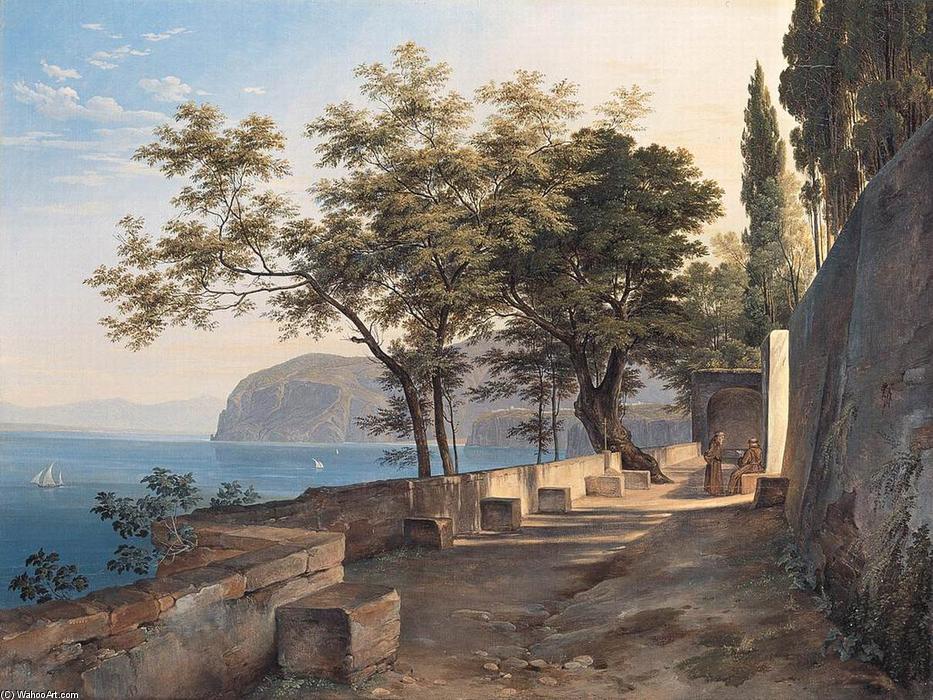
Terrace of the Capucin Priory in Sorrento
 Romanticism
 1823
1823 42.0 x 55.0 cm
 Neue Pinakothek
 Ver más
Giclée / Impresión de arte
Impresiones giclée o en lienzo de calidad de museo con producción rápida y opciones de acabado flexibles. ( Comprar pintura hecha a mano Comprar imagen)




































Elija entre nuestros tamaños predefinidos que respetan las proporciones originales de la obra.

Puede introducir sus propias dimensiones para adaptarse a un marco o espacio específico. Si el tamaño seleccionado no coincide con las proporciones de la imagen original, recortaremos la obra de arte o extenderemos la imagen con un borde con efecto espejo o de color sólido. Se enviará una maqueta digital para su aprobación antes de que comience la producción.
Tenga en cuenta que la vista previa en pantalla no refleja el recorte o la extensión real. Solo la maqueta mostrará con precisión la composición final.
Aunque existen tamaños personalizados, recomendamos seleccionar una dimensión de la lista predefinida para preservar las proporciones originales.
Envío a todo el mundo () en 2 semanas en lugar de las 4/5 semanas estándar. (5 septiembre)

Envío exprés gratuito a todo el mundo

Lienzo de lino de alta calidad

Seguro de envío total

Garantía de reembolso de impuestos aduaneros

Garantía de fidelidad cromática exacta

Política de devolución de 60 días (solo por defectos)

Garantía de devolución del 100% del dinero

Descuento por cantidad
 La opción de vidrio solo está disponible en tamaños inferiores a 110 cm.

Terrace of the Capucin Priory in Sorrento
Giclée / Impresión de arte
Dimensiones de la reproducción
-


Precio total final
$ 62
The Painting's Composition and Style
The Terrace of the Capucin Priory in Sorrento depicts a serene coastal scene, with a stone terrace overlooking the sea. The artist has masterfully incorporated trees, shrubs, and two individuals engaged in conversation, adding a sense of human presence to the scene. Reinhold's use of soft hues and gentle light creates a tranquil atmosphere, inviting viewers to immerse themselves in this peaceful setting. Key Features of the painting include:- The artist's exceptional attention to detail, evident in the intricate architecture and lush vegetation
- The captivating play of light and shadow, which adds depth and dimensionality to the scene
- The sense of serenity and calmness, which pervades the entire composition
Reinhold's Artistic Legacy
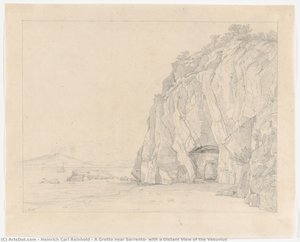
Heinrich Carl Reinhold was a prominent German painter and engraver, known for his stunning landscapes and cityscapes. His work can be found in various museums and collections, including the Von Der Heydt Museum in Wuppertal, Germany. As a testament to his artistic genius, Reinhold's paintings continue to inspire and captivate art lovers around the world. For more information on Heinrich Carl Reinhold and his works, visit https://ArtsDot.com and explore our extensive collection of handmade oil painting reproductions. You can also learn more about the artist's life and legacy on Terrace of the Capucin Priory in Sorrento.Discover the beauty of Terrace of the Capucin Priory in Sorrento and other stunning artworks by renowned artists at https://ArtsDot.com.
Obras relacionadas

Biografía del artista
A Romantic Vision of Italy: The Life and Legacy of Heinrich Carl Reinhold
Johann Heinrich Carl Reinhold emerged as a luminous figure within the burgeoning Romantic movement, leaving behind a legacy defined by his captivating landscapes and meticulously rendered depictions of Italian scenery. Born in 1788 in Gera, Thuringia, Reinhold’s artistic journey was deeply rooted in familial tradition. His early training began under the nurturing tutelage of his father and his half-brother, Friedrich Philipp Reinhold, an experience that fostered a profound appreciation for the precision of drawing and established the technical foundation upon which his later masterpieces would be built. As a student at the Dresden Academy of Fine Arts, he began to absorb the classical ideals that would serve as the structural backbone of his compositions, even as his spirit drifted toward the emotive power of Romanticism. The trajectory of Reinhold’s career was shaped by a series of pivotal migrations across Europe's great artistic centers. In 1806, seeking further refinement, he moved to Vienna, enrolling at the Akademie der bildenden Künste Wien. It was here that his talent caught the eye of the influential Dominique Vivant, Baron de Denon, the Director of Museums in Paris. This encounter proved transformative, propelling Reinhold into the vibrant heart of Parisian artistic discourse in 1809. During his years in France, he did not merely observe; he actively documented the era's seismic shifts, capturing the grandeur and drama of Napoleon’s military campaigns through a masterful blend of keen observation and poetic interpretation.The Italian Influence and Artistic Maturity
The true soul of Reinhold’s oeuvre, however, was found in the sun-drenched landscapes of the South. Following his time in Paris, a renewed enthusiasm for Romanticism spurred his return to Vienna in 1819, leading to an ambitious expedition to Italy alongside Johann Christoph Erhard. This journey through Rome and Naples allowed Reinhold to immerse himself in a classical milieu that would forever alter his palette and perspective. His works from this period, such as the breathtaking Terrace of the Capucin Priory in Sorrento, demonstrate a remarkable sensitivity to light and atmosphere. In these paintings, one finds a serene coastal beauty where stone terraces, lush vegetation, and the gentle play of shadow create a tranquil, almost meditative atmosphere. Reinhold’s technical mastery is particularly evident in his ability to balance the monumental with the intimate. While he could capture the sweeping vistas of a distant Vesuvius or the dramatic scale of Roman architecture, he never lost sight of the human element. His compositions often feature subtle traces of life—a young couple beneath a wicker basket or figures engaged in quiet conversation—which ground his grand landscapes in a sense of lived reality. This duality between the epic and the everyday is what makes his work so enduringly poignant.Historical Significance and Artistic Heritage
Though his life was tragically short, ending in 1825, Reinhold’s impact on the German Romantic landscape tradition remains significant. He bridged the gap between the rigorous academic traditions of the late 18th century and the emotive, nature-centric philosophies of the 19th century. His ability to synthesize the stylistic innovations of Joseph Anton Koch with his own firsthand observations of Mediterranean light created a unique visual language that resonated across borders. Today, the works of Heinrich Carl Reinhold serve as vital windows into a bygone era of European exploration and artistic passion. His paintings are not merely records of scenery but are emotional evocations of a time when the landscape was viewed as a mirror to the human soul. His contributions continue to be celebrated in prestigious institutions such as:- The Neue Pinakothek in Munich, which houses his exquisite depictions of Sorrento.
- The National Gallery of Art, preserving his intimate studies of figures within landscapes.
- The Von Der Heydt Museum, where his legacy as a master of German landscape art is preserved.
heinrich carl reinhold
1788 - 1825
Datos clave
- Artistic Movement Or Style: Romantic Painting
- Artists Or Movements Influenced By This Artist: ['Romanticism']
- Artists Who Influenced This Artist: ['Joseph Anton Koch']
- Date Of Birth: 18 July 1788
- Date Of Death: 15 January 1825
- Full Name: Johann Heinrich Carl Reinhold
- Nationality: German
- Notable Artworks:
- Terrace of the Capucin Priory in Sorrento
- Family at the Foot of a Staircase of a Roman Palace
- Place Of Birth: Gera, thuringia
Artículos relacionados

Paisajes Románticos: 10 Obras Maestras que Definieron un Movimiento Artístico
Descubre los 10 paisajes románticos más influyentes de artistas como Caspar David Friedrich y Turner. Explora la belleza, el simbolismo y las técnicas del movimiento romántico. Reproducciones de arte exclusivas en ArtsDot.com.

Evocations of Place: A Historical Journey Through Landscape Art
Explore the rich history of landscape art with ArtsDot. Discover renowned artists, movements like Impressionism & Romanticism, and expert guidance for collecting timeless pieces. Find your perfect serene escape today!

John Constable: Las 25 Obras Maestras del Paisaje Inglés | ArtsDot
Descubre las 25 obras maestras de John Constable, el pintor romántico inglés que capturó la belleza del paisaje. Explora su técnica, historia y significado en ArtsDot.com. Reproducciones de arte de alta calidad para tu hogar.

El Sublime y lo Pintoresco: Explorando la Emoción y la Naturaleza en la Pintura Romántica de Paisaje
Explora la profunda conexión entre el arte romántico y la naturaleza. Descubre a Caspar David Friedrich, John Constable y otros maestros del sublime y lo pintoresco. Análisis experto e historia del movimiento.

Evoking Nature's Sublime: A Comprehensive Exploration of 19th-Century Landscape Painting
Explore the captivating world of 19th-century landscape painting! Discover renowned artists like Friedrich & Monet, key movements, and find the perfect artwork to bring nature's serenity into your home. Expert insights at ArtsDot.

