

 プレビュー
プレビュー
 プリントを購入
 シェアする
シェアする シェアする
シェアする
 詳細を見る
詳細を見る

 ダウンロード
 似ている作品
 X線調査
X線調査 スライドショー
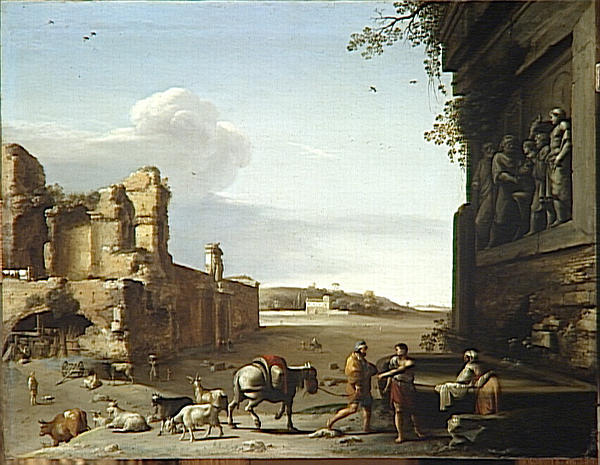
RUINES DE L'ANCIENNE ROME AVEC UN BAS RELIEF ANTIQUE


 詳細を見る
詳細を見る




P118B $10

P118H $10

P118W $10

P438Z $10

P508JH $12

P508YH $12

P805H $10

P805Z $10

P919BZ $10

P919G $10

P919XJ $10

P959ZH $10

P968JZ $12

W106C $8

W218G $10

W218JH $8

W218Y $10

W307PJ $10

W316G $10

W316PJ $8

W316Y $10

W398PJ $8

W4111J $10

W500HY $15

W500JH $15

W692G $12

W849H $8

W940BG $15

W953PJ $8




作品のオリジナル比率に合わせた、当店の規定サイズからお選びください。

特定のフレームやスペースに合わせて、ご希望のサイズをご入力いただけます。選択されたサイズが元の画像の比率と異なる場合、アートワークをトリミングするか、手描きで要素を追加して絵画を拡張いたします。デジタルモックアップ を制作し、制作開始前にご確認(承認)をいただきます。
画面上のプレビューは、実際のトリミングや拡張を正確に反映しているものではありません。最終的な構図は、モックアップによってのみ正確にご確認いただけます。
カスタムサイズもご利用いただけますが、元の比率を維持するためには、あらかじめ用意されたリストからサイズを選択することをお勧めいたします。
ご注文後、ArtsDot.com チームより詳細な指示をお送りするとともに、仕上がりイメージ(モックアップ)をご提供いたします。


 ガラスオプションは、110cm未満のサイズでのみご利用いただけます。

RUINES DE L'ANCIENNE ROME AVEC UN BAS RELIEF ANTIQUE
複製技法
複製画のサイズ
-


合計金額
$ 363
作品解説
A Ruined Majesty: Cornelis van Poelenburch’s “Ruines de l'Ancienne Rome avec un bas relief antique”
Cornelis van Poelenburch’s “Ruines de l’Ancienne Rome avec un bas relief antique” isn’t merely a landscape painting; it’s a poignant meditation on time, memory, and the enduring allure of vanished grandeur. Completed around 1630, this oil-on-copper masterpiece transports us to the heart of ancient Rome, not as a vibrant metropolis but as a hauntingly beautiful ruin – a testament to both human ambition and inevitable decay. The painting’s power lies in its ability to evoke a profound sense of melancholy and contemplation, inviting viewers to consider their own place within the vast sweep of history.
Van Poelenburch, a pivotal figure in the Utrecht school of landscape painting, was deeply influenced by his time spent in Rome. He absorbed the classical ideals of beauty and proportion while simultaneously embracing the dramatic contrasts of light and shadow championed by Caravaggio. This dual influence is strikingly evident here; the composition echoes the balanced arrangements favored by Renaissance masters, yet the use of tenebrism – a hallmark of Caravaggist style – imbues the scene with an intense emotional charge. The muted palette, dominated by earthy browns, ochres, and subtle blues, creates a sense of atmospheric depth, drawing the eye into the receding landscape.
Composition and Perspective: A Journey Through Time
The painting’s composition is meticulously crafted to guide the viewer's gaze across the scene. The foreground is dominated by imposing Roman ruins – crumbling columns, fragmented walls, and weathered arches – that immediately establish a sense of scale and antiquity. These monumental structures are strategically placed to create a strong diagonal line, leading the eye towards the distant horizon where a hazy, atmospheric perspective suggests an endless expanse of countryside. The artist masterfully employs linear perspective, subtly converging lines to create the illusion of depth and distance, while simultaneously utilizing aerial perspective – softening colors and reducing detail in the background – to further enhance this effect.
Scattered throughout the landscape are figures—a small group of people and animals—adding a layer of narrative complexity. These figures, rendered with a delicate realism characteristic of van Poelenburch’s style, appear almost as if they are caught in a timeless moment, interacting with the ruins as if they were part of their daily lives. The inclusion of these human elements serves to remind us that even amidst the decay of civilization, life continues on.
Symbolism and Emotional Resonance
The ruins themselves are potent symbols – representing not just the physical decline of Rome but also the transience of power, wealth, and glory. They speak to the cyclical nature of history, suggesting that all empires eventually crumble, leaving behind only fragments of their former selves. Yet, within this sense of loss lies a strange beauty; the weathered stones possess an undeniable dignity, as if they are silently bearing witness to centuries of human drama.
The presence of animals – likely sheep and goats – further reinforces the painting’s themes of pastoral simplicity and connection with nature. They represent a return to a more primal existence, contrasting sharply with the artificiality and ambition of the Roman Empire. The overall effect is one of poignant beauty—a bittersweet reminder of the past and an invitation to contemplate our own mortality.
Technique and Materials: A Master’s Touch
Van Poelenburch's skill as a painter is evident in every brushstroke. He employs a traditional oil painting technique, layering thin glazes of paint to build up form and texture with remarkable precision. The surface of the copper panel—a material favored by Dutch artists at the time—adds a subtle sheen that enhances the richness of the colors. Close examination reveals the artist’s meticulous attention to detail – from the rough texture of the stone to the delicate folds of the clothing worn by the figures. The use of impasto, particularly in rendering the relief sculpture, adds a tactile quality to the painting, inviting viewers to reach out and touch its weathered surface.
This artwork is a remarkable example of Dutch Golden Age landscape painting, seamlessly blending classical influences with a distinctly personal vision. “Ruines de l’Ancienne Rome avec un bas relief antique” remains a captivating work of art, offering a timeless meditation on the beauty and fragility of human existence.
関連作品
アーティストの略歴
初期の生活と修行
コーネリス・ファン・ポーレンブルフは、1594年にオランダのユトレヒトで生まれた著名なオランダの風景画家でした。彼は当初、同時代の名高い芸術家であったアブラハム・ブロエマートのもとで修行を積みました。この基礎的な訓練が、ファン・ポーレンブルフの将来の成功の礎を築いたのです。芸術的キャリアと影響
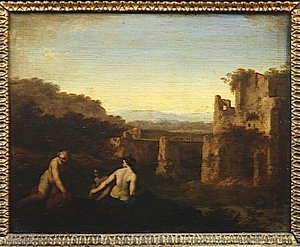
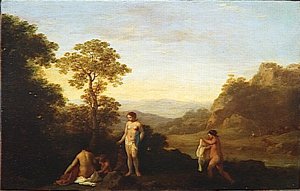
17世紀初頭にローマを旅した経験は、彼の作品に計り知れない影響を与え、彼をイタリアで活躍した第一世代のオランダ風景画家を代表する存在へと押し上げました。しばしば聖書や神話の場面を描いた小さな人物像が彩る、イタリア風の風景画が特徴的な彼の小品は、その類まれなる様式美を今に伝えています。注目すべき作品:- ニンフを覗き見るサテュロス(1627年頃)は、人物が沐浴する古風な風景を描いた、ファン・ポーレンブルフの代表的な作品の一つです。(ArtsDotで閲覧)
- 神々の評議会(1630年頃)は、ファン・ポーレンブルフの理想化された丘陵風景とローマ風の女神たちが描かれた作品で、現在マウリツィス美術館(ハーグ、オランダ)に所蔵されています。(ArtsDotで閲覧)
遺産と晩年
ファン・ポーレンブルフの作品は、トスカーナ公やオランダの州知など、同時代の多くの人々に高く評価されました。その後、彼はユトレヒトに戻り、古い師であるアブラハム・ブロエマートから数年しか経たない1667年に息を引き取りました。要点:- 1594年、オランダのユトレヒトで誕生
- アブラハム・ブロエマートのもとで修行
- ローマでの経験に影響を受ける
- 人物を描いた小規模なイタリア風の風景画で知られる
- 1667年にユトレヒトで死去 ArtsDotでコーネリス・ファン・ポーレンブルフの作品を見る ウィキペディアでコーネリス・ファン・ポーレンブルフについてもっと学ぶ
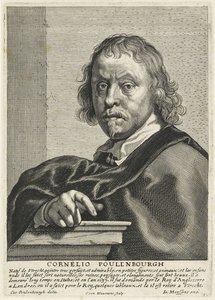
コーネリス・ファン・ポーレンブルフ
1594 - 1667 , オランダ
基本情報
- Artistic Movement Or Style: オランダ風景画、ローマ風
- Artists Or Movements Influenced By This Artist: ['クロード・ロレーン']
- Artists Who Influenced This Artist: ['アブラハム・ブロエマート']
- Date Of Birth: 1594年、ユトレヒト、オランダ
- Date Of Death: 1667年、ユトレヒト、オランダ
- Full Name: コルネリス・ファン・ポーレンブルフ
- Nationality: オランダ人
- Notable Artworks:
- ニンフを盗み見るサテュロス
- 神々の評議会
- Place Of Birth: ユトレヒト、オランダ
関連記事
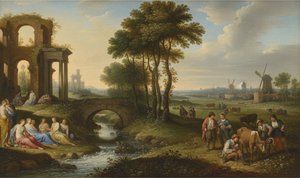
Cornelis van Poelenburch: Bridging Mannerism & the Dutch Baroque Landscape
Discover Cornelis van Poelenburch, a pivotal Dutch Baroque landscape painter bridging Mannerism & Italianate styles. Explore his life, key works, and lasting influence on 17th-century art with ArtsDot.
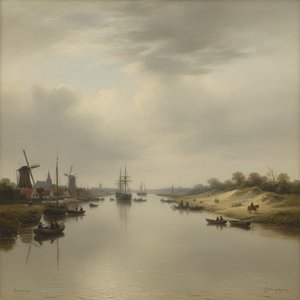
Jan van Goyen: Master of Dutch Landscape & Atmospheric Perspective
Discover Jan van Goyen, the master of Dutch landscape painting. Explore his subtle technique, atmospheric realism & lasting influence on art history. Learn about this 17th-century pioneer at ArtsDot.

レンブラント傑作25選:光と影の巨匠、魂を揺さぶる名画の世界 | ArtsDot
レンブラントの傑作25選。光と影の魔術師が描いた魂を揺さぶる名画の世界へ。美術史に残る自画像、夜警、宗教画…ArtsDotで高品質なアートプリントやインテリアアートをお楽しみください。コレクションはこちら→
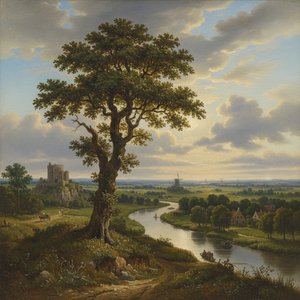
Jacob van Ruisdael: Master of Dutch Landscape & the Evocation of National Identity
Explore the life & work of Jacob van Ruisdael, the preeminent Dutch landscape painter. Discover his technical brilliance, symbolic depth, and lasting influence on art history. Learn about collecting Ruisdael's masterpieces.
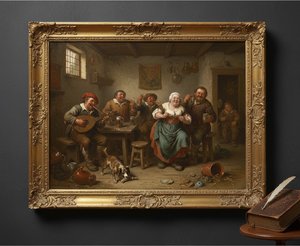
Adriaen van Ostade: A Master of Dutch Genre Painting & Social Commentary
Explore the life & work of Adriaen van Ostade, a leading Dutch Golden Age painter. Discover his realistic genre scenes, social commentary, and lasting influence on art history. Learn more at ArtsDot.

