

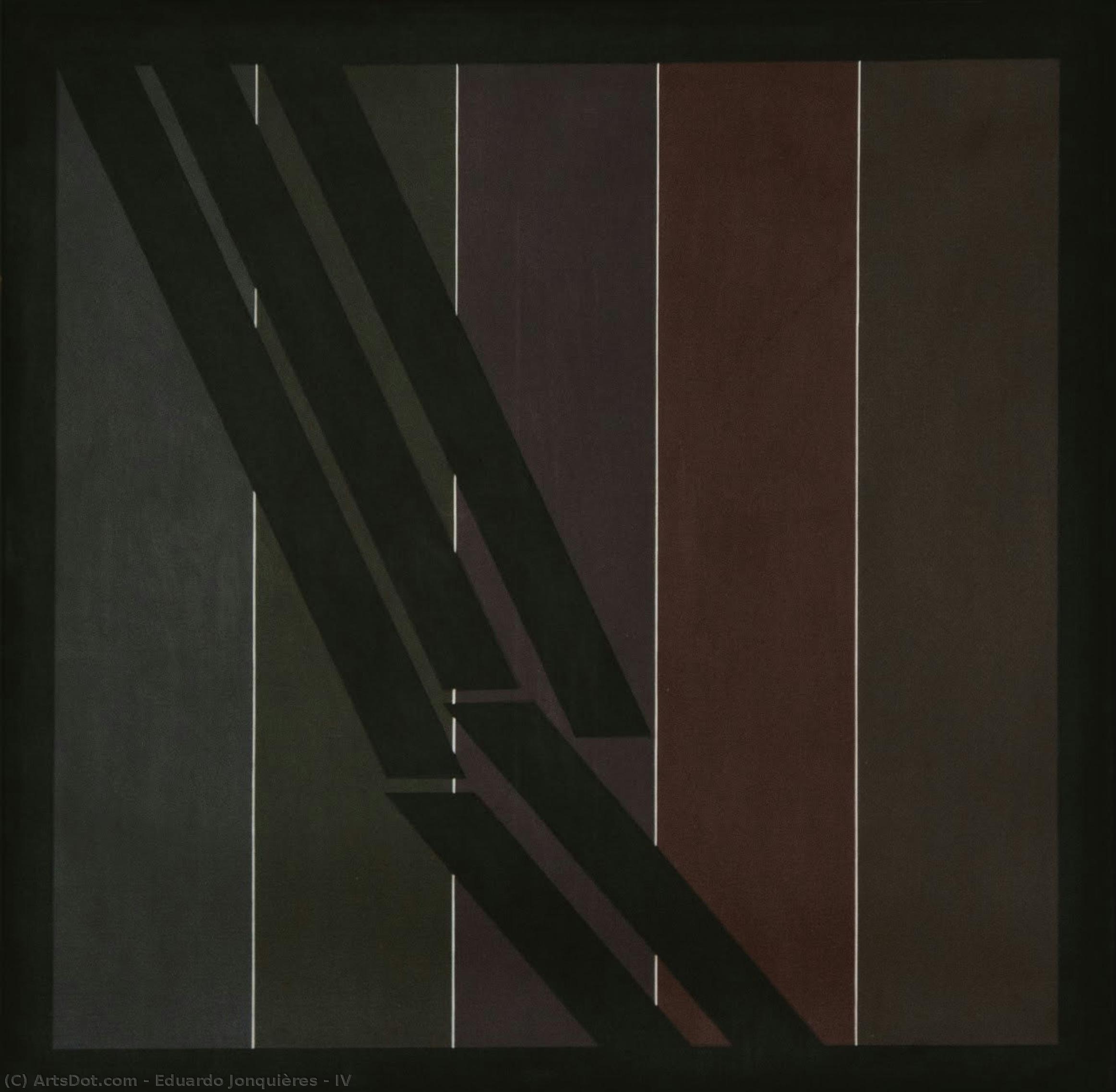
 プレビュー
プレビュー
 シェアする
シェアする シェアする
シェアする
 詳細を見る
詳細を見る

 ダウンロード
 似ている作品
 X線調査
X線調査 スライドショー
 Stats
StatsIV
 1984
1984 79.0 x 79.0 cm
 Museum of the Arts of the University of Guadalajara
 詳細を見る
詳細を見る
ジークレー/アートプリント
迅速な制作と多彩な仕上げオプションを備えた、ミュージアムクオリティのジークレーまたはキャンバスプリント。 ( 手描きの絵画を購入 Switch to Digital Image)




































作品のオリジナル比率に合わせた、当店の規定サイズからお選びください。

特定のフレームやスペースに合わせて、ご自身でサイズを指定することも可能です。選択されたサイズが元の画像の比率と一致しない場合、作品をトリミングするか、鏡面反射または単色での塗りつぶしによって画像を拡張いたします。制作を開始する前に、ご確認用のデジタルモックアップをお送りいたします。
画面上のプレビューには、実際のトリミングや拡張は反映されませんのでご注意ください。最終的な構図を正確に確認できるのは、モックアップのみとなります。
カスタムサイズも承っておりますが、元の比率を維持するためには、あらかじめ用意されたリストからサイズを選択することをお勧めいたします。


 ガラスオプションは、110cm未満のサイズでのみご利用いただけます。

IV
ジークレー/アートプリント
複製画のサイズ
-


合計金額
$ 62
関連作品
アーティストの略歴
Eduardo Jonquières: Architect of Concrete Color
Born in Buenos Aires, Argentina, in 1918, Eduardo Jonquières emerged as a pivotal figure in the landscape of Argentine modern art. His journey, marked by a profound engagement with European avant-garde movements and an innovative embrace of acrylic paint, ultimately established him as a key contributor to *Arte Concreto Invención* – a movement that fundamentally reshaped artistic expression within South America. Jonquières’s career spanned nearly eight decades, culminating in his death in 2000, leaving behind a legacy characterized by geometric precision, vibrant color palettes, and a fearless exploration of abstract form.
Jonquières' early artistic development was deeply influenced by the European avant-garde, particularly the principles espoused by the Bauhaus school. This exposure instilled within him a desire to move beyond traditional representational art, seeking instead new modes of visual communication. His initial works reflected this shift, characterized by geometric shapes and bold, often contrasting, colors – a direct response to the dynamism and experimentation prevalent in European artistic circles at the time. The influence of *pinturas elementales*, a movement emphasizing pure abstraction and industrial materials, is readily apparent in these formative pieces, laying the groundwork for his later explorations.
The Rise of Concrete Art and Acrylic Innovation
Jonquières’s most significant contribution lies within his involvement with *Arte Concreto Invención* – a movement that gained momentum in Argentina during the 1940s. This group, comprised of artists like Julio Payró and Carlos Evora, sought to break free from the constraints of traditional painting by embracing abstraction and utilizing unconventional materials. Jonquières’s adoption of acrylic paint proved particularly transformative. Unlike oil paints, which required extensive drying times, acrylic allowed for rapid layering and a heightened sense of immediacy in his compositions. This facilitated the creation of dynamic, layered surfaces that pulsed with energy and visual complexity.
The use of geometric forms remained central to Jonquières’s aesthetic, but it evolved beyond simple shapes into intricate networks and interlocking patterns. He wasn't merely constructing geometric figures; he was building spatial relationships, creating a sense of depth and movement within his canvases. His work became less about depicting objects and more about exploring the inherent qualities of form and color themselves – a core tenet of *Arte Concreto Invención*.
Notable Works and Recognition
Jonquières’s artistic achievements have been recognized through inclusion in prestigious collections, notably the Imperial College Healthcare Charity Art Collection at the Imperial College London. This collection provides a testament to the enduring value of his work and its significance within the broader context of 20th-century art. Furthermore, his paintings have graced the walls of museums across Argentina, including the Museo Nacional de Bellas Artes in Buenos Aires, ensuring that his vision continues to be accessible to a wide audience.
A particularly illuminating example of Jonquières’s early style can be found in “Painting by ‘Prilidiano Pueyrredón,’” a work that demonstrates the influence of European avant-garde principles on his nascent artistic practice. Comparisons with other Argentine artists, such as Oscar Agustín Alejandro Schulz Solari and even Pablo Sináí, reveal shared explorations of new modes of expression, albeit each artist forging their own unique path within the broader movement.
A Lasting Legacy
Eduardo Jonquières’s death in 2000 marked the end of an era for Argentine art. However, his innovative use of acrylic paint and his pioneering role in *Arte Concreto Invención* cemented his place as a vital figure in the country's artistic history. His work continues to be studied and appreciated for its bold experimentation, its vibrant color palettes, and its profound engagement with the principles of abstraction. Jonquières’s legacy extends beyond individual artworks; it represents a pivotal moment in Argentine art – a conscious rejection of tradition and an embrace of a new, dynamic visual language.

eduardo jonquières
1918 - 2000 , Argentina
基本情報
- Artistic Movement Or Style: Concrete art & Acrylic
- Artists Or Movements Influenced By This Artist: ['Pablo Siná']
- Artists Who Influenced This Artist: ['Bauhaus School']
- Date Of Birth: 1918
- Date Of Death: 2000
- Full Name: Eduardo Jonquières
- Nationality: Argentinian
- Notable Artworks: ['Prilidiano Pueyrredón']
- Place Of Birth: Buenos Aires, Argentina