
The Floating World: An Introduction to Ukiyo-e and the Spirit of Edo
 Floating Worlds: A Definitive Guide to the Mastery and Philosophy of Japanese Ukiyo-e Woodblock Prints
The Philosophy of Impermanence: Understanding the 'Floating World' Floating Worlds: The Captivating Magic and Timeless Legacy of Japanese Ukiyo-e Art The Philosophy of the Floating World: Understanding Ukiyo-e To understand Ukiyo-e is to grasp the ve...
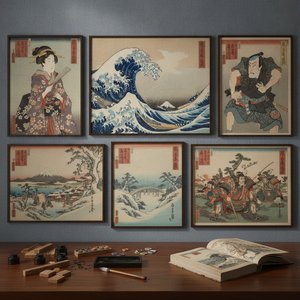
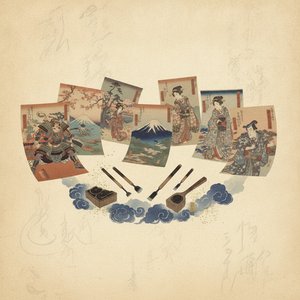
To understand the seismic shift that occurred in the nineteenth-century art world, one must first journey back to the bustling streets of Edo, the heart of Japan during the Tokugawa shogunate. It was an era defined by a burgeoning urban culture, where a new merchant class sought beauty not in grand religious icons or aristocratic lineages, but in the vibrant, transient pleasures of daily life. This philosophy gave birth to ukiyo-e, literally translated as "pictures of the floating world." The term itself carries a profound, bittersweet weight; it speaks to a world of fleeting moments—the sudden bloom of a cherry blossom, the dramatic tension of a Kabuki performance, or the rhythmic strength of a Sumo wrestler in the ring.
These prints were not mere decorations but windows into a society captivated by the ephemeral. Artists like the legendary Katsushika Hokusai and masters such as Utagawa Kunisada II captured the very pulse of Japan. In their hands, ink blossomed into waves and mountains breathed with life. Whether it was the delicate detail found in the works of Okumura Toshinobu or the raw, kinetic energy of a wrestling match, uklywoodblock prints offered an accessible, mass-produced beauty that celebrated the dignity of the ordinary. This era of relative peace fostered a creative ferment where art became a mirror held up to the joys and anxieties of a changing society, creating a visual language that was as much about emotion as it was about technique.
A Cultural Collision: The Reopening of Japan and the Birth of Japonisme
 Japonisme
Japonisme is a French term that refers to the popularity and influence of Japanese art and design among a number of Western European artists in the nineteenth century following the forced reopening of foreign trade with Japan in 1858. Japonisme was f...
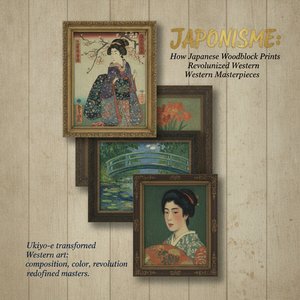
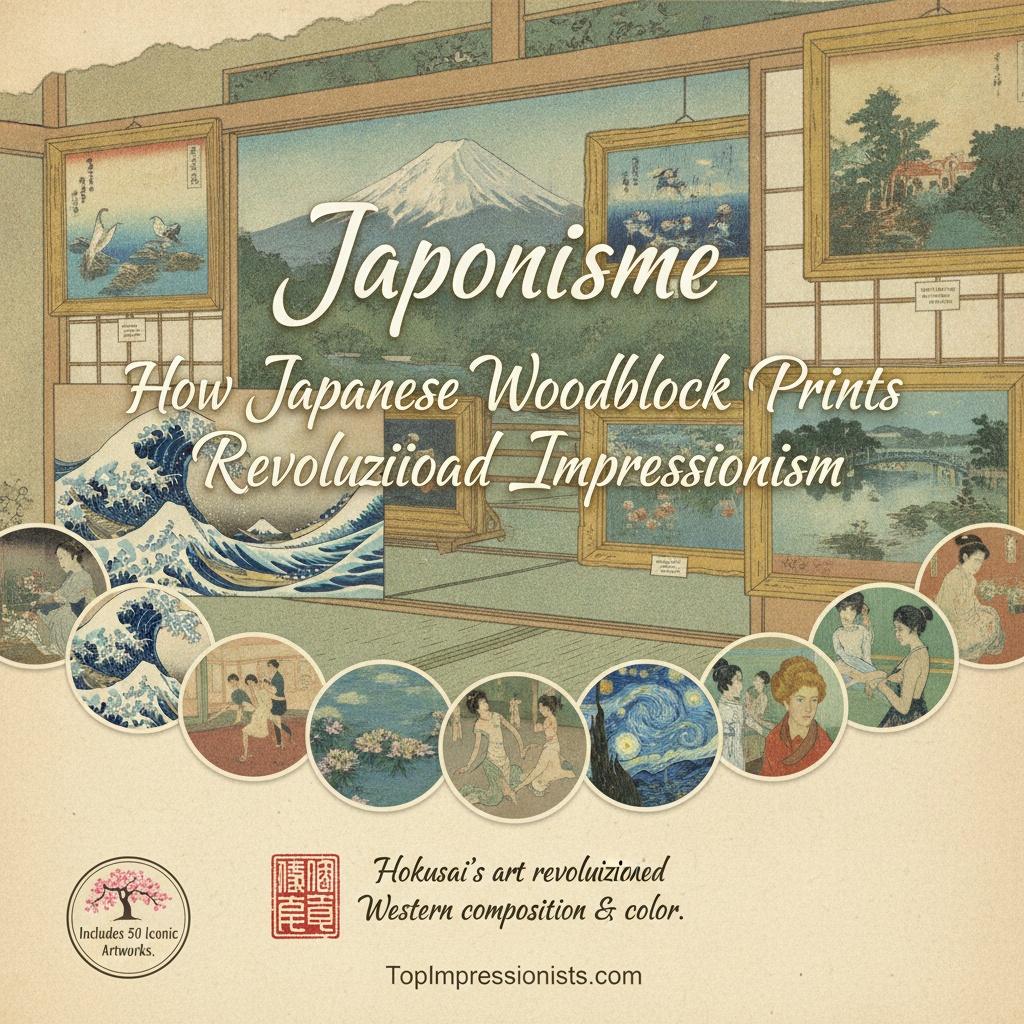
For centuries, Japan remained a secluded realm, its artistic treasures known only to those within its borders. However, the forced reopening of foreign trade in 1858 acted as a sudden, breathtaking gust of wind that scattered Japanese aesthetics across the Western world. This period of intense cultural exchange gave rise to Japonisme, a term coined by the French critic Philippe Burty in 1872 to describe the profound fascination with Japanese design sweeping through Europe. It was more than a passing trend; it was a revolution that touched everything from architecture and textiles to the very soul of painting.
As Japanese ceramics, enamels, and woodblock prints arrived in European ports, they acted as a catalyst for change. Collectors like Siegfried Bing became conduits for this new vision, introducing Western eyes to a way of seeing that was entirely foreign yet deeply magnetic. The arrival of these works coincided with a period of profound restlessness in Western art. The established academies, with their rigid rules of perspective and historical grandeur, were beginning to feel stagnant. The "new" art from the East offered an escape—a fresh vocabulary of color and form that promised to break the shackles of tradition and invite a more sensory, immediate way of experiencing reality.
Breaking the Frame: How Woodblock Composition Transformed Impressionist Vision
On the crest of that wave were woodcut prints by masters of the ukiyo-e school, which transformed Impressionist and Post-Impressionist art by ...
When the masters of Impressionism first encountered ukiyo-e, they did not merely see beautiful images; they saw a blueprint for a new way to compose a canvas. The traditional Western obsession with centered subjects and balanced, pyramidal structures was suddenly challenged by the radical asymmetry of Japanese prints. The Impressionists were mesmerized by the use of dramatic foreshortening and the way a subject could be abruptly cropped by the edge of the frame, suggesting that the scene continued far beyond what the eye could see.
This "breaking of the frame" allowed artists like Degas and Monet to experiment with much more dynamic perspectives. They learned from the Japanese masters how to utilize empty space—not as a void, but as an active participant in the composition. The ability to place a large, looming element in the foreground to create depth, while leaving vast areas of the canvas light and airy, provided the Impressionists with the tools to capture the fleeting nature of light and atmosphere. This structural liberation was essential in moving art away from the literal representation of objects toward the impressionistic capture of a moment's essence.
Mastery of Color and Line: Lessons from Hokusai, Hiroshige, and the Ukiyo-e Masters
 Hokusai's Masterpieces: 25 Iconic Prints & Paintings for Art Lovers | ArtsDot
Introduction To embark on a journey through the 25 most celebrated artworks of Katsushika Hokusai is to enter a world where ink blossoms into waves, mountains breathe with life, and everyday scenes resonate with profound beauty. These pieces aren’t m...
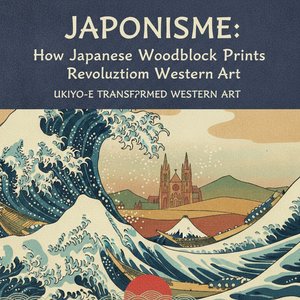
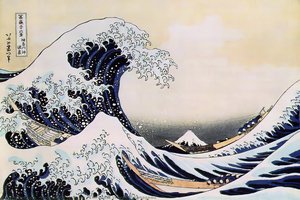
Beyond composition, the technical brilliance of the ukiyo-e masters offered a masterclass in color theory and linework. The vibrant, often bold pigments used in woodblock printing—saturated reds, deep blues, and opulent golds—provided a striking contrast to the more muted palettes prevalent in much of European academic art. The way artists like Hokusai utilized color to evoke the power of nature, such as the iconic deep blues of his Great Wave, taught Western painters that color could be used expressively rather than just descriptively.
Furthermore, the decisive, rhythmic flow of line in Japanese prints offered a new way to define form. In ukiyo-e, the line is not merely an outline; it is a carrier of energy and movement. We see this influence in the way Post-Impressionists like Van Gogh utilized bold, swirling contours to imbue his landscapes with psychological depth. The meticulousness required for woodblock printing—where a single design might necessitate hundreds of individual hand-printings—instilled a respect for precision that Western artists sought to blend with their own spontaneous brushwork, creating a unique synthesis of Eastern discipline and Western emotion.
The Lasting Legacy: From Japanese Prints to the Modern Impressionist Canvas
Japanese woodblock prints called ukiyo-e, or “pictures of the floating world,” were a cheap popular art form in Japan during the Edo Period (1615-1868).
The dialogue between Japan and Europe created a legacy that continues to resonate in every museum dedicated to the Impressionist movement. The influence of Japonisme is woven into the very fabric of the works we cherish today. When we look at a Monet landscape, we see the echoes of Japanese spatial depth; when we observe a Renoir portrait, we sense the subtle, soft forms reminiscent of the 18th-century Japanese masters. This was not a one-way street of imitation, but a profound artistic metamorphosis.
This era proved that art is never static; it is a living, breathing entity that evolves through contact with the "other." The Impressionists took the seeds of Japanese innovation and planted them in the fertile soil of European modernism, resulting in a movement that redefined the boundaries of human perception. The technical innovations of the ukiyo-e school—the flattened planes, the bold outlines, and the focus on the everyday—became the foundational stones upon which much of modern art was built.
Reflections on Beauty: Finding the Eternal in the Ephemeral
As we reflect on this extraordinary chapter of art history, we are reminded of the universal human desire to capture beauty in its most transient forms. The ukiyo-e artists and the Impressionists shared a common heartbeat: a devotion to the "floating" moment. They taught us that there is profound significance in the way light hits a lily pond or how a wave crests before it breaks. Their combined legacy invites us to slow down, to observe the subtle nuances of our own world, and to find the eternal within the ephemeral.
At ArtsDot.com, we hold this reverence for the masters close to our hearts. Our mission is to keep this luminous tradition alive through our exquisite, hand-painted oil reproductions. We believe that the soul of a painting lies in its texture—the visible brushstroke, the depth of the pigment, and the physical presence of the artist's hand on the canvas. Whether you are looking to bring the light-drenched atmosphere of Monet into your home or wish to transform a personal memory into a masterpiece in the style of Van Gogh, we invite you to join us in celebrating this enduring, beautiful connection between cultures.