Introduction
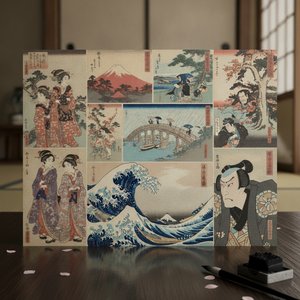
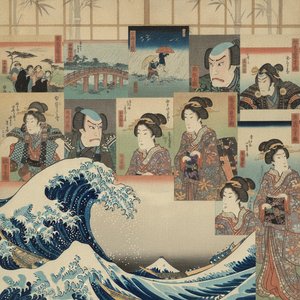
To step into the world of Japanese landscape painting is to embark on a meditative journey through mist, mountain, and memory. It is an art form that does not merely seek to replicate the physical world, but rather to capture its very breath—the ephemeral moment where the earth meets the sky in a silent, profound dialogue. For centuries, the masters of Japan have utilized ink, silk, and paper to weave narratives of solitude, grandeur, and the delicate impermanence of nature, inviting us to find stillness within the movement of the clouds.
The history of this movement is a rich tapestry woven from diverse cultural threads, from the early, spiritual depths of Sansui (mountain-water) paintings influenced by Zen Buddhism to the vibrant, rhythmic energy of the Ukiyo-e woodblock prints. These works emerged not just as aesthetic achievements, but as profound philosophical expressions of Mono no aware —a poignant awareness of the transience of all things. Through the delicate use of negative space and masterful brushwork, these artists transformed the rugged topography of the Japanese archipelago into a spiritual landscape that transcends geography.
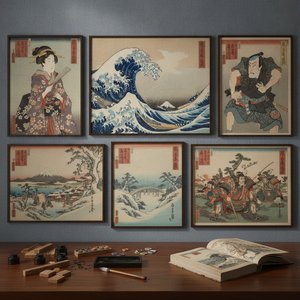
Today, these masterpieces remain deeply resonant, offering a sanctuary of calm in our increasingly fragmented modern era. They remind us that beauty is often found in the understated, and that there is immense power in the empty space between the strokes. As we prepare to traverse this curated selection, we invite you to look beyond the pigment and the paper. We shall explore ten definitive works that have shaped the soul of Japanese landscape art, each a window into a timeless vision of harmony, resilience, and the eternal dance of the natural world.
Fushimi, Station # 51 - Utagawa Hiroshige
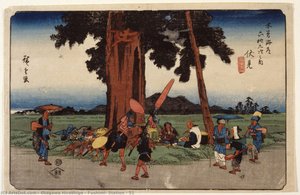 Fushimi, Station # 51 - Utagawa Hiroshige
In Fushimi, Station #51 by Utagawa Hiroshige, we encounter a masterclass in structural harmony that defines the very essence of the Japanese landscape painting movement. The composition is anchored by the commanding silhouette of a central tree, whose organic textures create a profound vertical axis against the tranquil pond. Hiroshige utilizes a sophisticated geometry of lines—the soft curve of umbrellas and the rhythmic placement of travelers—to guide the eye through a balanced, breathing space. This meticulous arrangement achieves a sense of timeless perfection, where every figure and shadow feels essential to the whole.
There is a quiet prestige in how this 1842 woodblock print balances bustling human activity with the stillness of nature. Much like the principles of modern minimalist design, Hiroshige’s ability to strip away the superfluous to focus on tonal depth and spatial clarity provides a grounding element for contemporary aesthetics. The luminous use of Prussian blue and the delicate gradations of light evoke a nostalgic, atmospheric beauty, making this piece an enduring cornerstone of the ukiyo-e tradition and a vital entry in our exploration of Japan's greatest landscape masterpieces.
Suruga-chô - Katsushika Hokusai
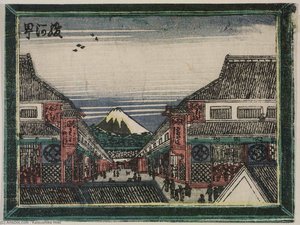 Suruga-chô - Katsushika Hokusai
To encounter Suruga-chô by Katsushika Hokusai is to witness a profound meditation on the eternal. As part of his legendary Thirty-Six Views of Mount Fuji , this masterpiece transcends mere landscape painting; it is a spiritual dialogue between the turbulent Suruga Bay and the steadfast majesty of Fuji. Hokusai utilizes the revolutionary Prussian blue pigments of the ukiyo-e tradition to weave a tapestry of atmospheric haze and rhythmic waves, capturing a sense of samsara —the beautiful, chaotic cycle of life.
The composition breathes with a delicate harmony, where tiny figures on pilgrimage navigate the cresting sea, seeking the spiritual enlightenment symbolized by the mountain’s peak. Owning such a piece from this definitive movement isn’t merely a purchase; it is an inheritance of a global artistic lineage. At ArtsDot, we invite you to bring this legacy into your private collection. Whether through a meticulous hand-painted oil reproduction that captures every nuanced brushstroke or a museum-quality print, Suruga-chô allows you to host a timeless handshake across centuries right upon your own walls.
Ceiling Of Ganshoin Temple At Obuse - Katsushika Hokusai
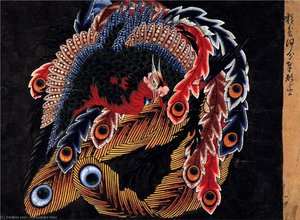 Ceiling Of Ganshoin Temple At Obuse - Katsushika Hokusai
Imagine standing beneath the hallowed rafters of the Ganshoin Temple, where the ceiling opens into a celestial garden frozen in time. In this breathtaking mural, Katsushika Hokusai transcends his fame as a printmaker to become a master of monumental scale. The composition is anchored by a striking peacock, its neck draped in a vibrant, luminous azure that pierces through the deep, velvety blacks of its plumage. As your eyes wander, you encounter a delicate ballet of pheasants and songbirds nestled among windswept pine branches and laurel leaves—symbols of eternal prosperity and spiritual endurance.
Hokusai’s late-period mastery is evident in the way he manipulates light and texture, using the traditional ukiyo-e spirit to create a sense of profound depth. The interplay of dark shadows and brilliant blues evokes a meditative atmosphere, perfect for those seeking to infuse a contemporary interior with a sense of Zen-like tranquility. To possess such a work is to invite the enduring serenity of the Japanese landscape into one's private sanctuary, fostering a space for deep reflection and creative inspiration.
Cherry Blossoms On Asuka Hill In Edo - Katsushika Hokusai
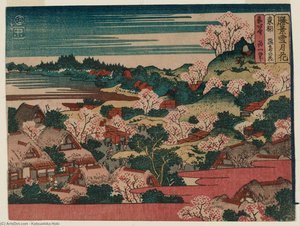 Cherry Blossoms On Asuka Hill In Edo - Katsushika Hokusai
To gaze upon Katsushika Hokusai’s Cherry Blossoms on Asuka Hill in Edo is to witness more than a mere seasonal transition; it is to experience the very breath of the Edo period. Hokusai does not simply depict a hillside adorned with blossoms; he composes a visual sonata where light and color act as the primary instruments. The way the soft, ephemeral pinks of the cherry trees interact with the structural permanence of the distant houses creates a profound dialogue between the transient and the eternal.
In this masterpiece of the Japanese landscape painting movement, Hokusai utilizes the revolutionary Ukiyo-e technique to master atmospheric depth. Through bold outlines and the strategic use of Prussian blue, he invites us into a serene world where every umbrella and wandering figure tells a story of communal harmony. This work stands within our Top 10 because it does not merely reflect the beauty of nature—it invents a luminous, spiritual reality. It is an invitation to bring the tranquil, storied light of historical Japan into your own contemporary sanctuary.
Dawn in the licensed quarters - Utagawa Hiroshige
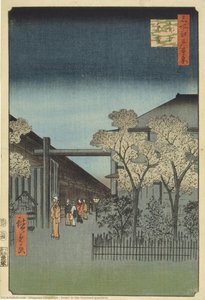 Dawn in the licensed quarters - Utagawa Hiroshige
To gaze upon Dawn in the licensed quarters by Utagawa Hiroshige is to step into a moment suspended between night and day, capturing the ephemeral heart of mid-nineteenth-century Edo. As the first light of morning touches the thoroughfare, Hiroshige employs a pearlescent, diffused glow that softens the edges of reality, transforming a bustling street scene into profound poetry. The composition draws the eye through a tapestry of figures—at least twelve individuals moving with the soft shuffle of wooden sandals—creating a palpable sense of urban rhythm and historical resonance.
As a titan of the ukiyo-e tradition , Hiroshige’s mastery of line and atmospheric wash offers more than mere documentation; it provides a window into a sophisticated social fabric. For the discerning collector or interior designer, this masterpiece brings an unparalleled sense of tranquility and depth to a modern space. Its ability to evoke the quiet energy of a burgeoning day makes it an exquisite choice for creating an atmosphere of reflection, calm, and timeless elegance in any curated home.
Canary and Peony - Katsushika Hokusai
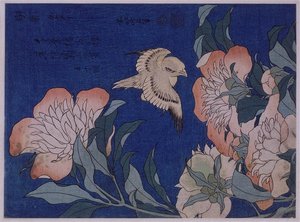 Canary and Peony - Katsushika Hokusai
In Canary and Peony , Katsushika Hokusai achieves a breathtaking mastery of atmospheric illumination, where the light does not merely strike the subject but seems to emanate from the very layers of Prussian blue pigment. The way the soft, diffused glow catches the delicate edges of the peony petals against the hazy, distant mountainscape creates a subtle chiaroscuro effect rarely seen in traditional ukiyo-e. This sophisticated interplay of light and shadow—highlighting the canary’s fragile form against an expansive, luminous backdrop—is precisely what secured this work's place among the top 10 masterpieces that defined the Japanese landscape painting movement .
Hokusai’s ability to balance the monumental scale of the landscape with the intimate, light-drenched details of nature offers a profound sense of depth. When reproduced as a high-quality oil painting or fine art print, this work brings an unparalleled layer of luxury and contemplative calm to a contemporary interior. The luminous blues and soft floral tones act as a sophisticated focal point, inviting the eye to wander through a landscape of light, adding both historical prestige and a serene, multidimensional texture to any curated collection.
Bullfinch And Weeping Cherry - Katsushika Hokusai
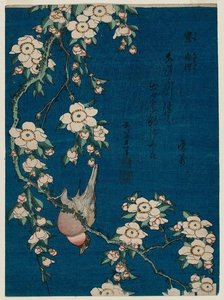 Bullfinch And Weeping Cherry - Katsushika Hokusai
To encounter Bullfinch And Weeping Cherry by Katsushika Hokusai is to step into a moment of profound stillness, as if discovering a hidden jewel within the vast archives of the Edo period. This masterpiece secures its place among the top ten defining works of the Japanese landscape movement through its exquisite ability to harmonize the minute with the infinite. Hokusai, the visionary behind The Great Wave off Kanagawa , utilizes the ukiyo-e woodblock technique to weave a sensory tapestry where the delicate textures of cherry blossoms meet the vibrant, watchful presence of the bullfinch.
The composition breathes with a rhythmic vitality; the soft, ethereal whites of the petals contrast beautifully against a deep, tranquil blue background, creating a sense of spatial depth that predated the Impressionist fascination with light. For the discerning collector or interior designer, this work offers more than mere decoration; it provides an anchor of timeless elegance and cultural heritage . Its delicate balance of color and seasonal symbolism brings a sophisticated, meditative energy to any refined space, embodying a legacy of beauty that remains as captivating today as it was in 1834.
Geese Homing at Katata - Utagawa Hiroshige
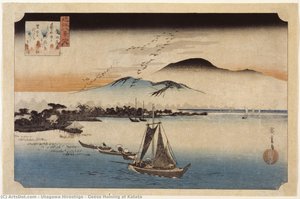 Geese Homing at Katata - Utagawa Hiroshige
To encounter Geese Homing at Katata by Utagawa Hiroshige is to step into a whispered poem from the heart of Edo Japan. As one of the definitive masterpieces of the Japanese landscape painting movement, this 1834 woodblock print transcends mere scenery; it captures a profound emotional resonance that has captivated collectors for centuries. Hiroshige utilizes the exquisite bokashi gradation technique to bathe the Katata shoreline in the ethereal, twilight hues of autumn, where the sky and Lake Biwa merge in a seamless dance of light and shadow.
The composition is anchored by the rhythmic flight of geese—symbols of perseverance and familial return—drifting above tranquil waters dotted with traditional boats. This work earns its place among the world's top ten through its masterful use of Prussian blue and its ability to evoke a sense of timeless nostalgia. For the discerning collector, such a piece offers more than visual beauty; it brings an aura of historical prestige and serene sophistication, making it an incomparable focal point for any refined, modern interior seeking a connection to the enduring legacy of ukiyo-e artistry.
Station 23, Fujieda - Utagawa Hiroshige
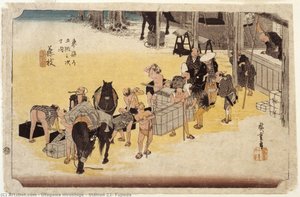 Station 23, Fujieda - Utagawa Hiroshige
While many view ukiyo-e as mere documentation, Utagawa Hiroshige possessed the rare ability to infuse a single woodblock print with the profound psychological weight of an entire era. In Station 23, Fujieda , created during the twilight of the Edo period, Hiroshige achieves a technical marvel of atmospheric perspective. He masterfully utilizes subtle color gradations to capture the salt-misted air of the coastal scene, where a bustling horse-drawn carriage and a solitary, contemplative dog coexist within a landscape of shifting light.
This masterpiece stands as a cornerstone of the Japanese Landscape Painting movement because it transcends simple scenery; it is a study in the tension between societal progress and eternal stillness. The way Hiroshige balances the energetic movement of travelers against the vast, tranquil horizon demonstrates a conceptual leap that would later mesmerize Impressionists like Monet. For the discerning collector, integrating such a work into a modern study or home office provides more than mere decoration; it introduces an atmosphere of disciplined focus and serene intellectual depth, inviting a sense of timelessness into one's professional sanctuary.
Umezawa In Sagami Province - Katsushika Hokusai
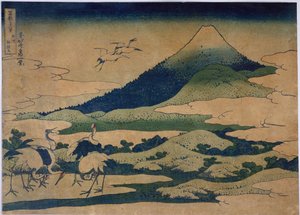 Umezawa In Sagami Province - Katsushika Hokusai
Imagine standing amidst a quiet, mist-laden marshland, where the only sound is the soft rustle of foliage and the distant cry of a bird. In Katsushika Hokusai’s Umezawa In Sagami Province , this profound stillness becomes palpable. As part of his legendary Thirty-Six Views of Mount Fuji , this masterpiece captures more than a topographical moment; it embodies the Zen-inspired philosophy of finding the sublime within the ephemeral.
Hokusai utilizes the exquisite bokashi technique—subtle color gradations—to simulate light filtering through dense trees, creating an ethereal depth that draws the viewer into the landscape. A solitary figure wanders the path, serving as a poignant reminder of humanity’s humble place within the vastness of nature. This work earns its place among the top 10 masterpieces of Japanese landscape painting through its ability to evoke a meditative state, bridging the gap between the Edo period's spiritual reverence and our modern need for tranquility. Bringing such a vision into a contemporary home offers more than decor; it invites a permanent sense of serenity and historical grace into your daily environment.
Conclusion
As the light fades on our journey through these storied landscapes, we are reminded that these masterpieces are far more than mere relics of a bygone era or static entries in an art historian's ledger. They are living presences, breathing with the rhythm of the seasons and the quiet pulse of nature itself. Each delicate line and sweeping wash of ink serves as a bridge across centuries, connecting the contemplative spirit of the ancient masters to our own modern sensibilities. When we stand before these works, we are not merely observing history; we are participating in a timeless conversation that transcends language and borders.
To bring such profound serenity into one's personal sanctuary is to invite that same eternal dialogue into the home. Whether through the textured depth of a hand-painted oil reproduction or the precise elegance of a fine print, these vistas continue to shape our interiors and stir our souls, offering a window into a world where humanity and nature exist in perfect, poetic harmony. We invite you to continue this exploration and find your own connection within our full collection , where every brushstroke carries the weight of heritage and the promise of enduring beauty.