Introduction
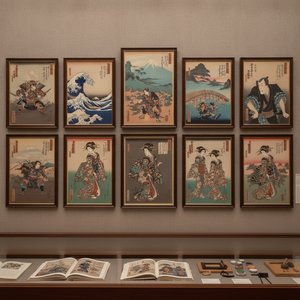
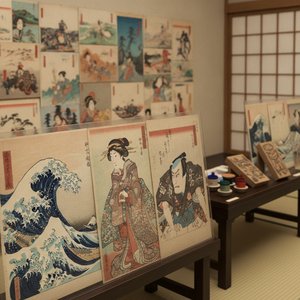
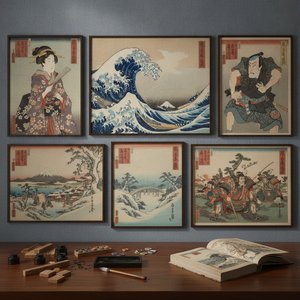
To step into the world of Ukiyo-e is to surrender to the beauty of the ephemeral. Born from the vibrant, pulsing energy of Japan’s Edo period, this art movement—literally translating to "pictures of the floating world"—captured a culture finding profound joy in the transient moments of existence: the fleeting bloom of a cherry blossom, the dramatic tension of a Kabuki actor, and the rhythmic, restless waves of a distant sea. It was an era where art moved beyond the gilded halls of the aristocracy, finding its true soul within the streets, the teahouses, and the shared, lived experiences of a rising urban class.
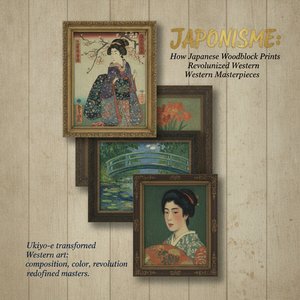
These woodblock prints were far more than mere ephemeral decorations; they were windows into a meticulously crafted reality, blending bold, decisive outlines with breathtaking color palettes that would eventually ignite the fires of Japonisme across Europe. When these works reached the hands of masters such as Van Gogh and Monet , they did not merely influence a new style; they fundamentally altered the trajectory of Western modernism, teaching the world to perceive light, composition, and emotion through a revolutionary, flattened, and profoundly expressive lens.
As we journey through this curated selection, we invite you to rediscover the technical mastery and poetic depth that continue to resonate within our contemporary aesthetic. We have selected ten definitive masterpieces—works that do not merely represent a historical era, but embody the very heartbeat of a movement that taught us how to find eternity within a single, passing moment.
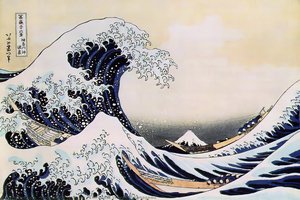
The Great Wave off Kanagawa - Katsushika Hokusai
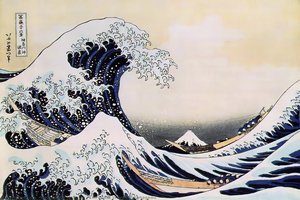 The Great Wave off Kanagawa - Katsushika Hokusai
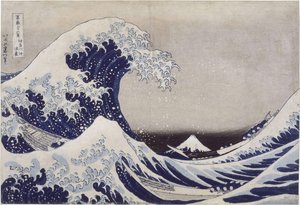
In Katsushika Hokusai’s The Great Wave off Kanagawa , the lines are not merely drawn; they are choreographed . This is not just a composition; it is a dance frozen in time , where the terrifying power of a Prussian blue crest meets the silent, snow-capped stability of Mount Fuji. As part of the celebrated Thirty-six Views of Mount Fuji , this woodblock masterpiece captures the very soul of the ukiyo-e movement—the beauty found within the fleeting, turbulent moments of life.
The way the spray mimics claw-like foam against the vulnerable fishing boats creates a tension that is both breathtaking and rhythmic. For the discerning collector, this piece offers more than historical significance; it offers an atmospheric anchor. What if your living room could hold that same profound balance? What if your walls could breathe with rhythm ? Bringing this iconic vision into your space allows you to invite that same sense of controlled chaos and timeless harmony into your home.
Femenine wave - Katsushika Hokusai
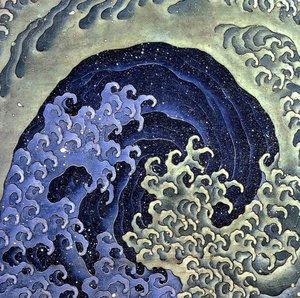 Femenine wave - Katsushika Hokusai
In Feminine Wave by Katsushika Hokusai, we encounter more than a mere seascape; we witness the very pulse of the ocean. This masterpiece stands as a definitive pillar of the Ukiyo-e movement , capturing the ephemeral beauty of the late Edo period through a breathtaking display of motion and color. Hokusai utilizes the striking depth of Prussian blue to sculpt a towering, rhythmic wave that seems to defy gravity, contrasted beautifully by the delicate flight of a bird amidst the spray.
The print’s technical brilliance—characterized by bold outlines and layered washes—creates a profound sense of presence that transcends time. For the discerning interior designer or collector, such a work offers an exquisite way to introduce movement and serenity into a space. Its vibrant blues and white accents provide a sophisticated anchor for modern coastal or minimalist aesthetics, bridging the gap between historical Japanese artistry and contemporary luxury living.
Cranes on pine tree - Katsushika Hokusai
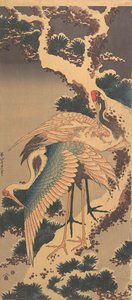 Cranes on pine tree - Katsushika Hokusai
In Cranes on pine tree , Katsushika Hokusai captures more than just a courtship; he invites us into a moment of profound, breathless serenity. As the two elegant cranes move with fluid grace against the weathered bark of an ancient pine, one feels the pulse of a quiet, enduring harmony. This masterpiece from the Ukiyo-e movement serves as a universal mirror of the human spirit, reflecting our deepest yearnings for longevity and resilience amidst the transient nature of life. Through the delicate bokashi gradients of sumi ink on washi paper, Hokusai creates a misty, atmospheric depth that feels both ethereal and grounded. To display such a work is to invite a sense of meditative stillness into your home; it transforms a personal sanctuary into a space for deep reflection, where the rhythmic beauty of the Edo period's finest woodblock traditions can foster a lasting connection with the natural world.
The Sixth Month (Right) - Utagawa Kuniyoshi
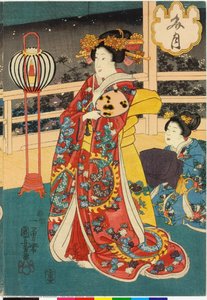 The Sixth Month (Right) - Utagawa Kuniyoshi
In The Sixth Month (Right) by Utagawa Kuniyoshi, we encounter a masterclass in compositional geometry. The artwork is anchored by the central figure of a woman, whose poised silhouette creates a stable vertical axis that balances the soft, organic curves of the autumnal landscape. Kuniyoshi employs a sophisticated interplay of light and shadow—a hallmark of his ability to blend traditional ukiyo-e motifs with Western-inspired depth—to guide the eye through a rhythmic arrangement of lanterns and seasonal foliage.
This structural harmony achieves a sense of timeless perfection, making it an essential pillar in the history of the ukiyo-e movement. There is a profound, quiet strength in this balance that resonates deeply with the principles of modern minimalist design; the way the scene strips away chaos to focus on essential forms and seasonal essence allows it to ground a clean, contemporary aesthetic in any curated space.
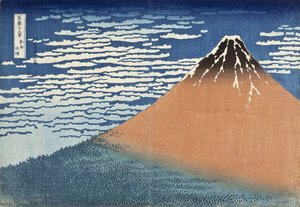
Fuji, Mountains in clear Weather (Red Fuji) - Katsushika Hokusai
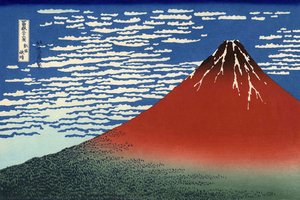 Fuji, Mountains in clear Weather (Red Fuji) - Katsushika Hokusai
In Fuji, Mountains in Clear Weather (Red Fuji) by Katsushika Hokusai, the composition achieves a breathtaking structural harmony through precise geometric interplay. The imposing, triangular silhouette of the mountain creates a powerful vertical anchor, balanced masterfully against the soft, horizontal bands of clouds that drift across the sky. This deliberate use of bold lines and flat planes of color—a hallmark of the Ukiyo-e art movement —evokes a sense of timeless perfection and spiritual stillness. The striking contrast between the mountain's warm, sun-drenched reds and the cool, ethereal blues of the atmosphere captures a moment of quiet grandeur. For the discerning collector or interior designer, this internal balance offers a profound connection to modern minimalist design ; its clean, uncluttered aesthetic provides a grounding element that brings a sense of serene prestige to any contemporary space. It is not merely a landscape, but a masterclass in capturing the eternal essence of nature.
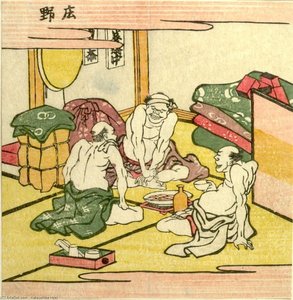
Akasaka, No. 37 - Utagawa Hiroshige
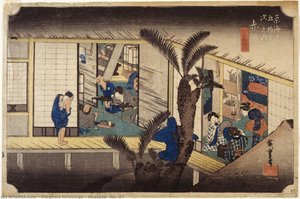 Akasaka, No. 37 - Utagawa Hiroshige
Imagine stepping onto the Tokaido highway during a cool autumn morning, where a soft mist clings to the lush greenery of Akasaka. In Akasaka, No. 37 , Utagawa Hiroshige captures more than a landscape; he preserves a fleeting breath of Edo Japan. This masterpiece utilizes exquisite tonal gradations to evoke the crisp, atmospheric chill of the season, guiding the eye from the intimate gathering of travelers toward the silent, enduring mountains in the distance. The print embodies the very essence of the Ukiyo-e art movement —the delicate interplay between human presence and the ephemeral beauty of nature. For the modern collector, such a work offers a profound sense of stillness. Integrating this serene vista into a contemporary interior provides a meditative focal point, inviting a moment of quiet reflection and bringing the timeless, organic elegance of Japanese history into the heart of the home.
The Imagire Sea Ferry, Maisaka, from the series The Fifty-three Stations of the Tokaido (Gyosho edition) - Utagawa Hiroshige
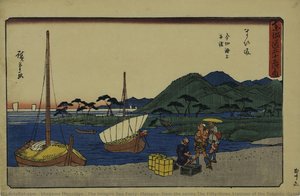 The Imagire Sea Ferry, Maisaka, from the series The Fifty-three Stations of the Tokaido (Gyosho edition) - Utagawa Hiroshige
In the delicate dance of woodblock printing, few masters captured the ephemeral beauty of the floating world as profoundly as Utagawa Hiroshige. His masterpiece, The Imagire Sea Ferry, Maisaka , serves as a poetic window into Edo-period Japan, where the boundary between land and sea blurs under a soft, atmospheric light. The composition breathes with the vitality of a bustling coastal hub; travelers gather near the water's edge, their colorful umbrellas scattered across the beach like vibrant petals amidst the rhythmic ebb of the tide.
To possess this work from the Ukiyo-e movement is not merely to decorate a room; it is to claim an inheritance. It is a handshake across centuries—a true lineage of taste. Through ArtsDot, this museum-grade legacy is brought directly to your walls, transforming your space into a curated sanctuary where every glance is a profound nod to the masters.
Kabuki Actor Ōtani Oniji III as Yakko Edobei - toshusai sharaku
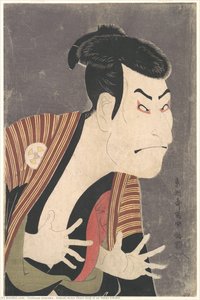 Kabuki Actor Ōtani Oniji III as Yakko Edobei - toshusai sharaku
There is a gaze in Kabuki Actor Ōtani Oniji III as Yakko Edobei by Tōshūsai Sharaku that follows you—not with judgment, but with an unsettling, profound understanding. This isn’t merely a portrait of a Kabuki performer; it is a mirror . Its place among the definitive masterpieces of the Ukiyo-e movement is a testament to its power to make the invisible emotions of the "Floating World" visible.
Sharaku captures a psychological crescendo, utilizing stark, monochromatic contrasts to pull the actor from the shadows. The intense, upward-cast eyes and the dramatic tension of the mouth agape create a visceral presence that seems to leap from the paper, anchored only by the poignant flicker of a red scarf. Now, imagine that gaze in your own curated space. It does not watch you; it reminds you : you are seen. You are part of this enduring, dramatic story.
Early Department from a Daimyo - Utagawa Hiroshige
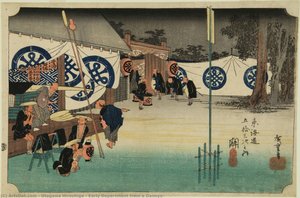 Early Department from a Daimyo - Utagawa Hiroshige
In the delicate interplay of line and atmosphere within Utagawa Hiroshige’s Early Department from a Daimyo , we encounter a profound meditation on the transient nature of existence. This masterpiece serves as a vital window into the "Floating World," where the rigid social hierarchies of the Edo period momentarily dissolve into the shared, rhythmic leisure of a riverside gathering. Through a masterclass in woodblock technique, Hiroshige utilizes muted blues and earthy tones to weave a tapestry of human connection—capturing the tension between the disciplined presence of the samurai and the hedonistic joy of the common folk.
This ability to freeze a fleeting moment of beauty grants the work its enduring place among the Ukiyo-e art movement's greatest achievements. In today’s fast-paced world, the piece’s serene, atmospheric depth offers a much-needed sanctuary, making it a timeless cornerstone for any curated collection seeking to evoke a sense of historical soul and quiet contemplation.
Keishi (Kyoto), Capital - Utagawa Hiroshige
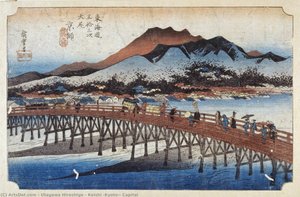 Keishi (Kyoto), Capital - Utagawa Hiroshige
To gaze upon Utagawa Hiroshige’s Keishi (Kyoto), Capital is to step into a moment of profound, rhythmic stillness amidst the bustle of the Edo period. There is a poignant beauty in the way travelers, sheltered by their umbrellas, traverse the bridge, their movement mirrored by the gentle flow of the water below. This masterpiece stands as a cornerstone of the Ukiyo-e art movement because it transcends mere documentation; through the masterful use of bokashi —subtle color gradations—Hiroshige captures the very atmosphere of the "floating world." It is this ability to render the ephemeral, the misty air and the soft light, that defines his unparalleled legacy. At ArtsDot, we believe such evocative history belongs in the modern home. Our exquisite hand-painted reproductions are meticulously crafted to preserve the delicate textures and emotional depth of Hiroshige’s original woodblock prints, allowing you to invite this timeless Japanese elegance into your personal sanctuary.
Conclusion
As the light fades on our exploration of these iconic Ukiyo-e works, we are left with more than just a memory of cresting waves and serene landscapes; we carry the quiet, rhythmic pulse of the floating world within us. These masterpieces do not belong solely to the silent halls of museums or the preserved archives of history. Instead, they exist as living presences, breathing texture and soul into the spaces we call home. To invite an Ukiyo-e work into a contemporary interior is to initiate a profound dialogue between the ephemeral beauty of old Edo and the enduring rhythms of our modern lives. They serve as a sanctuary of line and color, reminding us that even amidst the relentless motion of the present, there is a sacred grace to be found in the fleeting moment. Whether through the dramatic tension of a woodblock print or the delicate stillness of a landscape, these works continue to shape our emotions, refine our aesthetics, and connect us to a shared human heritage. We invite you to deepen this connection and find your own resonance within our full collection , where the artistry of the past meets the elegance of the present.