
The Canvas as Chronicle: Art Beyond Aesthetics
To gaze upon a masterpiece is often to engage in a silent dialogue with the past, yet we frequently overlook the profound role that fine art plays as a primary source of human record. While historians may rely on the dry precision of text, the painter offers something far more visceral: an atmospheric truth. Art, in its highest form, transcends mere decoration; it functions as a sensory archive, capturing the light, the tension, and the very soul of an era. When we study the history of painting, we are not merely observing the evolution of technique or the mastery of pigment, but rather the unfolding narrative of human existence itself.
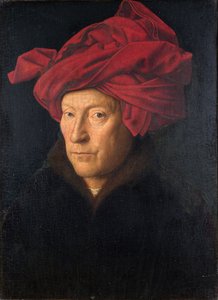
The true power of a canvas lies in its ability to document what words often fail to convey. A portrait does more than record a likeness; it captures the social hierarchy, the fashion, and the psychological weight of a specific moment in time. Whether through the delicate brushwork of a Renaissance master or the heavy, textured impasto of a later movement, these works provide a window into the collective consciousness. For the discerning collector or the dedicated historian, owning a high-quality reproduction is not simply about aesthetic pleasure; it is about possessing a tangible fragment of that enduring human story.
Witness to Revolution: Visualizing Social Upheaval and Conflict
 Framing the Past: How Iconic Artworks Documented History's Greatest Revolutions
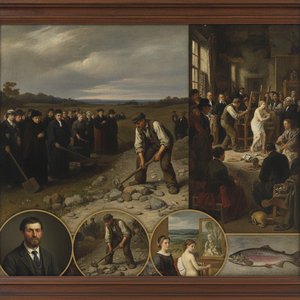
The Canvas of Conflict: Visualizing Social Upheaval in 19th-Century Europe Incident of the Revolution of 1848 in Paris in the Court of the Louvre Nicolas-Edward Gabé’s "Incident of 1848" captures a dramatic Parisian Revolution scene in muted tones. O...
History is rarely a period of static peace; rather, it is defined by the rhythmic pulse of unrest and the dramatic shifts of political power. During the nineteenth century, Europe was a continent in the throes of profound transformation, where the streets of Paris and the corridors of imperial power became stages for intense human struggle. It is within this crucible of conflict that art becomes an indispensable witness. Works such as Nicolas-Edward Gabé’s Incident of 1848 serve as more than mere depictions of revolt; they are captured heartbeats of national pride and mounting tension.
In these canvases, the artist utilizes muted tones and heavy textures to evoke the very atmosphere of uncertainty that hung over the populace. We see the movement of the crowd, the smoke of the barricades, and the visceral energy of urban riots. Even masters like Honoré Daumier utilized monochrome palettes to invite viewers into streetscapes defined by motion and societal fracture. These paintings provide a depth of emotion and an immediacy that written chronicles often lack, allowing us to feel the weight of the cobblestones and the heat of the mounting rage. To bring such works into a modern space via a hand-painted oil reproduction is to invite the gravity of history into one's own surroundings.
The Scriptorium and the Seal: Documents as Tangible History
 Canvas of Time: How Masterpieces Capture History's Most Significant Documents
The Scriptorium's Legacy: Illuminated Manuscripts as Sacred Records north western italy scriptorium Origins and the Dawn of Illuminated Script Within the shadowed halls of medieval monasteries, a remarkable tradition blossomed – the art of the script...
While we often celebrate the grand scale of oil paintings, the documentation of history also resides in the intimate, meticulously transcribed records of the scribe. In the shadowed halls of medieval monasteries, the tradition of the scriptorium served as the beating heart of intellectual life. Here, the art of the illuminated manuscript flourished—a convergence of faith, scholarship, and artistry where every stroke of ink was a sacred act of preservation.
This meticulous record-keeping extended into the legal and administrative realms of the early modern period. Consider the remarkable work of Luis de Porras, a Spanish public notary in 1592 Seville. His documents are not merely bureaucratic relics; they are tangible links to a pivotal era when figures like Miguel de Cervantes Saavedra were navigating the legal complexities of the Spanish Habsburg monarchy. Through elegant Latin calligraphy and the rich, dark tones of iron gall ink on aged parchment, these records offer an intimate window into the legal world of the sixteenth century. Such artifacts remind us that history is etched not only in grand portraits but also in the precise, beautiful traces of the pen.
Mapping the Known World: Cartography and the Evolution of Geography
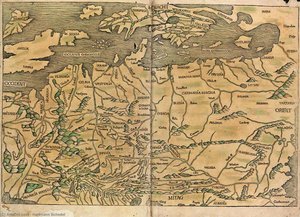 Illustration from the Nuremberg Chronicle
Explore Hartmann Schedel’s intricate 1493 Nuremberg Chronicle map! A stunning medieval illustration of Europe, showcasing cartography & historical detail. #arthistory #medievalmap
The evolution of human knowledge is perhaps most visibly charted through the history of cartography. To look upon a map from a bygone era is to witness a world in transition. A profound example is found in the work of Hartmann Schedel, whose 1493 Nuremberg Chronicle stands as a monumental achievement of the late medieval period. Schedel was not merely a historian but a pioneer who utilized the revolutionary potential of the printing press to create a sweeping panorama of geography and history.
His intricate illustrations and hand-colored woodcuts provided a visual representation of the world that shaped European consciousness during the rise of humanism. These maps are much more than navigational tools; they are artistic expressions of how humanity perceived its place in the cosmos. They document the expanding horizons of exploration and the shifting boundaries of empires, capturing a moment when the known world was being redrawn with every new voyage. The artistry of early cartography remains a testament to the human desire to frame, understand, and ultimately master the unknown.
Capturing Vanishing Eras: The Artist as Visual Historian
 Capturing a Vanishing World: The 25 Best Artworks by George Catlin
Introduction Imagine stepping into a time machine where the canvas breathes with the raw, untamed energy of the American frontier. To look upon the works of George Catlin is not merely to view paintings, but to witness a vanishing world captured in t...
There are moments in history when the urgency of documentation is driven by the realization that a culture is on the brink of profound transformation. In such times, the artist becomes a visual historian, driven by a beautiful and frantic necessity to capture what is about to be lost. This is profoundly evident in the works of George Catlin, who moved through the landscapes of the American frontier with a mission to document the indigenous cultures of the Missouri River territories before the dust of westward expansion could settle over them.
Catlin’s canvases breathe with the raw, untamed energy of a vanishing world. His work is not merely a collection of landscapes but a vital record of a culture in flux. Similarly, the nineteenth-century artist Thomas Baines acted as a chronicler of Southern Africa and Australia, transforming from a humble coach painter into one of the most important visual documentarians of his era. These artists understood that their brushes were tools of preservation, ensuring that the vibrant traditions, landscapes, and peoples they encountered would remain etched in the collective memory long after the physical realities had changed.
Preserving the Legacy: The Role of Archives and Museums in Art History
 China Modern and Contemporary Art Document Research Center
A Beacon of Chinese Artistic Heritage: Exploring the China Modern and Contemporary Art Document Research Center Located in the vibrant heart of Beijing, the China Modern and Contemporary Art Document Research Center stands as a testament to China’s d...
The survival of our shared human narrative depends upon the institutions dedicated to safeguarding the past. From the Archivo General de Simancas, founded by Philip II in 1540, to the Archivos Estatales in Madrid, these repositories serve as silent witnesses to centuries of dynastic intrigue and cultural evolution. These are not merely buildings filled with paper; they are living chronicles that bridge the medieval foundations of nations to their contemporary identities.
In a similar vein, institutions like the China Modern and Contemporary Art Document Research Center in Beijing act as engines for understanding the evolution of artistic heritage, tracing journeys from the Song Dynasty through to the present day. These archives and museums provide the essential context that allows us to appreciate the true value of art. They remind us that every painting, every manuscript, and every map is a thread in a much larger tapestry. At ArtsDot.com, we honor this tradition of preservation by offering meticulous, hand-painted reproductions of these canonical masterpieces, ensuring that the profound beauty and historical significance of the world's greatest artworks can continue to inspire and educate generations to come.