

 Pregledaj u prostoru
 Pošalji
 Podeli
 Detalji o delu

 Преузми
 Slični predmeti
 Rendgenski snimak
 Slajdovi
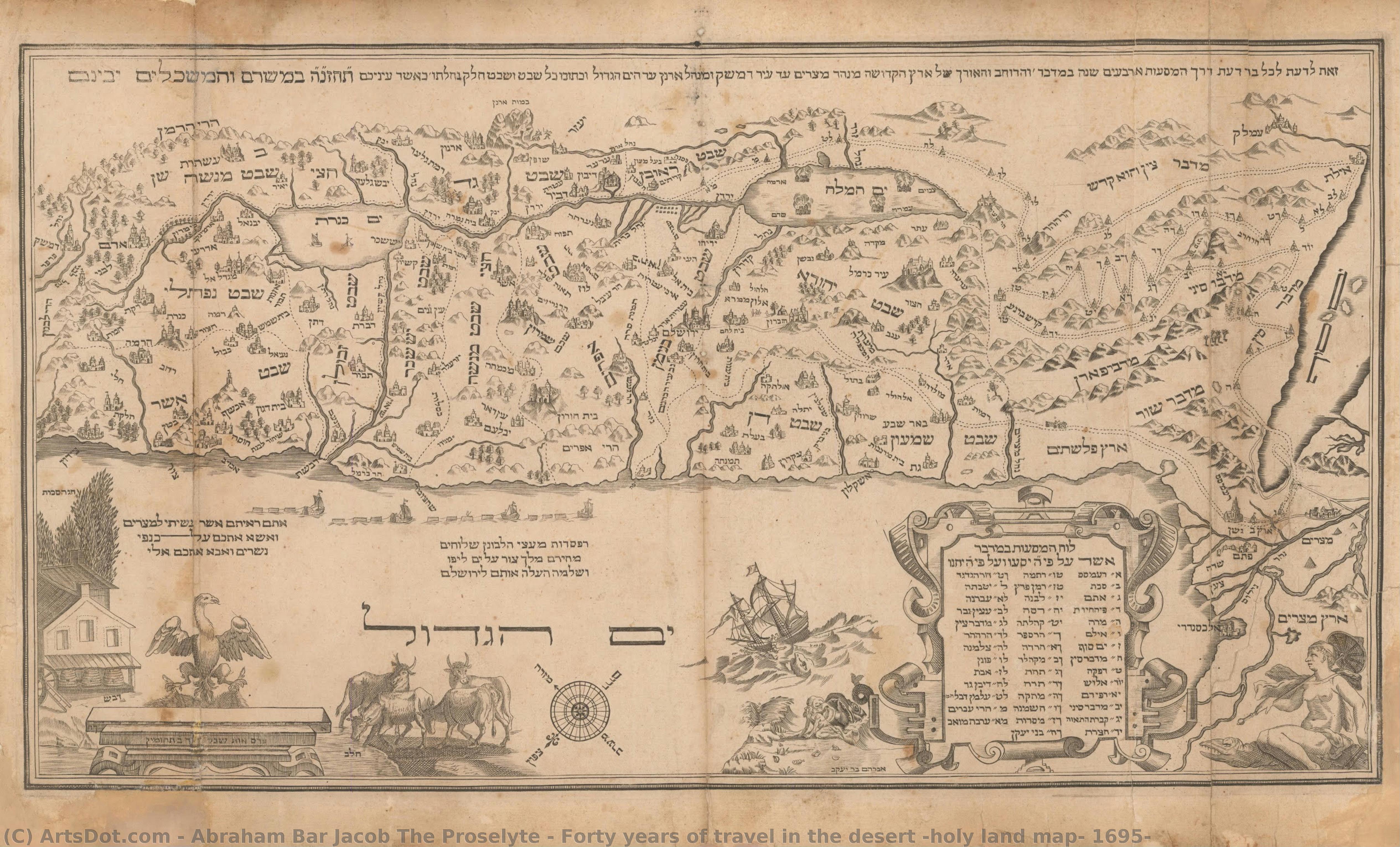
Forty years of travel in the desert (holy land map, 1695)
 Engraving
- Baroque
 1695
1695- Early Modern
 26.0 x 48.0 cm
 Nacionalna biblioteka Izraela
 Pročitaj više
Kupite digitalnu sliku visoke rezolucije i poboljšanog kvaliteta, koja je znatno superiornija od onoga što vidite u online prikazu.
Svaka datoteka je pedantno pripremljena od strane naših stručnjaka koristeći napredne alate i profesionalnu ručnu retušu. Osiguravamo da svaka slika ima izuzetnu oštrinu, preciznu reprodukciju boja i fine detalje.
Konačna datoteka se dostavlja putem e-pošte u roku od 72 sata, optimizovana za neposrednu upotrebu u profesionalnim, izdavačkim i štamparskim okruženjima. To je isti kvalitet kojem veruju vrhunski studiji dizajna, izdavači i galerije.
Digitalna slika
Preuzmite datoteku visoke rezolucije za ličnu upotrebu, štampanje i kreativne projekte. ( Kupi print Kupi ručno naslikanu sliku)
Uključeno uz svaku porudžbinu digitalne slike
Profesionalna digitalna isporuka, zagarantovana
Kada odaberete ArtsDot.com, ne dobijate samo sliku – vi primate profesionalno unapređeno digitalno umetničko delo, izrađeno sa najvećom preciznošću i uz garanciju zadovoljstva. Evo svega što automatski dolazi uz vašu porudžbinu:

Brza dostava putem e-pošte
Vaša digitalna slika visoke rezolucije biće vam poslata putem e-pošte u roku od 72 sata od poručivanja – spremna za trenutnu upotrebu.

Digitalna datoteka unapređena veštačkom inteligencijom
Vaše umetničko delo je profesionalno optimizovano korišćenjem naprednih AI alata i ručne obrade, čime se osiguravaju maksimalni detalji, oštrina i preciznost boja.

Besplatna ponovna isporuka doživotno
Slučajno ste obrisali ili izgubili svoju datoteku? Ne brinite – poslaćemo vam je ponovo u bilo kom trenutku, potpuno besplatno.

Bez troškova uvoza – zauvek
Uživajte u svojim umetničkim delima trenutno, bez carine, dažbina ili troškova dostave – digitalni download je uvek bez poreza.

Garancija vernosti boja
Uz pomoć profesionalnih alata i upravljanja bojama, osiguravamo da vaša digitalna slika što vernije odražava originalne boje.

Garancija zadovoljstva u roku od 100 dana
Ako niste zadovoljni svojom digitalnom slikom, revidirat ćemo je ili vratiti 100% novca u roku od 100 dana – bez ikakvih pitanja.

100% garancija povrata novca
Niste zadovoljni? Obezbedite pun povrat novca u roku od 100 dana od trenutka kada ste primili svoju digitalnu datoteku – bez suvišnih pitanja.

Popusti na velike porudžbine
Kupite 3 slike, uštedite 10% - Kupite 5 slika, uštedite 15% - Kupite 10+ slika, uštedite 20%. Odlično za kreativne projekte, galerije i agencije.
A Cartographic Journey Through Faith and History
In the delicate lines of Abraham Bar Jacob’s 1695 masterpiece, "Forty years of travel in the desert," we find much more than a mere geographical record; we encounter a profound spiritual odyssey etched into copper. This exquisite map of the Holy Land serves as a visual chronicle of the Exodus, guiding the viewer through the sacred landscapes of Israel with a precision that marries cartographic skill with deep religious devotion. As one gazes upon the intricate details, the terrain unfolds not just as earth and water, and stone, but as a stage for the divine drama of the Israelites. The artist masterfully captures the tension between the physical journey and the spiritual transformation, presenting a world where every mountain range and riverbed holds the weight of biblical memory.
The composition is a breathtaking tapestry of topographical detail and symbolic storytelling. To navigate this map is to witness the duality of the desert experience—the peril of the past and the promise of the future. The artist has meticulously rendered the destruction of the sinful cities, such as Sodom and Gomorrah, with visible flames that serve as a haunting reminder of divine judgment. Yet, amidst these scenes of catastrophe, there is a vibrant pulse of life; the map breathes through the inclusion of Hebrew elements, from the industrious presence of beehives to the gentle grazing of cows. This juxtaposition of destruction and vitality creates a complex emotional landscape, inviting the collector to contemplate the eternal cycle of wandering, hardship, and eventual arrival in a promised land.
The Mastery of the Copper Engraver
Technically, this work stands as a testament to the exceptional skill of Abraham Bar Jacob, a man whose very identity was defined by a transformative journey from Christianity to Judaism. Working on a modest copper medium of 26 x 48 cm, the artist achieved an extraordinary level of density and clarity. The medium of copper engraving allows for incredibly fine, hair-like lines that define the rugged topography of the Dead Sea, the Sea of Galilee, and the Hula Lake with remarkable sharpness. Each stroke is deliberate, contributing to a sense of texture that makes the mountains feel formidable and the roads feel traversable. For the discerning art lover, the technical brilliance lies in how Bar Jacob manages to pack such an immense amount of narrative information into a relatively small space without sacrificing the elegance of the aesthetic.
For interior designers and collectors of historical fine art, this piece offers a sophisticated focal point that transcends simple decoration. It possesses a scholarly gravity that complements classical or academic decor, yet its intricate details provide endless discovery for anyone seated before it. A high-quality reproduction of this map brings with it an atmosphere of intellectual curiosity and timelessness. Whether placed in a private library, a study, or a curated gallery space, the work acts as a window into the 17'th century, offering a sense of connection to the rich, multicultural history of Amsterdam and the enduring spiritual legacy of the Holy Land.
Srodna umetnička dela
Biografija umetnika
A Convert’s Vision: The Life and Art of Abraham Bar Jacob
The story of Abraham Bar Jacob is one steeped in transformation, a compelling narrative of religious conversion woven into the fabric of 17th-century Amsterdam's vibrant artistic landscape. Born in Berlin around 1669 as a Christian pastor, his journey took an unexpected turn when he embraced Judaism, adopting the name by which we know him today – Abraham Bar Jacob, meaning “Abraham, son of Jacob.” This profound shift wasn’t merely a change of faith; it fundamentally altered his artistic trajectory and imbued his work with a unique perspective. Little is known about his early life or training before arriving in Amsterdam, adding an air of mystery to the origins of his considerable skill as a copper engraver.
Amsterdam and the Haggadah: A Flourishing Career
Amsterdam in the late 17th century was a haven for Sephardic Jews fleeing persecution, a bustling center of trade, intellectual life, and artistic production. It was within this dynamic environment that Bar Jacob established himself as a respected artist. He quickly became known for his meticulous engravings, often employed to illustrate books printed by prominent Amsterdam publishing houses. However, it is his collaboration on the 1695 Amsterdam Haggadah that cemented his place in art history. This wasn’t simply an act of commercial artistry; it was a deeply personal undertaking. The Haggadah, the text recited during the Passover Seder, holds immense spiritual significance for Jewish people, recounting the story of the Exodus from Egypt.
Bar Jacob's contribution extended beyond mere illustration. He created a series of intricate engravings that adorned the pages, but his most striking achievement was the inclusion of a detailed map of Palestine rendered with Hebrew lettering. This wasn’t just a geographical depiction; it was a visual expression of longing for the Holy Land and a testament to his newfound faith. The map is remarkable for its accuracy—considering the limitations of contemporary cartography—and its symbolic weight, representing both historical connection and future aspiration.
Beyond the Haggadah: Diverse Artistic Expressions
While the Amsterdam Haggadah remains his most celebrated work, Bar Jacob’s artistic output was surprisingly diverse. He produced title pages for various books, showcasing his skill in decorative design and typography. Perhaps one of his more unusual commissions was an amulet created for women in childbirth, a testament to the practical role art played in everyday life during this period. This amulet, likely intended to offer protection during a vulnerable time, demonstrates his ability to adapt his style to suit different needs and audiences.
Another intriguing project was a wall calendar spanning 130 years, adorned with baroque illustrations. The sheer scale of such an undertaking speaks to Bar Jacob’s ambition and dedication. These calendars weren't merely functional timekeeping devices; they were works of art in their own right, reflecting the aesthetic sensibilities of the era.
A Legacy Marked by Faith and Art
In his later years, a curious phenomenon emerged: Bar Jacob began to obliterate or conceal his signature from his work. The reasons for this remain speculative, but it’s widely believed to be connected to his status as a convert. In a society where religious identity was often closely tied to artistic patronage and recognition, he may have feared discrimination or sought to distance himself from potential scrutiny. Regardless of the motivation, this act adds another layer of complexity to his story.
Abraham Bar Jacob’s legacy is that of an artist who seamlessly blended faith and artistry. His work offers a rare glimpse into the world of 17th-century Jewish life in Amsterdam, reflecting both the challenges and opportunities faced by converts. He wasn't simply replicating existing styles; he was creating something new—a unique visual language informed by his personal journey and deeply rooted in religious tradition. His engravings are not merely decorative objects; they are windows into a soul grappling with identity, belonging, and the enduring power of belief. The Amsterdam Haggadah, in particular, stands as a testament to his skill and a powerful symbol of Jewish resilience and cultural continuity.
abraham bar jacob the proselyte
1669 - 1730 , Germany
Kratke činjenice
- Artistic Movement Or Style: Baroque Illustration
- Date Of Birth: 1669
- Date Of Death: 1730
- Full Name: Abraham Bar Jacob the Proselyte
- Nationality: German-Jewish
- Notable Artworks:
- Amsterdam Haggadah
- Holy Land maps
- Amulet for childbirth
- Place Of Birth: Berlin, Germany