

![Poedua [poetua], Daughter Of Oreo, Chief Of Ulaietea, One Of The Society Isles — John Webber](/media/artworks/images-full/7e/7a/7e7a27a084a9e7a9d077f93d051c9c72.jpg)
 Pregledaj u prostoru
 Pošalji
 Podeli
 Detalji o delu

 Преузми
 Slični predmeti
 Rendgenski snimak
 Slajdovi
 Statistika
Poedua [Poetua], daughter of Oreo, chief of Ulaietea, one of the Society Isles


 Pročitaj više
Ručno rađena uljana reprodukcija
Ručno oslikano uljanim bojama na platnu u dimenzijama i okviru po vašem izboru, izrađeno po porudžbini od strane naših umetnika. ( Pređi na štampu Pređi na digitalnu sliku)




P118B $10

P118H $10

P118W $10

P438Z $10

P508JH $12

P508YH $12

P805H $10

P805Z $10

P919BZ $10

P919G $10

P919XJ $10

P959ZH $10

P968JZ $12

W106C $8

W218G $10

W218JH $8

W218Y $10

W307PJ $10

W316G $10

W316PJ $8

W316Y $10

W398PJ $8

W4111J $10

W500HY $15

W500JH $15

W692G $12

W849H $8

W940BG $15

W953PJ $8




Izaberite jednu od naših unapred definisanih veličina koje odgovaraju originalnim proporcijama umetničkog dela.

Можете унети сопствене димензије како бисте прилагодили дело одређеном оквиру или простору. Ако одабрана величина не одговара пропорцијама оригинала, слика ће бити исечена или проширена додатним елементима који се ручно насликавају. Дигитални prikaz ће вам бити послат на одобрење пре почетка производње.
Имајте на уму да преглед на екрану не одражава стварно исецање или проширење. Само приказ (mockup) ће тачно приказати коначну композицију.
Иако су доступне прилагођене величине, препоручујемо да одаберете димензију из дефинисане листе како бисте сачували оригиналне пропорције.
Nakon narudžbine, tim ArtsDot.com će klijentu putem e-pošte poslati uputstva i dostaviti prikaz predloženog rešenja
Isporuka širom sveta () za 3/4 nedelje umesto uobičajenih 5 nedelja. (10 септембар). Bez kompromisa po pitanju kvaliteta.

Besplatna ekspresna dostava širom sveta

Visokokvalitetno laneno platno

Kompletno osiguranje transporta

Garancija povraćaja carine i uvoznih dažbina

Garancija vernosti boja

Politika povraćaja u roku od 100 dana (isključivo u slučaju nedostataka)

Garancija povrata novca od 100%

Popust pri grupnoj kupovini
 Opcija sa staklom dostupna je samo za dimenzije manje od 110 cm

Poedua [Poetua], daughter of Oreo, chief of Ulaietea, one of the Society Isles
Tehnika reprodukcije
Dimenzije reprodukcije
-


Konačna cena
$ 263
A Glimpse of Paradise Lost: Poedua’s Portrait from Cook's Third Voyage
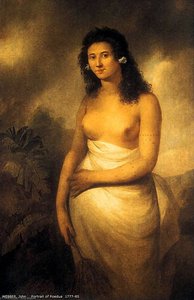
John Webber’s 1785 portrait of Poedua, daughter of Oreo, chief of Ulaietea in the Society Islands, transcends a simple likeness; it’s a poignant intersection of cultures, a carefully constructed narrative woven with threads of colonial ambition, political maneuvering, and the quiet dignity of a young woman caught between worlds. This remarkable painting, now housed at Te Papa in Wellington, offers a rare and unsettling window into the complexities of Captain James Cook's third Pacific voyage – a journey marked by both scientific discovery and profound cultural disruption.
Webber’s artistic approach is distinctly neoclassical, reflecting the prevailing aesthetic sensibilities of London society at the time. The composition itself is meticulously balanced: Poedua occupies a central position, her posture conveying an air of restrained grace despite the circumstances surrounding her depiction. Her gaze, directed slightly off-camera, suggests both awareness and a subtle melancholy – a quiet acknowledgement of her displacement. The tapa cloth draped around her shoulders, adorned with intricate patterns, speaks to her chiefly status and the rich traditions of her island home, while the fly whisk, a symbol of leadership and authority, subtly reinforces this narrative.
The Shadow of Hostage: Context within Cook’s Expedition
The story behind Poedua's portrait is inextricably linked to the fraught events that unfolded during Cook’s visit to Raiatea in 1777. Following a desertion by two crew members, Captain Cook, seeking to secure their return and maintain order, took the audacious step of holding Oreo’s daughter hostage alongside her husband and brother. This act, while seemingly pragmatic, was deeply unsettling for both the Māori population and Cook's own men, who had witnessed firsthand the potential for violence during previous encounters. Webber seized this opportunity – a delicate balance between observation and manipulation – to create this arresting image.
The painting’s creation occurred not within the lush confines of Ulaietea, but aboard the HMS Resolution, a stark contrast that subtly underscores the themes of displacement and cultural intrusion. The limited palette—primarily whites, creams, and muted browns—further emphasizes this sense of confinement and detachment. It's a deliberate choice, highlighting the artificiality of the portrait as a representation, rather than an authentic portrayal of Poedua’s life.
Symbolism and the Unspoken Narrative
Beyond the immediate depiction, the painting is laden with symbolic weight. The pregnant state of Poedua adds another layer of complexity to her story – a reminder of the potential for disruption and change within a society grappling with colonial expansion. Her pose, reminiscent of classical depictions of goddesses or virtuous women, elevates her status while simultaneously hinting at her vulnerability. The background, deliberately vague, avoids specific details of Ulaietea, suggesting a deliberate erasure of her cultural identity in favor of a European aesthetic.
The inclusion of the tapa cloth and fly whisk are particularly significant, serving as visual anchors to Poedua’s heritage and asserting her position within the traditional social hierarchy. However, even these symbols are presented through a European lens – a neoclassical drape rather than a naturally flowing garment, a formal fly whisk instead of a more organically crafted tool. This subtle manipulation speaks volumes about the power dynamics at play during this historical encounter.
A Legacy of Ambiguity: Reflections on Colonial Art
Poedua’s portrait remains a powerful and unsettling work of art, prompting us to consider the ethical implications of colonial representation. It's not simply a beautiful depiction of a young woman; it’s a testament to the complexities of cultural exchange, the manipulation of power, and the enduring legacy of colonialism. Webber’s skill as an artist is undeniable, but his role as a chronicler of a fraught encounter demands critical reflection. The painting serves as a poignant reminder that even seemingly objective representations can be deeply implicated in historical narratives – revealing both what was seen and what was deliberately obscured.
Srodna umetnička dela
Biografija umetnika
Early Life and Education
- Birth and Family: John Webber was born on October 6, 1751, in London, United Kingdom. His father, Abraham Wäber, was a Swiss sculptor who anglicized his name upon moving to London and marrying Mary Quant in 1744.
- Early Training: Webber received his initial education in Bern, Switzerland, where he lived with his paternal aunt from the age of six. He began his artistic training as an apprentice to Johann Ludwig Aberli, a prominent landscape painter.
- Studies in Paris: From 1770, Webber continued his studies at the Académie Royale in Paris for four years, focusing on drawing and oil painting. This period honed his skills and broadened his artistic horizons.
- Return to London: After completing his education abroad, Webber returned to London and further refined his techniques at the Royal Academy.
The Pacific Expedition with Captain Cook
- Appointment as Artist: In 1776, Webber was selected as the official artist for Captain James Cook's third voyage of discovery in the Pacific. This opportunity arose through a recommendation from Daniel Solander, a botanist who had accompanied Cook on his first voyage.
- Voyage and Documentation: From 1776 to 1780, Webber meticulously documented the landscapes, people, and cultures encountered during the expedition. He created numerous drawings and watercolors of scenes in New Zealand, Hawaii (then known as the Sandwich Islands), Alaska, and other Pacific locations.
- First European Contact with Hawaii: Webber became the first European artist to make contact with Hawaii, producing significant visual records of the islands and their inhabitants. His watercolor landscapes of Kauai and Hawaii Island, including Kealakekua Bay and Kowroaa village, are particularly notable.
- Portraits of Indigenous Peoples: Webber also created portraits of prominent figures like Tereoboo, King of Owyhee, offering valuable insights into the appearance and customs of Pacific Islanders.
- Illustrations for Admiralty Account: His work was crucial in illustrating the British Admiralty's official account of the expedition, published in 1784. These engravings brought the discoveries of Cook’s voyage to a wider audience.
Career and Artistic Style
- Exhibitions at the Royal Academy: Following his return to England in 1780, Webber exhibited around 50 works at the Royal Academy between 1784 and 1792. His paintings showcased both landscapes and figures.
- Recognition and Membership: He was elected an associate of the Royal Academy in 1785 and a full member in 1791, demonstrating his growing reputation within the British art world.
- Landscape Focus with Figurative Elements: Webber’s artistic style primarily focused on landscapes, often incorporating figures to add narrative or scale. A notable example is “A Party from H.M.S. Resolution shooting sea horses,” exhibited in 1784.
- Influence of Earlier Masters: While his work reflects the influence of earlier landscape painters like Aberli, Webber developed a unique style characterized by detailed observation and accurate representation of natural environments.
Legacy and Collections
- Historical Significance: John Webber’s artwork provides invaluable visual documentation of Captain Cook's voyages and the first European encounters with Pacific cultures. His images offer a unique perspective on 18th-century exploration and cultural exchange.
- Museum Holdings: His works are held in numerous prestigious collections worldwide, including the Anchorage Museum of History and Art (Alaska), the Bishop Museum (Honolulu), the British Museum (London), the National Maritime Museum (London) ,the Bern Historical Museum (Switzerland), and the San Antonio Museum of Art.
- Enduring Impact: Webber’s paintings continue to be studied by art historians, anthropologists, and scholars interested in the history of exploration, Pacific cultures, and 18th-century art. His detailed depictions offer a glimpse into a pivotal period of global interaction.
- Death and Remembrance: John Webber died on May 29, 1793, leaving behind a significant artistic legacy that continues to resonate today.
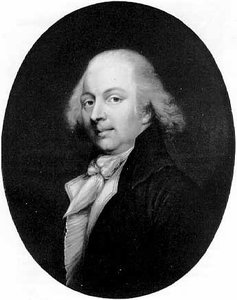
John Webber
1751 - 1793 , United Kingdom
Osnovne informacije
- Artistic Movement Or Style: Landscape, Portraiture
- Artists Who Influenced This Artist: ['Aberli']
- Date Of Birth: October 6, 1751
- Date Of Death: May 29, 1793
- Full Name: John Webber
- Nationality: English
- Notable Artworks:
- Ship Cove
- Cook's Portrait
- Poedua portrait
- Place Of Birth: London, UK
Povezani članci
Francis Ferdinand Maurice Cook: A Study in Victorian Aestheticism & Landscape Evolution
Explore the captivating art of Sir Francis Ferdinand Maurice Cook – a British artist bridging Victorian traditions & Aestheticism. Discover his landscapes, collection history, and unique style. Expert analysis for collectors.

25 Remek-dela Džona Konstebla: Lepota Engleske na Platnu | ArtsDot
Uronite u svet Džona Konstebla! Otkrijte 25 remek-dela engleskog pejzaža, romantizma i seoske idile. Kupite reprodukcije slika vrhunskog kvaliteta za dekoraciju enterijera na ArtsDot.com.

25 Remek-dela Džona Singera Sargenta: Portreti Elegancije i Svetlosti | ArtsDot
Uronite u svet Džona Singera Sargenta! Otkrijte 25 remek-dela impresionizma i realizma, od portreta Madame X do fascinantnih akvarela. Inspiracija za dekoraciju enterijera & luksuzne reprodukcije slika na ArtsDot.com.
Gwen John: Intimacy, Modernity & the Quiet Power of Welsh Portraiture
Explore the captivating world of Gwen John, a pioneering Welsh artist renowned for her intimate portraits & subtle style. Discover her life, legacy, and how to bring her timeless beauty into your home with ArtsDot.
Howard Cook: American Regionalism's Pursuit of Artistic Authenticity
Explore the life & art of Howard Cook, a pivotal figure in American Regionalism. Discover his stunning woodcuts, New Deal murals, and evolution from Expressionism – a deep dive for art enthusiasts.