

![Grande Cascata Da Tijuca [great Tijuca Waterfall] — Manuel José De Araújo Porto-alegre, Baron Of Santo Ângelo](/media/artworks/images-full/03/5f/035f1767f85479efb3e5ed5b265577d9.jpg)
 Pregledaj u prostoru
 Pošalji
 Podeli
 Detalji o delu

 Преузми
 Slični predmeti
 Rendgenski snimak
 Slajdovi
Grande cascata da Tijuca [Great Tijuca Waterfall]
 1833
1833 65.0 x 81.0 cm
 Pinacoteca do Estado de São Paulo
 Pročitaj više
Giclee štampa / Umetnički otisak
Giclée štampa ili print na platnu muzejskog kvaliteta uz brzu proizvodnju i fleksibilne opcije završne obrade. ( Kupi ručno naslikanu sliku Kupi digitalnu sliku)




































Izaberite jednu od naših unapred definisanih veličina koje odgovaraju originalnim proporcijama umetničkog dela.

Možete uneti sopstvene dimenzije kako biste umetničko delo prilagodili specifičnom okviru ili prostoru. Ako odabrani format ne odgovara proporcijama originalne slike, mi ćemo ili iscrtati deo dela ili proširiti sliku pomoću ogledane ivice ili jednobojnog popunjavanja. Digitalni prikaz će vam biti poslat na odobrenje pre početka proizvodnje.
Imajte na umu da pregled na ekranu ne odražava stvarno iscrtavanje ili proširivanje. Samo će prikaz (mockup) precizno pokazati finalnu kompoziciju.
Iako su prilagođene dimenzije dostupne, preporučujemo da odaberete dimenziju sa unapred definisane liste kako biste očuvali originalne proporcije.
Dostava širom sveta () za 2 nedelje umesto uobičajenih 4/5 nedelja. (5 септембар)

Besplatna ekspresna dostava širom sveta

Visokokvalitetno laneno platno

Kompletno osiguranje transporta

Garancija povraćaja carine i uvoznih dažbina

Garancija vernosti boja

Politika povrata u roku od 60 dana (samo u slučaju nedostataka)

Garancija povrata novca od 100%

Popust pri grupnoj kupovini
 Opcija sa staklom dostupna je samo za dimenzije manje od 110 cm

Grande cascata da Tijuca [Great Tijuca Waterfall]
Giclee štampa / Umetnički otisak
Dimenzije reprodukcije
-


Konačna cena
$ 62
Srodna umetnička dela






Biografija umetnika
Manuel José de Araújo Porto-Alegre, Baron of Santo Ângelo: A Life in Art and Letters
Early Life and Education
Born on November 29, 1806, in Rio Pardo, Brazil, Manuel José de Araújo Porto-Alegre, Baron of Santo Ângelo was a pivotal figure in 19th-century Brazilian art and culture. His early life demonstrated a strong inclination towards the arts, leading him to pursue formal training at the Imperial Academy of Fine Arts in Rio de Janeiro. He studied under the tutelage of Jean-Baptiste Debret, a French painter who played a crucial role in establishing artistic education in Brazil.
Artistic Career and Influences
Porto-Alegre’s artistic career flourished within the context of Romanticism, a movement that prioritized emotion, imagination, and individualism. He became renowned for his landscapes and portraits, which often captured the essence of Brazilian life and scenery. His work was deeply influenced by his travels to Europe, particularly Italy, where he encountered Gonçalves de Magalhães, another prominent Brazilian poet. This exposure broadened his artistic horizons and contributed to his nationalistic approach.
Key Artistic Contributions
- Landscapes: Porto-Alegre’s landscapes often depicted the natural beauty of Brazil, showcasing lush vegetation, dramatic waterfalls, and expansive vistas.
- Portraits: His portraits were characterized by their realism and attention to detail, capturing the personalities and social standing of his subjects.
- Literary Works: Beyond painting, Porto-Alegre was a prolific writer. His epic poem, “Colombo”, stands as a testament to his nationalistic fervor and literary talent.
Engagement with Brazilian Romanticism
Porto-Alegre actively participated in shaping the Romantic movement in Brazil through his contributions to influential magazines such as Niterói (1836) and Guanabara (1849). These publications served as platforms for disseminating Romantic ideals and fostering a sense of national identity.
Major Achievements and Legacy
Throughout his multifaceted career, Porto-Alegre excelled not only as an artist and writer but also as a politician, journalist, architect, caricaturist, historian, and art critic. This diverse range of pursuits underscores his intellectual curiosity and commitment to cultural development. His legacy continues to influence Brazilian art and literature, solidifying his place as a significant figure in the nation’s history.
Historical Significance
Manuel José de Araújo Porto-Alegre played a vital role in establishing a distinctly Brazilian artistic identity during the 19th century. His work reflected the social, political, and cultural transformations of his time, contributing to the formation of national consciousness. His contributions extended beyond the realm of art, encompassing literature, journalism, and politics, making him a true Renaissance man of Brazil.
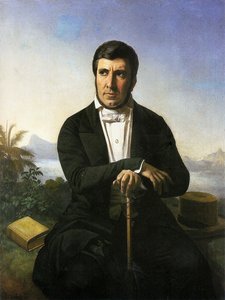
manuel josé de araújo porto-alegre, baron of santo ângelo
1806 - 1879 , Brazil
Osnovne informacije
- Birth Date: November 29, 1806
- Birth Place: Rio Pardo do Sul, Brazil
- Death Date: 1879
- Influenced By: ['Jean-Baptiste Debret']
- Movement: Romanticism
- Name: Manuel José de Araújo Porto-Alegre, Baron of Santo Ângelo
- Nationality: Brazilian
- Notable Works: ['Colombo']

