

 Pošalji
 Podeli
 Detalji o delu

 Преузми
 Slični predmeti
 Slajdovi
 Statistika
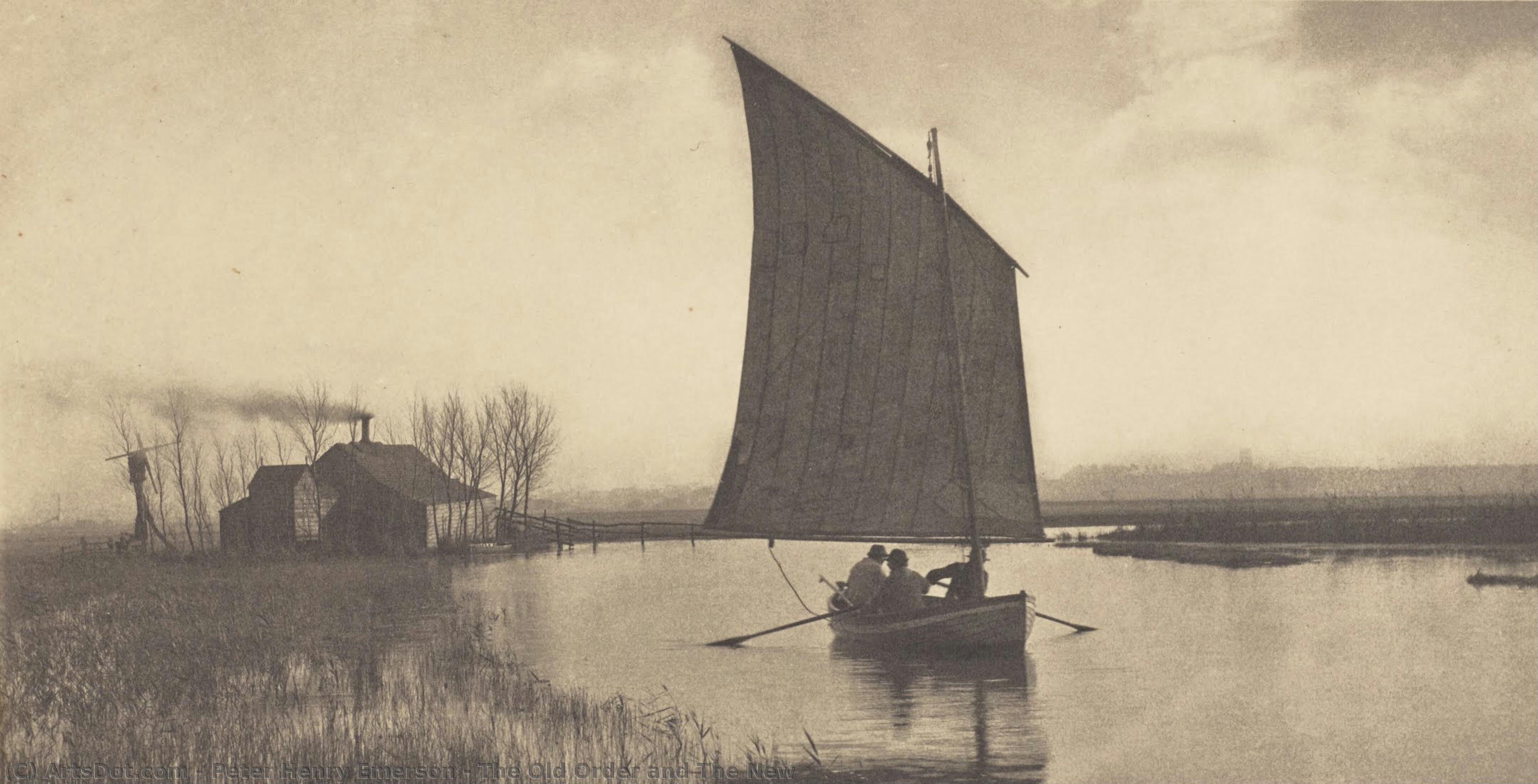
The Old Order and The New
 Black and White Photography
- Photo
- Naturalism
 1886
1886- 19th Century
 12.0 x 23.0 cm
 J. Paul Getty Museum
 Pročitaj više
Kupite digitalnu sliku visoke rezolucije i poboljšanog kvaliteta, koja je znatno superiornija od onoga što vidite u online prikazu.
Svaka datoteka je pedantno pripremljena od strane naših stručnjaka koristeći napredne alate i profesionalnu ručnu retušu. Osiguravamo da svaka slika ima izuzetnu oštrinu, preciznu reprodukciju boja i fine detalje.
Konačna datoteka se dostavlja putem e-pošte u roku od 72 sata, optimizovana za neposrednu upotrebu u profesionalnim, izdavačkim i štamparskim okruženjima. To je isti kvalitet kojem veruju vrhunski studiji dizajna, izdavači i galerije.
Digitalna slika
Preuzmite datoteku visoke rezolucije za ličnu upotrebu, štampanje i kreativne projekte. ( Pređi na štampu Kupi ručno naslikanu sliku)
Uključeno uz svaku porudžbinu digitalne slike
Profesionalna digitalna isporuka, zagarantovana
Kada odaberete ArtsDot.com, ne dobijate samo sliku – vi primate profesionalno unapređeno digitalno umetničko delo, izrađeno sa najvećom preciznošću i uz garanciju zadovoljstva. Evo svega što automatski dolazi uz vašu porudžbinu:

Brza dostava putem e-pošte
Vaša digitalna slika visoke rezolucije biće vam poslata putem e-pošte u roku od 72 sata od poručivanja – spremna za trenutnu upotrebu.

Digitalna datoteka unapređena veštačkom inteligencijom
Vaše umetničko delo je profesionalno optimizovano korišćenjem naprednih AI alata i ručne obrade, čime se osiguravaju maksimalni detalji, oštrina i preciznost boja.

Besplatna ponovna isporuka doživotno
Slučajno ste obrisali ili izgubili svoju datoteku? Ne brinite – poslaćemo vam je ponovo u bilo kom trenutku, potpuno besplatno.

Bez troškova uvoza – zauvek
Uživajte u svojim umetničkim delima trenutno, bez carine, dažbina ili troškova dostave – digitalni download je uvek bez poreza.

Garancija vernosti boja
Uz pomoć profesionalnih alata i upravljanja bojama, osiguravamo da vaša digitalna slika što vernije odražava originalne boje.

Garancija zadovoljstva od 100 dana
Ako niste zadovoljni svojom digitalnom slikom, izvršićemo reviziju ili ćemo vam vratiti 100% novca u roku od 100 dana – bez ikakvih pitanja.

100% garancija povrata novca
Niste zadovoljni? Dobijte puni povraćaj novca u roku od 100 dana od prijema digitalne datoteke – bez suvišnih pitanja.

Popusti na velike porudžbine
Kupite 3 slike, uštedite 10% - Kupite 5 slika, uštedite 15% - Kupite 10+ slika, uštedite 20%. Odlično za kreativne projekte, galerije i agencije.
A Poignant Intersection of Eras
In the delicate, monochromatic realm of Peter Henry Emerson’s 1886 masterpiece, "The Old Order and The New," we are invited into a world where time seems to suspend itself between the fading echoes of tradition and the encroaching tides of modernity. This evocative work captures a serene yet profound moment on the water, where a small boat carrying two figures drifts near the quiet periphery of a house. The composition is masterfully layered; while the foreground invites us into an intimate, almost voyeuristic encounter with the local life, the background reveals the majestic silhouette of a large sailboat, acting as a silent sentinel of change. Through Emerson’s lens, the water becomes more than just a setting—it is a mirror reflecting the shifting currents of human progress and the inevitable passage of time.
The artistry of this piece lies in its ability to evoke a sense of nostalgia that is both beautiful and haunting. The presence of multiple vessels, scattered across the expanse of the water, suggests a bustling maritime ecosystem, yet there is an underlying stillness that permeates the scene. For the discerning collector or interior designer, this artwork offers a sophisticated focal point that transcends mere decoration. It provides a window into the late 19th century, capturing the tension between the "old order"—the simpler, more localized way of life—and the "new," represented by the larger, more imposing structures of commerce and travel. The subtle interplay of light and shadow creates a depth that draws the eye inward, making it an ideal centerpiece for spaces designed to inspire contemplation and quiet elegance.
Technically, the work exemplifies Emerson’s pioneering approach to photographic art, where he sought to move beyond mere documentation toward a more painterly, emotive expression. The soft textures and nuanced gradients of tone in this reproduction allow the viewer to feel the dampness of the mist and the gentle ripple of the tide. Every element, from the weathered wood of the small boat to the distant, looming sails, is rendered with a precision that honors the historical context of 1886. To possess a high-quality reproduction of this work is to hold a fragment of history—a piece that does not merely occupy a wall but breathes life into a room, offering an enduring dialogue between the past and the present.
Srodna umetnička dela
Biografija umetnika
Early Life and Education: A Cuban Beginning
Peter Henry Emerson, born on May 13th, 1856, began life amidst the lush landscapes of La Palma Estate, a sugar plantation near Encrucijada, Cuba. His parents, Henry Ezekiel Emerson, an American, and Jane Harris Billing, a British woman, provided him with a unique upbringing far removed from the artistic circles he would later inhabit. A distant relative of both Samuel Morse and Ralph Waldo Emerson, young Peter’s early years were shaped by the rhythms of plantation life, a world steeped in natural beauty but also marked by the complexities of colonial society. The family's move to England in 1869, following his father’s death, signaled a significant shift in his trajectory. He received a classical education at Cranleigh School, where he distinguished himself as both a scholar and an athlete—a testament to his multifaceted intellect and energy. This foundation continued at King’s College London before culminating in a medical degree from Clare College, Cambridge in 1885.
From Surgeon to Photographer: A New Vision Emerges
Despite achieving academic success in medicine, Emerson harbored passions that lay elsewhere. In 1881, he acquired his first camera not as a tool for professional practice, but as an aid to bird-watching alongside ornithologist A.T. Evans. This seemingly casual beginning quickly blossomed into something far more profound. His involvement with the Camera Club of London in 1885 and subsequent election to the Council of the Photographic Society in 1886 marked a decisive turning point. He abandoned his surgical career, driven by an increasingly compelling desire to explore photography as a legitimate art form—a radical notion at the time. Emerson possessed not only intelligence and wealth but also a remarkable ability to articulate his convictions, qualities that would prove crucial in challenging established photographic norms.
Naturalistic Photography: Challenging Conventions
Emerson’s early work was deeply influenced by the naturalistic French painters, particularly those who focused on depicting rural life with honesty and detail. He championed a “naturalistic” approach to photography, advocating for sharp focus and meticulous recording of country scenes as they appeared—rejecting the then-popular practice of manipulating photographs to mimic painted effects. His first album, *Life and Landscape on the Norfolk Broads* (1886), comprised forty platinum prints that embodied this philosophy. However, Emerson was not one to remain static in his beliefs. He soon found himself dissatisfied with the indiscriminate clarity of sharp focus, recognizing it didn’t fully replicate human perception. This led him to experiment with soft focus techniques, though he ultimately found them lacking in their ability to capture the true depth and atmosphere of nature.
The Evolution of Style: Photogravure and a Shifting Aesthetic
Over the next decade, Emerson produced a remarkable body of work documenting the East Anglian fenlands. He published seven further books, culminating in *Marsh Leaves* (1895), widely considered his masterpiece. Increasingly frustrated with commercial printing processes that failed to meet his exacting standards, he took control of production himself, mastering the intricate art of photogravure for the final two volumes. This commitment to quality underscored his dedication to realizing his artistic vision. In 1889, Emerson published *Naturalistic Photography for Students of the Art*, a seminal text outlining his aesthetic principles and challenging prevailing photographic conventions. However, in a surprising turn, he recanted these views just two years later, acknowledging that accurate reproduction wasn’t synonymous with art itself.
Legacy and Historical Significance: A Pioneer of Straight Photography
Despite this shift in perspective, Emerson's initial arguments proved profoundly influential, laying the groundwork for much of 20th-century photography. He championed the idea of photography as a unique medium capable of capturing reality with unparalleled fidelity—a concept central to the development of straight photography. After *Marsh Leaves*, he largely ceased publishing photographs, turning his attention to other literary and scholarly pursuits, including genealogy and billiards. He began writing a history of artistic photography in 1924, completing the manuscript shortly before his death on May 12th, 1936, in Falmouth, Cornwall. Peter Henry Emerson’s legacy extends beyond his beautiful images; he was a visionary who dared to question established norms and elevate photography to its rightful place among the fine arts.
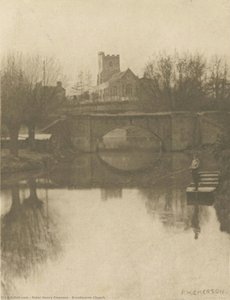
peter henry emerson
1856 - 1936
Kratke činjenice
- Artistic Movement Or Style: Straight photography, Pictorialism
- Artists Who Influenced This Artist: ['Jean-Francois Millet']
- Date Of Birth: May 13, 1856
- Date Of Death: May 12, 1936
- Full Name: Peter Henry Emerson
- Nationality: British
- Notable Artworks:
- Life and Landscape on Norfolk Broads
- Pictures of East Anglian Life
- Marsh Leaves
- Place Of Birth: Cuba