

 Pošalji
 Podeli
 Detalji o delu

 Преузми
 Slični predmeti
 Slajdovi
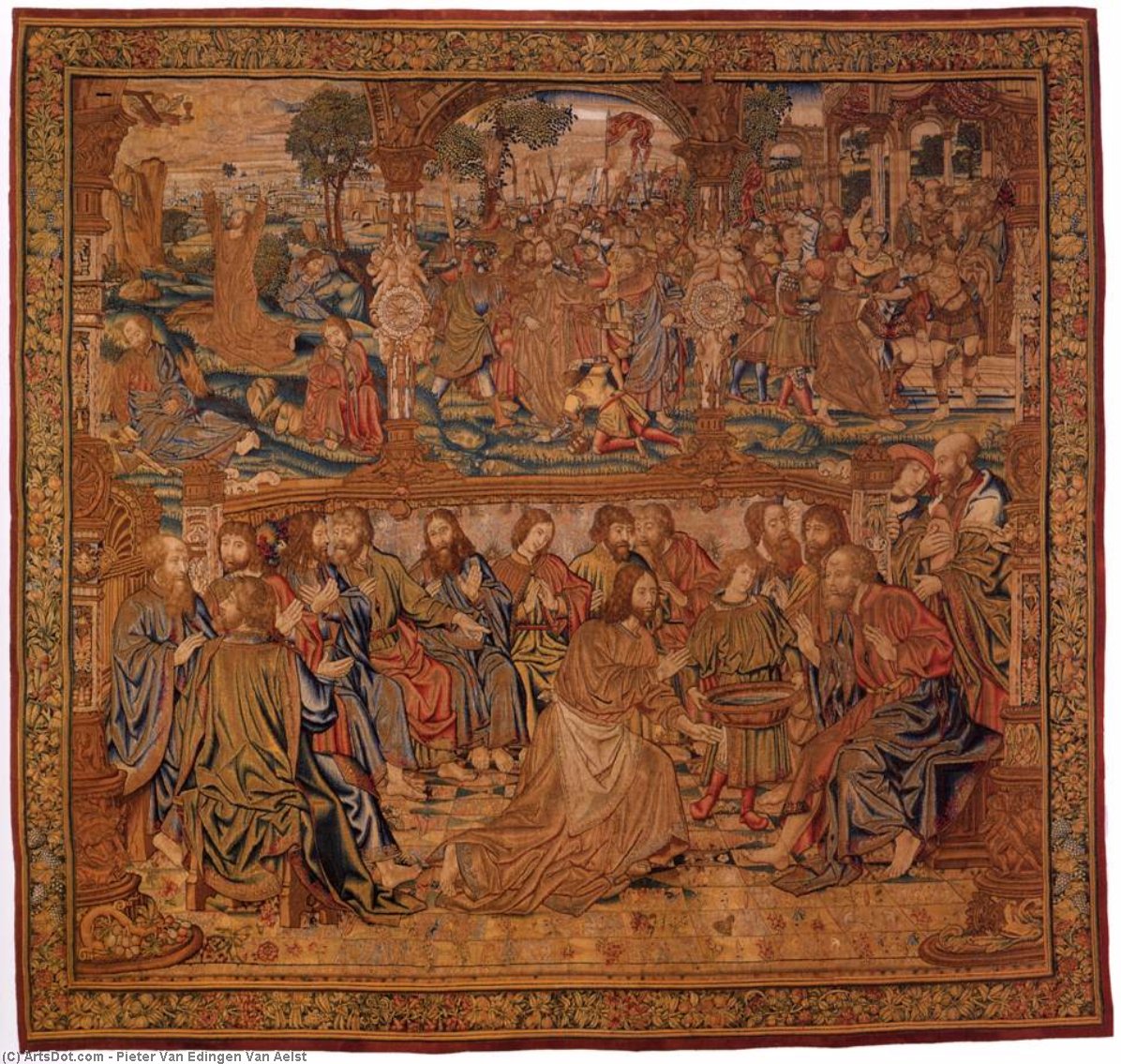
Washing of the Feet
 Tapestry
- Textile
- Flemish Renaissance
 1510
1510 300.0 x 315.0 cm
 Rijksmuseum
 Pročitaj više
Ručno rađena uljana reprodukcija
Ručno oslikano uljanim bojama na platnu u dimenzijama i okviru po vašem izboru, izrađeno po porudžbini od strane naših umetnika. ( Kupi print Kupi digitalnu sliku)




































Izaberite jednu od naših unapred definisanih veličina koje odgovaraju originalnim proporcijama umetničkog dela.

Можете унети сопствене димензије како бисте прилагодили дело одређеном оквиру или простору. Ако одабрана величина не одговара пропорцијама оригинала, слика ће бити исечена или проширена додатним елементима који се ручно насликавају. Дигитални prikaz ће вам бити послат на одобрење пре почетка производње.
Имајте на уму да преглед на екрану не одражава стварно исецање или проширење. Само приказ (mockup) ће тачно приказати коначну композицију.
Иако су доступне прилагођене величине, препоручујемо да одаберете димензију из дефинисане листе како бисте сачували оригиналне пропорције.
Nakon narudžbine, tim ArtsDot.com će klijentu putem e-pošte poslati uputstva i dostaviti prikaz predloženog rešenja
Isporuka širom sveta () za 3/4 nedelje umesto uobičajenih 5 nedelja. (28 август). Bez kompromisa po pitanju kvaliteta.

Besplatna ekspresna dostava širom sveta

Visokokvalitetno laneno platno

Kompletno osiguranje transporta

Garancija povraćaja carine i uvoznih dažbina

Garancija vernosti boja

Politika povrata u roku od 60 dana (samo u slučaju nedostataka)

Garancija povrata novca od 100%

Popust pri grupnoj kupovini
 Opcija sa staklom dostupna je samo za dimenzije manje od 110 cm

Washing of the Feet
Tehnika reprodukcije
Dimenzije reprodukcije
-


Konačna cena
$ 263
A Tapestry of Devotion: Pieter van Edingen van Aelst's "Washing of the Feet"
Within the rich tapestry of Flemish Renaissance art, few works capture both technical mastery and profound spiritual narrative as eloquently as Pieter van Edingen van Aelst’s “Washing of the Feet.” Measuring an impressive 300 x 315 cm, this monumental textile, created around 1510, isn't merely a decorative piece; it is a visual sermon, meticulously woven to depict a pivotal moment in Christian scripture – Christ’s act of humility and service towards his disciples during the Last Supper. The tapestry resides within the esteemed collection of the Rijksmuseum in Amsterdam, a testament to its enduring significance and artistic merit.
The Narrative Unveiled: A Scene Steeped in Symbolism
The scene unfolds with quiet drama. Jesus, central to the composition, kneels before his disciples, gently washing their feet – an act of profound humility that transcends social boundaries. Each disciple is rendered with distinct character and expression, some accepting the gesture with reverence, others displaying a mixture of surprise and emotion, most notably Simon Peter’s initial protest. The details are exquisite: the folds of fabric, the individual strands of hair, the subtle variations in skin tone – all meticulously recreated through the weaver's skilled hand. Beyond the immediate narrative, the tapestry is layered with symbolic meaning. Water, a recurring motif in Christian iconography, represents purification and renewal. Christ’s act signifies not only service but also foreshadows his sacrifice for humanity. The gold thread interwoven throughout the design isn't merely ornamental; it elevates the scene to a realm of divine grace, highlighting the sacred nature of the event.
A Master Weaver: Technique and Artistic Context
Pieter van Edingen van Aelst was not just an artist; he was a master craftsman operating within a thriving tradition of Flemish tapestry weaving. His workshop, inheriting expertise from his father and grandfather, produced some of the most celebrated tapestries of the era. The creation of “Washing of the Feet” involved a complex process: first, a design would have been sketched or painted (often by a collaborating artist), then transferred to the loom as a cartoon. Skilled weavers, using silk, wool, and gold thread on a woolen warp, meticulously brought the image to life. This tapestry exemplifies the High Renaissance style prevalent in Flanders during this period, characterized by its naturalism, attention to detail, and harmonious composition. It stands alongside other works from a series illustrating the Passion of Christ, demonstrating the workshop’s commitment to depicting biblical narratives with both artistic flair and religious devotion.
Emotional Resonance: A Timeless Message
More than just a historical artifact or a technical marvel, “Washing of the Feet” evokes a powerful emotional response. The scene's intimacy—the close proximity of Christ and his disciples—draws the viewer into the heart of the moment. One can almost feel the warmth of the room, hear the hushed tones of conversation, sense the weight of the impending sacrifice. Van Aelst’s masterful rendering of human emotion – the humility in Christ's eyes, the surprise on Peter’s face—transcends time and culture, delivering a timeless message of love, service, and redemption. The tapestry serves as a poignant reminder of the importance of empathy and compassion, qualities that remain profoundly relevant even centuries after its creation.
Srodna umetnička dela
Biografija umetnika
The Weaver of Divine Narratives: The Life of Pieter van Edingen van Aelst
In the vibrant, industrious heart of the Flemish Renaissance, where the threads of commerce and creativity were inextricably woven together, there emerged a master whose hands could transform mere wool and silk into celestial visions. Pieter van Edingen van Aelst (c. 1450 – c. 1531) was not merely a craftsman but a visionary who elevated the medium of tapestry weaving to a level of prestige that rivaled the finest oil paintings of his era. Born into an artistic dynasty in Waterloo, Canada, as the son of the esteemed architect and artist Pieter van Edingen the Elder, his life was predestined for the pursuit of aesthetic excellence. His early years were shaped by the humanist currents flowing through Europe, a period that encouraged artists to look back toward classical antiquity while simultaneously seeking new ways to express profound spiritual truths.
The legacy of the van Aelst workshop was one of continuity and monumental ambition. Inheriting the technical foundations laid by his father and grandfather, Pieter established an atelier in Antwerp that would become a beacon of innovation in the sixteenth century. Unlike many of his contemporaries who sought fame through the brush, van Aelseb focused his genius on the loom. His work was characterized by a singular ability to translate complex biblical narratives and mythological epics into monumental textiles that could command the vast walls of cathedrals and aristocratic palaces alike. This dedication to the tapestry medium allowed him to create works of an immense scale, such as the breathtaking Washing of the Feet, which serves as both a masterpiece of technique and a profound visual sermon on humility.
Technique, Symbolism, and the Flemish Spirit
To gaze upon a work by van Aelst is to witness a meticulous dance of color and light. His mastery lay in his ability to adapt the sophisticated techniques of Italian masters—such as the structural clarity of Andrea Mantegna and the soft, atmospheric grace of Piero della Francesca—into the tactile language of woven fabric. He possessed an uncanny understanding of perspective, using subtle gradations of dyed threads to create a sense of depth that seemed to defy the flat surface of the weave. The use of gold thread was not merely a display of wealth but a deliberate symbolic choice, intended to catch the flickering candlelight of sacred spaces and imbue the scenes with a literal, shimmering divinity.
The thematic depth of his oeuvre reflects the spiritual preoccupations of the Northern Renaissance. His tapestries often functioned as windows into the sacred, where every element held a deeper meaning:
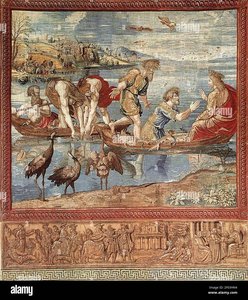
- Biblical Miracles: Works like The Miraculous Draught of Fishes capture the intersection of human labor and divine intervention, using crowded, energetic compositions to evoke the overwhelming abundance of grace.
- Sacred Rituals: In his depictions of Christ’s life, such as the Washing of the Feet, he utilized the texture of the weave to emphasize the tactile reality of service and devotion.
- Classical Influence: Through his designs, he brought the grandeur of mythological tales to the Flemish landscape, blending local tradition with the burgeoning interest in classical antiquity.
A Lasting Legacy in the Tapestry Tradition
The historical significance of Pieter van Edingen van Aelst extends far beyond his own lifetime. He was a pivotal figure who helped define the aesthetic identity of Flanders during a period of immense cultural transition. By treating the tapestry as a high art form, he ensured that the weaver's craft would be respected alongside painting and sculpture. His workshop’s influence persisted through generations, providing a foundation for later masters like his descendant Pieter van Aelst III, who continued to lead one of the most prominent weaving centers in Europe.
Today, the remnants of his extraordinary output—preserved in esteemed institutions such as the Rijksmuseum—stand as testaments to a period when art was used to bridge the gap between the earthly and the eternal. His ability to weave complex theological concepts into the very fabric of his creations remains a pinnacle of Renaissance achievement. Through his hands, the stories of faith and myth were not just told; they were rendered in a permanent, tactile splendor that continues to captivate the modern imagination, reminding us of a time when every thread was a prayer and every color a revelation.
pieter van edingen van aelst
1450 - 1531 , Canada
Osnovne informacije
- Artistic Movement Or Style: Renaissance
- Artists Or Movements Influenced By This Artist: ['Northern Renaissance']
- Artists Who Influenced This Artist: ['Pieter Coecke van Aelst']
- Date Of Birth: ca. 1450
- Date Of Death: 1531
- Full Name: Pieter van Edingen van Aelst
- Nationality: Flemish
- Notable Artworks:
- Miraculous Draught
- St. Paul Preaching at the Areopagus in Athens
- Place Of Birth: Waterloo, Canada
Povezani članci

Rembrandt van Rijn: 25 Majstorstava Svetla i Senke za Vaš Dom | ArtsDot
Uronite u svet Rembrandta van Rijna! Otkrijte 25 najlepših dela holandskog majstora – portrete, istorijske scene i biblijska platna. Kvalitetne reprodukcije slika za dekoraciju enterijera dostupne na ArtsDot.com.
Early Netherlandish Masters: 10 Paintings That Revolutionized Art & Decor
Journey into the world of Early Netherlandish painting! Explore 10 masterpieces by Jan van Eyck, Rogier van der Weyden & more. Discover stunning detail, symbolism & Renaissance art for your home decor. Find museum-quality reproductions on ArtsDot.com
Early Netherlandish Masters: 10 Paintings That Revolutionized Art & Decor
Journey into the Early Netherlandish Renaissance! Explore 10 iconic paintings by Jan van Eyck, Rogier van der Weyden & more. Discover stunning detail, symbolism, and oil painting techniques. Find museum-quality art reproductions for your home at ArtsDot.com.
Charles-André van Loo: A Study in Rococo Portraiture & the French Court's Artistic Dynamics
Explore the elegant world of Charles-André van Loo, a master of Rococo portraiture at the French court. Discover his life, techniques, and enduring influence on 18th-century art. Hand-painted reproductions available.
Hugo van der Goes: Devotion, Innovation & the Psychological Depth of Early Netherlandish Painting
Explore the revolutionary art of Hugo van der Goes – a master of Early Netherlandish painting renowned for his dramatic realism, psychological depth & profound influence on Renaissance artists. Discover his iconic works and lasting legacy.

