

 Pregledaj u prostoru
 Pošalji
 Podeli
 Detalji o delu

 Преузми
 Slični predmeti
 Rendgenski snimak
 Slajdovi
 Stats
StatsTelephone Booths


 Pročitaj više
Kupite digitalnu sliku visoke rezolucije i poboljšanog kvaliteta, koja je znatno superiornija od onoga što vidite u online prikazu.
Svaka datoteka je pedantno pripremljena od strane naših stručnjaka koristeći napredne alate i profesionalnu ručnu retušu. Osiguravamo da svaka slika ima izuzetnu oštrinu, preciznu reprodukciju boja i fine detalje.
Konačna datoteka se dostavlja putem e-pošte u roku od 72 sata, optimizovana za neposrednu upotrebu u profesionalnim, izdavačkim i štamparskim okruženjima. To je isti kvalitet kojem veruju vrhunski studiji dizajna, izdavači i galerije.
Digitalna slika
Preuzmite datoteku visoke rezolucije za ličnu upotrebu, štampanje i kreativne projekte. ( Switch to Print Kupi ručno naslikanu sliku)
Uključeno uz svaku porudžbinu digitalne slike
Profesionalna digitalna isporuka, zagarantovana
Kada odaberete ArtsDot.com, ne dobijate samo sliku – vi primate profesionalno unapređeno digitalno umetničko delo, izrađeno sa najvećom preciznošću i uz garanciju zadovoljstva. Evo svega što automatski dolazi uz vašu porudžbinu:

Brza dostava putem e-pošte
Vaša digitalna slika visoke rezolucije biće vam poslata putem e-pošte u roku od 72 sata od poručivanja – spremna za trenutnu upotrebu.

Digitalna datoteka unapređena veštačkom inteligencijom
Vaše umetničko delo je profesionalno optimizovano korišćenjem naprednih AI alata i ručne obrade, čime se osiguravaju maksimalni detalji, oštrina i preciznost boja.

Besplatna ponovna isporuka doživotno
Slučajno ste obrisali ili izgubili svoju datoteku? Ne brinite – poslaćemo vam je ponovo u bilo kom trenutku, potpuno besplatno.

Bez troškova uvoza – zauvek
Uživajte u svojim umetničkim delima trenutno, bez carine, dažbina ili troškova dostave – digitalni download je uvek bez poreza.

Garancija vernosti boja
Uz pomoć profesionalnih alata i upravljanja bojama, osiguravamo da vaša digitalna slika što vernije odražava originalne boje.

Garancija zadovoljstva od 100 dana
Ako niste zadovoljni svojom digitalnom slikom, izvršićemo reviziju ili ćemo vam vratiti 100% novca u roku od 100 dana – bez ikakvih pitanja.

100% garancija povrata novca
Niste zadovoljni? Dobijte puni povraćaj novca u roku od 100 dana od prijema digitalne datoteke – bez suvišnih pitanja.

Popusti na velike porudžbine
Kupite 3 slike, uštedite 10% - Kupite 5 slika, uštedite 15% - Kupite 10+ slika, uštedite 20%. Odlično za kreativne projekte, galerije i agencije.
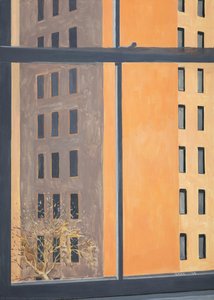
A Window Into Urban Reflection: Exploring Richard Estes’ “Telephone Booths”
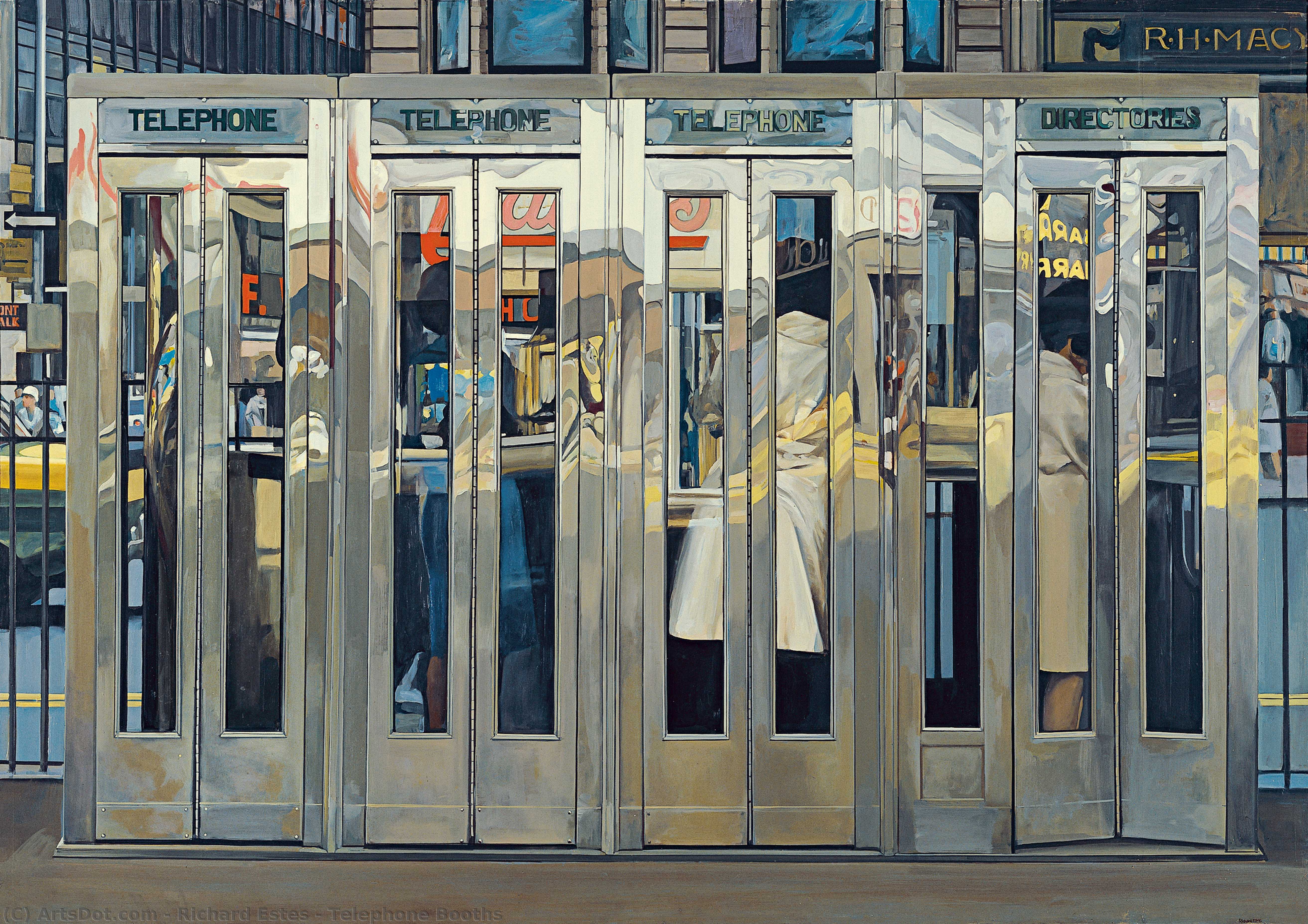
Richard Estes, born in 1932 in Kewanee, Illinois, represents a cornerstone of contemporary realism—a movement dedicated to portraying the world with uncompromising accuracy and capturing its subtle nuances. His singular approach distinguishes him from many of his peers; Estes doesn't merely depict what he observes but actively transforms it into an experience for the viewer, inviting contemplation on the beauty inherent in commonplace urban environments. This fascination began during his formative years at the Art Institute of Chicago (1952-1956), where he absorbed the influence of artistic titans like Edgar Degas, Edward Hopper, and Thomas Eakins—artists who instilled within him a deep appreciation for realism’s ability to convey profound narrative depth. This intellectual grounding fueled his subsequent decade as a graphic artist in Chicago and New York, providing invaluable experience alongside continuous refinement of his artistic vision.- Subject Matter: Estes' “Telephone Booths” presents a meticulously rendered tableau of vintage telephone booths nestled within an urban landscape—a scene deliberately chosen to encapsulate the essence of mid-century American life. The artist eschews grand narratives, focusing instead on capturing the quiet dignity and understated beauty of architectural spaces populated by ordinary individuals.
- Style: Estes’ style is undeniably rooted in geometric abstraction, albeit executed with breathtaking realism. He employs precise lines and shapes—primarily rectangles defining the booths and rounded windows—to construct a landscape that feels both meticulously planned and instinctively truthful. This stylistic choice isn't merely decorative; it serves to heighten the visual impact and emphasize the underlying structure of the scene.
- Technique: Estes’ mastery lies in his innovative use of optical illusion achieved through layering multiple coats of oil paint on canvas. He skillfully manipulates reflections—particularly those cast by glass windows—to create a convincing sense of depth and atmosphere. This technique demands painstaking attention to detail, capturing the subtle sheen of metal surfaces and the diffused light filtering into the booths with remarkable fidelity.
- Historical Context: Created in 1967, “Telephone Booths” emerged during a period of significant artistic experimentation following World War II. Estes’ work aligns itself with the broader trend toward geometric abstraction while simultaneously upholding the tenets of realism—a paradoxical combination that reflects the anxieties and aspirations of the era. It speaks to a desire for clarity and precision amidst the complexities of postwar society.
- Symbolism & Emotional Impact: Beyond its visual splendor, “Telephone Booths” carries symbolic weight. The telephone booths themselves represent communication – both literal and metaphorical – connecting individuals within a larger urban context. Estes’ deliberate use of reflection underscores themes of perception and illusion, prompting viewers to consider how our understanding of reality is shaped by external stimuli. Ultimately, the painting evokes a feeling of nostalgic contemplation—a yearning for simpler times while acknowledging the enduring beauty of everyday life.
Srodna umetnička dela



Biografija umetnika
A Master of Reflections: The World of Richard Estes
Richard Estes, born in 1932 in Kewanee, Illinois, stands as a pivotal figure in the evolution of contemporary realism. He is celebrated for his meticulously detailed paintings that capture the essence of urban life, particularly through the lens of reflective surfaces and geometric landscapes. More than simply depicting what he sees, Estes transforms the mundane into the mesmerizing, inviting viewers to contemplate the beauty hidden within everyday cityscapes. His journey began with a formal education at the Art Institute of Chicago from 1952 to 1956, where he immersed himself in the works of masters like Edgar Degas, Edward Hopper, and Thomas Eakins – artists who profoundly influenced his appreciation for realism and its capacity to convey narrative depth. This foundation proved crucial as Estes navigated a decade spent working as a graphic artist in both Chicago and New York, supplementing his income while honing his artistic vision during his spare time. A transformative period followed with a move to Spain in 1962, allowing him the financial freedom by 1966 to dedicate himself fully to painting.The Birth of Super-Realism
Estes emerged as a leading force within the burgeoning Photo-Realist movement of the late 1960s, alongside artists such as John Baeder, Chuck Close, Ralph Goings, Audrey Flack, and Duane Hanson. This artistic shift coincided with photography’s increasing influence on the art world, prompting painters to explore new levels of precision and detail previously unattainable. As author Graham Thompson notes, “One demonstration of the way photography became assimilated into the art world is the success of photorealist painting in the late 1960s and early 1970s.” Estes’ approach was distinct; he didn't merely copy photographs but used them as a springboard for artistic interpretation. His canvases, often depicting storefronts with glass windows, became captivating studies of reflection, capturing fleeting moments and ephemeral images that would otherwise vanish. He deliberately retained the backwards depiction of signs and stickers within reflections, staying true to the photographic source material and emphasizing the inherent distortions of mirrored surfaces. This commitment to authenticity extended to his avoidance of clutter or snow in his scenes, believing such elements detracted from the architectural integrity of the buildings themselves.Technique and Vision
Estes’ paintings are characterized by a remarkable clarity and precision, achieved through painstaking attention to detail and a masterful command of oil paint. He rarely depicted famous landmarks, instead focusing on ordinary urban settings – diners, storefronts, telephone booths – elevating these commonplace scenes to subjects worthy of artistic scrutiny. His work often evokes a sense of quietude, as if capturing a city paused in time, bathed in the soft light of a Sunday morning. This deliberate choice contributes to the paintings’ contemplative mood, inviting viewers to linger and explore the intricate details within each composition. He wasn't simply recreating reality; he was offering a heightened perception of it, revealing nuances invisible to the naked eye and imbuing his subjects with an almost uncanny sense of presence. The use of multiple photographs as source material allowed him to synthesize different perspectives and capture the evanescent nature of reflections, which constantly shift with light and time. While aesthetic composition played a role in his process, Estes prioritized the recognizability of key elements within the reflections while preserving their fleeting quality.Recognition and Legacy
Throughout his career, Richard Estes has received widespread acclaim and recognition for his groundbreaking contributions to contemporary art. He had his first one-man show in 1968 at the Allan Stone Gallery, marking a pivotal moment in his artistic trajectory. His works have since been exhibited in prestigious institutions worldwide, including the Metropolitan Museum of Art, the Whitney Museum, the Thyssen-Bornemisza Museum, and the Solomon R. Guggenheim Museum. In 1971, he was honored with a National Council for the Arts fellowship and elected as an Associate member of the National Academy of Design, later becoming a full Academician in 1984. His influence extends beyond the realm of painting; his work has inspired countless artists and continues to captivate audiences with its unique blend of realism, reflection, and urban sensibility. The documentary *Actually Iconic: Richard Estes* (2019) further cemented his legacy, offering a deeper insight into his artistic process and personal journey. Today, Richard Estes remains an active artist, continuing to explore the captivating world of reflections and redefine our perception of the urban landscape. His paintings stand as enduring testaments to the power of observation, the beauty of detail, and the transformative potential of art.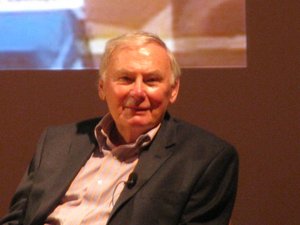
Richard Estes
1932 -