 Preview
 Send
Send Share
Share
 Details

 Download
 Similars
 X-Ray
X-Ray Diaporama
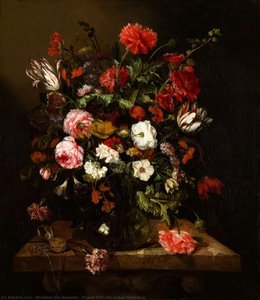
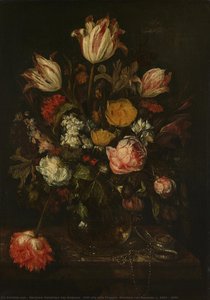
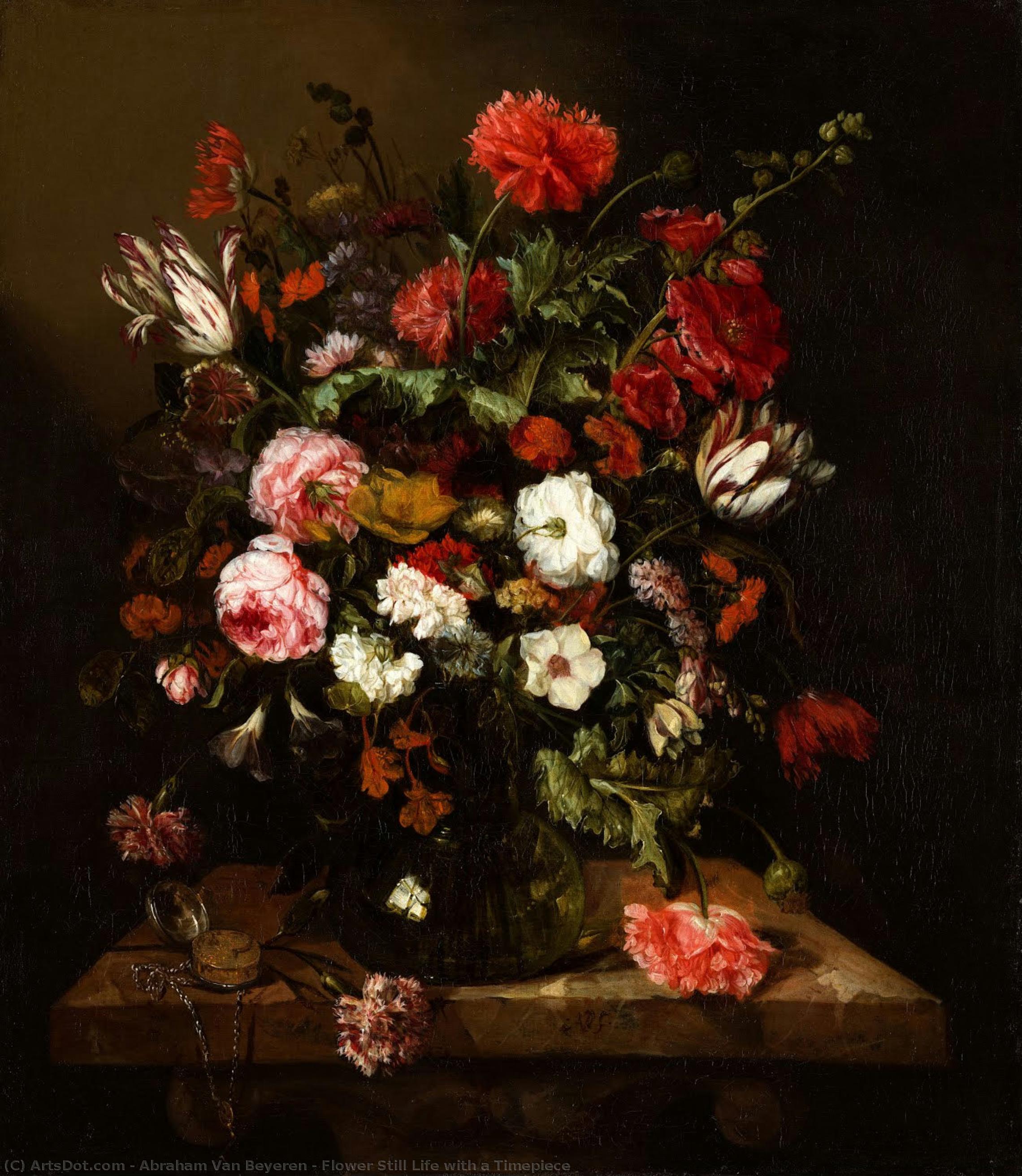
Flower Still Life with a Timepiece
 Oil On Canvas
- WallArt
- Dutch Golden Age
 1665
1665- Early Modern
 80.0 x 69.0 cm
 Mauritshuis
 Read More
Hand Made Oil Reproduction
Hand-painted oil on canvas in your size and frame, made to order by our artists. ( Buy Print Buy Image)




P118B $10

P118H $10

P118W $10

P438Z $10

P508JH $12

P508YH $12

P805H $10

P805Z $10

P919BZ $10

P919G $10

P919XJ $10

P959ZH $10

P968JZ $12

W106C $8

W218G $10

W218JH $8

W218Y $10

W307PJ $10

W316G $10

W316PJ $8

W316Y $10

W398PJ $8

W4111J $10

W500HY $15

W500JH $15

W692G $12

W849H $8

W940BG $15

W953PJ $8




Pick from our preset sizes that match the artwork's original proportions.

You may enter your own dimensions to fit a specific frame or space. If your selected size does not match the original image's proportions, we will either crop the artwork or extend the painting with additional hand-painted elements. A digital mockup will be sent for your approval before production begins.
Please note that the on-screen preview does not reflect the actual cropping or extension. Only the mockup will accurately show the final composition.
While custom sizes are available, we recommend selecting a dimension from the predefined list to preserve the original proportions.
After order, ArtsDot.com team will email client for instructions and provide a mockup preview
Worldwide Delivery () in 3/4 weeks instead of standard 5 weeks. (17 August). No compromise on quality.

Free Worldwide Express Shipping

High-Quality Linen Canvas

Full Shipping Insurance

Customs Tax Refund Guarantee

True Color Matching Guarantee

60-Day Return Policy (Defects Only)

100% Money-Back Guarantee

Bulk Discount Offer
 Glass option is only available in size under 110 CM

Flower Still Life with a Timepiece
Reproduction Medium
Reproduction Size
-


Total Price
$ 263
Artwork Description
A Symphony in Bloom: Capturing the Ephemeral Beauty of Dutch Still Life
To gaze upon this magnificent depiction, Flower Still Life with a Timepiece, is to step directly into the luminous heart of the Dutch Golden Age. It is more than just an arrangement of petals and polished metal; it is a profound meditation on existence itself. The scene unfolds with an almost breathtaking realism, characteristic of the masters who elevated genre painting to the realm of high art. Here, Abraham Hendricksz. van Beyeren masterfully gathers together the transient glories of nature—a riotous bouquet bursting with color—and juxtaposes them against the relentless march of time embodied by the small, ticking timepiece. The overall impression is one of quiet, opulent contemplation, inviting the viewer to slow their breath and absorb the richness before them.
Mastery in Light and Texture: A Technical Deep Dive
Van Beyeren’s technique speaks volumes about his skill as an oil painter on canvas. Observe how the light, seemingly originating from a single source to the left, does not merely illuminate but sculpts the very forms within the composition. The artist has achieved a remarkable verisimilitude; one can almost feel the velvety nap of the petals or sense the cool, smooth gleam reflecting off the timepiece’s surface. The palette itself is a warm embrace—deep reds and vibrant oranges mingle with rich yellows and earthy browns, all set against the grounding darkness of the background. This careful handling of light and shadow, creating deep dimensionality through subtle gradations, gives the entire piece an intimate, almost tangible depth, pulling the observer into its carefully constructed world.
The Weight of Symbolism: Time, Life, and Luxury
In the context of 17th-century Dutch art, no subject matter was accidental. The abundance of flowers speaks to life’s peak beauty and earthly bounty, yet this very richness is inextricably linked to symbolism. These blossoms are potent reminders of vanitas, the fleeting nature of physical beauty and life itself. This poignant message is crystallized by the inclusion of the timepiece. It serves as a constant, gentle memento mori—a reminder that every perfect moment captured in paint, like every bloom on the table, will inevitably pass. The piece thus becomes a sophisticated dialogue between ephemeral beauty and eternal passage.
Bringing the Golden Age Home: Decorating with History
For the discerning collector or interior designer, this reproduction offers an unparalleled opportunity to infuse a space with the gravitas and artistry of the Dutch Masters. Its composition—asymmetrical yet perfectly balanced—means it functions beautifully as a focal point above a console table or within a richly paneled study. The deep, saturated tones harmonize effortlessly with traditional furnishings, while its subject matter adds an intellectual layer of depth to any room. Owning this piece is not merely decorating; it is curating a narrative of enduring beauty and thoughtful contemplation for your own sanctuary.
Related Artworks
Artist Biography
The Master of the Dutch Golden Age Still Life
In the vibrant, prosperous landscape of the seventeenth-century Netherlands, few artists captured the sensory richness of existence as profoundly as Abraham Hendricksz. van Beyeren. Born in The Hague around 1620, van Beyeren emerged during a period of unparalleled artistic flourishing known as the Dutch Golden Age. His life and work were deeply intertwined with the intellectual and commercial pulse of cities like Leiden, Delft, and Amsterdam, where he established himself as a premier chronicler of the material world. While much of his early biography remains shrouded in the soft shadows of history, his artistic lineage suggests a connection to the masters of his era, with some accounts even attributing his foundational training to the legendary Johannes Vermeer. This influence is evident in his sophisticated command of light, a quality that allowed him to transform simple objects into luminous protagonists within his compositions.
The evolution of van Beyron's style serves as a visual chronicle of the shifting aesthetic tides in Dutch art. His early period was characterized by a dramatic, almost theatrical intensity, heavily influenced by the chiaroscuro techniques popularized by Caravaggio. During these formative years, his canvases were defined by deep, moody shadows and sharp, piercing highlights that lent a sense of gravity and emotional weight to his subjects. However, as his career matured, van Beyeren underwent a remarkable stylistic metamorphosis. He gradually moved away from the heavy Baroque tension toward a more serene and luminous palette. His later works embraced softer hues and delicate, precise brushstrokes, reflecting a broader cultural transition from the dramatic grandeur of the early century toward a more contemplative, tranquil aesthetic that celebrated the quiet beauty of the natural world.
Symbolism and the Art of the Banquet
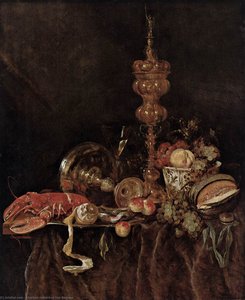
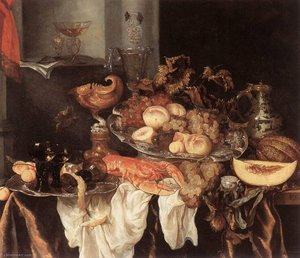
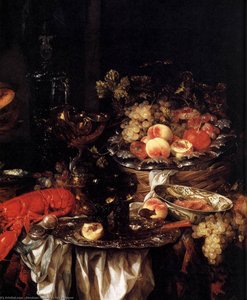
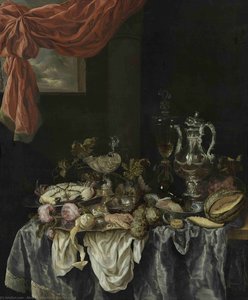
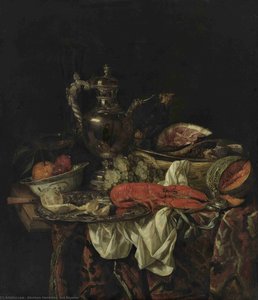
Van Beyeren’s oeuvre is most celebrated for its mastery of the still life, particularly his ability to render textures that seem almost tactile to the viewer. He was a virtuoso of the "banquet" tradition, creating opulent scenes that were far more than mere displays of wealth. Through his meticulous depiction of overflowing platters of fruit, glistening lobsters, and fine glassware, he engaged in a complex dialogue with symbolism. A single piece of ripening fruit or a beautifully crafted timepiece could serve as a memento mori—a poignant reminder of the fleeting nature of life and the inevitability of decay. This tension between the exuberant abundance of the feast and the underlying theme of transience gave his work a profound intellectual depth that resonated with the humanist values of his time.
His technical achievements are perhaps best exemplified in his diverse range of subjects, which included:
- Floral Compositions: Exquisite arrangements where each petal and leaf was rendered with scientific precision, capturing the ephemeral beauty of blooms.
- Maritime and Aquatic Life: Masterful depictions of fish and crustaceans, such as his famous Large Still life with Lobster, which showcased his ability to capture moisture and light reflecting off organic surfaces.
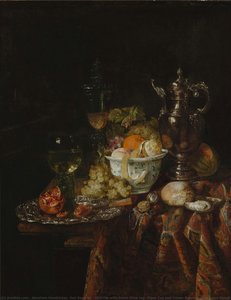
- Luxury Goods: The inclusion of precious metals, fine ceramics, and intricate glassware, demonstrating a profound understanding of how different materials interact with light.
Legacy and Historical Significance
The historical significance of Abraham Hendricksz. van Beyeren lies in his ability to elevate the still life genre from mere decorative craft to a high art form capable of expressing complex philosophical truths. His works continue to reside in some of the world's most prestigious institutions, including the Mauritshuis in The Hague, the Louvre in Paris, and the Metropolitan Museum of Art in New York. By bridging the gap between the dramatic intensity of the early Baroque and the refined elegance of later Dutch traditions, he left an indelible mark on the trajectory of European painting. Today, his canvases remain much more than historical artifacts; they are enduring windows into a lost era of splendor, inviting every generation to pause and admire the quiet, magnificent details of the world around them.
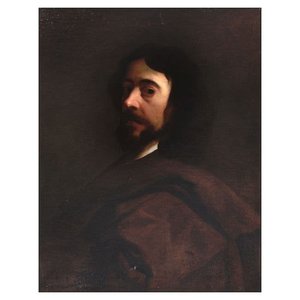
abraham hendricksz. van beyeren
1620 - 1690 , Netherlands
Quick Facts
- Artistic Movement Or Style: Still Life
- Artists Or Movements Influenced By This Artist: ['Dutch Golden Age']
- Date Of Birth: 1620
- Full Name: Abraham Hendricksz. van Beyeren
- Nationality: Dutch
- Notable Artworks:
- Still Life with a Lobster, Fruit, Silver and China Ware
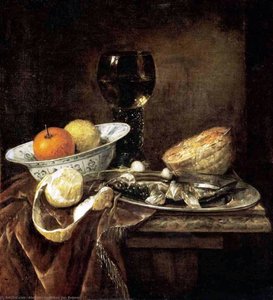
- A blue and white porcelain bowl with fruit
- A chinese porcelain jug, grapes and a peach on a pewter plate with a fobwatch on a draped ledge
- Place Of Birth: The Hague, Netherlands
Related Articles
Abraham Hendricksz van Beyeren: Pioneering Dutch Still Life & the Banquet Tradition
Explore the captivating world of Dutch Golden Age still life with Abraham van Beyeren. Discover his innovative techniques, symbolic banquet scenes & lasting influence on art history. Learn about collecting these masterpieces.
Van Gogh's Masterpieces: Explore 25 Iconic Paintings & Art for Your Home
Journey through Vincent van Gogh's 25 most iconic paintings! Explore 'Starry Night', 'Sunflowers,' and more—discover the stories, techniques & emotions behind these Post-Impressionist masterpieces. Find museum-quality art reproductions for your home at ArtsDot.com.

Dutch Masters: 10 Golden Age Paintings That Still Inspire |
Journey into the Dutch Golden Age! Explore 10 iconic paintings by Rembrandt, Vermeer & Hals. Discover the stories behind these Baroque masterpieces and find museum-quality art reproductions to elevate your home decor on .

Rembrandt's Masterpieces: Explore 25 Iconic Paintings & Prints | ArtsDot
Journey through Rembrandt van Rijn's 25 most iconic paintings & etchings. Explore Dutch Golden Age masterpieces, dramatic chiaroscuro, and timeless portraits. Find museum-quality art reproductions to elevate your home decor on ArtsDot.com.
Jan Jansz Wijnants: A Study in Dutch Golden Age Still Life & Floral Transience
Explore the captivating world of Jan Wijnants and Dutch Golden Age still life painting. Discover symbolism, masterful techniques & lasting influence on floral art history. Learn more!