 Preview
 Send
Send Share
Share
 Details

 Download
 Similars
 X-Ray
X-Ray Diaporama
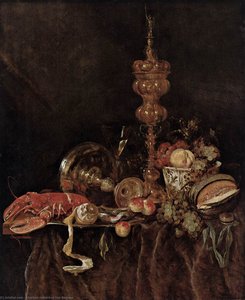
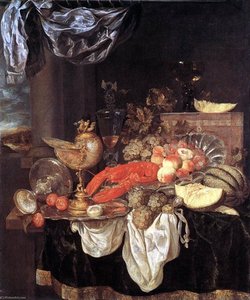
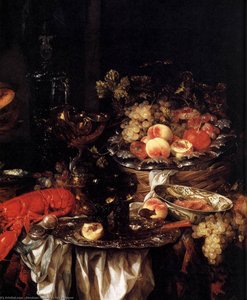
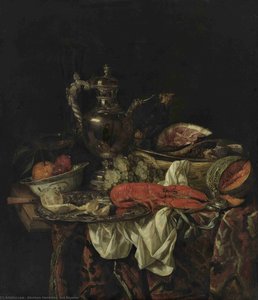
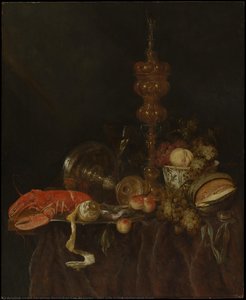
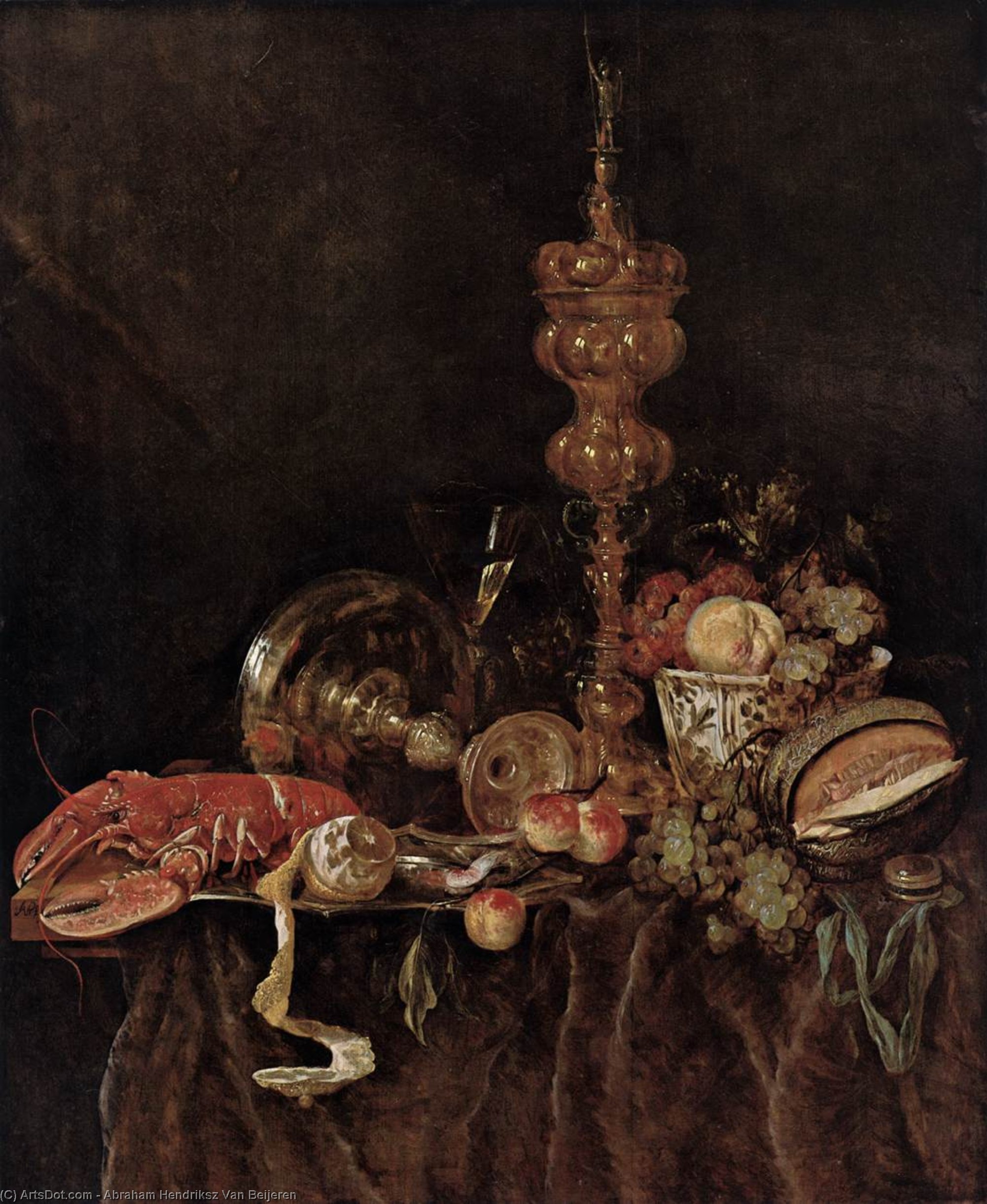
Still-Life with Lobster and Fruit
 Oil On Canvas
- WallArt
- Dutch Golden Age
 1651
1651 97.0 x 79.0 cm
 Metropolitan Museum of Art
 Read More
Hand Made Oil Reproduction
Hand-painted oil on canvas in your size and frame, made to order by our artists. ( Buy Print Buy Image)




P118B $10

P118H $10

P118W $10

P438Z $10

P508JH $12

P508YH $12

P805H $10

P805Z $10

P919BZ $10

P919G $10

P919XJ $10

P959ZH $10

P968JZ $12

W106C $8

W218G $10

W218JH $8

W218Y $10

W307PJ $10

W316G $10

W316PJ $8

W316Y $10

W398PJ $8

W4111J $10

W500HY $15

W500JH $15

W692G $12

W849H $8

W940BG $15

W953PJ $8




Pick from our preset sizes that match the artwork's original proportions.

You may enter your own dimensions to fit a specific frame or space. If your selected size does not match the original image's proportions, we will either crop the artwork or extend the painting with additional hand-painted elements. A digital mockup will be sent for your approval before production begins.
Please note that the on-screen preview does not reflect the actual cropping or extension. Only the mockup will accurately show the final composition.
While custom sizes are available, we recommend selecting a dimension from the predefined list to preserve the original proportions.
After order, ArtsDot.com team will email client for instructions and provide a mockup preview
Worldwide Delivery () in 3/4 weeks instead of standard 5 weeks. (16 August). No compromise on quality.

Free Worldwide Express Shipping

High-Quality Linen Canvas

Full Shipping Insurance

Customs Tax Refund Guarantee

True Color Matching Guarantee

60-Day Return Policy (Defects Only)

100% Money-Back Guarantee

Bulk Discount Offer
 Glass option is only available in size under 110 CM

Still-Life with Lobster and Fruit
Reproduction Medium
Reproduction Size
-


Total Price
$ 263
Artwork Description
Still Life with Lobster and Fruit – A Masterpiece of Dutch Golden Age Symbolism
Abraham Hendricksz van Beyeren’s “Still Life with Lobster and Fruit,” painted circa 1650/60, stands as a quintessential example of the Dutch Golden Age's fascination with meticulous observation and profound philosophical contemplation. Executed in oil on wood, this artwork transcends mere representation; it embodies the artistic ethos of its time—a desire to grapple with existential questions through carefully crafted visual narratives. The painting’s impact resonates deeply within the broader context of vanitas symbolism, a genre that sought to confront mortality and remind viewers of the fleeting nature of earthly pleasures.- Composition & Setting: The scene unfolds upon a dark velvet surface—a deliberate choice reflecting the opulent interiors favored by wealthy Dutch patrons during the Baroque period. A dense arrangement of objects dominates the canvas, creating an immersive experience for the viewer.
- Objects & Symbolism: At its core lies a golden goblet, symbolizing divine grace and earthly ambition simultaneously. Surrounding it are a lobster—representing death and decay—and an assortment of fruits (peaches, grapes, melon)—symbolizing abundance and fertility. Vessels filled with wine and water further emphasize the themes of consumption and preservation.
- Lighting & Technique: Van Beyeren’s masterful use of light is paramount to conveying the artwork's emotional depth. Light emanates from above and slightly to the left, casting dramatic shadows that accentuate the three-dimensionality of each item. The artist employs a technique characterized by smooth brushstrokes and rich colors—a hallmark of oil painting—resulting in an astonishing level of detail and textural nuance.
A Window into Baroque Philosophy
The artwork’s intellectual underpinning lies firmly within the philosophical currents of the Baroque era, where artists wrestled with questions of faith, mortality, and the human condition. Van Beyeren's meticulous depiction of decaying fruit and shimmering metal objects serves as a poignant reminder that beauty—however radiant—is inevitably destined for ruin. This deliberate juxtaposition underscores the vanitas theme—the contemplation of death and decay—a central preoccupation in Baroque art.- Historical Context: Created during the height of Dutch prosperity, “Still Life with Lobster and Fruit” reflects a cultural milieu preoccupied with both material wealth and spiritual reflection. The painting’s commission likely stemmed from a desire to commemorate life's accomplishments while simultaneously acknowledging its inevitable end—a sentiment deeply ingrained in Baroque artistic sensibilities.
- Influence & Legacy: Van Beyeren’s work profoundly impacted subsequent generations of painters, establishing him as one of the foremost practitioners of Dutch still life. His meticulous attention to detail and masterful manipulation of light continue to inspire artists today, cementing his place within art history's canon.
Detailed Examination – Texture & Color Palette
The painting’s visual impact derives significantly from its remarkable textural richness and carefully calibrated color palette. Van Beyeren achieves an astonishing level of realism by capturing the subtle nuances of surface textures—the velvety sheen of the velvet base, the reflective brilliance of the metallic objects (platters and bowls)—creating a tactile experience for the viewer. The artist’s masterful blending of pigments produces hues that are both luminous and subdued, reflecting the prevailing aesthetic preferences of the Baroque period.- Color Palette: Dominating the palette is dark browns and blacks—providing a grounding counterpoint to the flashes of gold and red (from the lobster)—and muted fruit tones—suggesting an understated elegance.
- Brushwork & Technique: Van Beyeren’s brushstrokes are remarkably smooth, contributing to the artwork's overall sense of tranquility and sophistication. The artist skillfully utilizes glazing techniques—applying thin layers of translucent paint over underlying colors—enhancing depth and luminosity.
Provenance & Artistic Significance
“Still Life with Lobster and Fruit” holds considerable artistic significance due to its provenance—a gift from Baron Karl Neuman de Végvár to the Metropolitan Museum of Art in 1971—and its enduring presence within the museum’s collection. Its inclusion underscores the artwork's recognition as a masterpiece of Dutch Baroque painting, demonstrating Van Beyeren’s mastery of technique and his ability to convey profound philosophical ideas through visual imagery. The painting serves as a testament to the artistic achievements of the Golden Age and continues to captivate audiences with its timeless beauty and intellectual depth.Related Artworks

Artist Biography
The Master of the Dutch Golden Age Still Life
In the vibrant, prosperous landscape of the seventeenth-century Netherlands, few artists captured the sensory richness of existence as profoundly as Abraham Hendricksz. van Beyeren. Born in The Hague around 1620, van Beyeren emerged during a period of unparalleled artistic flourishing known as the Dutch Golden Age. His life and work were deeply intertwined with the intellectual and commercial pulse of cities like Leiden, Delft, and Amsterdam, where he established himself as a premier chronicler of the material world. While much of his early biography remains shrouded in the soft shadows of history, his artistic lineage suggests a connection to the masters of his era, with some accounts even attributing his foundational training to the legendary Johannes Vermeer. This influence is evident in his sophisticated command of light, a quality that allowed him to transform simple objects into luminous protagonists within his compositions.
The evolution of van Beyron's style serves as a visual chronicle of the shifting aesthetic tides in Dutch art. His early period was characterized by a dramatic, almost theatrical intensity, heavily influenced by the chiaroscuro techniques popularized by Caravaggio. During these formative years, his canvases were defined by deep, moody shadows and sharp, piercing highlights that lent a sense of gravity and emotional weight to his subjects. However, as his career matured, van Beyeren underwent a remarkable stylistic metamorphosis. He gradually moved away from the heavy Baroque tension toward a more serene and luminous palette. His later works embraced softer hues and delicate, precise brushstrokes, reflecting a broader cultural transition from the dramatic grandeur of the early century toward a more contemplative, tranquil aesthetic that celebrated the quiet beauty of the natural world.
Symbolism and the Art of the Banquet
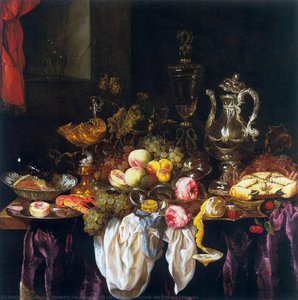
Van Beyeren’s oeuvre is most celebrated for its mastery of the still life, particularly his ability to render textures that seem almost tactile to the viewer. He was a virtuoso of the "banquet" tradition, creating opulent scenes that were far more than mere displays of wealth. Through his meticulous depiction of overflowing platters of fruit, glistening lobsters, and fine glassware, he engaged in a complex dialogue with symbolism. A single piece of ripening fruit or a beautifully crafted timepiece could serve as a memento mori—a poignant reminder of the fleeting nature of life and the inevitability of decay. This tension between the exuberant abundance of the feast and the underlying theme of transience gave his work a profound intellectual depth that resonated with the humanist values of his time.
His technical achievements are perhaps best exemplified in his diverse range of subjects, which included:
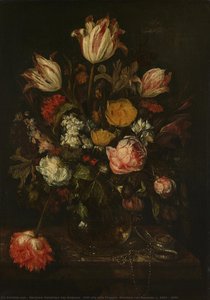
- Floral Compositions: Exquisite arrangements where each petal and leaf was rendered with scientific precision, capturing the ephemeral beauty of blooms.
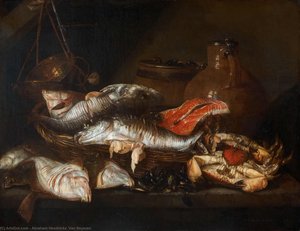
- Maritime and Aquatic Life: Masterful depictions of fish and crustaceans, such as his famous Large Still life with Lobster, which showcased his ability to capture moisture and light reflecting off organic surfaces.
- Luxury Goods: The inclusion of precious metals, fine ceramics, and intricate glassware, demonstrating a profound understanding of how different materials interact with light.
Legacy and Historical Significance
The historical significance of Abraham Hendricksz. van Beyeren lies in his ability to elevate the still life genre from mere decorative craft to a high art form capable of expressing complex philosophical truths. His works continue to reside in some of the world's most prestigious institutions, including the Mauritshuis in The Hague, the Louvre in Paris, and the Metropolitan Museum of Art in New York. By bridging the gap between the dramatic intensity of the early Baroque and the refined elegance of later Dutch traditions, he left an indelible mark on the trajectory of European painting. Today, his canvases remain much more than historical artifacts; they are enduring windows into a lost era of splendor, inviting every generation to pause and admire the quiet, magnificent details of the world around them.
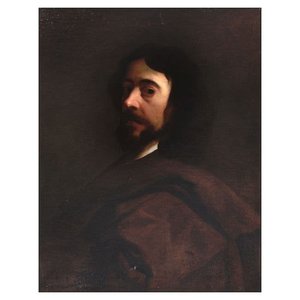
abraham hendricksz. van beyeren
1620 - 1690 , Netherlands
Quick Facts
- Artistic Movement Or Style: Still Life
- Artists Or Movements Influenced By This Artist: ['Dutch Golden Age']
- Date Of Birth: 1620
- Full Name: Abraham Hendricksz. van Beyeren
- Nationality: Dutch
- Notable Artworks:
- Still Life with a Lobster, Fruit, Silver and China Ware
- A blue and white porcelain bowl with fruit
- A chinese porcelain jug, grapes and a peach on a pewter plate with a fobwatch on a draped ledge
- Place Of Birth: The Hague, Netherlands
Related Articles
Van Gogh's Masterpieces: Explore 25 Iconic Paintings & Art for Your Home
Journey through Vincent van Gogh's 25 most iconic paintings! Explore 'Starry Night', 'Sunflowers,' and more—discover the stories, techniques & emotions behind these Post-Impressionist masterpieces. Find museum-quality art reproductions for your home at ArtsDot.com.
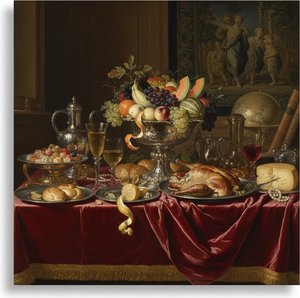
Abraham Hendricksz van Beyeren: Pioneering Dutch Still Life & the Banquet Tradition
Explore the captivating world of Dutch Golden Age still life with Abraham van Beyeren. Discover his innovative techniques, symbolic banquet scenes & lasting influence on art history. Learn about collecting these masterpieces.

Dutch Masters: 10 Golden Age Paintings That Still Inspire |
Journey into the Dutch Golden Age! Explore 10 iconic paintings by Rembrandt, Vermeer & Hals. Discover the stories behind these Baroque masterpieces and find museum-quality art reproductions to elevate your home decor on .

Rembrandt's Masterpieces: Explore 25 Iconic Paintings & Prints | ArtsDot
Journey through Rembrandt van Rijn's 25 most iconic paintings & etchings. Explore Dutch Golden Age masterpieces, dramatic chiaroscuro, and timeless portraits. Find museum-quality art reproductions to elevate your home decor on ArtsDot.com.

Golden Age Reflections: Dutch Baroque Painting & Cultural Innovation
Explore the Dutch Golden Age of painting! Discover key artists like Vermeer & ter Borch, their innovative techniques, and the rich cultural context behind these Baroque masterpieces. Learn about collecting & appreciating this iconic art period.