

 Preview
 Send
Send Share
Share
 Details

 Download
 Similars
 X-Ray
X-Ray Diaporama
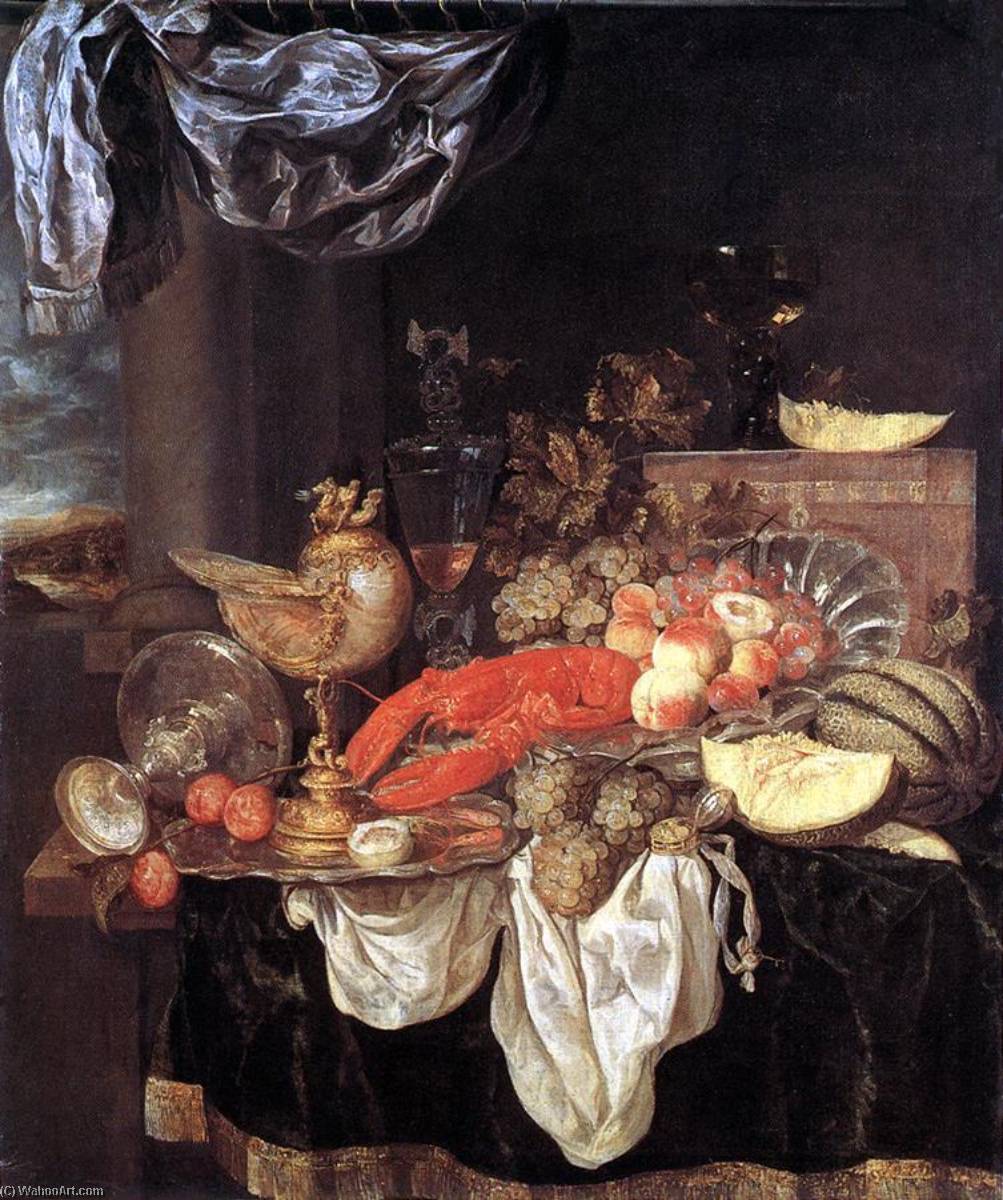
Large Still life with Lobster
 Oil On Canvas
- WallArt
- Baroque
 1653
1653- Early Modern
 1255.0 x 1051.0 cm
 Alte Pinakothek
 Read More
Purchase a high-resolution, enhanced digital image, far superior to the online preview.
Each file is meticulously prepared by our in-house specialists using advanced tools and expert manual retouching. We ensure every image has exceptional clarity, precise color accuracy, and fine detail.
The final file is delivered via email within 72 hours, optimized for immediate use in professional, editorial, and print environments. This is the same quality trusted by top-tier design studios, publishers, and galleries.
Digital Image
Download a high-resolution file for personal display, printing, and creative projects. ( Buy Print Buy Hand Made Painting)
Included in Every Digital Image Order
Expert Digital Delivery, Guaranteed
When you choose ArtsDot.com, you're not just getting an image - you're receiving a professionally enhanced digital artwork, crafted with precision and backed by a satisfaction guarantee. Here's everything that comes with your order, automatically:

Fast Email Delivery
Your high-resolution digital image file will be emailed to you within 72 hours of ordering - ready for immediate use.

AI-Enhanced Digital File
Your artwork is professionally optimized using advanced AI tools and manual editing, ensuring maximum detail, clarity, and color accuracy.

Free Lifetime Re-Delivery
Accidentally deleted or lost your file? No worries - we'll resend it to you anytime, free of charge.

No Import Fees - Ever
Enjoy your artwork instantly with zero customs, duties, or delivery fees - digital downloads are always tax-free.

Color Accuracy Guarantee
We ensure your digital image reflects the original colors as closely as possible using professional tools and color management.

60-Day Satisfaction Guarantee
If you're not satisfied with your digital image, we'll revise it or refund 100% within 60 days - no questions asked.

100% Money-Back Guarantee
Not satisfied? Get a full refund within 60 days of receiving your digital file - no questions asked.

Bulk Order Discounts
Buy 3 images, save 10% - Buy 5, save 15% - Buy 10+, save 20%. Great for creative projects, galleries, and agencies.
Collectible Description
A Bounty of Earthly Splendor: Exploring the Still Life Tradition
To gaze upon this magnificent still life is to be enveloped in an atmosphere of opulent abundance. It is a feast for the eyes, meticulously arranged to celebrate the rich harvest and the bounty that nature so generously provides. The composition centers around a magnificent lobster, its vibrant shell a focal point against the tapestry of surrounding edibles. Scattered apples, gleaming with ripeness, dot the scene—some nestled in the upper reaches, others grounding the lower corners. These are not merely depictions of food; they are carefully curated moments of material perfection, inviting the viewer into a contemplation of earthly pleasures.
The sheer scale of this work, measuring an impressive 1255 x 1051 cm, suggests it was intended as a monumental statement piece, designed to command attention within the grandest of interiors. It speaks volumes about the period's love for display and the celebration of worldly success.
The Masterful Hand of Abraham Hendricksz. van Beyeren
This exquisite work bears the unmistakable signature of Abraham Hendricksz. van Beyeren, a true luminary of the Dutch Golden Age. Van Beyeren, whose career spanned from 1620 to 1690, was renowned for his unparalleled ability to capture the ephemeral beauty found in flowers, fruits, and marine life. His technique is nothing short of breathtaking; one can almost smell the sweetness of the apples or feel the cool shell of the lobster. The influence of masters like Johannes Vermeer lingers in the subtle play of light across the various textures—the waxy sheen on a fruit, the deep gloss on the seafood.
His handling of light is particularly noteworthy. It does not merely illuminate; it sculpts, giving every element a tangible weight and presence that elevates the arrangement from mere still life to something approaching a carefully constructed tableau vivant.
Symbolism and the Art of Vanitas
Within the rich vocabulary of Dutch art, such an overflowing display carries layers of meaning. While the immediate impression is one of luxury—the very definition of earthly excess—these works often whisper secrets of Vanitas. The inclusion of perishable goods, though rendered with such permanence by the artist's skill, serves as a gentle memento mori. It reminds us that even the most glorious bounty fades. Yet, this contemplation is not one of despair; rather, it is an acknowledgment of life’s fleeting perfection, urging the viewer to appreciate the moment.
The bowls themselves, strategically placed in the upper right and lower left, act as anchors for the composition, framing the central drama and guiding the eye through the narrative of abundance and transience.
Bringing Grandeur Home: Reproduction Considerations
For those seeking to infuse a space with this historical grandeur, acquiring a high-quality reproduction of this piece is an unparalleled choice. A hand-painted rendition allows you to bring the depth, the saturated color palette, and the masterful illusionism of Van Beyeren’s original vision into your modern home or gallery setting. Imagine the impact: the rich narrative unfolding across a large format, echoing the opulence of 17th-century Dutch masters while serving as a breathtaking focal point for contemporary design.
This artwork is more than decoration; it is an heirloom in waiting—a conversation starter that speaks to connoisseurship, history, and the enduring beauty found at nature's lavish table.
Related Artworks
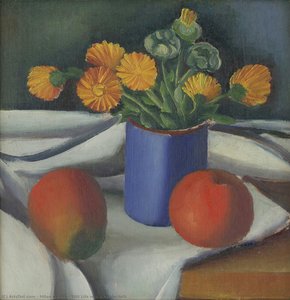
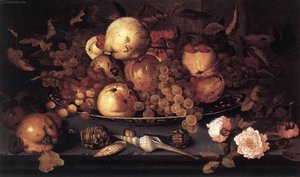
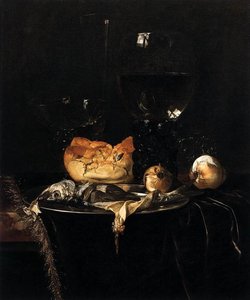
Artist Biography
The Master of the Dutch Golden Age Still Life
In the vibrant, prosperous landscape of the seventeenth-century Netherlands, few artists captured the sensory richness of existence as profoundly as Abraham Hendricksz. van Beyeren. Born in The Hague around 1620, van Beyeren emerged during a period of unparalleled artistic flourishing known as the Dutch Golden Age. His life and work were deeply intertwined with the intellectual and commercial pulse of cities like Leiden, Delft, and Amsterdam, where he established himself as a premier chronicler of the material world. While much of his early biography remains shrouded in the soft shadows of history, his artistic lineage suggests a connection to the masters of his era, with some accounts even attributing his foundational training to the legendary Johannes Vermeer. This influence is evident in his sophisticated command of light, a quality that allowed him to transform simple objects into luminous protagonists within his compositions.
The evolution of van Beyron's style serves as a visual chronicle of the shifting aesthetic tides in Dutch art. His early period was characterized by a dramatic, almost theatrical intensity, heavily influenced by the chiaroscuro techniques popularized by Caravaggio. During these formative years, his canvases were defined by deep, moody shadows and sharp, piercing highlights that lent a sense of gravity and emotional weight to his subjects. However, as his career matured, van Beyeren underwent a remarkable stylistic metamorphosis. He gradually moved away from the heavy Baroque tension toward a more serene and luminous palette. His later works embraced softer hues and delicate, precise brushstrokes, reflecting a broader cultural transition from the dramatic grandeur of the early century toward a more contemplative, tranquil aesthetic that celebrated the quiet beauty of the natural world.
Symbolism and the Art of the Banquet
Van Beyeren’s oeuvre is most celebrated for its mastery of the still life, particularly his ability to render textures that seem almost tactile to the viewer. He was a virtuoso of the "banquet" tradition, creating opulent scenes that were far more than mere displays of wealth. Through his meticulous depiction of overflowing platters of fruit, glistening lobsters, and fine glassware, he engaged in a complex dialogue with symbolism. A single piece of ripening fruit or a beautifully crafted timepiece could serve as a memento mori—a poignant reminder of the fleeting nature of life and the inevitability of decay. This tension between the exuberant abundance of the feast and the underlying theme of transience gave his work a profound intellectual depth that resonated with the humanist values of his time.
His technical achievements are perhaps best exemplified in his diverse range of subjects, which included:
- Floral Compositions: Exquisite arrangements where each petal and leaf was rendered with scientific precision, capturing the ephemeral beauty of blooms.
- Maritime and Aquatic Life: Masterful depictions of fish and crustaceans, such as his famous Large Still life with Lobster, which showcased his ability to capture moisture and light reflecting off organic surfaces.
- Luxury Goods: The inclusion of precious metals, fine ceramics, and intricate glassware, demonstrating a profound understanding of how different materials interact with light.
Legacy and Historical Significance
The historical significance of Abraham Hendricksz. van Beyeren lies in his ability to elevate the still life genre from mere decorative craft to a high art form capable of expressing complex philosophical truths. His works continue to reside in some of the world's most prestigious institutions, including the Mauritshuis in The Hague, the Louvre in Paris, and the Metropolitan Museum of Art in New York. By bridging the gap between the dramatic intensity of the early Baroque and the refined elegance of later Dutch traditions, he left an indelible mark on the trajectory of European painting. Today, his canvases remain much more than historical artifacts; they are enduring windows into a lost era of splendor, inviting every generation to pause and admire the quiet, magnificent details of the world around them.
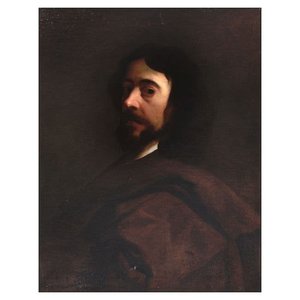
abraham hendricksz. van beyeren
1620 - 1690 , Netherlands
Quick Facts
- Artistic Movement Or Style: Still Life
- Artists Or Movements Influenced By This Artist: ['Dutch Golden Age']
- Date Of Birth: 1620
- Full Name: Abraham Hendricksz. van Beyeren
- Nationality: Dutch
- Notable Artworks:
- Still Life with a Lobster, Fruit, Silver and China Ware
- A blue and white porcelain bowl with fruit
- A chinese porcelain jug, grapes and a peach on a pewter plate with a fobwatch on a draped ledge
- Place Of Birth: The Hague, Netherlands

