 Preview
 Send
Send Share
Share
 Details

 Download
 Similars
 X-Ray
X-Ray Diaporama
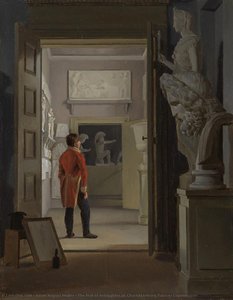
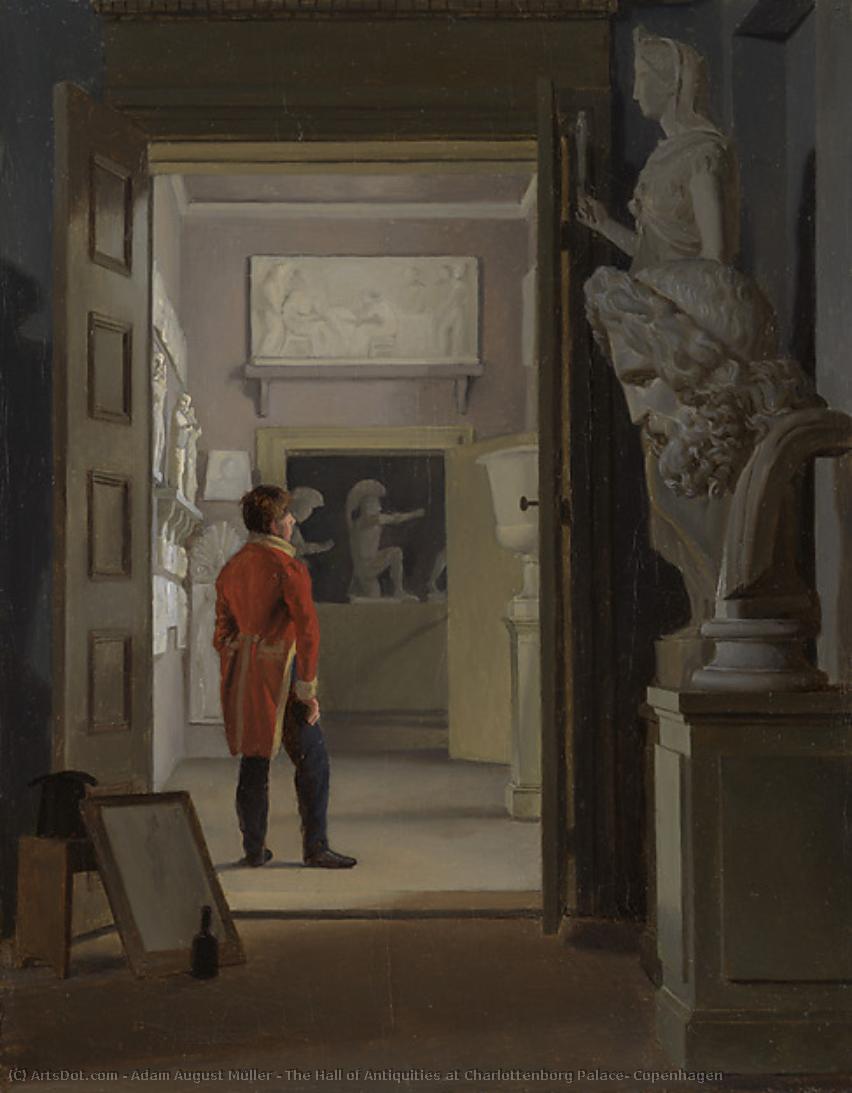
The Hall of Antiquities at Charlottenborg Palace, Copenhagen
 Oil On Canvas
- WallArt
- Romanticism
 1830
1830 32.0 x 25.0 cm
 Metropolitan Museum of Art
 Read More
Hand Made Oil Reproduction
Hand-painted oil on canvas in your size and frame, made to order by our artists. ( Buy Print Buy Image)




P118B $10

P118H $10

P118W $10

P438Z $10

P508JH $12

P508YH $12

P805H $10

P805Z $10

P919BZ $10

P919G $10

P919XJ $10

P959ZH $10

P968JZ $12

W106C $8

W218G $10

W218JH $8

W218Y $10

W307PJ $10

W316G $10

W316PJ $8

W316Y $10

W398PJ $8

W4111J $10

W500HY $15

W500JH $15

W692G $12

W849H $8

W940BG $15

W953PJ $8




Pick from our preset sizes that match the artwork's original proportions.

You may enter your own dimensions to fit a specific frame or space. If your selected size does not match the original image's proportions, we will either crop the artwork or extend the painting with additional hand-painted elements. A digital mockup will be sent for your approval before production begins.
Please note that the on-screen preview does not reflect the actual cropping or extension. Only the mockup will accurately show the final composition.
While custom sizes are available, we recommend selecting a dimension from the predefined list to preserve the original proportions.
After order, ArtsDot.com team will email client for instructions and provide a mockup preview
Worldwide Delivery () in 3/4 weeks instead of standard 5 weeks. (2 September). No compromise on quality.

Free Worldwide Express Shipping

High-Quality Linen Canvas

Full Shipping Insurance

Customs Tax Refund Guarantee

True Color Matching Guarantee

60-Day Return Policy (Defects Only)

100% Money-Back Guarantee

Bulk Discount Offer
 Glass option is only available in size under 110 CM

The Hall of Antiquities at Charlottenborg Palace, Copenhagen
Reproduction Medium
Reproduction Size
-


Total Price
$ 263
A Glimpse into the Past: Müller’s Reflection on Antiquity
Adam August Müller's “The Hall of Antiquities at Charlottenborg Palace, Copenhagen” isn’t merely a depiction of a museum space; it’s a carefully constructed dialogue between the present and the echoes of antiquity. Painted in 1830 during his formative years under the tutelage of Christoffer Wilhelm Eckersberg, this work captures a pivotal moment in Danish art history – the renewed fascination with classical Greece and Rome that swept across Europe. The scene unfolds within the Royal Danish Academy’s Charlottenborg Palace, specifically its Hall of Antiquities, a space designed to inspire young artists by presenting them with tangible models of ancient sculpture. Müller masterfully uses light and shadow to draw the viewer into this contemplative atmosphere, creating a sense of quiet reverence amidst the bustling activity of artistic training.

A Study in Form and Observation
Müller’s technique is characterized by a meticulous attention to detail and a restrained palette. He employs a predominantly muted color scheme – ochres, browns, and greys – that evokes the aged stone of the palace walls and the weathered surfaces of the plaster casts. The artist's brushwork is precise yet subtly expressive, capturing not just the physical forms but also the textures and nuances of light reflecting off the marble and bronze. Notice how he renders the shadows cast by the statues, imbuing them with a sense of weight and solidity. The composition itself is carefully balanced, guiding the eye through the gallery towards the central statue – a subtle reference to the idealized beauty of ancient Greek sculpture, likely Isis.
- Subject Matter: A museum hallway showcasing classical sculptures.
- Style: Romanticism with strong influences from Neoclassicism and academic painting.
- Technique: Oil on canvas; meticulous observation of form, light, and texture.
Symbolism and the Artist’s Presence
Beyond a straightforward depiction, “The Hall of Antiquities” is laden with symbolic meaning. The young watchman, positioned in the foreground, embodies the transition from tradition to modernity. His casual posture – a stark contrast to the rigid formality of the plaster casts – suggests a shift in artistic sensibilities. The tablet he holds, bearing a faint rendering of the standing Isis statue, subtly acknowledges Müller’s own engagement with antiquity and his role as a student learning from its legacy. This small detail underscores the artist's presence within the scene, inviting us to consider the creative process itself.
A Window into 19th-Century Denmark
This painting offers a valuable glimpse into the cultural landscape of 19th-century Copenhagen. The Royal Danish Academy’s Charlottenborg Palace served as a vital center for artistic training, shaping generations of Danish artists. Müller's work reflects the renewed interest in classical antiquity that was prevalent at the time – a movement fueled by archaeological discoveries and a desire to revive the ideals of ancient Greece and Rome. The painting also speaks to the importance of observation and meticulous study within the academic tradition, values that would continue to influence Danish art for decades to come. It’s a poignant reminder of how artists engage with their historical context and use it as a foundation for their own creative explorations.
Related Artworks
Artist Biography
A Visionary of the Danish Golden Age
The history of the Danish Golden Age is often told through the lens of serene landscapes and intimate genre scenes, yet within this era lived a spirit far more dramatic and profound. Adam August Müller (1811–1844) was an artist whose brief, thirty-two-year life burned with the intensity of a short-lived flame. Born in Copenhagen into a family of intellectual and ecclesiastical distinction—the son of the prominent Bishop Peter Erasmus Müller—Müller was destined for a life of deep contemplation. While his contemporaries often sought the quiet charm of the Danish countryside, Müller turned his gaze toward the monumental, aspiring to the lofty heights of history painting. His career, though tragically truncated by illness, remains a vital chapter in Scandinavian art, representing a bridge between Northern precision and the emotive grandeur of the Southern Renaissance.
Müller’s artistic journey began under the watchful eye of Christoffer Wilhelm Eckersberg, the "Father of Danish Painting." Entering the Royal Danish Academy of Fine Arts in 1825, Müller became one of Eckersberg’s most cherished pupils. From his mentor, he inherited a rigorous commitment to meticulous observation and a belief that art should serve as a vessel for moral truth. However, where Eckersberg often found beauty in the clarity of light and the simplicity of form, Müller sought to infuse his work with a more turbulent, Romantic energy. He joined the Model School in 1828, refining a technique that balanced the disciplined anatomical accuracy taught at the Academy with an emerging desire to capture the raw essence of human emotion and spiritual narrative.
The Italian Influence and the Pursuit of Grandeur
The trajectory of Müller’s development was irrevocly altered by his encounter with the traditions of the South. Though his path to Italy was fraught with the physical frailty that would eventually claim his life, his travels through Munich and eventually into the heart of Italy provided him with a new visual vocabulary. It was here that he moved away from the restrained aesthetics of the North and began to embrace the dramatic chiaroscuro reminiscent of Caravaggio. His studies of Florentine painting encouraged a profound shift in his approach to religious subjects, leading him to adopt an older, more classical Italian style characterized by weight, shadow, and theatricality.
This period of exploration culminated in some of his most significant achievements, marking him as a rising star of the Danish art scene. His talent was formally recognized through prestigious accolades, including:
- The Silver Medal (1833): Awarded by the Royal Danish Academy, signaling his mastery of form and composition.
- The Gold Medal (1836): A testament to his growing reputation as one of Denmark's most promising historical painters.
- The Thorvaldsen Medal: Earned for his masterpiece "Christ Blesses the Four Evangelists" (1843), a work that synthesized his academic training with his newfound passion for Italianate drama.
A Legacy Interrupted
Despite the brilliance of his ascent, Müller’s life was defined by a persistent struggle with ill health. His journey to Italy was marked by bouts of sickness, and upon his return to Copenhagen, his physical decline became irreversible. He died in 1844, leaving behind a collection of works that feel like fragments of a much larger, unfinished epic. Because he focused on history and religious themes—genres that were notoriously difficult to sustain within the smaller Danish market—much of his potential remained locked within unfinished commissions.
Yet, the historical significance of Adam August Müller transcends the tragedy of his early death. He challenged the boundaries of the Danish Golden Age, proving that the movement could encompass not just the observation of the everyday, but the exploration of the eternal. Through his use of light and shadow, and his dedication to the monumental, he brought a sense of cosmic scale to Danish painting. Today, his work stands as a poignant reminder of a visionary who sought to elevate the human spirit through the grandest possible canvas, leaving an indelible mark on the soul of Scandinavian art history.
adam august müller
1811 - 1844 , Denmark
Quick Facts
- Artistic Movement Or Style: Historical Painting
- Artists Or Movements Influenced By This Artist: August Bournonville
- Artists Who Influenced This Artist: Christoffer Wilhelm Eckersberg
- Date Of Birth: August 16, 1811
- Date Of Death: March 15, 1844
- Full Name: Adam August Müller
- Nationality: Danish
- Notable Artworks:
- The Hall of Antiquities at Charlottenborg Palace
- Skewville
- Place Of Birth: Copenhagen, Denmark
Related Articles
Renoir's Masterpieces: Explore 25 Iconic Paintings & Bring Art Home | ArtsDot
Explore 25 iconic Pierre-Auguste Renoir paintings! Discover the stories behind Impressionist masterpieces like 'Dance at Le Moulin de la Galette' & 'Luncheon of the Boating Party'. Find museum-quality art reproductions and elevate your home decor with ArtsDot.com.
William James Müller: Navigating Victorian Sentiment & Realism in British Landscape Painting
Explore the captivating landscapes of William James Müller, the leading artist of the Bristol School. Discover his Victorian masterpieces, Egyptian travels & Lycian sketches – a journey through 19th-century art and technique.

John Ottis Adams: Capturing Rural Indiana's Luminist Spirit
Explore the serene landscapes of John Ottis Adams, a key American Impressionist of the Hoosier Group. Discover his Luminist style & forgotten legacy with ArtsDot.
August Macke: Expressionist Visions of Harmony & Modern Life
Explore the vibrant Expressionist paintings of August Macke (1887-1914). Discover his key role in Der Blaue Reiter, Fauvist influences, and captivating depictions of modern life. A comprehensive guide for art enthusiasts & collectors.
Marianne North's Masterpieces: 25 Botanical Paintings That Bloom With Adventure | ArtsDot
Journey through the vibrant world of Marianne North’s botanical paintings! Explore 25 iconic artworks from this Victorian artist, celebrating exotic flora & travel. Find museum-quality reproductions and curated decor ideas at ArtsDot.com.