 Preview
 Send
Send Share
Share
 Details

 Download
 Similars
 X-Ray
X-Ray Diaporama
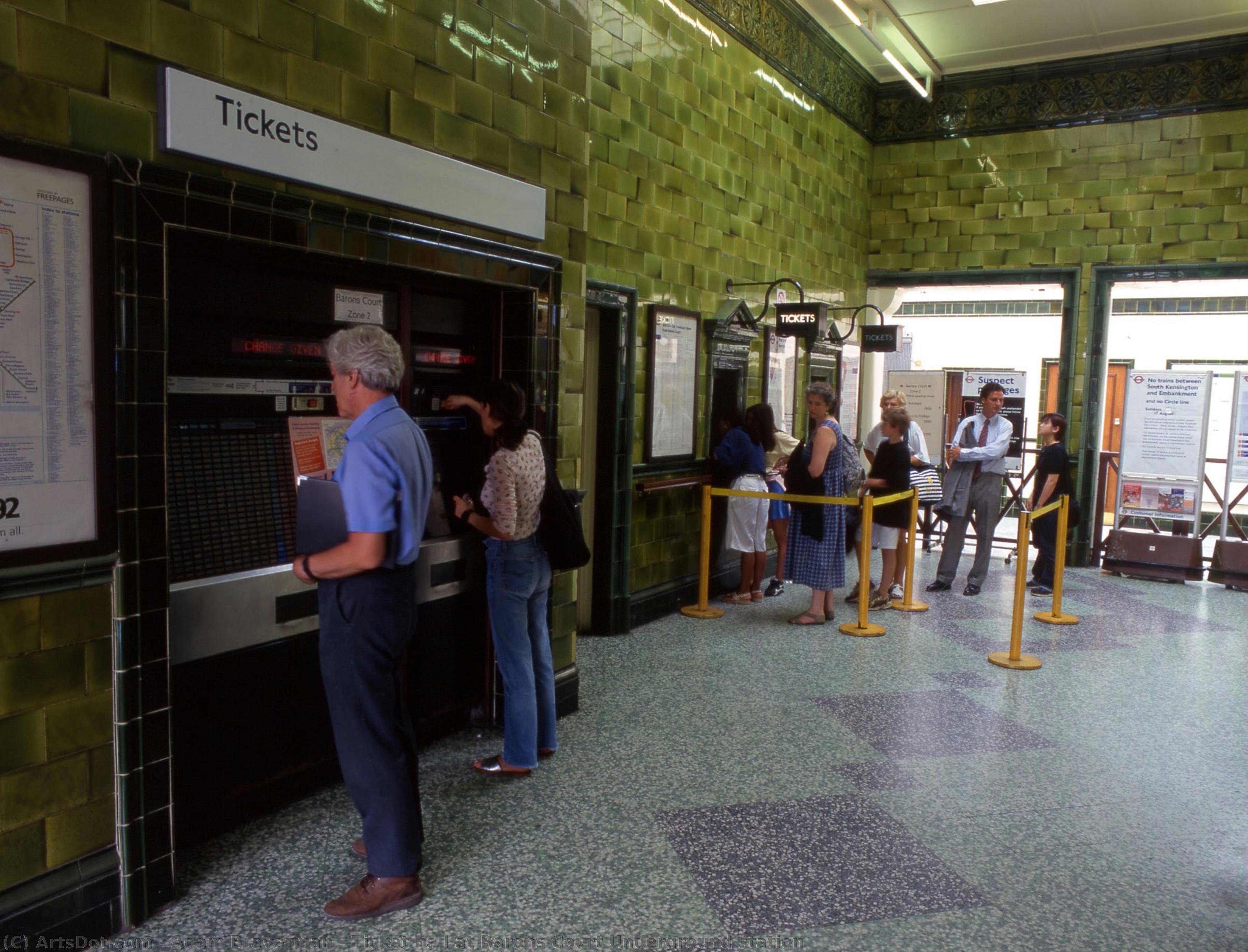
Ticket hall at Barons Court Underground station


 Read More
Hand Made Oil Reproduction
Hand-painted oil on canvas in your size and frame, made to order by our artists. ( Buy Print Buy Image)




P118B $10

P118H $10

P118W $10

P438Z $10

P508JH $12

P508YH $12

P805H $10

P805Z $10

P919BZ $10

P919G $10

P919XJ $10

P959ZH $10

P968JZ $12

W106C $8

W218G $10

W218JH $8

W218Y $10

W307PJ $10

W316G $10

W316PJ $8

W316Y $10

W398PJ $8

W4111J $10

W500HY $15

W500JH $15

W692G $12

W849H $8

W940BG $15

W953PJ $8




Pick from our preset sizes that match the artwork's original proportions.

You may enter your own dimensions to fit a specific frame or space. If your selected size does not match the original image's proportions, we will either crop the artwork or extend the painting with additional hand-painted elements. A digital mockup will be sent for your approval before production begins.
Please note that the on-screen preview does not reflect the actual cropping or extension. Only the mockup will accurately show the final composition.
While custom sizes are available, we recommend selecting a dimension from the predefined list to preserve the original proportions.
After order, ArtsDot.com team will email client for instructions and provide a mockup preview
Worldwide Delivery () in 3/4 weeks instead of standard 5 weeks. (25 August). No compromise on quality.

Free Worldwide Express Shipping

High-Quality Linen Canvas

Full Shipping Insurance

Customs Tax Refund Guarantee

True Color Matching Guarantee

60-Day Return Policy (Defects Only)

100% Money-Back Guarantee

Bulk Discount Offer
 Glass option is only available in size under 110 CM

Ticket hall at Barons Court Underground station
Reproduction Medium
Reproduction Size
-


Total Price
$ 413
Artwork Description
A Glimpse of Urban Transit: Adam Braverman’s ‘Ticket Hall at Barons Court’
Adam Braverman's 1990 photograph, “Ticket Hall at Barons Court Underground Station,” isn’t merely a snapshot; it’s a meticulously observed study of human interaction within the heart of London’s transport system. The image captures a bustling scene inside the historic Barons Court station, a microcosm of city life rendered in striking detail and imbued with a quiet sense of anticipation. The photograph immediately draws the eye to the dominant geometry – the relentlessly green tilework that covers every surface, creating an almost hypnotic pattern that anchors the composition. This deliberate use of color isn’t simply decorative; it speaks to the station's history and its role as a vital artery within the city’s circulatory system.
Braverman’s approach is firmly rooted in documentary photography, prioritizing accuracy and realism over overt artistic expression. The lighting, subtly diffused and casting gentle shadows, contributes to this sense of authenticity. The perspective is linear, guiding the viewer's eye towards the receding lines of the tiled walls and the diminishing figures waiting patiently at the ticket booths. This creates a powerful illusion of depth, transporting us into the very heart of the station’s activity. The composition itself feels deliberately restrained, focusing on the essential elements – the people, the tiles, the architecture – without unnecessary embellishment.
The Architecture and its Context
Barons Court Underground Station holds a significant place in London's transport history. Opened in 1900 as part of the Metropolitan District Railway’s expansion, it represents an early example of subterranean station design. The station’s distinctive green tiles are not just aesthetic; they were chosen for their durability and ability to reflect light, creating a brighter and more welcoming environment compared to the darker conditions prevalent in earlier underground stations. The photograph subtly evokes this history, hinting at the layers of time and transformation that have shaped the station over the decades.
Furthermore, Barons Court itself is a fascinating example of Victorian urban planning. Situated on the edge of Kensington, it was designed as a self-contained neighborhood with its own shops, houses, and public spaces. The station’s location within this context adds another layer of meaning to Braverman's image – it’s not just about transport; it’s about connecting people to their community and beyond.
Symbolism and the Human Element
Despite its documentary style, “Ticket Hall at Barons Court” is rich in symbolism. The queue of waiting passengers represents a universal human experience: the desire for connection, movement, and access to opportunity. Each individual embodies a story – journeys home, commutes to work, visits with loved ones – all converging within this single space. Braverman masterfully captures this sense of collective anticipation, suggesting a shared rhythm and purpose.
The green tiles themselves can be interpreted as symbols of growth, renewal, and the relentless forward momentum of the city. They represent the constant flow of people and ideas that drive London’s dynamism. The photograph, therefore, becomes a meditation on the interconnectedness of urban life – the way in which individuals are shaped by their surroundings and contribute to the larger narrative of the metropolis.
A Timeless Image for Interior Design
“Ticket Hall at Barons Court Underground Station” transcends its documentary origins to become a compelling work of art suitable for a wide range of applications. Its strong geometric composition, evocative lighting, and powerful sense of human connection make it an ideal choice for interior design projects seeking to create a sophisticated and engaging atmosphere. The photograph’s muted color palette and understated elegance complement both modern and classic interiors, adding a touch of urban sophistication and historical resonance.
Reproductions of this image are particularly well-suited for spaces that celebrate travel, architecture, or the spirit of London. Whether adorning a hallway, a waiting room, or a private study, “Ticket Hall at Barons Court” offers a captivating glimpse into the heart of one of the world’s great cities.
Related Artworks



Artist Biography
Early Life and Background
- Born: Berkeley, United States of America (1970)
- Adam Praverman, also known as Adam Braverman, was born in Berkeley, California, in 1970.
- He is an actor best recognized for his role as Adam Braverman in the television series "Parenthood."
- As a child, Adam grew up in a family that valued art and culture. His parents, Zeek and Camille Braverman, were both involved in artistic pursuits, exposing him to various forms of creative expression from an early age. This upbringing likely influenced his decision to pursue acting.
Career as an Actor
- Adam Braverman has appeared in several television shows and movies throughout his career.
- His most notable role is arguably that of Adam Braverman in the series "Parenthood," where he portrayed a complex character with depth and emotional range.
- He demonstrated an ability to convey nuanced emotions, making him a compelling figure on screen.
Artistic Influences
- Adam Braverman's work as an actor has been influenced by various artists and art movements.
- Specifically, he has cited Claude Monet and Vincent Van Gogh as inspirations for his character portrayals.
- The Museum of Modern Art (MoMA) in New York City has also served as a source of inspiration for his artistic approach.
Notable Works and Recognition
- His roles in "Parenthood" and other television shows are considered among his most significant contributions to the acting community.
- Adam's ability to portray complex characters has earned him recognition and respect within the industry.
Summary and Legacy
- Adam Braverman’s biography reflects a dedication to the arts and a passion for acting.
- His career showcases his talent for portraying compelling characters, influenced by various artistic inspirations.
- He continues to be recognized for his contributions to television and his ability to bring depth and emotion to his roles.

adam braverman
1970 - , United States of America
Quick Facts
- Artists Who Influenced This Artist:
- Claude Monet
- Vincent Van Gogh
- Date Of Birth: 1970
- Full Name: Adam Braverman (Adam Praverman)
- Nationality: American
- Notable Artworks: ['Roles in Parenthood and other shows']
- Place Of Birth: Berkeley, United States
Related Articles

Monochrome Visions: Exploring the Aesthetic & Historical Significance of Black & White Photography
Explore the rich history & artistic power of black and white photography. From early techniques to iconic masters like Ansel Adams, discover why monochrome continues to captivate art lovers today. Expert insights for collectors.
Beyond the Lens: Photography's Enduring Influence on Modern & Contemporary Art
Explore photography's pivotal role in shaping modern & contemporary art. Discover key movements, influential artists like Stieglitz, and expert collecting advice from ArtsDot.
Documentary Photography's Defining Moments: 10 Masterpieces for Your Home |
Explore 10 defining documentary photography masterpieces – from Dorothea Lange to Robert Capa. Discover powerful stories, iconic images & timeless art for your home. Museum-quality prints at .

Witnessing History Through Lens & Light: Documentary Photography's Enduring Legacy
Explore the powerful history of documentary photography – from its origins to contemporary masters like Gordon Parks & W. Eugene Smith. Discover how this art form shapes our understanding of society and witness pivotal moments in time.
Pictorialism: A Search for Artistic Photography's Soul – Aesthetics, Techniques & Legacy
Explore the captivating world of Pictorialism – a pivotal movement that transformed photography into fine art. Discover key artists like Stieglitz & Käsebier, techniques, and collecting tips from experts.