 Preview
 Send
Send Share
Share
 Details

 Download
 Similars
 X-Ray
X-Ray Diaporama
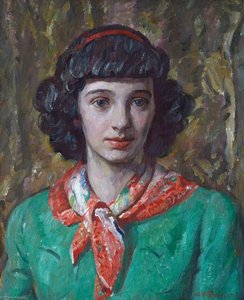
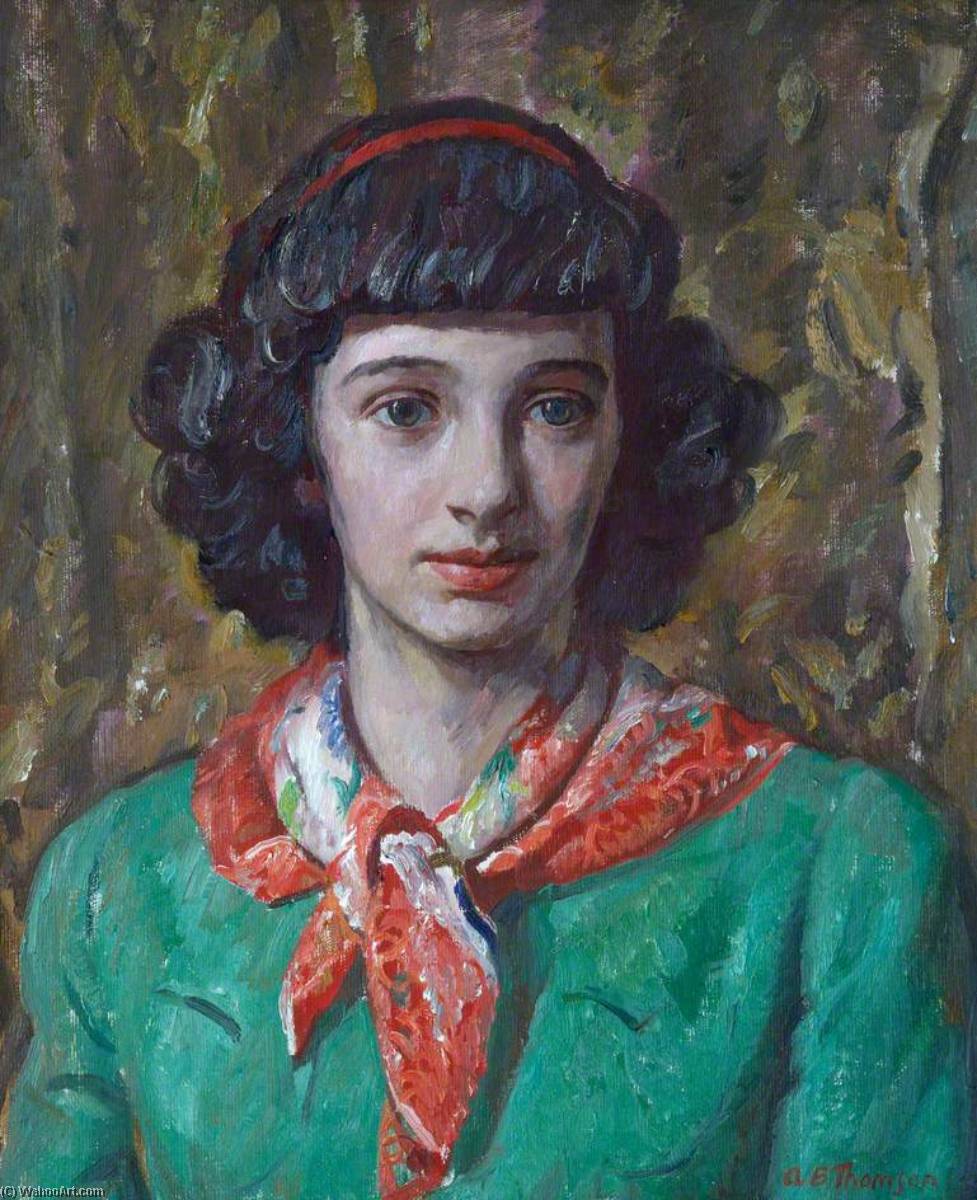
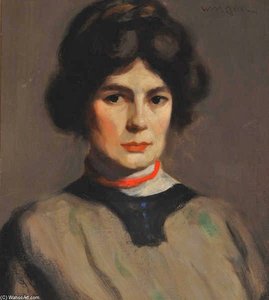
Head of a Girl
 Edinburgh School
 1943
1943 56.0 x 46.0 cm
 Royal Scottish Academy of Art - Architecture
 Read More
Hand Made Oil Reproduction
Hand-painted oil on canvas in your size and frame, made to order by our artists. ( Buy Print Buy Image)




































Pick from our preset sizes that match the artwork's original proportions.

You may enter your own dimensions to fit a specific frame or space. If your selected size does not match the original image's proportions, we will either crop the artwork or extend the painting with additional hand-painted elements. A digital mockup will be sent for your approval before production begins.
Please note that the on-screen preview does not reflect the actual cropping or extension. Only the mockup will accurately show the final composition.
While custom sizes are available, we recommend selecting a dimension from the predefined list to preserve the original proportions.
After order, ArtsDot.com team will email client for instructions and provide a mockup preview
Worldwide Delivery () in 3/4 weeks instead of standard 5 weeks. (22 August). No compromise on quality.

Free Worldwide Express Shipping

High-Quality Linen Canvas

Full Shipping Insurance

Customs Tax Refund Guarantee

True Color Matching Guarantee

60-Day Return Policy (Defects Only)

100% Money-Back Guarantee

Bulk Discount Offer
 Glass option is only available in size under 110 CM

Head of a Girl
Reproduction Medium
Reproduction Size
-


Total Price
$ 263
Related Artworks

Artist Biography
A Highland Visionary: The Life and Legacy of Adam Bruce Thomson
In the heart of Scotland’s rich artistic heritage, few names resonate with as much quiet authority and enduring grace as Adam Bruce Thomson. Known affectionately to his students at the Edinburgh College of Art as ‘Adam B’, this master of light and landscape was far more than a mere painter; he was a chronicler of the Scottish soul. Born in Edinburgh in 1885, Thomson’s life was an intricate tapestry woven from the rigorous discipline of classical training and a profound, wandering curiosity that led him across the landscapes of Europe. His journey began within the hallowed halls of the Royal Institution School of Art and the RSA Life School, where he laid the foundational stones of his technical mastery. This early period of intense study in drawing, painting, and even architecture provided him with a unique structural understanding of the world—a perspective that would later allow him to capture the rugged bones of the Highlands with both precision and poetic fluidity.
The evolution of Thomson’s style was profoundly shaped by his thirst for exploration. Between 1910 and 1912, his travels through the vibrant streets of Paris, the historic canals of Holland, and the sun-drenched landscapes of Spain introduced him to the transformative power of Impressionism. These expeditions acted as a catalyst, softening the edges of his academic training and infusing his palette with a new, luminous vitality. However, the shadows of history would soon intersect with his artistic path. During the Great War, serving as a second lieutenant in the Royal Engineers, Thomson witnessed the harrowing realities of conflict near Arras. His sketches from this era—depicting troop movements and the skeletal remains of the Mont St Eloi Abbey—stand as poignant testaments to a humanist compassion, blending technical prowess with the somber weight of wartime experience.
Mastery of Medium and the Edinburgh School
Upon his return to civilian life, Thomson’s influence expanded from the canvas to the classroom. As a dedicated educator at the Edinburgh College of Art from 1919 until his retirement in 1950, he nurtured generations of talent, cementing his role as a cornerstone of the celebrated Edinburgh School. His pedagogical legacy was matched only by his prolific output in both oil and watercolour. Thomson possessed a rare ability to manipulate these mediums to evoke different emotional registers; where his oils offered a robust, textured exploration of form and light, his watercolours captured the ephemeral, misty atmosphere of the Scottish Highlands with unparalleled delicacy.
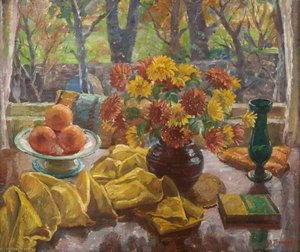
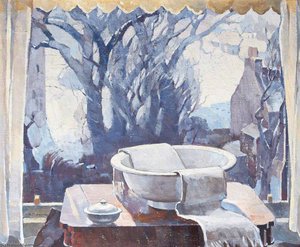
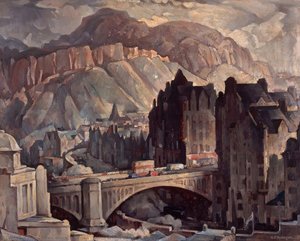
His body of work is characterized by an intimate connection to his subject matter. Whether he was rendering the architectural charm of Edinburgh’s North Bridge or the serene, domestic stillness of a window-side still life, there was always an underlying sense of reverence for the scene. His technical repertoire was remarkably diverse, encompassing:
- Landscape Painting: Evocative depictions of the Highlands and Edinburgh that capture the shifting moods of Scottish weather.
- Printmaking: Early mastery in the intricate disciplines of etching, drypoint, and lithography.
- Portraiture and Still Life: A sensitive approach to human subjects and domestic objects, blending realism with impressionistic light.
- Watercolour Excellence: A celebrated ability to use transparency and wash to recreate the atmospheric haze of the North.
Today, the significance of Adam Bruce Thomson lies not only in the beauty of his finished works but in his role as a bridge between the classical traditions of the 19th century and the modern sensibilities of the 20th. He remains a vital figure for anyone seeking to understand the rhythmic pulse of Scottish landscape art, leaving behind a visual legacy that continues to inspire awe through its quiet, enduring strength.
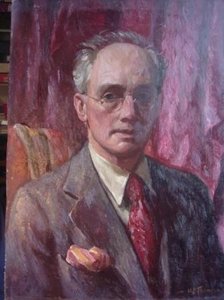
Adam Bruce Thomson
1885 - 1976
Quick Facts
- Artistic Movement Or Style: Edinburgh School
- Artists Who Influenced This Artist:
- William MacTaggart
- David Macbeth Sutherland
- Date Of Birth: 1885
- Date Of Death: 1976
- Full Name: adam bruce thomson
- Nationality: Scottish
- Notable Artworks:
- St. Martin’s Bridge in Toledo
- Zeppelin L 33 Crash
- Head of a Girl
- Place Of Birth: Edinburgh
Related Articles

Crimson Threads of Narrative: Exploring Symbolism & Representation in Artworks Featuring the Red Dress
Explore the rich symbolism of the red dress in art history! From ancient power displays to iconic portraits like Cézanne’s 'Madame Cezanne', discover the cultural and artistic significance behind this captivating color. Expert analysis & insights.

The Enduring Legacy of Oil on Canvas: Technique, History & Aesthetic Impact
Explore the rich history & techniques of oil painting – from Renaissance masters to Impressionism. Discover pigments, layering methods, and why this timeless medium endures. Expert insights for artists & art enthusiasts.

Oil on Canvas: A Historical & Technical Exploration of a Timeless Artistic Medium
Explore the rich history & enduring techniques of oil painting on canvas. Discover the science behind its longevity, conservation practices, and contemporary relevance. Expert insights for art enthusiasts.

The Enduring Power of Painting: A Historical & Contemporary Exploration of Form and Emotion
Explore the rich history & enduring techniques of oil painting with ArtsDot. Discover masterpieces, learn about art collecting, and find authentic handmade reproductions crafted by skilled artists.

The Enduring Legacy of Oil on Canvas: Technique, History & Contemporary Practice
Explore the rich history & enduring techniques of oil painting on canvas. Discover the science behind its longevity, conservation practices, and contemporary relevance. Expert insights for art enthusiasts.