 Preview
 Send
Send Share
Share
 Details

 Download
 Similars
 X-Ray
X-Ray Diaporama
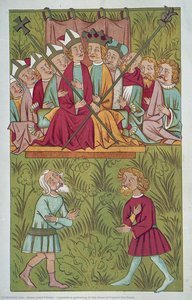
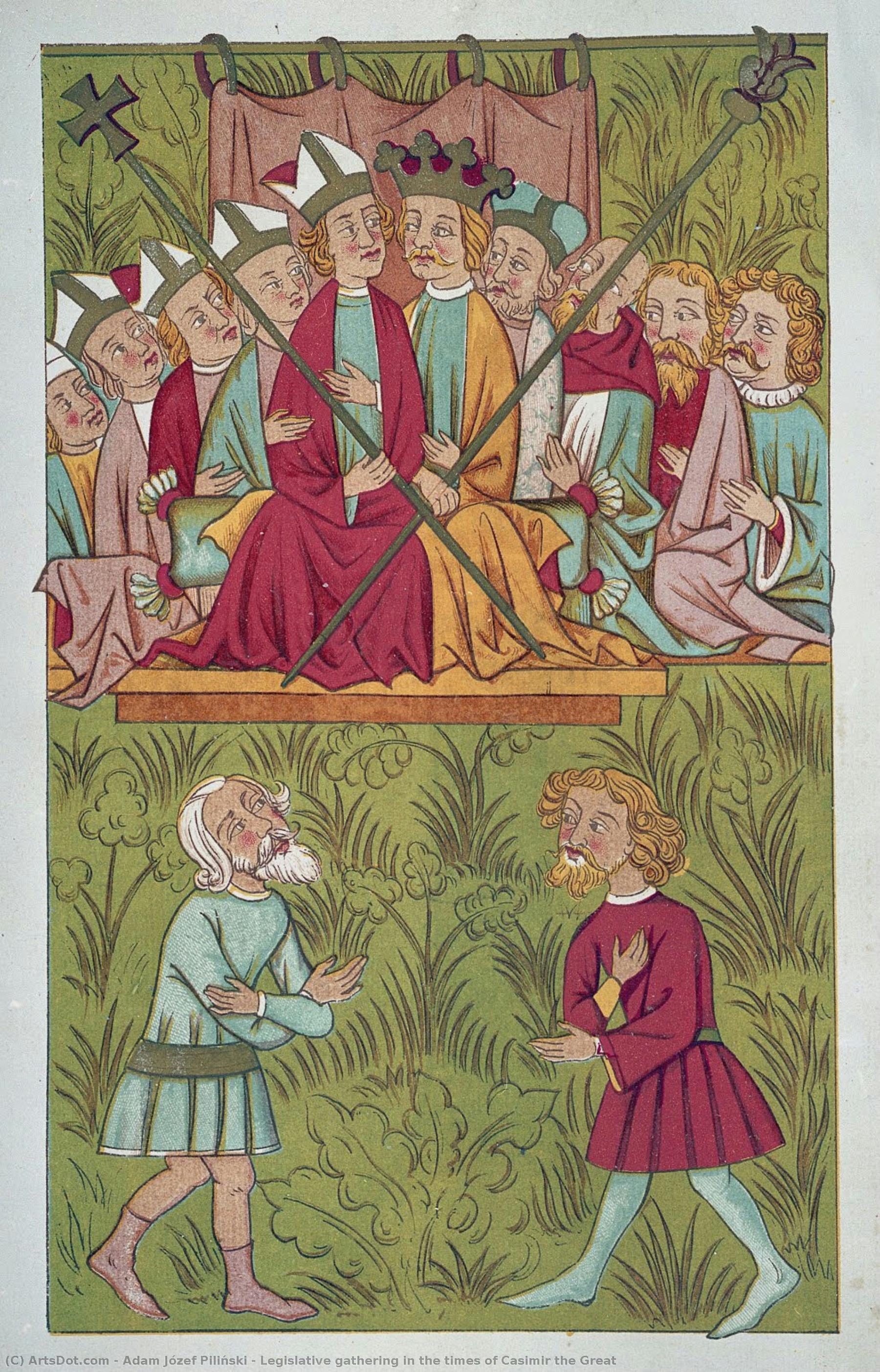
Legislative gathering in the times of Casimir the Great
 Lithograph
- Historicism
 1883
1883- Late Medieval
 32.0 x 23.0 cm
 Parliament of Poland
 Read More
Hand Made Oil Reproduction
Hand-painted oil on canvas in your size and frame, made to order by our artists. ( Buy Print Buy Image)




P118B $10

P118H $10

P118W $10

P438Z $10

P508JH $12

P508YH $12

P805H $10

P805Z $10

P919BZ $10

P919G $10

P919XJ $10

P959ZH $10

P968JZ $12

W106C $8

W218G $10

W218JH $8

W218Y $10

W307PJ $10

W316G $10

W316PJ $8

W316Y $10

W398PJ $8

W4111J $10

W500HY $15

W500JH $15

W692G $12

W849H $8

W940BG $15

W953PJ $8




Pick from our preset sizes that match the artwork's original proportions.

You may enter your own dimensions to fit a specific frame or space. If your selected size does not match the original image's proportions, we will either crop the artwork or extend the painting with additional hand-painted elements. A digital mockup will be sent for your approval before production begins.
Please note that the on-screen preview does not reflect the actual cropping or extension. Only the mockup will accurately show the final composition.
While custom sizes are available, we recommend selecting a dimension from the predefined list to preserve the original proportions.
After order, ArtsDot.com team will email client for instructions and provide a mockup preview
Worldwide Delivery () in 3/4 weeks instead of standard 5 weeks. (30 August). No compromise on quality.

Free Worldwide Express Shipping

High-Quality Linen Canvas

Full Shipping Insurance

Customs Tax Refund Guarantee

True Color Matching Guarantee

60-Day Return Policy (Defects Only)

100% Money-Back Guarantee

Bulk Discount Offer
 Glass option is only available in size under 110 CM

Legislative gathering in the times of Casimir the Great
Reproduction Medium
Reproduction Size
-


Total Price
$ 263
A Glimpse into Poland's Golden Age
In this evocative masterpiece by the Polish master Adam Józef Piliński, we are transported back to the 14th century, witnessing a pivotal moment in the formation of the Polish state. Legislative gathering in the times of Casimir the Great is not merely a depiction of a meeting; it is a window into the very soul of medieval governance. The scene captures the essence of the provincial gatherings held during the reign of Casimir III, known as the Great. Unlike the later, more structured Sejms, these assemblies were characterized by a unique atmosphere where knights and nobles gathered not as active participants in debate, but as solemn witnesses to the unfolding of justice and royal decree. Piliński masterfully recreates this sense of historical gravity, placing the viewer directly into the heart of a field where the destiny of a nation was being quietly shaped.
The composition is anchored by the commanding presence of the King and the Archbishop of Gniezno. As they hold the sacred insignia of power—the long, imposing sceptre and the cross—they embody the dual pillars of medieval authority: the crown and the church. Surrounded by a sea of magnates and bishops, their figures serve as the focal point around which the weight of history revolves. The artist uses light and shadow to highlight these symbols of legitimacy, ensuring that the viewer feels the profound importance of the regalia. Every figure in the crowd, from the highest-ranking cleric to the watchful knight, contributes to a tapestry of communal witness, reflecting a time when the law was a shared, visible experience.
Mastery of Detail and Historical Texture
Piliński, a virtuoso of lithography and engraving, brings an extraordinary level of textural richness to this work. His background as a paleographer and specialist in reproducing ancient manuscripts is evident in the meticulous attention to detail found in the medieval attire and the sacred objects depicted. The heavy fabrics of the nobles' robes, the intricate metallic sheen of the armor, and the weathered texture of the religious texts are rendered with a precision that borders on the miraculous. This technical prowess allows the painting to function as much as a historical document as an artistic triumph, offering collectors a piece that is deeply rooted in the authenticity of the 14th-century aesthetic.
For the discerning collector or interior designer, this artwork offers a profound emotional and intellectual depth. The muted, earthy palette evokes the natural setting of the outdoor assembly, while the dramatic interplay of light creates a sense of timelessness. It is a piece that commands attention in any sophisticated space, providing a conversation starter that bridges the gap between art history and national identity. Whether placed in a library, a study, or a grand hall, this reproduction serves as a powerful emblem of heritage, stability, and the enduring legacy of leadership. To possess such a work is to hold a fragment of Poland's glorious past, captured through the skilled hand of an artist who dedicated his life to preserving the echoes of history.
Related Artworks
Artist Biography
The Soul of the Line: The Life and Legacy of Adam Józef Piliński
In the turbulent landscape of nineteenth-century Europe, where national identities were forged in the fires of uprising and resistance, the work of Adam Józef Piliński emerged as a profound testament to Polish resilience. Born on November 22, 1810, in Maciejowice, Poland, Piliński was more than a mere practitioner of the graphic arts; he was a scholar, an activist, and a guardian of cultural memory. His life, which spanned from the height of Polish romanticism to his final days in Paris in 1887, was inextricably linked to the heartbeat of his nation. As a student at the University of Warsaw's School of Fine Arts, he did not merely learn the mechanics of lithography and engraving; he learned how to use the precision of the burin and the softness of the stone to document a heritage that was under constant threat of erasure.
The formative years of Piliński’s career were shadowed by the smoke of conflict, most notably during the November Uprising of 1830-1831. This period of intense political upheaval deeply influenced his artistic consciousness, instilling in him a sense of duty that would define his professional trajectory. He did not view art as an isolated pursuit of beauty, but as a vital tool for preservation and political expression. His mastery over various mediums—ranging from the delicate nuances of paleography to the technical rigors of lithography—allowed him to bridge the gap between historical reconstruction and contemporary activism.
A Master of Reconstruction and Design
Piliński’s true genius lay in his ability to breathe life into the past through his revolutionary approach to historical documents. He became renowned for his exceptional skill in reproducing manuscripts and printed works from diverse eras, a feat that required not only artistic dexterity but also the meticulous eye of a paleographer. Perhaps his most significant technical contribution was the development of homography, a sophisticated technique designed for the reconstruction of ancient documents. Through this method, he could replicate the essence of historical scripts, ensuring that the fragile threads of Polish cultural heritage remained visible to future generations even as original manuscripts succumbed to time.
This dedication to functional and symbolic art reached a pinnacle during the January Uprising of 1863-1864. As Poland struggled for sovereignty, Piliński applied his graphic talents to the service of the National Polish Monetary Fund. His work on banknotes and coins was far more than mere currency production; it was an act of defiance. By creating intricate, high-quality designs for the nation's financial instruments, he helped assert a sense of economic and cultural autonomy. Each engraving and lithograph served as a miniature monument to the Polish cause, blending the precision of a master engraver with the passion of a patriot.
An Enduring Artistic Heritage
The significance of Adam Józef Piliński extends far beyond the borders of Poland, reaching into the broader history of nineteenth-century graphic arts. His ability to adapt his style across various mediums—from the sharp, definitive lines of engraving to the tonal richness of lithography—demonstrates a versatility that few of his contemporaries could match. His legacy is not found merely in museums, but in the very survival of the historical narratives he worked so tirelessly to protect.
Today, the works of Piliński continue to captivate scholars and art enthusiasts alike. His contributions can be explored through various prestigious collections, including those featured on ArtsDot, where his meticulous reproductions serve as a window into a vanished era. To study Piliński is to witness the intersection of art and history, where every stroke of the engraver's tool was an act of devotion to a culture, a people, and a dream of independence.
adam józef piliński
1810 - 1887 , Poland
Quick Facts
- Artistic Movement Or Style: Graphic art, lithography, and engraving
- Date Of Birth: November 22, 1810
- Date Of Death: January 23, 1887
- Full Name: Adam Józef Piliński
- Nationality: Polish
- Notable Artworks: ['Banknotes and coins for National Monetary Fund']
- Place Of Birth: Maciejowice, Poland
Related Articles

High Medieval Art: 10 Masterpieces That Shaped an Era | ArtsDot
Journey through High Medieval Art! Explore 10 iconic masterpieces – from Giotto's frescoes to stunning Gothic cathedrals. Discover the stories behind these timeless paintings, sculptures & illuminated manuscripts. Find museum-quality art reproductions at ArtsDot.com.
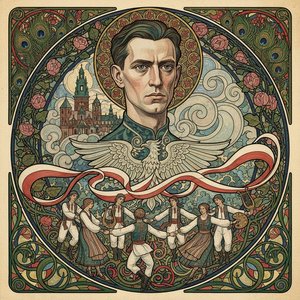
Stanisław Wyspiański: Symbolism, National Identity & the Polish Secession
Explore the life & work of Stanisław Wyspiański, a pivotal figure in Polish Symbolism and the Young Poland movement. Discover his iconic paintings, dramas, and stained glass designs reflecting national identity & artistic innovation.
Late Medieval Masterpieces: 10 Artworks That Defined an Era | ArtsDot
Journey through 10 defining Late Medieval masterpieces – from Giotto's frescoes to Jan van Eyck’s realism. Explore the stories, techniques & vibrant colors of Gothic art. Find museum-quality reproductions and elevate your home decor with ArtsDot.com! Discover all masterpieces on ArtsDot.com
Jan Matejko: Historical Narrative & National Identity in 19th-Century Polish Painting
Explore the powerful historical paintings of Jan Matejko, Poland's national artist. Discover his iconic works & learn how he shaped Polish identity in the 19th century. High-quality reproductions available.
Early Medieval Art: 10 Masterpieces That Shaped a New World | ArtsDot
Journey through 10 stunning Early Medieval masterpieces – from the Book of Kells to Carolingian mosaics. Explore art history, symbolism & find museum-quality reproductions for your home at ArtsDot.com. Discover all masterpieces online!