 Preview
 Send
Send Share
Share
 Details

 Download
 Similars
 X-Ray
X-Ray Diaporama
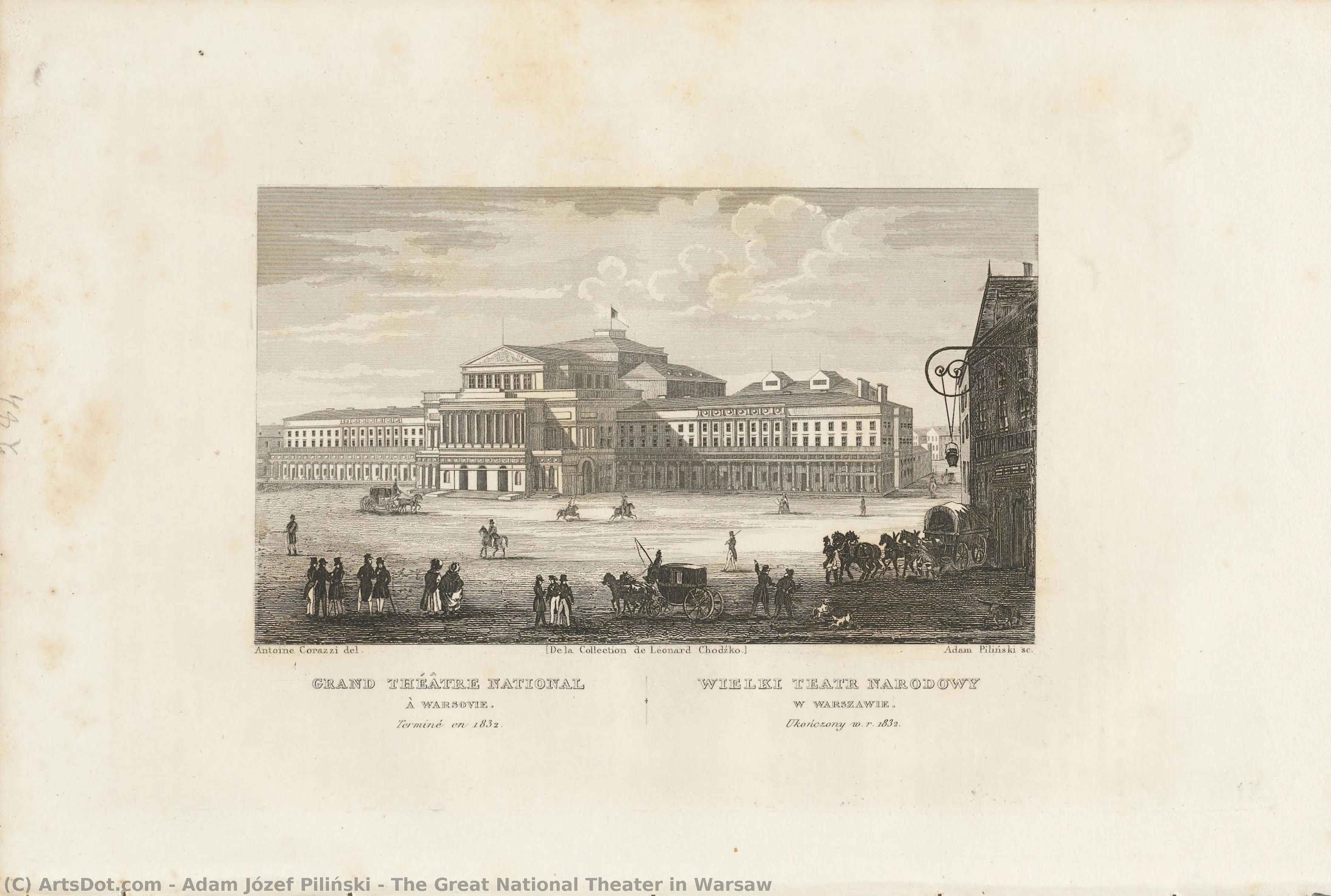
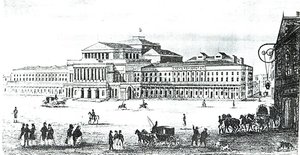
The Great National Theater in Warsaw

 Read More
Hand Made Oil Reproduction
Hand-painted oil on canvas in your size and frame, made to order by our artists. ( Buy Print Buy Image)




































Pick from our preset sizes that match the artwork's original proportions.

You may enter your own dimensions to fit a specific frame or space. If your selected size does not match the original image's proportions, we will either crop the artwork or extend the painting with additional hand-painted elements. A digital mockup will be sent for your approval before production begins.
Please note that the on-screen preview does not reflect the actual cropping or extension. Only the mockup will accurately show the final composition.
While custom sizes are available, we recommend selecting a dimension from the predefined list to preserve the original proportions.
After order, ArtsDot.com team will email client for instructions and provide a mockup preview
Worldwide Delivery () in 3/4 weeks instead of standard 5 weeks. (28 August). No compromise on quality.

Free Worldwide Express Shipping

High-Quality Linen Canvas

Full Shipping Insurance

Customs Tax Refund Guarantee

True Color Matching Guarantee

60-Day Return Policy (Defects Only)

100% Money-Back Guarantee

Bulk Discount Offer
 Glass option is only available in size under 110 CM

The Great National Theater in Warsaw
Reproduction Medium
Reproduction Size
-


Total Price
$ 263
Related Artworks









Artist Biography
The Soul of the Line: The Life and Legacy of Adam Józef Piliński
In the turbulent landscape of nineteenth-century Europe, where national identities were forged in the fires of uprising and resistance, the work of Adam Józef Piliński emerged as a profound testament to Polish resilience. Born on November 22, 1810, in Maciejowice, Poland, Piliński was more than a mere practitioner of the graphic arts; he was a scholar, an activist, and a guardian of cultural memory. His life, which spanned from the height of Polish romanticism to his final days in Paris in 1887, was inextricably linked to the heartbeat of his nation. As a student at the University of Warsaw's School of Fine Arts, he did not merely learn the mechanics of lithography and engraving; he learned how to use the precision of the burin and the softness of the stone to document a heritage that was under constant threat of erasure.
The formative years of Piliński’s career were shadowed by the smoke of conflict, most notably during the November Uprising of 1830-1831. This period of intense political upheaval deeply influenced his artistic consciousness, instilling in him a sense of duty that would define his professional trajectory. He did not view art as an isolated pursuit of beauty, but as a vital tool for preservation and political expression. His mastery over various mediums—ranging from the delicate nuances of paleography to the technical rigors of lithography—allowed him to bridge the gap between historical reconstruction and contemporary activism.
A Master of Reconstruction and Design
Piliński’s true genius lay in his ability to breathe life into the past through his revolutionary approach to historical documents. He became renowned for his exceptional skill in reproducing manuscripts and printed works from diverse eras, a feat that required not only artistic dexterity but also the meticulous eye of a paleographer. Perhaps his most significant technical contribution was the development of homography, a sophisticated technique designed for the reconstruction of ancient documents. Through this method, he could replicate the essence of historical scripts, ensuring that the fragile threads of Polish cultural heritage remained visible to future generations even as original manuscripts succumbed to time.
This dedication to functional and symbolic art reached a pinnacle during the January Uprising of 1863-1864. As Poland struggled for sovereignty, Piliński applied his graphic talents to the service of the National Polish Monetary Fund. His work on banknotes and coins was far more than mere currency production; it was an act of defiance. By creating intricate, high-quality designs for the nation's financial instruments, he helped assert a sense of economic and cultural autonomy. Each engraving and lithograph served as a miniature monument to the Polish cause, blending the precision of a master engraver with the passion of a patriot.
An Enduring Artistic Heritage
The significance of Adam Józef Piliński extends far beyond the borders of Poland, reaching into the broader history of nineteenth-century graphic arts. His ability to adapt his style across various mediums—from the sharp, definitive lines of engraving to the tonal richness of lithography—demonstrates a versatility that few of his contemporaries could match. His legacy is not found merely in museums, but in the very survival of the historical narratives he worked so tirelessly to protect.
Today, the works of Piliński continue to captivate scholars and art enthusiasts alike. His contributions can be explored through various prestigious collections, including those featured on ArtsDot, where his meticulous reproductions serve as a window into a vanished era. To study Piliński is to witness the intersection of art and history, where every stroke of the engraver's tool was an act of devotion to a culture, a people, and a dream of independence.
adam józef piliński
1810 - 1887 , Poland
Quick Facts
- Artistic Movement Or Style: Graphic art, lithography, and engraving
- Date Of Birth: November 22, 1810
- Date Of Death: January 23, 1887
- Full Name: Adam Józef Piliński
- Nationality: Polish
- Notable Artworks: ['Banknotes and coins for National Monetary Fund']
- Place Of Birth: Maciejowice, Poland