 Preview
 Send
Send Share
Share
 Details

 Download
 Similars
 X-Ray
X-Ray Diaporama
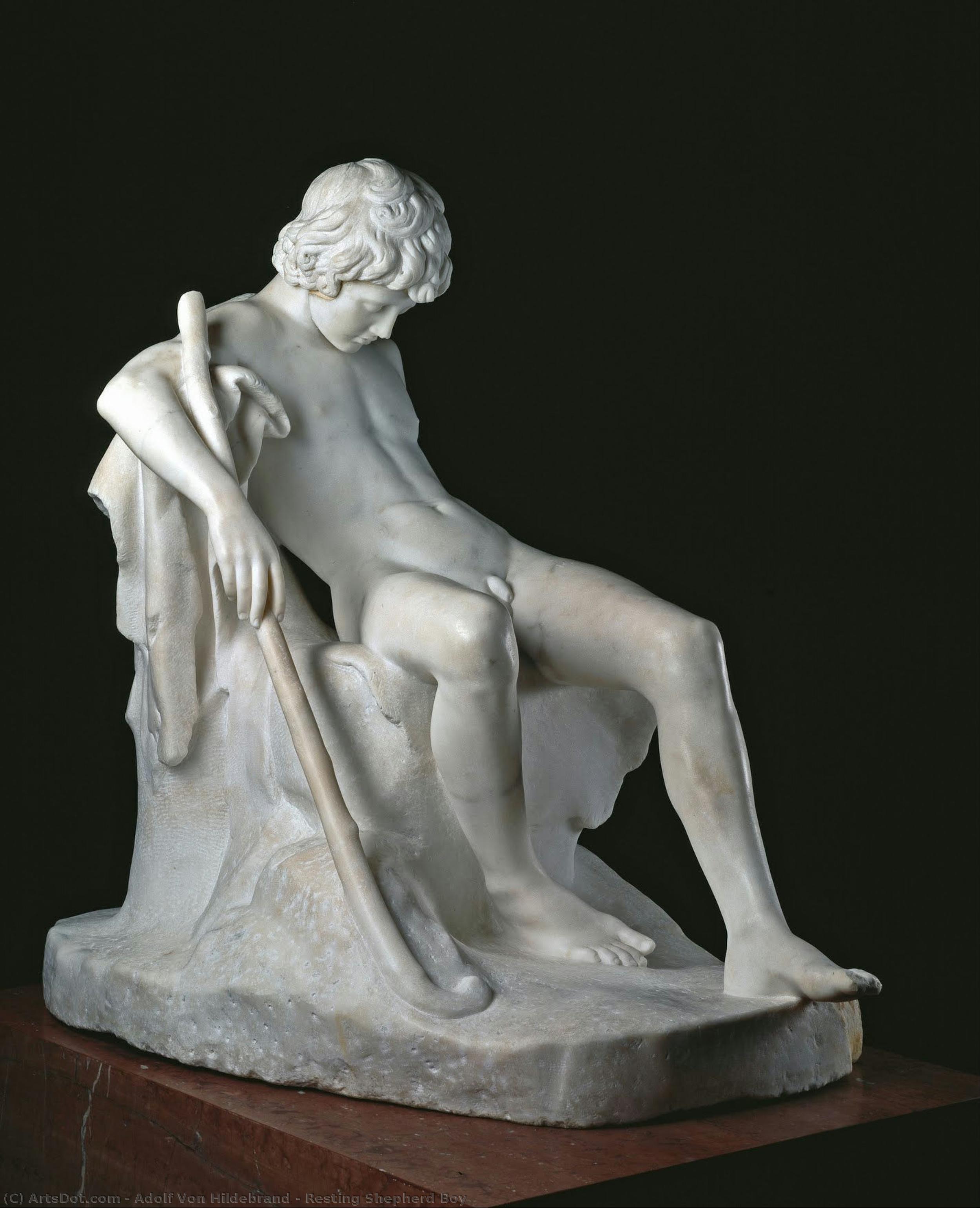
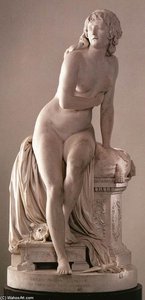
Resting Shepherd Boy
 Acrylic
- WallArt
- Neoclassical Sculpture
 1873
1873 68.0 x 105.0 cm
 Alte Nationalgalerie
 Read More
Hand Made Oil Reproduction
Hand-painted oil on canvas in your size and frame, made to order by our artists. ( Buy Print Buy Image)




P118B $10

P118H $10

P118W $10

P438Z $10

P508JH $12

P508YH $12

P805H $10

P805Z $10

P919BZ $10

P919G $10

P919XJ $10

P959ZH $10

P968JZ $12

W106C $8

W218G $10

W218JH $8

W218Y $10

W307PJ $10

W316G $10

W316PJ $8

W316Y $10

W398PJ $8

W4111J $10

W500HY $15

W500JH $15

W692G $12

W849H $8

W940BG $15

W953PJ $8




Pick from our preset sizes that match the artwork's original proportions.

You may enter your own dimensions to fit a specific frame or space. If your selected size does not match the original image's proportions, we will either crop the artwork or extend the painting with additional hand-painted elements. A digital mockup will be sent for your approval before production begins.
Please note that the on-screen preview does not reflect the actual cropping or extension. Only the mockup will accurately show the final composition.
While custom sizes are available, we recommend selecting a dimension from the predefined list to preserve the original proportions.
After order, ArtsDot.com team will email client for instructions and provide a mockup preview
Worldwide Delivery () in 3/4 weeks instead of standard 5 weeks. (17 August). No compromise on quality.

Free Worldwide Express Shipping

High-Quality Linen Canvas

Full Shipping Insurance

Customs Tax Refund Guarantee

True Color Matching Guarantee

60-Day Return Policy (Defects Only)

100% Money-Back Guarantee

Bulk Discount Offer
 Glass option is only available in size under 110 CM

Resting Shepherd Boy
Reproduction Medium
Reproduction Size
-


Total Price
$ 263
Artwork Description
Resting Shepherd Boy: A Meditation on Solitude and Classical Grace
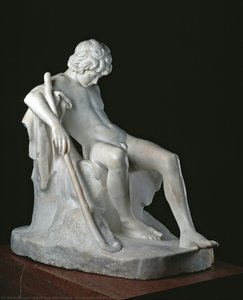
Adolf von Hildebrand’s “Resting Shepherd Boy,” completed in 1873, isn't merely a depiction of a young man at rest; it’s an exquisitely rendered exploration of solitude, contemplation, and the enduring power of classical ideals. This marble sculpture, housed within the Alte Nationalgalerie in Berlin, immediately draws the viewer into a world of serene stillness – a deliberate and profoundly affecting choice by Hildebrand. The piece transcends its subject matter to become a poignant meditation on the human condition, inviting us to consider our own moments of quiet reflection amidst the complexities of life.
Hildebrand’s artistic philosophy, articulated in his seminal work “The Problem of Form,” championed an approach he termed ‘purely and genuinely artistic,’ prioritizing emotional resonance over meticulous naturalism. This is strikingly evident in the boy's form; he isn’t a photographic representation but rather a carefully sculpted embodiment of idealized beauty – a testament to Hildebrand’s belief that art should express “what is purely and genuinely artistic.” The subtle slackness of his limbs, the gentle curve of his head resting on his chest, all contribute to an atmosphere of profound tranquility. The sculpture's success, as noted by Conrad Fiedler, stemmed from its seemingly effortless blend of classical serenity, a novel approach to human form, and exceptional sculptural technique – qualities that distinguished Hildebrand’s work from the prevailing artistic trends of his time.
A Study in Form and Light
The sculpture's technical mastery is immediately apparent. The smooth, flowing lines of the marble create an illusion of incredible softness, despite the inherent rigidity of the material. Hildebrand skillfully manipulates light and shadow to emphasize the contours of the boy’s body, highlighting the subtle shifts in texture that define the marble’s surface. Notice how the highlights catch on his brow and cheekbones, while deeper shadows accentuate the folds of his drapery and the gentle curve of his spine. This careful attention to detail elevates the work beyond a simple portrait; it becomes a study in form itself – an exploration of how light interacts with material to create depth and visual interest.
The color palette is deliberately restrained, relying entirely on the natural tones of the marble. The interplay of bright whites and deep shadows creates a dramatic contrast that draws the eye and enhances the sense of three-dimensionality. This monochromatic approach serves not to diminish the sculpture’s beauty but rather to focus attention on its form and texture – allowing the viewer to fully appreciate the artist's skill in shaping and manipulating this challenging medium.
Symbolism and Historical Context
“Resting Shepherd Boy” is deeply rooted in the artistic traditions of the late 19th century, drawing inspiration from classical sculpture while simultaneously embracing a distinctly modern sensibility. The shepherd boy himself carries symbolic weight – representing innocence, simplicity, and a connection to nature. The pose—a figure at rest, seemingly lost in thought—resonates with themes of introspection and contemplation that were prevalent in European art during this period. It’s important to remember that Hildebrand was working within the context of a rapidly changing world, grappling with industrialization, urbanization, and the rise of new artistic movements. His commitment to classical ideals offered a counterpoint to these shifts, providing a sense of stability and continuity.
A Legacy in Reproduction
Today, “Resting Shepherd Boy” continues to captivate viewers with its timeless beauty and profound emotional impact. ArtsDot offers high-quality reproductions that faithfully capture the essence of this remarkable sculpture, allowing art lovers around the world to experience Hildebrand’s vision firsthand. Whether displayed in a private collection or incorporated into an interior design scheme, this piece serves as a powerful reminder of the enduring appeal of classical art and its ability to evoke contemplation and serenity.
Related Artworks
Artist Biography
The Architect of Form: The Life and Legacy of Adolf von Hildebrand
In the grand tapestry of nineteenth-century European art, few figures loom as intellectually imposing or aesthetically refined as Adolf von Hildebrand. Born in 1847 in the scholarly atmosphere of Marburg, Germany, Hildebrand was destined for a life where rigorous thought and visual beauty would intertwine. The son of the esteemed economist Bruno Hildebrand, his upbringing was steeped in an environment that valued precision, logic, and the pursuit of fundamental truths. This intellectual foundation would later manifest not in economic treatises, but in a revolutionary approach to sculpture that sought to define the very essence of three-dimensional form.
Hildebrand’s artistic journey began with formal training at the Academy of Fine Arts in Nuremberg and continued under the guidance of Rudolf Siemering in Munich. Yet, it was his profound connection to Italy that would ultimately forge his creative identity. Moving to Florence in 1872, he found himself immersed in the cradle of the Renaissance. Living within the quietude of the St Francesco Monastery, Hildebrand did not merely observe the works of antiquity; he entered into a deep, philosophical dialogue with them. The elegance of Florentine sculpture and the balanced proportions of Greek and Roman masters became his primary teachers, instigating a lifelong devotion to the principles of classical grace.
The Philosophy of Form and Artistic Vision
What truly distinguished Hildebrand from his contemporaries was his refusal to view sculpture as mere ornamentation. He approached the medium with the mind of a theorist, a conviction most famously articulated in his seminal 1893 treatise, Das Problem der Form in der bildenden Kunst (The Problem of Form in Painting and Sculpture). In this work, he argued that the true power of art lies in its ability to transcend surface decoration through the mastery of form. For Hildebrand, form was a vehicle for profound emotion and intellectual clarity, a structural language that could communicate universal truths without the need for excessive realism or dramatic artifice.
This theoretical rigor informed every chisel stroke. He championed a style that emphasized the "plastic" quality of sculpture—the way light interacts with volume and how a shape maintains its integrity from every conceivable angle. His work avoided the fleeting, hyper-realistic details of much nineteenth-century realism, opting instead for a distilled, monumental permanence. By focusing on the essential relationships between mass and space, he bridged the gap between the classical traditions of the past and the burgeoning modernism of his era.
Monumental Achievements and Lasting Significance
The physical manifestations of Hildebrand’s genius are scattered across the European landscape, serving as enduring landmarks of civic pride and artistic excellence. His ability to command large-scale public spaces is evident in his monumental fountains and the imposing Bismarck Monument in Bremen, works that possess a rhythmic strength and a sense of timelessness. These structures do not merely occupy space; they define it, bringing the sophisticated aesthetic of the studio into the heart of the urban environment.
Hildebrand’s influence extended far beyond his own hands. As a theorist, he provided a much-needed intellectual framework for sculptors navigating the transition into the twentieth century. His legacy is characterized by several key contributions:
- The Elevation of Sculpture as Thought: He transformed the perception of the sculptor from a craftsman to an intellectual artist capable of profound philosophical expression.
- Classical Reinterpretation: He successfully revitalized neoclassical principles, stripping them of academic stiffness and infusing them with a modern sense of structural clarity.
- The Mastery of Surface and Light: His technical focus on how form captures light revolutionized the way artists approached the tactile qualities of marble and bronze.
When Adolf von Hildebrand passed away in 1921, he left behind more than just a collection of breathtaking monuments; he left a redefined vocabulary for the sculptural arts. Through his unwavering commitment to the integrity of form, he ensured that the dialogue between antiquity and modernity would continue to resonate through the ages.

adolf von hildebrand
1847 - 1921 , Germany
Quick Facts
- Artistic Movement Or Style: Neoclassical
- Date Of Birth: Marburg, Germany (1847)
- Date Of Death: 1921
- Full Name: Adolf von Hildebrand
- Nationality: German
- Notable Artworks:
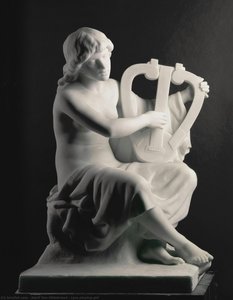
- Lyra Playing Girl
- Resting Shepherd Boy
- Lute Playing Girl
- Place Of Birth: Marburg
Related Articles
The Enduring Allure of Marble in Art History: From Classical Sculpture to Modern Abstraction
Explore the captivating history of marble sculpture from ancient Greece to modern art. Discover renowned artists like Canova & Michelangelo, carving techniques, and investment insights at ArtsDot.

Bronze Sculptures That Defined Art History | ArtsDot
Journey through art history with our Top 10 bronze sculptures! Explore masterpieces by Rodin, Michelangelo & more. Discover stories behind iconic statues and find museum-quality reproductions for your home decor at ArtsDot.com.

The Enduring Form: Exploring Themes & Techniques in Sculpture Across Historical Periods
Explore the rich history of sculpture from ancient masterpieces to contemporary innovations. Discover key techniques, influential artists & investment potential for discerning art collectors.
The Enduring Form: Sculpture Across History, Technique & Emotional Resonance
Explore the rich history of sculpture with ArtsDot. Discover key techniques, influential artists & investment potential for discerning collectors. Expert insights into valuing and collecting timeless masterpieces.
Antonio Canova: Neoclassical Sculpture & the Pursuit of Emotional Perfection
Explore the life & art of Antonio Canova, the greatest Neoclassical sculptor. Discover his masterpieces, innovative techniques, and lasting influence on fine art collecting. Expert insights for discerning investors.