

 Preview
 Send
Send Share
Share
 Details

 Download
 Similars
 X-Ray
X-Ray Diaporama
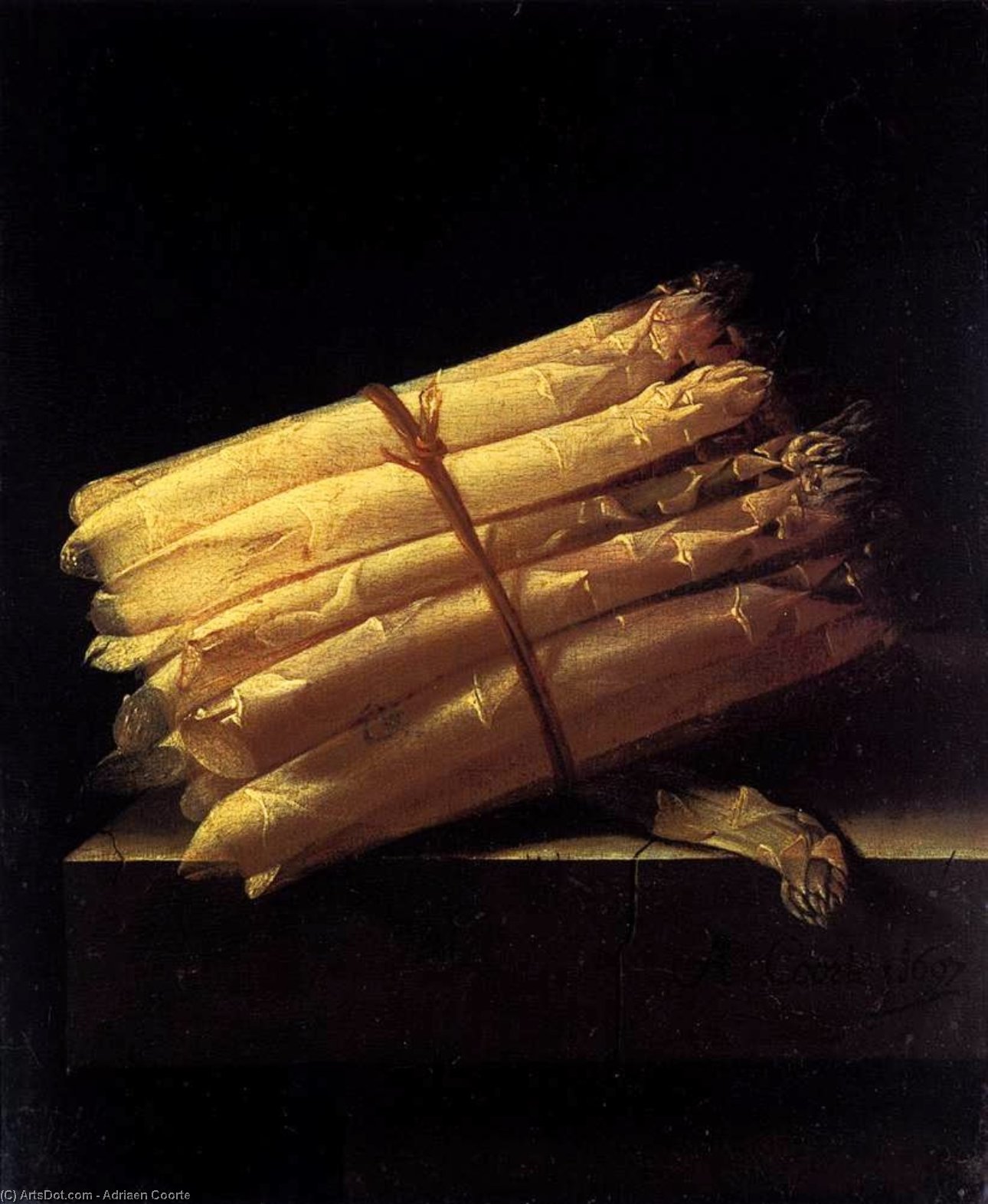
Still-Life with Asparagus
 Oil On Canvas
- WallArt
- Dutch Golden Age
 1697
1697- Early Modern
 25.0 x 21.0 cm
 Rijksmuseum
 Read More
Purchase a high-resolution, enhanced digital image, far superior to the online preview.
Each file is meticulously prepared by our in-house specialists using advanced tools and expert manual retouching. We ensure every image has exceptional clarity, precise color accuracy, and fine detail.
The final file is delivered via email within 72 hours, optimized for immediate use in professional, editorial, and print environments. This is the same quality trusted by top-tier design studios, publishers, and galleries.
Digital Image
Download a high-resolution file for personal display, printing, and creative projects. ( Buy Print Buy Hand Made Painting)
Included in Every Digital Image Order
Expert Digital Delivery, Guaranteed
When you choose ArtsDot.com, you're not just getting an image - you're receiving a professionally enhanced digital artwork, crafted with precision and backed by a satisfaction guarantee. Here's everything that comes with your order, automatically:

Fast Email Delivery
Your high-resolution digital image file will be emailed to you within 72 hours of ordering - ready for immediate use.

AI-Enhanced Digital File
Your artwork is professionally optimized using advanced AI tools and manual editing, ensuring maximum detail, clarity, and color accuracy.

Free Lifetime Re-Delivery
Accidentally deleted or lost your file? No worries - we'll resend it to you anytime, free of charge.

No Import Fees - Ever
Enjoy your artwork instantly with zero customs, duties, or delivery fees - digital downloads are always tax-free.

Color Accuracy Guarantee
We ensure your digital image reflects the original colors as closely as possible using professional tools and color management.

60-Day Satisfaction Guarantee
If you're not satisfied with your digital image, we'll revise it or refund 100% within 60 days - no questions asked.

100% Money-Back Guarantee
Not satisfied? Get a full refund within 60 days of receiving your digital file - no questions asked.

Bulk Order Discounts
Buy 3 images, save 10% - Buy 5, save 15% - Buy 10+, save 20%. Great for creative projects, galleries, and agencies.
Collectible Description
The Quiet Poetry of Everyday Things
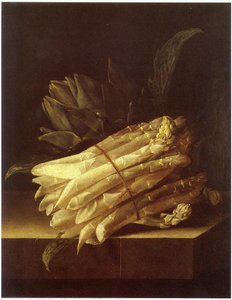
To gaze upon Adriaen Coorte's Still-Life with Asparagus is to step into a moment suspended in time—a quiet, verdant meditation rendered with astonishing intimacy. This painting transcends mere depiction; it offers a profound contemplation on the simple bounty of nature. The arrangement itself, featuring several delicate bunches of asparagus artfully displayed upon a tabletop, speaks volumes through its restraint. Coorte does not shout his subject's beauty; rather, he whispers it into existence through meticulous observation. Notice how the stems are thoughtfully wrapped in cloth, adding an unexpected layer of texture that catches the light just so, inviting the viewer to lean closer and examine every fold and curve.
Mastery in Light and Texture
Technically, this work is a testament to Coorte's unparalleled skill as a master of the small scale. The handling of light across the asparagus spears is nothing short of miraculous. One can almost feel the cool, waxy surface of the vegetable against the muted tones of the counter beneath it. Coorte employs a delicate chiaroscuro, allowing deep shadows to anchor the composition while brilliant highlights catch the tips of the stalks. This masterful control over illumination gives the still life an almost three-dimensional presence, making the arrangement feel tangible, as if one could reach out and pluck a spear. It is this exquisite attention to the tactile quality of humble materials that elevates the piece from simple genre scene to high art.
A Glimpse into Dutch Domestic Life
Dating from 1697, this painting situates itself firmly within the rich tradition of Dutch Golden Age still life, yet it possesses a distinctly personal touch. While the period's masters often tackled grander themes, Coorte carved out his niche in these understated, almost private moments. These domestic arrangements were not merely decorative; they served as visual reminders of prosperity, seasonality, and the careful stewardship of resources. The asparagus itself, at this time, would have been a symbol of spring’s return and burgeoning life, grounding the painting in a specific, hopeful moment of the year.
Symbolism and Enduring Appeal
Beyond its botanical beauty, the still life carries deeper symbolic weight. In art history, such arrangements often contemplate the transience of earthly pleasures—the fleeting perfection of a harvest. Yet, Coorte imbues this contemplation with a sense of enduring grace. For the modern collector or designer, owning a reproduction of this piece is acquiring more than just artwork; it is adopting a philosophy: one that finds profound beauty in the overlooked, the ephemeral, and the beautifully mundane. It brings an air of cultivated calm and sophisticated history into any space.
Related Artworks
Artist Biography
Adriaen Coorte: A Rediscovered Master of Dutch Still Life
Adriaen Coorte, a name largely absent from the annals of art history for centuries, represents a fascinating and poignant story of rediscovery within the world of 17th-century Dutch painting. Born in Middelburg, Netherlands, around 1665 and tragically passing away sometime after 1707, Coorte’s life remains shrouded in relative obscurity – a characteristic that paradoxically contributed to his enduring appeal. He wasn't a flamboyant figure of the Golden Age, nor did he produce works destined for grand salons or royal collections. Instead, Coorte carved out a unique niche as one of the last practitioners of a highly intimate and meticulously observed category of still life painting: small, understated arrangements that offered a profound meditation on light, texture, and the fleeting beauty of everyday objects.
Coorte’s artistic journey began under the tutelage of Melchior d'Hondecoeter in Amsterdam around 1680. Hondecoeter, renowned for his detailed depictions of birds and his systematic approach to repetition – often painting multiple variations of the same subject – appears to have instilled in Coorte a disciplined eye for observation and a penchant for creating carefully constructed compositions. However, Coorte’s trajectory soon led him back to his native Middelburg, where he established a workshop and began signing his works around 1683. This return marked a shift towards a distinctly personal style, characterized by an almost austere simplicity that distinguished him from his teacher's more elaborate approach.
The Style of a Minimalist Master
Coorte’s paintings are immediately recognizable for their remarkable restraint and quiet elegance. Unlike the opulent still lifes favored by many of his contemporaries – brimming with exotic fruits, silver vessels, and luxurious fabrics – Coorte’s arrangements were remarkably pared down. His compositions typically featured small groupings of humble objects: a single peach or apricot resting on a rough-hewn stone slab, a scattering of shells, or a few sprigs of asparagus arranged against a dark, almost impenetrable background. The tableware was equally basic—simple pottery rather than elaborate silver – emphasizing the inherent beauty of the materials themselves. This deliberate minimalism wasn’t born of poverty; rather, it reflected Coorte's intense focus on capturing the essence of each object through careful observation and masterful manipulation of light.
The lighting in Coorte’s paintings is particularly noteworthy. He employed a single, often unseen source of illumination, creating dramatic contrasts between light and shadow that heightened the textures and forms of his subjects. The dark backgrounds served to isolate and emphasize the delicate details of each object, drawing the viewer's eye to their subtle variations in color and shape. This technique, combined with Coorte’s meticulous attention to detail, resulted in paintings that possess a remarkable sense of immediacy and intimacy – as if the viewer were peering directly into a small, carefully arranged still life within a domestic setting.
Influences and Legacy
While Coorte's style is undeniably unique, it’s clear that he was influenced by both his teacher, Hondecoeter, and earlier generations of Dutch still life painters. The systematic approach to repetition evident in Hondecoeter’s work – the careful duplication of bird poses – can be seen as a foundational element in Coorte’s own compositions. However, Coorte’s paintings also possess a certain austerity and directness that distinguishes them from the more decorative style of many of his contemporaries. He seems to have been particularly drawn to the works of older masters, such as Pieter Pietersz. Compagnon, whose spare arrangements and emphasis on light and shadow foreshadowed Coorte's own approach.
Despite his talent and dedication, Coorte remained largely unknown outside of Middelburg for over two centuries. It wasn’t until the mid-20th century that art historian Laurens J. Bol began to champion his work, meticulously cataloging his paintings and publishing a comprehensive monograph in 1977. This rediscovery sparked renewed interest in Coorte's art, leading to exhibitions at prestigious museums such as the Rijksmuseum in Amsterdam and the National Gallery of Art in Washington D.C. Today, Adriaen Coorte is recognized as one of the most important – and tragically overlooked – figures of the Dutch Golden Age, a testament to the enduring power of quiet observation and understated beauty.
Notable Works
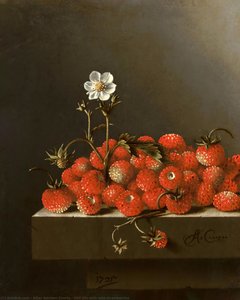
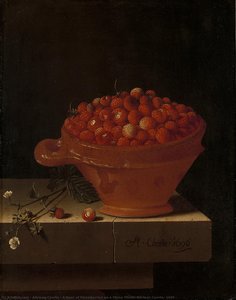
- A Bowl of Strawberries on a Stone Plinth, 1696: A quintessential example of Coorte’s style, showcasing ripe strawberries arranged on a simple stone slab.
- Untitled (AQRD9W): An anonymous work demonstrating the artist's signature minimalist approach.
- Peaches and apricots on a stone ledge, 1665-1707: A delicate arrangement of fruit against a dark background, highlighting Coorte’s mastery of light and shadow.
- After Adriaen Coorte: Various works by artists inspired by his style.
Historical Significance
Adriaen Coorte's significance lies not in grand narratives or revolutionary techniques, but rather in his steadfast commitment to a specific aesthetic. He represents a counterpoint to the prevailing trends of the Dutch Golden Age – a period often characterized by opulent displays of wealth and luxury. Coorte’s paintings offer a glimpse into a different sensibility: one that valued simplicity, observation, and the quiet contemplation of everyday objects. His rediscovery serves as a reminder that true artistic merit can be found not only in grand gestures but also in the subtle nuances of a well-observed still life – a testament to the enduring power of understated beauty.
Adriaen Coorte
1665 - 1707 , Netherlands
Quick Facts
- Artistic Movement Or Style: Dutch Golden Age, Still Life
- Artists Or Movements Influenced By This Artist: ['Baroque']
- Artists Who Influenced This Artist: ['Melchior Hondecoeter']
- Date Of Birth: 1665, Middelburg
- Date Of Death: 1707
- Full Name: Adriaen Coorte
- Nationality: Dutch
- Notable Artworks:
- A Bowl Strawberries
- Peaches Apricots Ledge
- Three Peaches Stone
- Place Of Birth: Middelburg, Netherlands

