

 Preview
 Send
Send Share
Share
 Details

 Download
 Similars
 X-Ray
X-Ray Diaporama
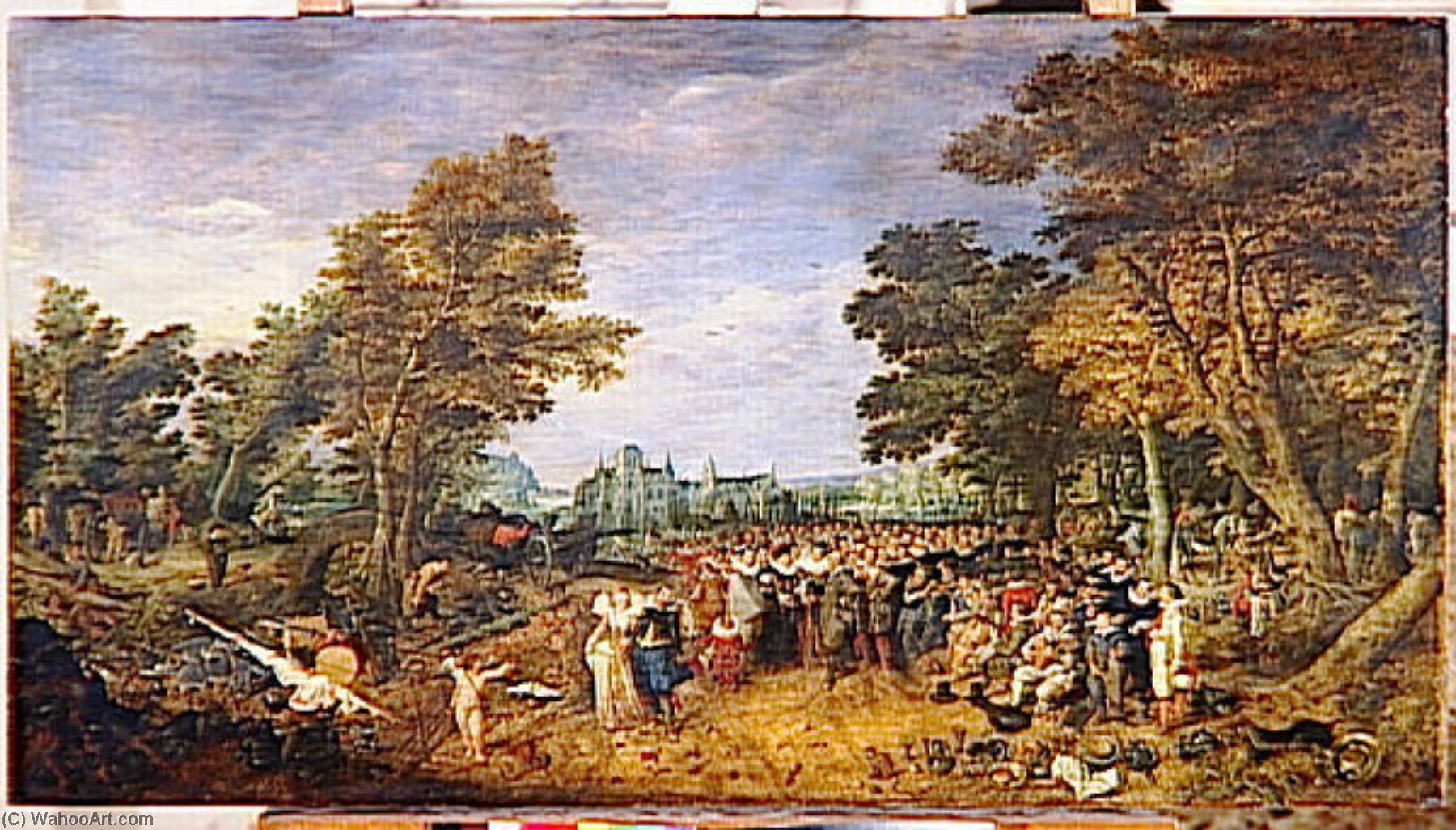
ALLEGORIE DE LA TREVE DE 1609 ENTRE L'ARCHIDUC D'AUTRICHE, GOUVERNEUR DES PAYS BAS DU SUD, ET LES ETATS DES PAYS BAS DU NORD


 Read More
Purchase a high-resolution, enhanced digital image, far superior to the online preview.
Each file is meticulously prepared by our in-house specialists using advanced tools and expert manual retouching. We ensure every image has exceptional clarity, precise color accuracy, and fine detail.
The final file is delivered via email within 72 hours, optimized for immediate use in professional, editorial, and print environments. This is the same quality trusted by top-tier design studios, publishers, and galleries.
Digital Image
Download a high-resolution file for personal display, printing, and creative projects. ( Buy Print Buy Hand Made Painting)
Included in Every Digital Image Order
Expert Digital Delivery, Guaranteed
When you choose ArtsDot.com, you're not just getting an image - you're receiving a professionally enhanced digital artwork, crafted with precision and backed by a satisfaction guarantee. Here's everything that comes with your order, automatically:

Fast Email Delivery
Your high-resolution digital image file will be emailed to you within 72 hours of ordering - ready for immediate use.

AI-Enhanced Digital File
Your artwork is professionally optimized using advanced AI tools and manual editing, ensuring maximum detail, clarity, and color accuracy.

Free Lifetime Re-Delivery
Accidentally deleted or lost your file? No worries - we'll resend it to you anytime, free of charge.

No Import Fees - Ever
Enjoy your artwork instantly with zero customs, duties, or delivery fees - digital downloads are always tax-free.

Color Accuracy Guarantee
We ensure your digital image reflects the original colors as closely as possible using professional tools and color management.

60-Day Satisfaction Guarantee
If you're not satisfied with your digital image, we'll revise it or refund 100% within 60 days - no questions asked.

100% Money-Back Guarantee
Not satisfied? Get a full refund within 60 days of receiving your digital file - no questions asked.

Bulk Order Discounts
Buy 3 images, save 10% - Buy 5, save 15% - Buy 10+, save 20%. Great for creative projects, galleries, and agencies.
A Frozen Moment of Negotiation: Adriaen van de Venne’s Allegory of the Twelve-Year Truce
Adriaen Pietersz van de Venne's “Allegorie de la Trêve de 1609 entre l’Archiduc d’Autriche, gouverneur des Pays-Bas du Sud, et les États des Pays-Bas du Nord” is more than just a painting; it’s a meticulously crafted tableau of political maneuvering and symbolic reconciliation. Completed in Delft around 1616, this monumental oil on canvas transports the viewer to a pivotal moment in Dutch history – the cessation of hostilities between the Spanish Netherlands and the fledgling Dutch Republic after twelve years of brutal warfare. Van de Venne, a master of allegorical representation, doesn’t simply depict an event; he constructs a complex narrative brimming with layered meaning, inviting contemplation on themes of peace, power, and the precarious balance of European politics.
The scene unfolds within a vast, meticulously rendered landscape – a field dotted with trees, suggesting both the natural world and the fertile ground for negotiation. Dominating the foreground is an imposing stone bridge, acting as a symbolic threshold between opposing forces. On one side stands the Archduke Albert of Austria, representing the Spanish Netherlands, flanked by his wife, Isabelle, radiating an aura of regal authority. Opposite him are representatives from the Dutch Republic, including Maurice and Frederick of Orange, their posture conveying cautious optimism. The sheer scale of the figures underscores the gravity of the situation – a truce that held the entire region in suspense for years.
A Symphony of Symbolism
Van de Venne’s genius lies not just in his technical skill but also in his masterful deployment of symbolism. Scattered throughout the composition are potent visual cues designed to communicate complex ideas. A scattering of weapons and armor, rendered with a touch of melancholic humor, represents the devastation of war – a deliberate reminder of the cost of conflict. A pair of doves, emblems of peace, flutter gracefully above the scene, while an amorous Cupid shoots arrows towards a blossoming rose, symbolizing the hope for reconciliation and future prosperity. The inclusion of animals—a lion representing Spain and a horse signifying the Netherlands—adds another layer of symbolic depth, grounding the allegorical elements in tangible representations of power.
Notably, the painting incorporates elements of vanitas – still-life objects that traditionally served as reminders of mortality and the transience of earthly pleasures. A discarded goblet, a broken lute, and scattered coins hint at the fleeting nature of worldly possessions and the futility of material pursuits in the face of conflict. These subtle details elevate the work beyond a simple historical record, transforming it into a meditation on human folly and the enduring pursuit of peace.
The Artist’s Hand: Technique and Style
Van de Venne's style is firmly rooted in the Dutch Golden Age, characterized by its dramatic lighting, rich colors, and meticulous attention to detail. He employs a technique known as “chiaroscuro,” skillfully manipulating light and shadow to create a sense of depth and volume within the composition. The figures are rendered with remarkable realism, their expressions conveying a range of emotions – from cautious anticipation to weary resignation. The landscape is painted with atmospheric perspective, creating a believable sense of distance and contributing to the overall feeling of grandeur.
Interestingly, Van de Venne’s work shares stylistic affinities with the Flemish painter Peter Paul Rubens, particularly in his use of vibrant colors and dynamic compositions. However, Van de Venne possesses a distinct sensibility, evident in his ability to infuse allegorical scenes with a subtle sense of irony and moral judgment. His paintings are not merely decorative; they offer insightful commentary on the social and political realities of his time.
A Legacy of Peace – And a Reproduction for Today
“Allegorie de la Trêve de 1609” remains a powerful testament to the enduring human desire for peace. It’s a painting that speaks volumes about the complexities of diplomacy, the cost of war, and the importance of reconciliation. Today, high-quality reproductions offer an accessible way to experience the beauty and intellectual depth of this remarkable work. Whether displayed in a grand hall or a cozy living room, a faithful reproduction allows us to contemplate Van de Venne’s masterful depiction of a pivotal moment in European history – a frozen tableau of negotiation that continues to resonate with contemporary audiences.
Related Artworks



Artist Biography
A Life Forged in Flight: The World of Adriaen Pietersz van de Venne
Adriaen Pietersz van de Venne, a name resonating with the vibrant energy of the Dutch Golden Age, was more than just a painter; he was a visual storyteller, a social commentator, and a versatile artist who navigated the complex currents of 17th-century life. Born in Delft in 1589, his very origins were steeped in upheaval. His parents, fleeing religious persecution in the Southern Netherlands, instilled within him a sense of displacement that perhaps fueled his keen observation of societal fractures and human foibles. This early experience shaped not only his artistic vision but also his commitment to using art as a mirror reflecting the world around him—its joys, its sorrows, and its often-pointed ironies. Van de Venne’s education began in Leiden, where he immersed himself in the intellectual ferment of the university town, acquiring a grounding in Latin that would later serve him well in understanding classical allegories and humanist thought. His formal artistic training commenced with Simon de Valk, a master goldsmith and painter, followed by an apprenticeship with Jeronimus van Diest, honing his skills in the delicate art of grisailles—monochrome paintings executed in shades of gray, a technique that would become a hallmark of his style.From Allegory to Everyday Life: A Developing Artistic Voice
Van de Venne’s artistic journey began to truly unfold with his move to Middelburg in 1614. Here, he encountered the powerful influence of Jan and Pieter Bruegel the Elder, whose depictions of peasant life and allegorical scenes resonated deeply with his own burgeoning sensibilities. It was during this period that he created Fishing for Souls, a strikingly symbolic work commenting on the religious conflicts tearing through Europe during the Eighty Years’ War. This early masterpiece demonstrated an ability to translate complex political and theological ideas into compelling visual narratives, establishing him as an artist with something important to say. As his career progressed, Van de Venne increasingly turned towards genre scenes—depictions of everyday life featuring peasants, beggars, thieves, and fools. However, these were not merely observational studies; they were often infused with moral lessons and proverbs, drawing heavily on the writings of Jacob Cats, a prominent Dutch poet and playwright. This collaboration between artist and writer proved fruitful, resulting in numerous engravings and grisailles that captured the essence of Dutch society—its bustling markets, its boisterous taverns, and its underlying anxieties. He wasn’t simply recording life; he was interpreting it through a lens of satire and social critique.A Master of Many Trades: Beyond the Canvas
Van de Venne's talents extended far beyond painting. Throughout his career, he actively worked as a book illustrator and print designer, contributing to the flourishing literary scene of the Dutch Golden Age. This versatility was not unusual for artists of the time, but Van de Venne distinguished himself through the quality and inventiveness of his work in multiple mediums. In 1625, he relocated to The Hague, becoming an integral part of the city’s artistic community. He quickly rose through the ranks of the Guild of Saint Luke, eventually serving as its dean in 1637. This position underscored his standing within the art world and allowed him to advocate for the interests of fellow artists. His commitment to professionalizing the field led him to become a founding member of Confrerie Pictura, an organization dedicated to elevating the status of artists and promoting a more academic approach to artistic training. He even secured commissions from high places, executing portraits and historical paintings for Frederik Hendrik, the Dutch stadholder, demonstrating his skill in both formal portraiture and grand-scale narrative painting.Legacy and Lasting Influence
Adriaen Pietersz van de Venne’s artistic legacy is multifaceted. He was a master of allegory, genre scenes, portraits, grisailles, and satirical works—a true polymath of the Dutch Golden Age. His paintings offer invaluable insights into the social, religious, and political landscape of his time, providing a nuanced perspective on the complexities of 17th-century life. While perhaps not as widely celebrated today as some of his contemporaries like Rembrandt or Vermeer, Van de Venne’s influence persisted well after his death in The Hague in 1662. His use of grisailles and genre scenes continued to inspire artists for generations, and his satirical commentary on human nature remains relevant even now. His work serves as a reminder that art can be both beautiful and thought-provoking, capable of entertaining, educating, and challenging our perceptions of the world. He left behind a body of work that is not only aesthetically pleasing but also historically significant—a testament to his skill, his intellect, and his unwavering commitment to capturing the spirit of his age.Key Characteristics of His Work
- Allegorical Depth: Van de Venne frequently employed allegory to convey complex moral or political messages.
- Genre Scene Realism: His depictions of everyday life are remarkably detailed and realistic, capturing the essence of Dutch society.
- Grisaille Mastery: He was a renowned master of grisailles, using monochrome palettes to create striking and evocative images.
- Satirical Commentary: His work often contains subtle or overt satire, offering insightful critiques of human behavior and societal norms.
- Proverbial Illustrations: Many of his paintings illustrate popular proverbs and sayings, adding layers of meaning and cultural context.
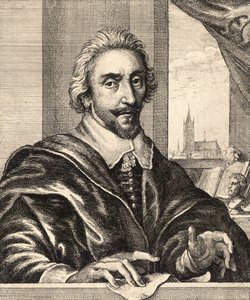
Adriaen Pietersz van de Venne
1589 - 1662 , Netherlands
Quick Facts
- Artistic Movement Or Style: Dutch Golden Age painting
- Artists Who Influenced This Artist:
- Jan Brueghel the Elder
- Pieter Brueghel the Elder
- Date Of Birth: 1589
- Date Of Death: 1662
- Full Name: Adriaen Pietersz van de Venne
- Nationality: Dutch
- Notable Artworks:
- Fishing for Souls
- Fools Have the Most Fun
- Place Of Birth: Delft, Netherlands

