 Preview
 Send
Send Share
Share
 Details

 Download
 Similars
 X-Ray
X-Ray Diaporama
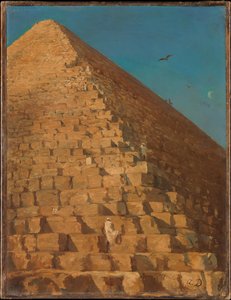
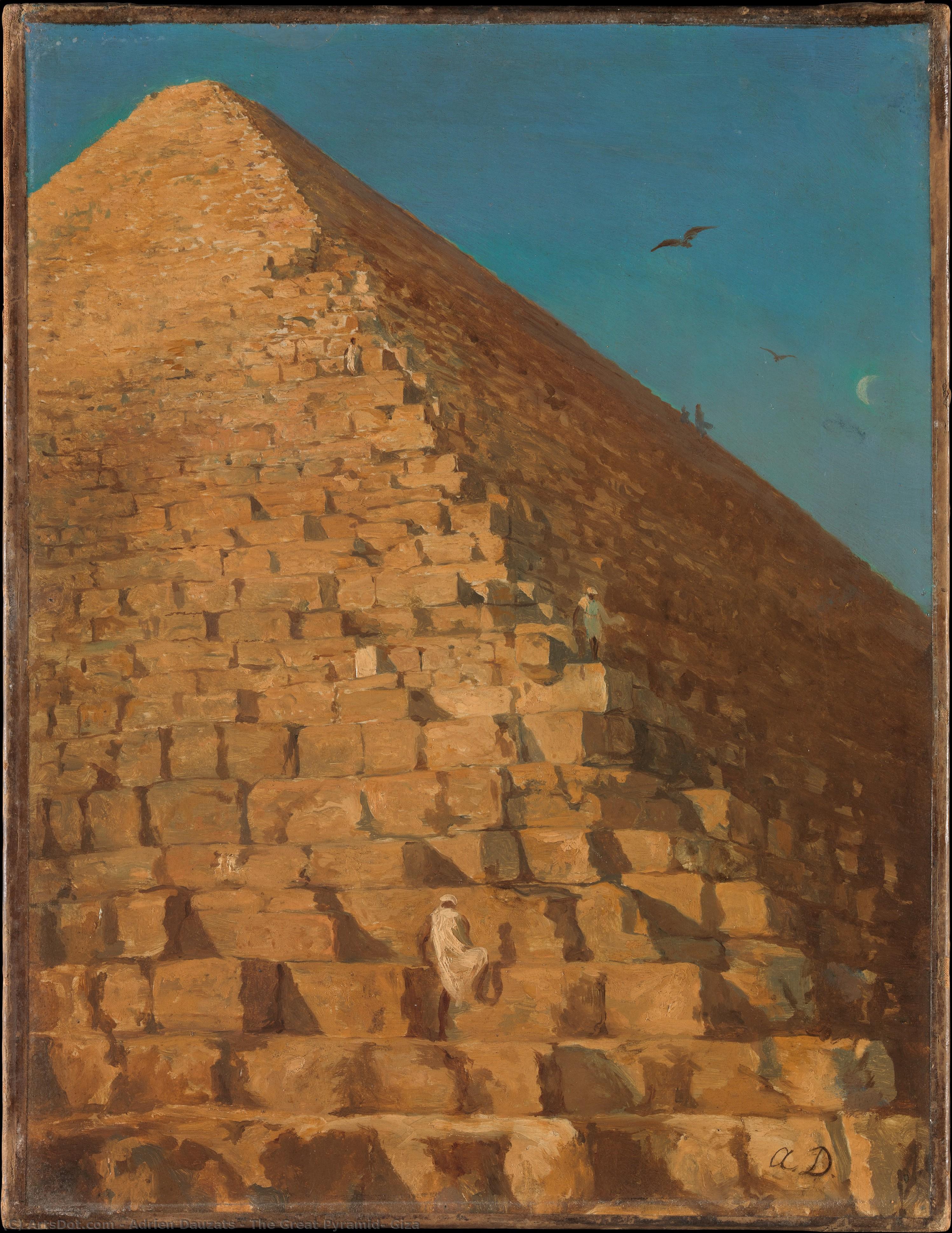
The Great Pyramid, Giza
 Acrylic On Canvas
- WallArt
- Oriental Romanticism
 1830
1830 43.0 x 33.0 cm
 Metropolitan Museum of Art
 Read More
Hand Made Oil Reproduction
Hand-painted oil on canvas in your size and frame, made to order by our artists. ( Buy Print Buy Image)




P118B $10

P118H $10

P118W $10

P438Z $10

P508JH $12

P508YH $12

P805H $10

P805Z $10

P919BZ $10

P919G $10

P919XJ $10

P959ZH $10

P968JZ $12

W106C $8

W218G $10

W218JH $8

W218Y $10

W307PJ $10

W316G $10

W316PJ $8

W316Y $10

W398PJ $8

W4111J $10

W500HY $15

W500JH $15

W692G $12

W849H $8

W940BG $15

W953PJ $8




Pick from our preset sizes that match the artwork's original proportions.

You may enter your own dimensions to fit a specific frame or space. If your selected size does not match the original image's proportions, we will either crop the artwork or extend the painting with additional hand-painted elements. A digital mockup will be sent for your approval before production begins.
Please note that the on-screen preview does not reflect the actual cropping or extension. Only the mockup will accurately show the final composition.
While custom sizes are available, we recommend selecting a dimension from the predefined list to preserve the original proportions.
After order, ArtsDot.com team will email client for instructions and provide a mockup preview
Worldwide Delivery () in 3/4 weeks instead of standard 5 weeks. (17 August). No compromise on quality.

Free Worldwide Express Shipping

High-Quality Linen Canvas

Full Shipping Insurance

Customs Tax Refund Guarantee

True Color Matching Guarantee

60-Day Return Policy (Defects Only)

100% Money-Back Guarantee

Bulk Discount Offer
 Glass option is only available in size under 110 CM

The Great Pyramid, Giza
Reproduction Medium
Reproduction Size
-


Total Price
$ 263
Artwork Description
A Window Into Ancient Egypt: Dauzats’s “The Great Pyramid”
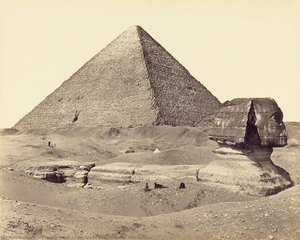
Adrien Dauzats's "The Great Pyramid," painted in 1830 shortly after his return from an expedition to Egypt with Baron Taylor, transcends mere topographical depiction; it embodies the spirit of Romantic Orientalism—a fascination with the East fueled by scientific curiosity and artistic imagination. This monumental canvas captures a pivotal moment in European perception of antiquity, presenting a dramatic vista of Giza’s iconic pyramid against a backdrop of hazy desert skies and soaring birds. More than just an image of architectural grandeur, it speaks to the artist's profound engagement with the physicality and atmosphere of his surroundings.Composition and Technique: Capturing Scale and Light
Dauzats employed a masterful technique characterized by loose brushstrokes and tonal gradations—a hallmark of Romantic painting—to convey the immense scale of the pyramid and the ethereal quality of dawn. The artist skillfully utilized perspective to compress the pyramid’s height, emphasizing its imposing presence while simultaneously creating an illusion of depth. Note the meticulous attention to detail in rendering the stone blocks, reflecting Dauzats's dedication to accurate observation. The subtle interplay of light and shadow contributes significantly to the painting's dramatic effect, highlighting the pyramid’s contours and casting a cool luminescence over the surrounding landscape.Historical Context: Romanticism Meets Scientific Exploration
“The Great Pyramid” emerged during a period of intense intellectual ferment—the Enlightenment had yielded to Romanticism—where artists sought inspiration in emotion and imagination alongside reason and empirical observation. Dauzats's journey with Baron Taylor coincided with burgeoning interest in Egyptology, driven by discoveries at Luxor and Philae. The painting reflects this scholarly enthusiasm, portraying the pyramid not merely as a relic of bygone civilizations but as an object of wonder and contemplation. Furthermore, it aligns with the broader Romantic preoccupation with sublime landscapes—those vistas that inspire awe and terror—demonstrating Dauzats’s ability to capture the emotional resonance of his subject matter.Symbolism: Majesty and Transcendence
Beyond its visual splendor, “The Great Pyramid” carries symbolic weight. The pyramid itself represents stability, permanence, and divine authority—concepts central to Egyptian cosmology. Its towering form dominates the composition, asserting a sense of grandeur and transcendence. The birds circling above symbolize aspiration and spiritual elevation, mirroring the artist’s own quest for understanding and beauty. Dauzats's depiction underscores the enduring fascination with ancient Egypt as a source of inspiration for artistic expression—a testament to its ability to evoke profound emotional responses in viewers across time.Emotional Impact: A Moment Frozen in Time
The painting succeeds in conveying a palpable sense of immediacy, capturing the artist’s experience of witnessing this monumental structure firsthand. Dauzats's description of scrambling over the pyramid’s stones—“the lizard-like dexterity required to scramble over the ancient monument’s massive stone blocks”—reveals not only his physical exertion but also his fascination with the tactile qualities of the landscape. “The Great Pyramid” remains a captivating image, transporting us back to 1830 and inviting contemplation on the intersection of art, science, and human emotion—a legacy that continues to inspire admiration for Dauzats’s artistic vision.Related Artworks



Artist Biography
A Life of Travel and Artistic Observation
Adrien Dauzats, born in Bordeaux, France in 1804, was a painter whose life unfolded as a compelling narrative of artistic exploration and meticulous observation. His father’s profession as a scenery painter at a local theatre sparked an early fascination with visual representation within young Adrien, laying the foundation for a career deeply rooted in capturing the world around him. He received his initial formal training under Lacour at the École de Dessin in Bordeaux, honing essential skills in drawing and composition that would serve him throughout his artistic journey. Even in these early stages, Dauzats demonstrated versatility, exhibiting genre subjects and interiors of churches while simultaneously practicing lithography – a testament to his burgeoning talent and willingness to explore diverse mediums.The Orient Beckons: Collaboration with Baron Taylor
A pivotal moment arrived when Dauzats embarked on expeditions to the Middle East alongside the intrepid travel writer, Baron Taylor, beginning around 1829. These journeys weren’t merely sightseeing tours; they were immersive experiences that took them through Egypt, Syria, Mount Sinai, Palestine, and beyond. Dauzats's primary role during these travels was to create illustrations for Taylor’s ambitious travel books – including *Voyages Pittoresques et Romantiques de l'ancienne France*, *Voyage Pittoresque en Espagne, en Portugal, et sur la côte d'Afrique*, and the expansive *La Syrie, I'Egypte, la Palestine et la Judée*. This collaboration proved transformative. Dauzats wasn’t simply recording what he saw; he was striving for a level of accuracy previously unseen in depictions of the Orient. He aimed to portray landscapes and cultural details with “scrupulous exactitude and impartiality,” setting him apart from contemporaries who often romanticized or exoticized their subjects. His experiences profoundly influenced his artistic style, leading him to produce works characterized by detailed renderings of architecture, local customs, and sweeping landscapes – a commitment to realism that defined his approach to Orientalist art. This period also saw the co-authorship with Alexandre Dumas Sr. of *Quinze Jours au Sinai*, a travelogue distinguished by Dauzats’s artistic vision, offering a unique perspective on the region.Spanish Sojourns and Algerian Commissions
Dauzats's travels weren’t limited to the Middle East. A trip to Spain with Baron Taylor in 1835-1837 introduced him to Pharamond Blanchard, who facilitated introductions to the influential de Madrazo family – a cornerstone of Spanish art at the time. He spent considerable time immersed in the Spanish artistic milieu, meeting prominent artists and developing a keen appreciation for Spanish painting traditions. This exposure broadened his artistic horizons and subtly influenced his evolving style. Later, in 1839, Dauzats received a prestigious commission from King Louis-Philippe to join a military and diplomatic expedition to Algeria. He was tasked with creating five watercolors depicting French military exploits – a significant undertaking that marked one of his final major voyages. This commission demonstrates the growing recognition of his talent and his ability to capture both the grandeur of landscapes and the drama of historical events.Legacy and the Unfinished Masterpiece
In 1868, Dauzats received a fascinating, yet ultimately incomplete, commission: to create illustrations based on characters from *One Thousand and One Nights*. He completed the initial sketch for *Sinbad the Sailor*, but his untimely death intervened before he could finish the project. This unfinished work became the subject of legal contention, with his estate refusing to release it due to a stipulation in his will prohibiting the public display of incomplete works. Despite this final chapter, Dauzats’s legacy as a pioneer of Orientalist art remains secure. He is remembered for his commitment to accuracy, his meticulous attention to detail, and his ability to capture the essence of distant lands with remarkable fidelity. Following his death, his sketchbooks, artworks, and extensive library were sold at auction in Paris, preserving a valuable record of his travels and artistic endeavors. Today, his works are held in esteemed institutions such as the Musée des Beaux-Arts d’Orléans, ensuring that his contributions to 19th-century art continue to be appreciated by generations to come. Dauzats stands as a testament to the power of travel, observation, and artistic dedication – an artist who sought not merely to depict the world, but to understand it with unwavering precision and impartiality.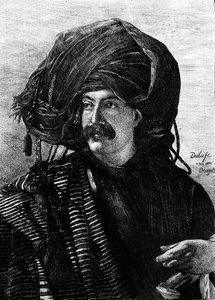
Adrien Dauzats
1804 - 1868 , France
Quick Facts
- Artistic Movement Or Style: Orientalism
- Artists Or Movements Influenced By This Artist: ['Early Orientalist artists']
- Date Of Birth: 1804
- Date Of Death: 1868
- Full Name: Adrien Dauzats
- Nationality: French
- Notable Artworks:
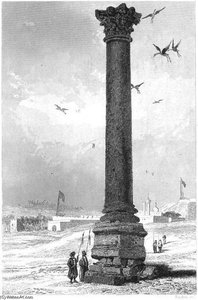
- Pompey's Pillar
- Well of Moses
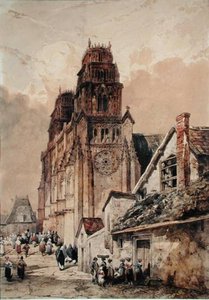
- Beauvais Abbey Church
- Place Of Birth: Bordeaux, France
Related Articles
The Alluring Gaze: Orientalism in 19th-Century Art – Representation, Reception & Construction of the 'Orient'
Explore the complex history of Orientalism in 19th-century art. Discover how Western artists depicted the 'Orient,' its cultural impact, and Edward Said's critical analysis. A deep dive for art lovers & historians.
Golden Hour on the Nile: Symbolism & Artistic Legacy of Egyptian Sunsets
Explore the rich symbolism of Egyptian sunset paintings & their artistic legacy. Discover how color, ritual, and landscape shaped ancient beliefs – a guide for discerning collectors.

Hokusai's Masterpieces: 25 Iconic Prints & Paintings for Art Lovers | ArtsDot
Journey through Katsushika Hokusai’s 25 most iconic artworks, including *The Great Wave*. Explore the ukiyo-e master's history, style & timeless Japanese woodblock prints. Find museum-quality reproductions for your home at ArtsDot.com.
John Frederick Lewis: Orientalism, Detail & Genre Painting in 19th-Century British Art
Explore the captivating Orientalist paintings of John Frederick Lewis! Discover his mastery of detail, genre scenes & influence on 19th-century British art. Learn about his life, techniques & legacy at ArtsDot.
The Allure of the Exotic: Orientalism in 19th-Century Art
Explore the captivating world of 19th-century Orientalist art! Discover iconic painters like Gérôme & Benjamin-Constant, key themes, and collecting insights. Expert analysis at ArtsDot.