




The Nile as Lifeblood: Ancient Egypt’s Cosmic Landscape
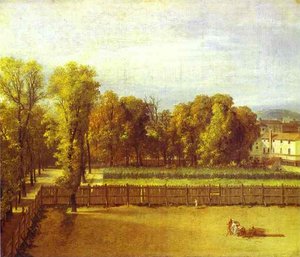
For the ancient Egyptians, the world was not merely a physical space but a reflection of divine order – Ma'at – meticulously maintained through ritual and artistic expression. Central to this worldview was the Nile River, known as Kemet (“the black land”), its fertile banks contrasting sharply with the “red land” of the surrounding deserts. This duality wasn’t simply geographical; it represented life versus death, abundance versus scarcity, and ultimately, the cyclical nature of existence itself. The river wasn't just a source of sustenance but a pathway to the afterlife, deeply interwoven with their cosmology. Consequently, depictions of the Nile – particularly at sunset – weren’t merely scenic representations but potent symbols imbued with religious significance.
Color & Meaning: Decoding the Palette of Egyptian Sunset Paintings
 The Chromatic Spectrum of Feeling: Exploring Color & Emotion in Art History
Explore the fascinating relationship between color and emotion in art history. Discover how master artists used color to evoke feelings & cultural meanings, plus the psychology behind it all.
The vibrant hues that adorn ancient Egyptian art were far from arbitrary choices. Each color held specific meaning and was carefully selected to evoke particular emotions and convey complex ideas. Red, often associated with life, vitality, but also chaos and destruction, dominated sunset scenes, representing both the setting sun’s fiery power and the promise of rebirth. Gold, symbolizing divinity and eternity, frequently highlighted deities and royal figures within these compositions. Blue, derived from lapis lazuli, represented the heavens and the primordial waters of creation. Understanding this chromatic spectrum is crucial to appreciating the depth of Egyptian artistic intent. As explored in “The Chromatic Spectrum of Feeling: Exploring Color & Emotion in Art History,” artists weren’t simply replicating reality but actively constructing a symbolic language understood by initiates and priests alike. The intensity of these colors, preserved remarkably well within tomb walls, speaks to their enduring belief in the power of visual representation.
From Ritual to Representation: The Evolution of Sunset Imagery
Ancient Egyptian art refers to art produced in ancient Egypt between the 6th millennium BC and the 4th century AD, spanning from Prehistoric Egypt until the Christianization of Roman Egypt. It includes paintings, sculptures, drawings on papyrus, faie...
The earliest depictions of the Nile appear on pottery and cloth from the pre-dynastic period (6000–3000 BC), often stylized representations of boats and animals. These early images, while rudimentary, demonstrate a nascent fascination with the river’s power and its connection to daily life. As Egyptian society evolved during the Naqada culture (4000-3000 BC), paintings became more sophisticated, incorporating geometric symbols and narratives. The Gerzean period saw an expansion of artistic techniques, including wavy handles on pottery and increasingly elaborate scenes depicting human figures and ships. However, it was during the Old Kingdom (2686-2181 BC) that sunset imagery truly began to flourish, particularly within royal tombs. These weren’t isolated depictions but integral parts of larger funerary complexes designed to ensure a successful transition into the afterlife.
Royal Tombs and Eternal Visions: Sunsets in Funerary Art
The purpose of Egyptian art was fundamentally functional – to guarantee permanence and facilitate passage into eternity. This is vividly illustrated by the elaborate scenes found within royal tombs, where sunsets often symbolized the journey of the deceased pharaoh through the underworld. Model boats laden with provisions, such as the elegant example held in museum collections, were placed within these tombs to provide transportation for the afterlife voyage. Similarly, coffins like that of Paankhenamun, adorned with depictions of Osiris, Isis, and Nephthys, served not only as protective vessels but also as visual guides through the perilous realms beyond death. The meticulous detail lavished upon these objects underscores the profound belief in an abundant new existence mirroring life on Earth – a testament to their dedication to preserving memory and ensuring continued prosperity for generations to come.
Neoclassical Echoes: Jacques-Louis David’s Study of a Pyramid and Egyptomania
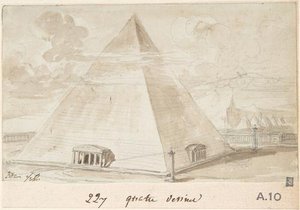 Study of a Pyramid
Explore Jacques-Louis David's "Study of a Pyramid," a captivating architectural sketch showcasing ancient Egypt in muted tones. A unique piece for art lovers & collectors seeking neoclassical studies.
The fascination with ancient Egypt extended far beyond its geographical boundaries, captivating artists and intellectuals throughout history. The 18th and 19th centuries witnessed a surge in “Egyptomania,” fueled by Napoleon’s expedition to Egypt and the subsequent rediscovery of ancient artifacts. Jacques-Louis David’s “Study of a Pyramid”, a captivating architectural sketch, exemplifies this renewed interest. While executed in muted tones, it showcases the enduring power of Egyptian architecture and its symbolic resonance. This piece, along with others from the period, demonstrates how artists sought to incorporate elements of Egyptian style into their own work, often blending classical forms with exotic motifs. The study isn’t merely an architectural rendering; it's a reflection of a broader cultural obsession with a civilization perceived as possessing profound wisdom and artistic mastery.
A Lasting Impression: The Enduring Symbolism of the Egyptian Sunset
From the earliest depictions on pottery to the elaborate scenes within royal tombs, the sunset has remained a potent symbol in Egyptian art. It represents not only the end of life but also the promise of rebirth, the cyclical nature of existence, and the enduring power of memory. The rich colors, meticulous detail, and symbolic language employed by Egyptian artists continue to captivate audiences today. The legacy of this ancient civilization – its profound beliefs, artistic innovations, and unwavering dedication to preserving eternity – continues to resonate through the ages, reminding us of the timeless human quest for meaning and immortality.