 Preview
 Send
Send Share
Share
 Details

 Download
 Similars
 X-Ray
X-Ray Diaporama
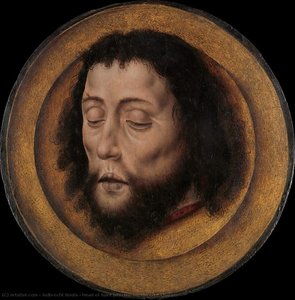
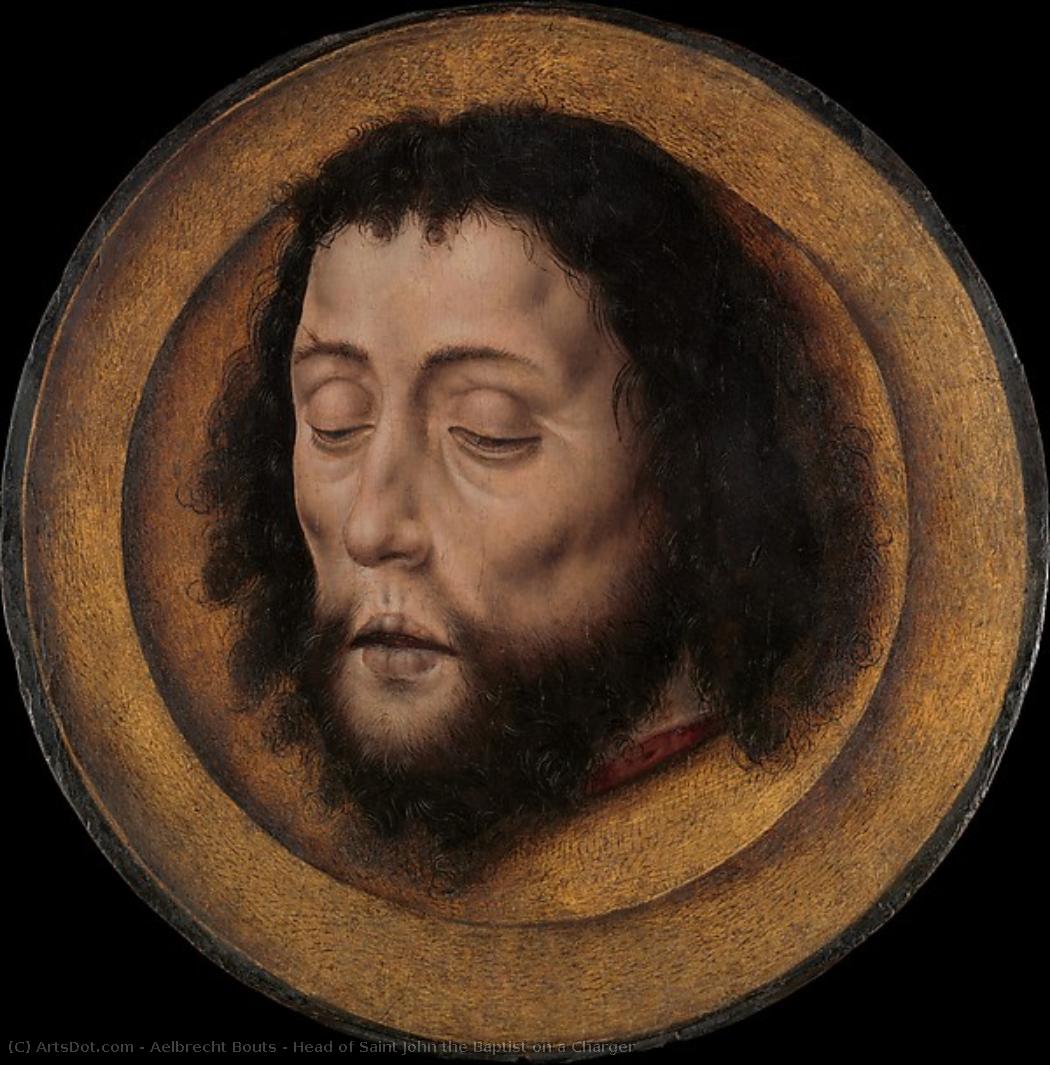
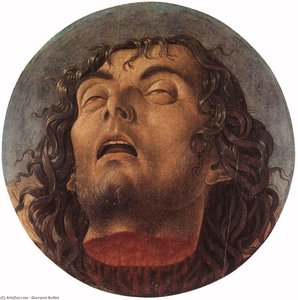
Head of Saint John the Baptist on a Charger


 Read More
Giclée / Art Print
Museum-quality giclée or canvas print with fast production and flexible finish options. ( Buy Hand Made Painting Buy Image)




P118B $10

P118H $10

P118W $10

P438Z $10

P508JH $12

P508YH $12

P805H $10

P805Z $10

P919BZ $10

P919G $10

P919XJ $10

P959ZH $10

P968JZ $12

W106C $8

W218G $10

W218JH $8

W218Y $10

W307PJ $10

W316G $10

W316PJ $8

W316Y $10

W398PJ $8

W4111J $10

W500HY $15

W500JH $15

W692G $12

W849H $8

W940BG $15

W953PJ $8




Pick from our preset sizes that match the artwork's original proportions.

You may enter your own dimensions to fit a specific frame or space. If your selected size does not match the original image's proportions, we will either crop the artwork or extend the image with a mirrored or solid-fill edge. A digital mockup will be sent for your approval before production begins.
Please note that the on-screen preview does not reflect the actual cropping or extension. Only the mockup will accurately show the final composition.
While custom sizes are available, we recommend selecting a dimension from the predefined list to preserve the original proportions.
Worldwide Delivery () in 2 weeks instead of standard 4/5 weeks. (28 August)

Free Worldwide Express Shipping

High-Quality Linen Canvas

Full Shipping Insurance

Customs Tax Refund Guarantee

True Color Matching Guarantee

60-Day Return Policy (Defects Only)

100% Money-Back Guarantee

Bulk Discount Offer
 Glass option is only available in size under 110 CM

Head of Saint John the Baptist on a Charger
Giclée / Art Print
Reproduction Size
-


Total Price
$ 63
A Meditation on Mortality: The Head of Saint John the Baptist
To gaze upon this depiction of Saint John the Baptist’s severed head is to confront the profound intersection of piety, artistry, and the inescapable reality of human mortality. It is a work steeped in the rich, somber atmosphere of the early Northern Renaissance. Rather than presenting mere gore, Aelbrecht Bouts transforms the subject into an object of deep, almost melancholic contemplation. The saint’s visage, rendered with painstaking detail, captures not the moment of death, but a state of profound introspection; his closed eyes and slightly parted lips suggest a soul wrestling with eternal mysteries, inviting the viewer into a quiet, sorrowful dialogue.
The Master's Hand: Technique and Flemish Precision
Aelbrecht Bouts, working in the vibrant crucible of late fifteenth-century Flanders, employed techniques that allowed for an astonishing verisimilitude. The illusion achieved here—the convincing portrayal of a real head resting upon a charger—speaks volumes about his mastery of oil painting. One can almost feel the texture of the painted enamel and the subtle sheen on the gold background. This meticulous attention to detail, characteristic of the Flemish school, elevates the piece beyond mere portraiture; it becomes a technical marvel. The composition itself is carefully balanced, drawing the eye inward toward the saint’s enigmatic expression, while the surrounding golden circle lends an air of sacred importance and timeless depth.
Historical Echoes and Spiritual Significance
The popularity of such images during the Middle Ages speaks to a deep cultural preoccupation with salvation and the afterlife. Saint John the Baptist, as a figure pointing toward Christ, held immense spiritual weight. This particular motif, therefore, was not simply decorative; it served as a potent devotional object. Bouts’ rendition channels this historical resonance, transforming what might otherwise be considered macabre into something deeply sacred. It speaks to an era where art functioned as both high craft and vital conduit for religious belief.
Bringing Renaissance Sorrow Home
For the modern collector or designer, this piece offers more than just a reproduction of history; it offers an atmosphere. Reproducing such a work allows one to infuse a space with the quiet gravity and intellectual depth of the Flemish Renaissance. It serves as a powerful focal point—a conversation starter that whispers tales of devotion and artistic genius across the centuries. Owning a high-quality rendition is acquiring a piece of enduring narrative, a tangible link to the profound emotional landscape painted by masters like Aelbrecht Bouts.
Related Artworks
Artist Biography
Aelbrecht Bouts: A Master of Sorrow and Subtle Detail
Born around 1452 in Leuven, the heart of early Renaissance Flanders, Aelbrecht Bouts emerged as a significant figure within the vibrant artistic landscape of the late fifteenth century. His life was inextricably linked to his family’s legacy – he was the son of Dieric Bouts the Elder, a renowned painter already established by 1415, and brother to Dieric Bouts the Younger, a master known for his altarpieces. This familial connection undoubtedly shaped his artistic trajectory, yet Aelbrecht quickly forged his own distinctive style, one characterized by an intense emotionality and a remarkable sensitivity to detail that set him apart from his contemporaries.
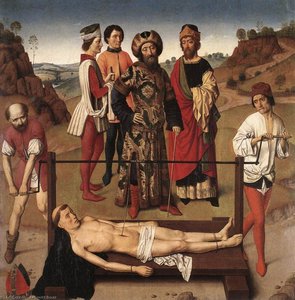
Leuven, at this time, was a thriving center of art and commerce, fueled by the wool trade and the patronage of wealthy merchants and religious institutions. Bouts’ early training likely involved apprenticeships within his father's workshop, absorbing the established techniques and stylistic conventions of the era. However, it wasn’t simply imitation; Aelbrecht demonstrated an innate ability to imbue his paintings with a profound sense of human experience – particularly themes of sorrow, loss, and spiritual contemplation. This is immediately evident in some of his most celebrated works, such as the poignant ‘Martyrdom of St. Erasmus,’ where the depiction of the saint’s suffering resonates with a quiet dignity that transcends mere representation.
The Development of a Unique Style
While initially influenced by his father's style – particularly in the meticulous rendering of drapery and the use of rich, earthy colors – Aelbrecht Bouts gradually developed a more personal and expressive approach. His paintings are distinguished by a heightened sense of drama, achieved through carefully orchestrated lighting effects and subtle shifts in color palette. Unlike some of his contemporaries who favored bold, flamboyant compositions, Bouts often opted for a more restrained aesthetic, prioritizing psychological depth over overt spectacle.
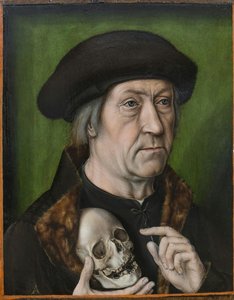
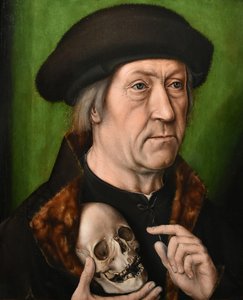
A key element of his distinctive style is the use of ‘subtlety’ – a term frequently applied to works from this period. This doesn't imply a lack of detail, but rather an ability to convey complex emotions and ideas through nuanced gestures, averted gazes, and carefully chosen symbolic elements. His self-portrait, featuring a skull resting on his lap, is a particularly striking example of this approach – a meditation on mortality rendered with understated elegance.
Major Works and Themes
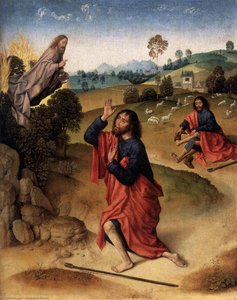
Aelbrecht Bouts’ oeuvre comprises a relatively small number of paintings, yet each one reveals the depth of his artistic vision. The ‘Martyrdom of St. Erasmus,’ housed at the Noordbrabants Museum in 's-Hertogenbosch, is arguably his most famous work. It depicts the saint's final moments with agonizing realism, capturing not only the physical suffering but also the profound sense of despair and resignation that accompanies martyrdom. The ‘Prophet Elijah in the Desert,’ another significant painting, showcases Bouts’ mastery of atmospheric perspective and his ability to evoke a sense of isolation and spiritual yearning.
Beyond these iconic works, Bouts created numerous altarpieces, panels, and individual portraits, each reflecting his evolving artistic sensibilities. His religious scenes are particularly noteworthy for their emotional intensity and psychological insight – he wasn’t simply depicting biblical events; he was exploring the human condition itself.
Legacy and Historical Significance
Aelbrecht Bouts died in Leuven in 1549, leaving behind a legacy as one of the most important figures of the Early Netherlandish period. While his work was often overshadowed by the towering achievements of Jan van Eyck and Rogier van der Weyden, Bouts’ unique style – characterized by its emotional depth, subtle detail, and profound sense of human experience – has earned him considerable recognition in recent decades. His paintings offer a valuable window into the intellectual and spiritual climate of fifteenth-century Flanders, reflecting a growing interest in individual psychology and the complexities of faith.
His influence can be seen in subsequent generations of Flemish painters, particularly those who sought to capture the inner lives of their subjects with greater psychological realism. Aelbrecht Bouts’ enduring appeal lies not only in his technical skill but also in his ability to connect with viewers on a deeply emotional level – reminding us of our shared humanity and the inevitability of sorrow and loss.
aelbrecht bouts
1450 - 1549 , Netherlands
Quick Facts
- Artistic Movement Or Style: Early Netherlandish
- Artists Or Movements Influenced By This Artist: ['Dieric Bouts the Younger']
- Artists Who Influenced This Artist: ['Dieric Bouts the Elder']
- Date Of Birth: c.1452
- Date Of Death: March 1549
- Full Name: Aelbrecht Bouts
- Nationality: Flemish
- Notable Artworks:
- Martyrdom Of St Erasmus
- Prophet Elijah In The Desert
- Self portrait with a dead head
- Place Of Birth: Leuven, Netherlands
Related Articles

Bronze Sculptures That Defined Art History | ArtsDot
Journey through art history with our Top 10 bronze sculptures! Explore masterpieces by Rodin, Michelangelo & more. Discover stories behind iconic statues and find museum-quality reproductions for your home decor at ArtsDot.com.

John Singer Sargent's 25 Masterpieces: Portraits & Beyond | ArtsDot
Explore 25 iconic John Singer Sargent paintings – from dazzling portraits to Impressionist landscapes. Discover the stories behind Madame X, El Jaleo & more! Find museum-quality art reproductions and elevate your home decor with ArtsDot.com.

John Constable's Masterpieces: Explore 25 Iconic Landscapes for Your Home
Journey through John Constable's 25 most celebrated landscapes. Explore Romanticism, Dedham Vale & his masterful use of light in iconic paintings like 'Hay Wain'. Find museum-quality art reproductions and elevate your home decor on ArtsDot.com.

The Enduring Form: Exploring Themes & Techniques in Sculpture Across Historical Periods
Explore the rich history of sculpture from ancient masterpieces to contemporary innovations. Discover key techniques, influential artists & investment potential for discerning art collectors.

Bronze Age to Modern Masters: 10 Sculptures That Redefined Art | ArtsDot
Journey through art history with 10 legendary bronze sculptures – from Michelangelo's David to Rodin’s Thinker. Explore the stories, techniques & timeless beauty of these masterpieces. Find museum-quality reproductions & elevate your home decor on ArtsDot.com.