 Send
Send Share
Share
 Details

 Download
 Similars
 Diaporama
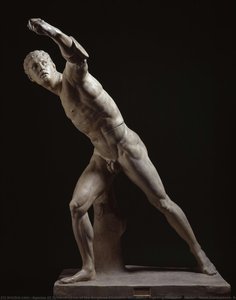
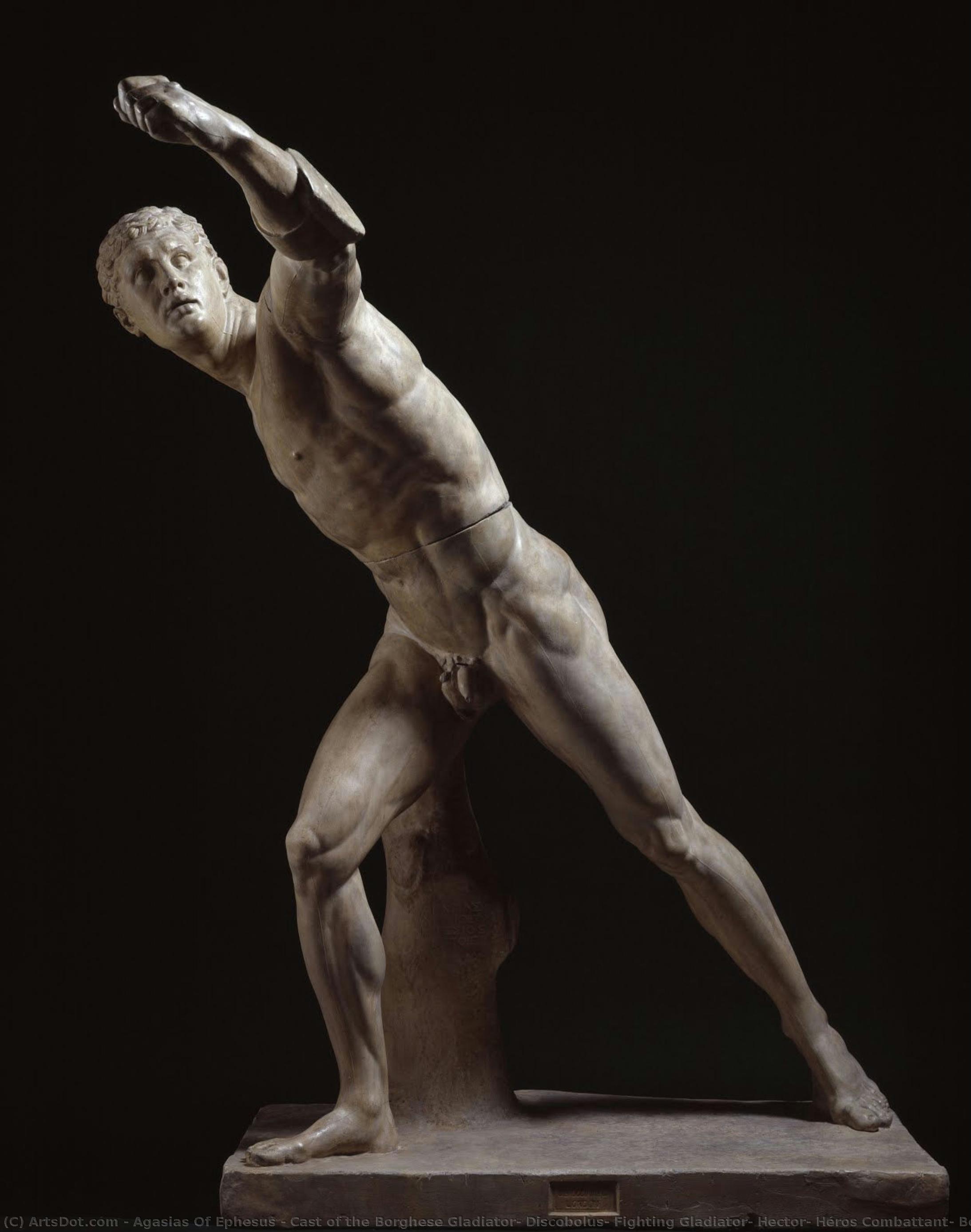
Cast of the Borghese Gladiator; Discobolus; Fighting Gladiator; Hector; Héros Combattant; Borghese Warrior; Original in Musée du Louvre, Paris; Warrior of Agasias


 Read More
Giclée / Art Print
Museum-quality giclée or canvas print with fast production and flexible finish options. ( Buy Hand Made Painting Buy Image)




































Pick from our preset sizes that match the artwork's original proportions.

You may enter your own dimensions to fit a specific frame or space. If your selected size does not match the original image's proportions, we will either crop the artwork or extend the image with a mirrored or solid-fill edge. A digital mockup will be sent for your approval before production begins.
Please note that the on-screen preview does not reflect the actual cropping or extension. Only the mockup will accurately show the final composition.
While custom sizes are available, we recommend selecting a dimension from the predefined list to preserve the original proportions.
Worldwide Delivery () in 2 weeks instead of standard 4/5 weeks. (1 September)

Free Worldwide Express Shipping

High-Quality Linen Canvas

Full Shipping Insurance

Customs Tax Refund Guarantee

True Color Matching Guarantee

60-Day Return Policy (Defects Only)

100% Money-Back Guarantee

Bulk Discount Offer
 Glass option is only available in size under 110 CM

Cast of the Borghese Gladiator; Discobolus; Fighting Gladiator; Hector; Héros Combattant; Borghese Warrior; Original in Musée du Louvre, Paris; Warrior of Agasias
Giclée / Art Print
Reproduction Size
-


Total Price
$ 63
The Eternal Motion of the Borghese Warrior
In the quiet stillness of a museum gallery or the curated elegance of a private study, few figures command attention quite like the Borghese Gladiator. This breathtaking plaster cast captures a moment of suspended animation, frozen in the height of physical exertion. The sculpture depicts a male figure caught in a dynamic, twisting motion, his body a masterclass in Hellenistic tension and anatomical precision. As he prepares to release his projectile, every sinew and muscle is rendered with profound clarity, creating a rhythmic flow of energy that leads the eye across the diagonal axis of his torso. The play of light and shadow across the smooth, matte surface of the cast emphasizes the heroic musculature, evoking a sense of raw power and disciplined grace that has captivated observers for centuries.
The artistry of Agasias of Ephesus lies in his ability to breathe life into cold medium. While the original marble masterpiece resides in the hallowed halls of the Musée du Louvre, this reproduction allows the spirit of ancient Greece to inhabit contemporary spaces. The composition is a triumph of balance; despite the intense physical struggle depicted, there is an underlying harmony in the figure's stance. His grounded left leg provides a foundation of stability, contrasting beautifully with the reaching, preparatory movement of his right arm. For the discerning collector or interior designer, this piece serves as a profound focal point, offering a sophisticated interplay of classical grandeur and sculptural depth that complements both minimalist modernism and opulent traditional decor.
A Legacy Carved in History
To behold this work is to touch the lineage of Western civilization. The history of the Borghese Gladiator is as dramatic as the sculpture itself. Originally unearthed near Anzio, Italy, in 1611, the statue became a crown jewel of the illustrious Borghese collection. Its journey through time is marked by the hands of emperors and connoisseurs alike; notably, Napoleon Bonaparte’s acquisition of the piece in 1807 cemented its status as an icon of cultural heritage. The sculpture's influence even reached the royal courts of England, where bronze casts graced the gardens of St. James’ Palace and Wilton, inspiring generations of artists and thinkers to contemplate the ideals of heroism and human perfection.
Beyond its physical form, the piece carries a deep symbolic weight. It represents the Hellenistic pursuit of naturalism—the transition from the idealized, static figures of earlier eras to a more visceral, emotional representation of the human condition. The warrior is not merely a subject of athletic prowess but an emblem of the struggle, the focus, and the indomitable will. For those seeking to infuse their environment with inspiration, this reproduction offers more than mere decoration; it provides a window into an era where art sought to capture the very essence of life, strength, and the eternal dance between movement and stillness.
Related Artworks


Artist Biography
Agasias of Ephesus: The Sculptor Behind the Borghese Warrior
Agasias of Ephesus, a Greek sculptor active in the first century BC, remains an enigmatic figure despite his enduring legacy as creator of one of Hellenistic sculpture’s most iconic masterpieces – the Borghese Gladiator. Little is known about his personal life beyond fragmentary inscriptions hinting at his involvement in Delos during Roman rule, yet his artistic output speaks volumes about the intellectual and aesthetic currents shaping ancient Greece. He stands as a testament to the dynamism and naturalism that characterized the period following Alexander the Great’s death, embodying the ambition to represent human form with unprecedented realism.Early Life and Artistic Training
Information regarding Agasias' birthdate and family is scarce. Evidence suggests he hailed from Ephesus, a thriving port city at the crossroads of Greek and Roman cultures—a location that fostered artistic innovation and patronage. He was likely the son of Dositheus, another sculptor known for his work on monumental sculptures in Ephesus, establishing him within a lineage dedicated to crafting impressive representations of gods and heroes. While precise details about his formative years are elusive, it’s plausible he received training under prominent sculptors of his time, absorbing techniques honed by masters like Lysippos—a figure whose influence is palpable in Agasias' stylistic choices.The Borghese Gladiator: A Pinnacle of Hellenistic Style
The Borghese Gladiator, housed in the Louvre Museum, represents Agasias’ magnum opus and arguably embodies the very essence of Hellenistic sculpture. Completed around 100 BC, this colossal bronze statue depicts a warrior engaged in combat—a subject favored by sculptors during this era who sought to capture movement and emotion with remarkable accuracy. Unlike idealized depictions prevalent in Classical art, Agasias' Gladiator is imbued with palpable tension and physicality; muscles ripple beneath the skin, conveying the strain of exertion. The sculptor meticulously studied anatomy, utilizing techniques honed by Lysippos—a master known for his anatomical precision—to achieve a level of realism previously unattainable. The statue’s pose—the warrior leaning forward, one arm outstretched—is deliberately asymmetrical, reflecting the Hellenistic preoccupation with dynamism and conveying an impression of immediacy. Agasias skillfully employed bronze casting techniques to capture this movement, demonstrating mastery over material science alongside artistic vision. The sculpture's surface is polished to a gleaming sheen, enhancing its visual impact and highlighting the sculptor’s meticulous attention to detail—a hallmark of Hellenistic artistry.Beyond the Gladiator: Temple Sculpture and Artistic Legacy
While the Borghese Gladiator secures Agasias’ place in art history, his contribution extends beyond this single monumental work. He played a crucial role in decorating the Temple of Artemis at Ephesus—one of the Seven Wonders of the Ancient World—a project that showcased his skill in crafting large-scale sculptures for religious contexts. The temple complex was adorned with statues depicting gods and heroes, reflecting the artistic sensibilities of the time and demonstrating Agasias’ ability to execute ambitious commissions. Agasias' style—characterized by naturalism, dynamism, and anatomical precision—influenced subsequent sculptors throughout antiquity and beyond. His work served as a model for artists striving to emulate Lysippos’ achievements and solidified Ephesus’ reputation as a center of artistic excellence. Though Agasias himself remains shrouded in obscurity, his legacy persists through the enduring beauty and intellectual depth of his sculptures—particularly the Borghese Gladiator—a testament to the transformative power of Hellenistic art and its lasting impact on Western artistic tradition.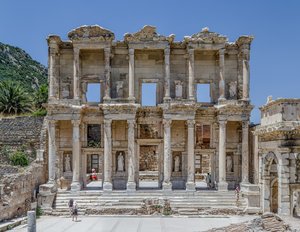
agasias of ephesus
Greece
Quick Facts
- Artistic Movement Or Style: Hellenistic Sculpture
- Artists Or Movements Influenced By This Artist: ['Classical Sculpture']
- Artists Who Influenced This Artist: ['Lysippos']
- Full Name: agasias of ephesus
- Nationality: Greek
- Notable Artworks: ['Borghese Warrior']
- Place Of Birth: Greece
Related Articles

Bronze Sculptures That Defined Art History | ArtsDot
Journey through art history with our Top 10 bronze sculptures! Explore masterpieces by Rodin, Michelangelo & more. Discover stories behind iconic statues and find museum-quality reproductions for your home decor at ArtsDot.com.

The Enduring Form: Exploring Themes & Techniques in Sculpture Across Historical Periods
Explore the rich history of sculpture from ancient masterpieces to contemporary innovations. Discover key techniques, influential artists & investment potential for discerning art collectors.

Bronze Age to Modern Masters: 10 Sculptures That Redefined Art | ArtsDot
Journey through art history with 10 legendary bronze sculptures – from Michelangelo's David to Rodin’s Thinker. Explore the stories, techniques & timeless beauty of these masterpieces. Find museum-quality reproductions & elevate your home decor on ArtsDot.com.

The Enduring Form: Sculpture Across History, Technique & Emotional Resonance
Explore the rich history of sculpture with ArtsDot. Discover key techniques, influential artists & investment potential for discerning collectors. Expert insights into valuing and collecting timeless masterpieces.
The Enduring Legacy of Bronze Sculpture: History, Techniques & Contemporary Interpretations
Explore the rich history & enduring appeal of bronze sculpture. Learn about casting techniques, iconic artists, collecting tips, & contemporary interpretations. Expert insights for discerning art collectors.