 Preview
 Send
Send Share
Share
 Details

 Download
 Similars
 X-Ray
X-Ray Diaporama
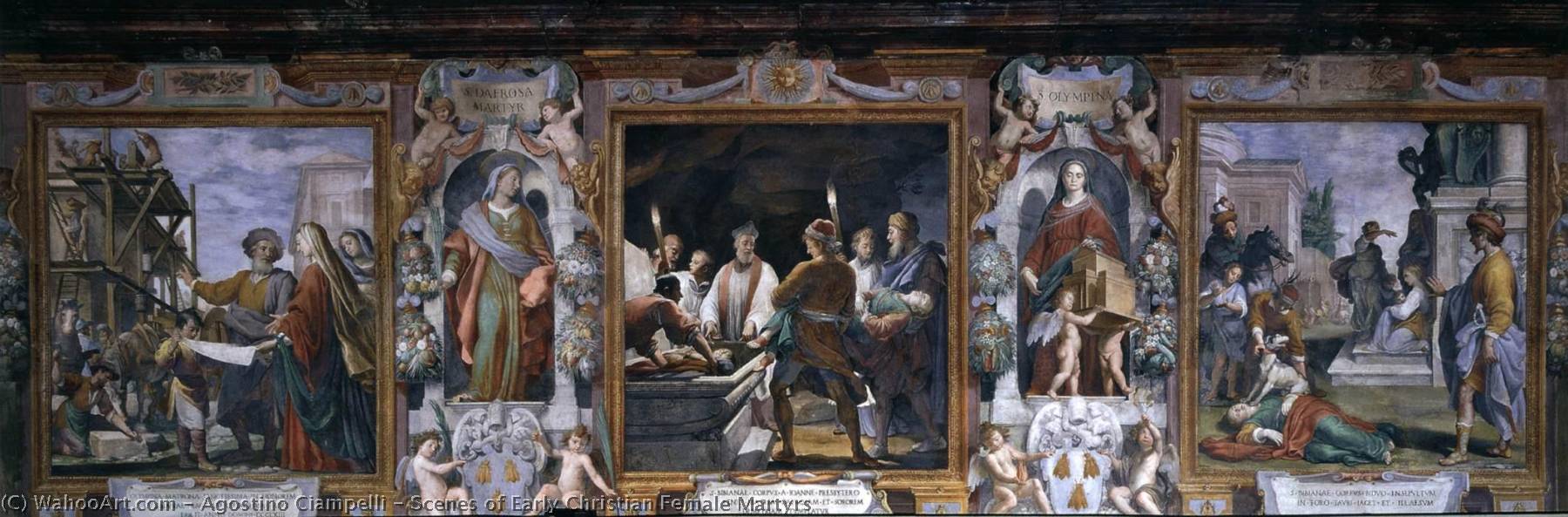
Scenes of Early Christian Female Martyrs


 Read More
Giclée / Art Print
Museum-quality giclée or canvas print with fast production and flexible finish options. ( Buy Hand Made Painting Buy Image)




































Pick from our preset sizes that match the artwork's original proportions.

You may enter your own dimensions to fit a specific frame or space. If your selected size does not match the original image's proportions, we will either crop the artwork or extend the image with a mirrored or solid-fill edge. A digital mockup will be sent for your approval before production begins.
Please note that the on-screen preview does not reflect the actual cropping or extension. Only the mockup will accurately show the final composition.
While custom sizes are available, we recommend selecting a dimension from the predefined list to preserve the original proportions.
Worldwide Delivery () in 2 weeks instead of standard 4/5 weeks. (31 August)

Free Worldwide Express Shipping

High-Quality Linen Canvas

Full Shipping Insurance

Customs Tax Refund Guarantee

True Color Matching Guarantee

60-Day Return Policy (Defects Only)

100% Money-Back Guarantee

Bulk Discount Offer
 Glass option is only available in size under 110 CM

Scenes of Early Christian Female Martyrs
Giclée / Art Print
Reproduction Size
-


Total Price
$ 63
Related Artworks






Artist Biography
The Luminous Legacy of Agostino Ciampelli
In the grand, sweeping narrative of the Italian Baroque, few artists captured the spiritual fervor and dramatic tension of the Counter-Reformation as poignantly as Agostino Ciampelli. Born in Florence around 1565, Ciampelli emerged from a period of profound religious and artistic transition, a time when the clarity of Mannerism was beginning to yield to the emotive power and theatrical grandeur of the Baroque. His life, spanning from the late sixteenth century to his death in Rome in 1630, serves as a bridge between the disciplined classical ideals of the Florentine tradition and the soaring, celestial visions that would define Roman sacred art for generations.
The foundations of Ciampelli’s mastery were laid in the prestigious workshop of Santi di Tito. Under this tutelage, he absorbed a new naturalist style that moved away from the artificial complexities of earlier decades toward a more grounded, yet spiritually resonant, depiction of the human form. This training instilled in him a profound ability to balance classical grace with a burgeoning sense of movement and light. By 1585, his talent was formally recognized through his admission into the Accademia del Disegno in Florence, marking the ascent of a painter who would soon command the attention of the most influential patrons in Italy.
A Journey Through Sacred Spaces
Ciampelli’s career was defined by a restless movement between the artistic hubs of Florence and Rome, a journey that allowed him to weave his visual language into the very fabric of Italy's most sacred architecture. In Florence, his early commissions were marked by an ambitious scale, notably his work on the Tornabuoni Chapel within the Palazzo Pitti. Here, alongside contemporaries like Andrea Commodi, he breathed life into biblical narratives, creating scenes that resonated with the political and religious weight of the Medici era. His ability to translate complex theological themes into accessible, emotionally charged imagery made him a preferred hand for those seeking to decorate the chapels of the elite.
However, it was his relocation to Rome during the papacy of Clement VIII that truly ignited his artistic zenith. In the heart of the Eternal City, Ciampelli found an unparalleled stage for his fresco work. The Roman atmosphere, thick with the scent of incense and the weight of antiquity, provided the perfect backdrop for his monumental achievements. His hand can be seen decorating the walls of the Sala Clementina in the Basilica of San Giovanni in Laterano and the apse of Santa Maria in Trastevere, where his depictions of angels seemed to descend from the heavens themselves. These works were not merely decorations; they were immersive spiritual experiences designed to inspire awe and devotion in the faithful.
Mastery of Light and Devotion
The technical brilliance of Ciampelli lies in his sophisticated use of color and composition to direct the viewer's soul. His frescoes, such as the Crucifixion for Santa Prassede, demonstrate a remarkable command over light—using it not just to define form, but to create a sense of divine presence. In his depictions of saints and martyrs, there is a palpable sense of human suffering intertwined with celestial triumph. Whether painting the Stoning of Saint Vitale or the Martyrdom of St. Stephen, he utilized a palette that could shift from the somber tones of earthly tragedy to the radiant, golden hues of heavenly glory.
Beyond his technical skill, Ciampelli’s historical significance resides in his role as a visual communicator for the Church. His work embodies the very essence of the Counter-Reformation: an art form that is didactic, emotionally accessible, and profoundly beautiful. Through his prolific output across churches and palaces, he helped shape the visual identity of a period defined by faith and renewal. Even today, when we gaze upon the remnants of his frescoes in the quiet corners of Roman basilicas, we encounter the enduring vision of an artist who sought to make the invisible visible, turning stone and pigment into windows to the divine.
agostino ciampelli
1578 - 1630
Quick Facts
- Artistic Movement Or Style: Baroque
- Artists Or Movements Influenced By This Artist: Alessandro de Medici
- Artists Who Influenced This Artist: Santi di Tito
- Date Of Birth: 1565
- Date Of Death: 1630
- Full Name: Agostino Ciampelli
- Nationality: Italian
- Notable Artworks:
- Madonna del Rosary
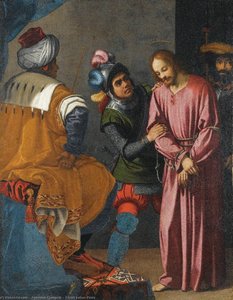
- Christ before Pilate
- Place Of Birth: Florence