 Preview
 Send
Send Share
Share
 Details

 Download
 Similars
 X-Ray
X-Ray Diaporama
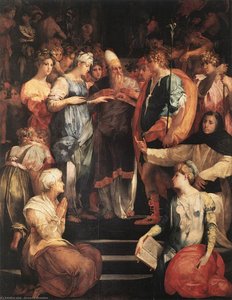
Betrothal of the Virgin
 Oil On Canvas
- WallArt
- Mannerism
 1523
1523 325.0 x 250.0 cm
 San Lorenzo
 Read More
Hand Made Oil Reproduction
Hand-painted oil on canvas in your size and frame, made to order by our artists. ( Buy Print Buy Image)




P118B $10

P118H $10

P118W $10

P438Z $10

P508JH $12

P508YH $12

P805H $10

P805Z $10

P919BZ $10

P919G $10

P919XJ $10

P959ZH $10

P968JZ $12

W106C $8

W218G $10

W218JH $8

W218Y $10

W307PJ $10

W316G $10

W316PJ $8

W316Y $10

W398PJ $8

W4111J $10

W500HY $15

W500JH $15

W692G $12

W849H $8

W940BG $15

W953PJ $8




Pick from our preset sizes that match the artwork's original proportions.

You may enter your own dimensions to fit a specific frame or space. If your selected size does not match the original image's proportions, we will either crop the artwork or extend the painting with additional hand-painted elements. A digital mockup will be sent for your approval before production begins.
Please note that the on-screen preview does not reflect the actual cropping or extension. Only the mockup will accurately show the final composition.
While custom sizes are available, we recommend selecting a dimension from the predefined list to preserve the original proportions.
After order, ArtsDot.com team will email client for instructions and provide a mockup preview
Worldwide Delivery () in 3/4 weeks instead of standard 5 weeks. (16 August). No compromise on quality.

Free Worldwide Express Shipping

High-Quality Linen Canvas

Full Shipping Insurance

Customs Tax Refund Guarantee

True Color Matching Guarantee

60-Day Return Policy (Defects Only)

100% Money-Back Guarantee

Bulk Discount Offer
 Glass option is only available in size under 110 CM

Betrothal of the Virgin
Reproduction Medium
Reproduction Size
-


Total Price
$ 363
Artwork Description
Betrothal of the Virgin – A Renaissance Masterpiece Revisited
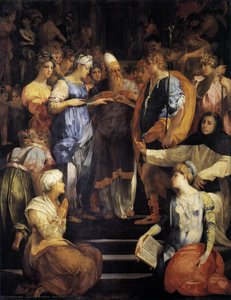
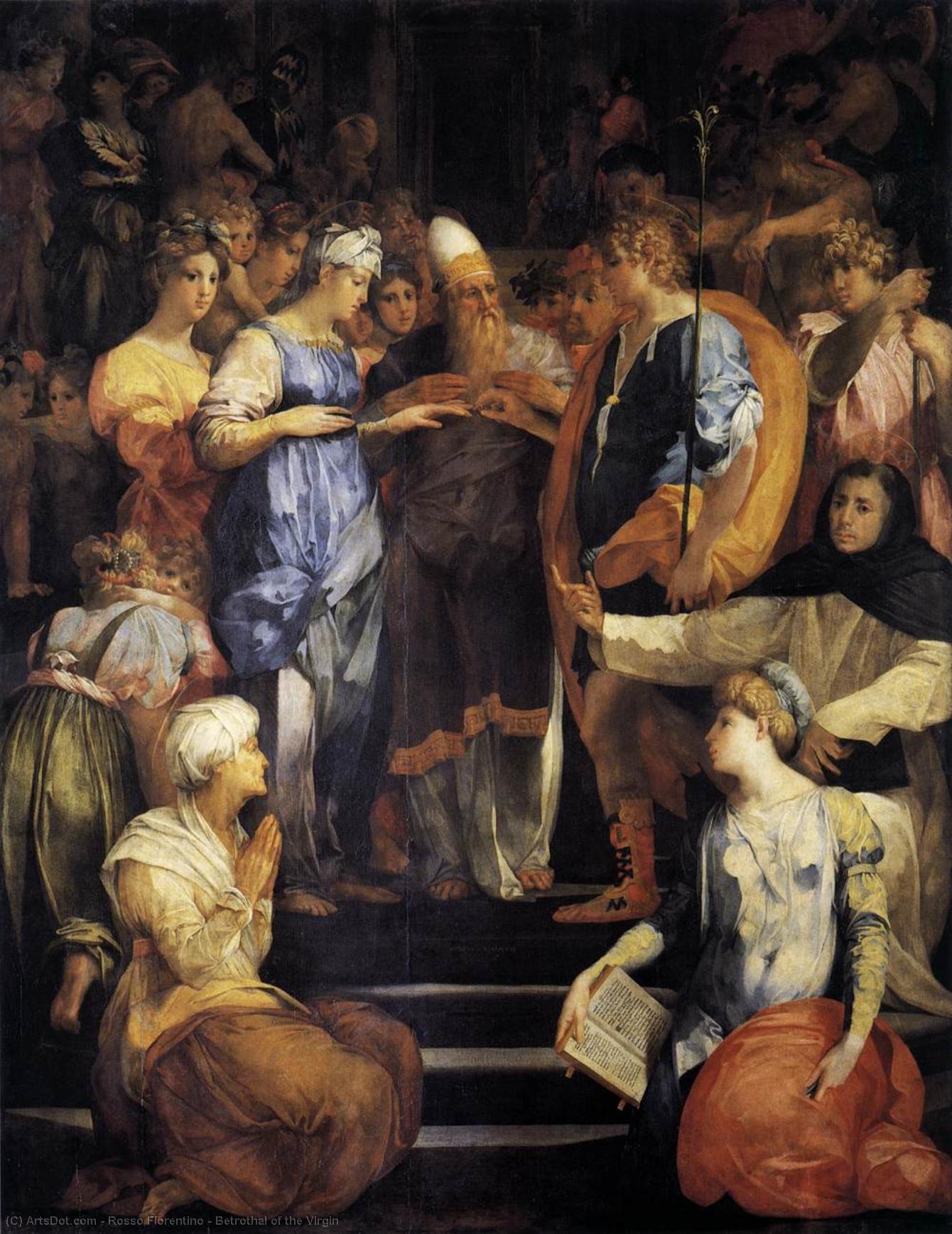
The Marriage of the Virgin, painted by Rosso Fiorentino in 1523, stands as a testament to the artistic fervor and intellectual curiosity that characterized the High Renaissance’s twilight years. Commissioned for the chapel dedicated to Saint Peter and Saint Joseph within Florence's Basilica of San Lorenzo – a space imbued with papal prestige – this monumental oil painting transcends mere depiction; it embodies a profound reimagining of religious iconography and reflects the burgeoning anxieties surrounding spiritual renewal during Clement VII’s papacy.A Bold Departure from Tradition
Rosso Fiorentino’s genius lay in his willingness to challenge established conventions. Unlike preceding depictions of Saint Joseph, where he was portrayed as an aged patriarch embodying humility and piety, Rosso presented him as a youthful Adonis – a deliberate provocation intended to symbolize *renovatio ecclesiae*, the revitalization of the Church championed by Pope Leo X and Clement VII. This audacious decision wasn’t merely stylistic; it carried symbolic weight, questioning traditional notions of masculinity and faith within a period grappling with papal legitimacy amidst political turmoil. Scholars debate whether this was driven by artistic innovation or a conscious desire to disrupt established dogma.Compositional Drama and Mannerist Influence
The painting's dramatic composition immediately captivates the viewer’s gaze. Rosso skillfully employs perspective, creating a three-dimensional space that draws attention upwards towards the central scene – the nuptials of Mary and Joseph. Unlike the pyramidal stability favored by Raphael and Michelangelo, Rosso abandons symmetry, opting for an asymmetrical arrangement that pulsates with energy. Figures are clustered densely around the altar steps, conveying a palpable sense of movement and emotion. Lines dominate the canvas, defining forms with meticulous precision and emphasizing architectural elements—a hallmark of Mannerism’s stylistic preoccupation with illusionistic space. The artist's masterful glazing technique contributes to the painting’s luminous quality, layering colors to achieve depth and richness.Symbolic Resonance: Faith and Renewal
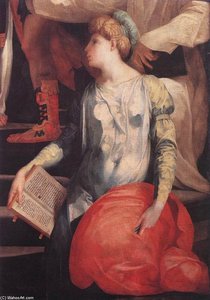
Beyond its aesthetic brilliance, “The Marriage of the Virgin” resonates deeply with religious symbolism. Joseph’s youthful portrayal underscores the importance of vitality and strength in upholding Christian faith. The figures surrounding him—Saint Anne, Saint Vincent Ferrer (possibly), and Saint Apollonia—represent diverse saints embodying piety and spiritual contemplation. Notably, a young woman holds aloft a metallic object – speculated to be a key symbolizing divine grace – reinforcing the painting’s overarching theme of redemption and renewal. The artist's deliberate use of gestures directs the viewer's eye towards the central narrative, mirroring the biblical story itself and elevating it beyond mere visual representation.A Legacy Enduring Through Time
Today, “The Marriage of the Virgin” resides in the Basilica of San Lorenzo, alongside a meticulously crafted copy attributed to Antonio Circignani – now housed in the Louvre – ensuring its enduring presence within the artistic heritage of Florence and Europe. Rosso Fiorentino’s masterpiece continues to inspire artists and collectors alike, cementing his place as one of the most influential figures of the Renaissance and demonstrating the transformative power of artistic innovation driven by intellectual conviction.Related Artworks

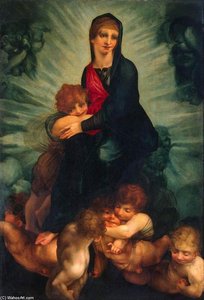
Artist Biography
A Life Painted in Fire: The Dramatic World of Rosso Fiorentino
Giovanni Battista di Jacopo, known to the world as Rosso Fiorentino – “The Red Florentine” – was a name whispered with both admiration and a touch of unease during the Italian Renaissance. Born in Florence on March 8th, 1495, his very nickname alluded to the fiery spirit that would come to define not only his appearance but also his intensely emotional and innovative art. Rosso wasn’t merely a painter; he was a harbinger of change, a pivotal figure bridging the High Renaissance's classical ideals with the burgeoning complexities of Mannerism. His journey, marked by artistic exploration, political upheaval, and ultimately, a premature death in Fontainebleau in 1540, left an indelible mark on the landscape of European art.Formative Years and Florentine Foundations
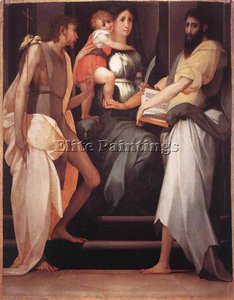
Rosso’s artistic education began within the esteemed workshop of Andrea del Sarto, one of Florence's leading masters. This environment proved crucial, placing him alongside another rising star, Pontormo. The two artists shared a space for experimentation, fostering a creative rivalry that pushed both to explore beyond conventional boundaries. The influence of the Florentine school was deeply ingrained during these formative years; however, even early works reveal Rosso’s distinct inclination towards dramatic intensity and an expressive use of color – qualities that would set him apart. He absorbed the lessons of perspective and anatomical accuracy but quickly began to imbue his figures with a psychological depth rarely seen in earlier Renaissance art. Early paintings like the *Holy Family with the Infant Saint John the Baptist* demonstrate this emerging style, hinting at the emotional turbulence that would characterize his mature work.The Roman Interlude and the Seeds of Mannerism
In 1523, Rosso ventured to Rome, a city brimming with artistic energy and the monumental achievements of Michelangelo and Raphael. This period proved transformative. He was profoundly impacted by Michelangelo’s powerful figures and dynamic compositions, as well as Raphael's refined grace. However, rather than simply imitating these masters, Rosso synthesized their influences into something uniquely his own. The Sack of Rome in 1527 brought chaos and destruction, forcing Rosso to flee the city and marking a turning point in his career. This traumatic event seems to have intensified the emotional undercurrents within his art, pushing him further away from the High Renaissance’s emphasis on harmony and towards the more unsettling aesthetic of Mannerism.French Patronage and Lasting Legacy
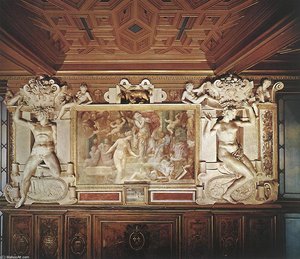
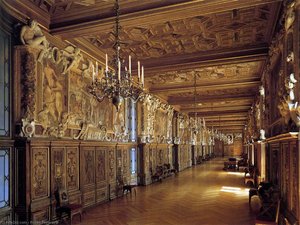
Rosso's journey eventually led him to France in 1530, where he entered the service of King Francis I. This marked a new chapter, as he became a key figure in the decoration of the Château de Fontainebleau, alongside other prominent artists. Here, he was given considerable freedom to experiment and develop his style further. The *Gallery of Francis I* at Fontainebleau stands as a testament to his skill, showcasing allegorical scenes filled with elongated figures, vibrant colors, and complex symbolism. He also created works like *Elephant*, demonstrating an ability to capture the essence of his subjects with remarkable detail. Sadly, Rosso’s time in France was cut short by illness; he died in 1540 at the age of forty-five. Despite his relatively brief career, Rosso Fiorentino's influence resonated throughout Europe. His style profoundly impacted artists like Francesco Primaticcio, who succeeded him at Fontainebleau, and helped to solidify Mannerism as a dominant force in art for decades to come. His paintings, now found in museums worldwide – including the Galleria Nazionale d'Arte Moderna e Contemporanea in Rome, the Pinacoteca Comunale in Volterra, and the Duomo in Città di Castello – continue to captivate viewers with their dramatic power and emotional depth, ensuring that the “Red Florentine” remains a vital and compelling figure in art history.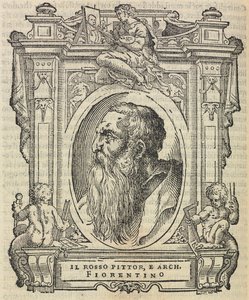
Rosso Fiorentino
1495 - 1540 , Italy
Quick Facts
- Artistic Movement Or Style: Mannerism
- Artists Or Movements Influenced By This Artist: ['Francesco Primaticcio']
- Artists Who Influenced This Artist:
- Michelangelo
- Raphael
- Date Of Birth: March 8, 1495
- Date Of Death: November 14, 1540
- Full Name: Giovanni Battista di Jacopo
- Nationality: Italian
- Notable Artworks:
- The Deposition
- Elephant
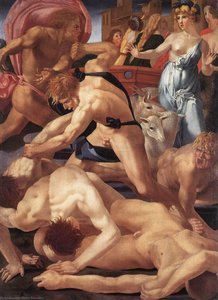
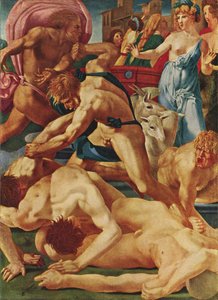
- Moses and Jethro's Daughters
- Place Of Birth: Florence, Italy
Related Articles
Sacred Narratives Embodied: A Comprehensive Exploration of Religious Iconography in Art History
Explore the rich history of religious iconography in art! Discover symbolism, movements & masterpieces from Byzantine to Renaissance periods. Expert insights for collectors and enthusiasts at ArtsDot.
Sacred Narratives on Canvas: Exploring Religious Painting Through History
Explore the rich history of religious painting with ArtsDot.com! Discover iconic artworks, symbolism & techniques from antiquity to the Renaissance. Enhance your art appreciation today.
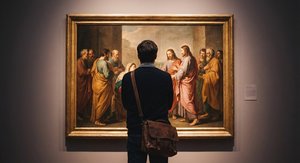
Sacred Narratives on Canvas: Exploring Religious Scenes & Their Enduring Influence
Explore the rich history of religious art from Giotto to the Renaissance masters with ArtsDot. Discover symbolism, techniques & enduring legacies. Museum-quality reproductions available.

Sacred Visions: Exploring Faith & Devotion in Religious Art Across Cultures
Explore the rich history of religious art across cultures! Discover symbolism, Renaissance masterpieces & the power of color in devotional works. Expert insights for collectors and enthusiasts.

Sacred Narratives on Canvas: Exploring Devotional Imagery Across Art History
Explore the rich history of devotional art! Discover iconic masterpieces, symbolism & techniques from antiquity to the Renaissance. Expert insights for collectors & enthusiasts at ArtsDot.