 Preview
 Send
Send Share
Share
 Details

 Download
 Similars
 X-Ray
X-Ray Diaporama
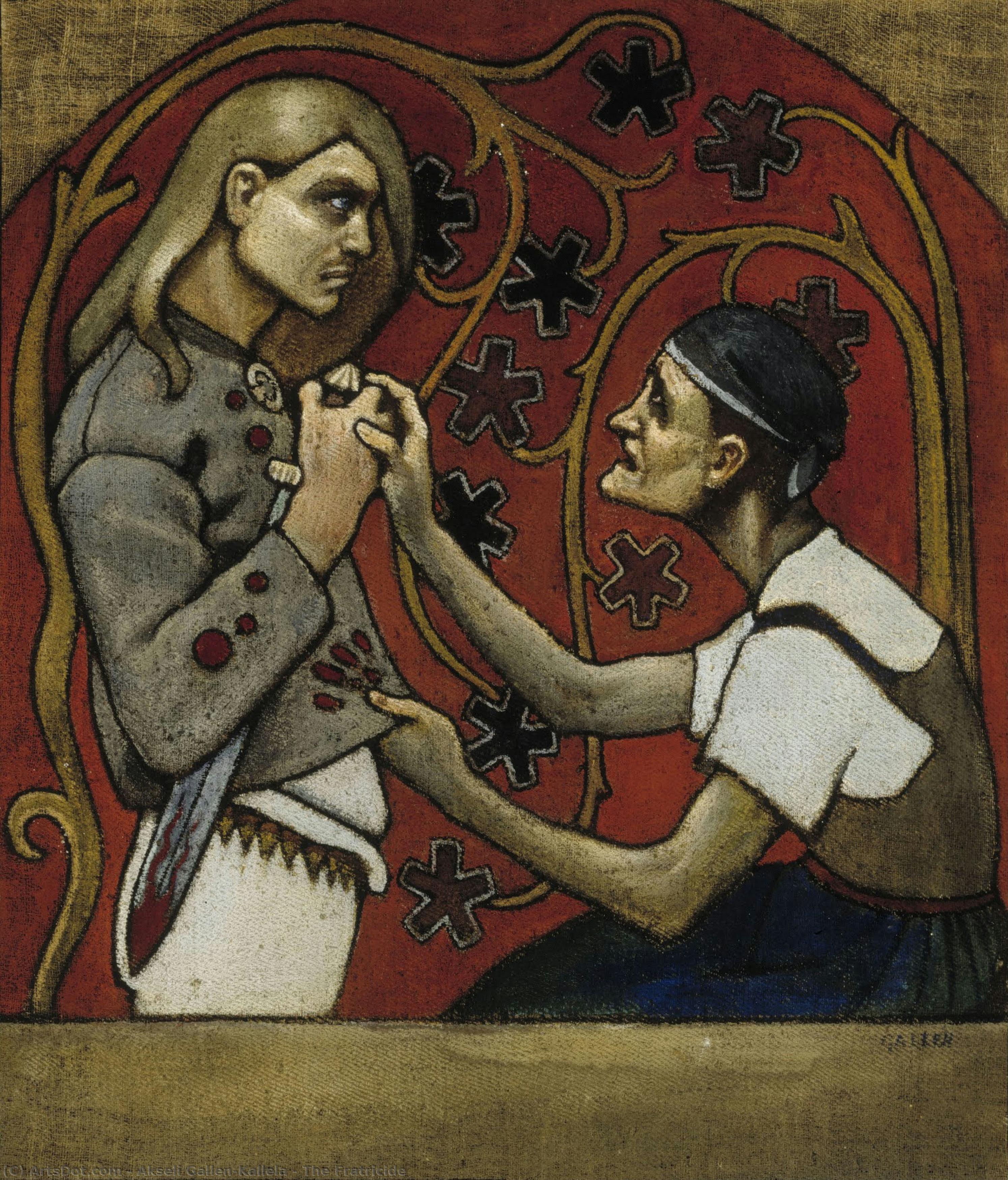
The Fratricide
 Acrylic
- WallArt
- Art Nouveau
 1897
1897 56.0 x 66.0 cm
 Ateneum Art Museum
 Read More
Hand Made Oil Reproduction
Hand-painted oil on canvas in your size and frame, made to order by our artists. ( Buy Print Buy Image)




P118B $10

P118H $10

P118W $10

P438Z $10

P508JH $12

P508YH $12

P805H $10

P805Z $10

P919BZ $10

P919G $10

P919XJ $10

P959ZH $10

P968JZ $12

W106C $8

W218G $10

W218JH $8

W218Y $10

W307PJ $10

W316G $10

W316PJ $8

W316Y $10

W398PJ $8

W4111J $10

W500HY $15

W500JH $15

W692G $12

W849H $8

W940BG $15

W953PJ $8




Pick from our preset sizes that match the artwork's original proportions.

You may enter your own dimensions to fit a specific frame or space. If your selected size does not match the original image's proportions, we will either crop the artwork or extend the painting with additional hand-painted elements. A digital mockup will be sent for your approval before production begins.
Please note that the on-screen preview does not reflect the actual cropping or extension. Only the mockup will accurately show the final composition.
While custom sizes are available, we recommend selecting a dimension from the predefined list to preserve the original proportions.
After order, ArtsDot.com team will email client for instructions and provide a mockup preview
Worldwide Delivery () in 3/4 weeks instead of standard 5 weeks. (17 August). No compromise on quality.

Free Worldwide Express Shipping

High-Quality Linen Canvas

Full Shipping Insurance

Customs Tax Refund Guarantee

True Color Matching Guarantee

60-Day Return Policy (Defects Only)

100% Money-Back Guarantee

Bulk Discount Offer
 Glass option is only available in size under 110 CM

The Fratricide
Reproduction Medium
Reproduction Size
-


Total Price
$ 263
Artwork Description
A Portrait of Finnish Soul: Exploring Gallen-Kallela’s “The Fratricide”
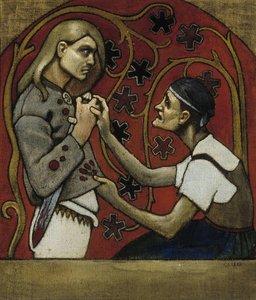
“The Fratricide,” painted in 1897 by Akseli Gallen-Kallela, transcends mere visual representation; it embodies the anxieties and aspirations of Finland during its formative years as a nation striving for self-determination. More than just depicting two men wielding a weapon, this monumental black and white print captures a profound psychological drama rooted in folklore and myth.
- Subject Matter: The artwork portrays two figures engaged in an intense confrontation—a stark depiction of familial discord and the struggle for identity. Gallen-Kallela draws heavily from Finnish mythology, specifically the Kalevala epic poem, which recounts tales of heroic battles and primal conflicts between brothers.
- Style & Technique: Gallen-Kallela’s style is characterized by Symbolism, aligning him with prominent European artists of his time. He employs a meticulous etching technique—a process known for its tonal range and ability to convey subtle nuances of emotion—resulting in an image imbued with palpable tension. The artist's masterful use of hatching and cross-hatching creates depth and texture, mirroring the rugged landscapes of Finland and reflecting the emotional turmoil at the heart of the scene.
- Historical Context: Created during a period of significant political upheaval – Finland’s quest for independence from Russia – “The Fratricide” serves as a visual commentary on societal divisions and the challenges faced in forging a unified national spirit. Gallen-Kallela's artistic vision reflects the broader cultural movement seeking to reclaim Finnish heritage and express its collective psyche.
- Symbolism: The knife held by one figure symbolizes aggression, division, and potentially violence—themes prevalent throughout Kalevala narratives. The positioning of the men, facing away from each other, emphasizes isolation and underscores the difficulty of reconciliation. The hats worn by both figures are significant; they represent tradition and conformity, juxtaposed against the internal conflict unfolding before the viewer’s eyes.
- Emotional Impact: “The Fratricide” evokes a powerful sense of unease and melancholy. Gallen-Kallela's masterful rendering captures not only physical confrontation but also psychological struggle—a reflection of Finland’s own turbulent journey toward selfhood. It invites contemplation on themes of brotherhood, betrayal, and the enduring influence of mythic narratives on human experience.
A reproduction of “The Fratricide” offers an exceptional opportunity to bring a cornerstone of Finnish art history into any interior space—a testament to Gallen-Kallela’s artistic genius and his unwavering devotion to capturing the essence of his nation.
Related Artworks
Artist Biography
A Life Woven into the Finnish Soul
Akseli Gallen-Kallela, born Axel Waldemar Gallén in 1865 in Pori, Finland, wasn’t merely a painter; he was a visual poet of a nation finding its voice. His life unfolded against a backdrop of shifting political tides and a burgeoning national identity, deeply influencing his artistic trajectory. Initially raised in a Swedish-speaking family—a common reality within Finland at the time—Gallen-Kallela's eventual embrace and championing of Finnish culture was not simply an aesthetic choice but a deliberate act of cultural affirmation. His early years were marked by a tension between familial expectations and artistic ambition, leading him to Paris in 1884 to study at the Académie Julian. This period exposed him to the currents of European art, yet it also ignited within him a longing for the landscapes and folklore of his homeland.
The Parisian experience was formative, introducing him to artists like Albert Edelfelt and fostering friendships with figures such as August Strindberg. However, Gallén-Kallela’s artistic spirit proved resistant to complete assimilation into the prevailing European styles. He began returning frequently to Finland, drawn by a desire to capture the essence of its rural life and ancient mythology. This marked a turning point, a conscious decision to forge an artistic path rooted in Finnish identity. His early works reflected this shift, depicting scenes of peasant life with a realism tempered by a growing symbolic sensibility—a style that would soon become his signature.
The Kalevala’s Embrace: Myth and National Identity
Gallen-Kallela's most enduring legacy lies in his breathtaking illustrations of the Kalevala, Finland’s national epic. This collection of ancient folklore, poems, and myths became more than just subject matter for him; it was a wellspring of inspiration, a key to unlocking the soul of his nation. Paintings like The Defense of the Sampo (1897) and Lemminkäinen’s Mother (1893) are not mere illustrations but powerful visual interpretations that resonate with the epic's themes of heroism, loss, and the struggle against adversity. He didn’t simply depict scenes from the Kalevala; he *embodied* them, infusing his canvases with a sense of primal energy and symbolic depth.
His approach was meticulous, involving extensive research into Finnish folklore, traditions, and landscapes. He sought to capture not just the narrative elements but also the underlying spiritual beliefs and cultural values embedded within the epic. This dedication elevated his work beyond mere illustration; it transformed him into a visual storyteller, a conduit for preserving and celebrating Finland’s cultural heritage. The impact of these works was profound, solidifying Gallen-Kallela's position as a pivotal figure in Finnish art and contributing significantly to the nation’s growing sense of self-awareness.
Beyond Myth: Symbolism, Expression, and Artistic Evolution
While inextricably linked with the Kalevala, Gallen-Kallela’s artistic range extended far beyond mythological subjects. He explored symbolism in works like Symposium (1894), a haunting depiction of Finnish artists engaged in intellectual discourse, subtly hinting at anxieties about national identity and cultural preservation. His style evolved over time, incorporating elements of Art Nouveau and later embracing the expressive power of color and form. A pivotal moment came with his journey to Kenya in 1909-1910, where he encountered a different culture and landscape that profoundly impacted his artistic vision.
This experience led to a shift towards more vibrant colors and bolder brushstrokes, foreshadowing the emergence of Expressionism. He continued to experiment with various mediums, including frescoes—most notably those commissioned for the Jusélius Mausoleum—and designs for textiles and furniture, demonstrating a holistic approach to art that extended beyond the confines of traditional painting. Even during periods of political turmoil, such as the Finnish Civil War in 1917-1918, Gallen-Kallela remained actively engaged, designing uniforms and decorations for the newly independent Finnish army.
A Lasting Legacy: The Shaping of a National Aesthetic
Akseli Gallen-Kallela’s influence on Finnish art and culture is immeasurable. He didn't just paint pictures; he helped to define what it meant to be Finnish, visually articulating the nation’s identity during a period of profound transformation. His work continues to inspire artists today, serving as a testament to the power of art to shape national consciousness and preserve cultural heritage.
- National Romanticism: Gallen-Kallela is considered a central figure in Finnish National Romanticism, an artistic movement that sought to celebrate Finland’s unique culture and identity.
- Cultural Icon: His illustrations of the Kalevala have become iconic representations of Finnish mythology and folklore.
- Artistic Innovation: He was a versatile artist who experimented with various styles and mediums, pushing the boundaries of Finnish art.
- Enduring Influence: His work continues to inspire artists and shape Finland’s cultural landscape today.
Gallen-Kallela's life was a testament to the power of artistic vision, a journey from youthful ambition to national icon. He died in Stockholm in 1931, leaving behind a body of work that continues to resonate with audiences worldwide—a legacy woven into the very fabric of the Finnish soul.
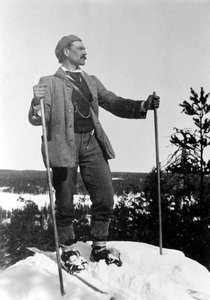
Akseli Gallen-Kallela
1865 - 1931 , Finland
Quick Facts
- Artistic Movement Or Style: National Romanticism
- Artists Or Movements Influenced By This Artist: ['Finnish Art']
- Date Of Birth: April 26, 1865
- Date Of Death: March 7, 1931
- Full Name: Akseli Gallen-Kallela
- Nationality: Finnish
- Notable Artworks:
- The Defense of the Sampo
- Lemminkäinen's Mother
- Kullervo's Curse
- Place Of Birth: Pori, Finland
Related Articles
Akseli Gallen-Kallela: Shaping Finnish Identity Through National Romanticism & Symbolism
Explore the captivating world of Akseli Gallen-Kallela, Finland's iconic National Romantic painter. Discover his symbolic landscapes, Kalevala illustrations & lasting impact on Finnish identity. Expert analysis & high-quality reproductions at ArtsDot.
National Gallery London's Masterpieces: 25 Iconic Paintings for Your Home Decor
Journey through the National Gallery London's 25 most iconic paintings! Explore Van Gogh, Monet, Rembrandt & more. Discover art history, techniques & find museum-quality reproductions for your home decor on ArtsDot.com.
Albert Edelfelt: A Pioneer of Finnish Realism & International Impressionist Circles
Explore the life & work of Albert Edelfelt, a pioneering Finnish Realist painter who bridged Impressionism & national identity. Discover his masterpieces and lasting influence on art history.
National Gallery of Art's Masterpieces: 25 Iconic Paintings for Your Home Decor
Explore 25 iconic artworks from Washington DC's National Gallery of Art! Discover masterpieces by Cézanne, Matisse & Picasso. Find museum-quality art reproductions and elevate your home decor with timeless paintings. Explore the full collection online at ArtsDot.com.
Jan Matejko: Historical Narrative & National Identity in 19th-Century Polish Painting
Explore the powerful historical paintings of Jan Matejko, Poland's national artist. Discover his iconic works & learn how he shaped Polish identity in the 19th century. High-quality reproductions available.