

 Preview
 Send
Send Share
Share
 Details

 Download
 Similars
 X-Ray
X-Ray Diaporama
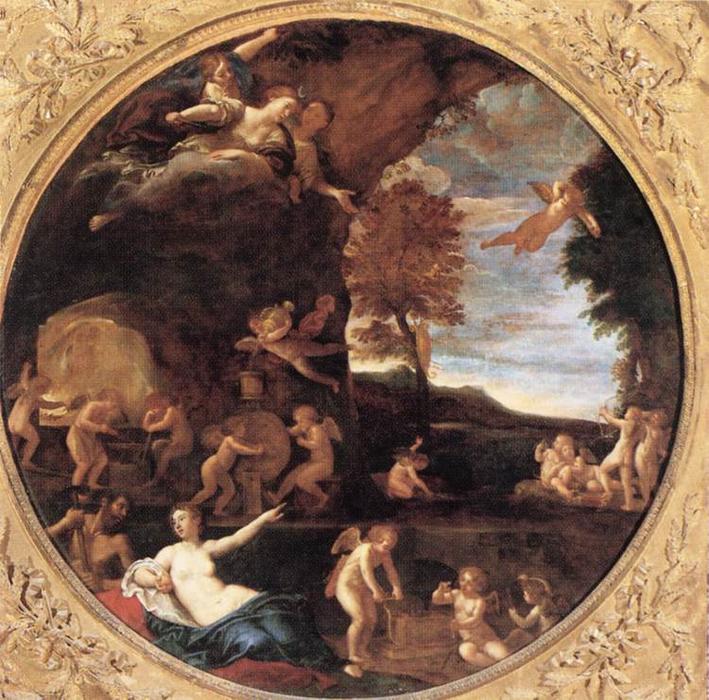
Summer (Venus in Vulcan's Forge)
 Oil On Canvas
- WallArt
- Mannerism
 1616
1616 154.0 x 154.0 cm
 Galleria Borghese
 Read More
Purchase a high-resolution, enhanced digital image, far superior to the online preview.
Each file is meticulously prepared by our in-house specialists using advanced tools and expert manual retouching. We ensure every image has exceptional clarity, precise color accuracy, and fine detail.
The final file is delivered via email within 72 hours, optimized for immediate use in professional, editorial, and print environments. This is the same quality trusted by top-tier design studios, publishers, and galleries.
Digital Image
Download a high-resolution file for personal display, printing, and creative projects. ( Buy Print Buy Hand Made Painting)
Included in Every Digital Image Order
Expert Digital Delivery, Guaranteed
When you choose ArtsDot.com, you're not just getting an image - you're receiving a professionally enhanced digital artwork, crafted with precision and backed by a satisfaction guarantee. Here's everything that comes with your order, automatically:

Fast Email Delivery
Your high-resolution digital image file will be emailed to you within 72 hours of ordering - ready for immediate use.

AI-Enhanced Digital File
Your artwork is professionally optimized using advanced AI tools and manual editing, ensuring maximum detail, clarity, and color accuracy.

Free Lifetime Re-Delivery
Accidentally deleted or lost your file? No worries - we'll resend it to you anytime, free of charge.

No Import Fees - Ever
Enjoy your artwork instantly with zero customs, duties, or delivery fees - digital downloads are always tax-free.

Color Accuracy Guarantee
We ensure your digital image reflects the original colors as closely as possible using professional tools and color management.

60-Day Satisfaction Guarantee
If you're not satisfied with your digital image, we'll revise it or refund 100% within 60 days - no questions asked.

100% Money-Back Guarantee
Not satisfied? Get a full refund within 60 days of receiving your digital file - no questions asked.

Bulk Order Discounts
Buy 3 images, save 10% - Buy 5, save 15% - Buy 10+, save 20%. Great for creative projects, galleries, and agencies.
Collectible Description
A Moment of Divine Disquiet: Francesco Albani’s “Summer (Venus in Vulcan’s Forge)”
Francesco Albani's "Summer (Venus in Vulcan’s Forge)," painted in 1616, isn’t merely a depiction of mythological figures; it’s a carefully constructed tableau brimming with narrative tension and exquisite detail. This circular oil painting transports the viewer to a fantastical Roman landscape – a vibrant, almost feverish realm where the goddess Venus, reclining amidst a profusion of flowers, confronts a shocking revelation. The scene unfolds beneath a dramatic sky, hinting at both beauty and impending conflict, capturing a fleeting moment of divine discord that resonates with timeless emotional depth.
Albani, a pivotal figure in the transition from Mannerism to Baroque painting in Italy, masterfully employs a style characterized by elongated forms, dynamic gestures, and an intense focus on conveying emotion. Unlike the rigid formality often associated with earlier Renaissance art, Albani embraces a more fluid, expressive approach. The figures are not static representations but rather embodiments of their roles – Venus, languidly sensual yet radiating authority; Vulcan, the god of fire, his face etched with surprise and perhaps a touch of anger; and the surrounding putti, caught in the whirlwind of gossip and disbelief. The composition itself is deliberately complex, layering figures and elements to create a sense of depth and movement that draws the eye across the canvas.
A Symphony of Color and Light: Technique and Style
Albani’s technical prowess is immediately apparent in the painting's rich textures and masterful use of color. He employs a technique known as “sfumato,” subtly blurring outlines and creating soft transitions between tones, lending an ethereal quality to the scene. The palette is dominated by warm hues – fiery oranges and reds for Vulcan’s forge, lush greens and blues for the landscape, and delicate pinks and creams for Venus's attire and the surrounding flowers. Albani skillfully utilizes glazing—applying thin layers of translucent paint over dried underlayers—to build up depth and luminosity, creating a sense of tactile richness that invites close inspection.
The painting’s circular format is particularly noteworthy. This unconventional choice contributes to the feeling of intimacy and immediacy, as if the viewer has been invited into an exclusive conversation. The perspective is subtly flattened, characteristic of Renaissance painting, but Albani manipulates it to create a convincing illusion of space and depth. He uses atmospheric perspective—diminishing detail and color intensity in the distance—to suggest the vastness of the landscape and the receding figures.
Mythological Echoes and Symbolic Resonance
"Summer (Venus in Vulcan’s Forge)" is rooted firmly in classical mythology, drawing inspiration from Ovid's *Metamorphoses*. The narrative centers on Venus’s infidelity with Mars, a scandalous revelation brought to light by Apollo. Each figure carries symbolic weight: Venus represents love and beauty, but also passion and betrayal; Vulcan embodies creation and craftsmanship, yet is confronted with the destructive consequences of his work; and Apollo acts as the messenger of truth, delivering a painful message that shatters the idyllic facade of their world.
The inclusion of putti—cherubic angels—adds a layer of innocence and vulnerability to the scene. They represent the youthful exuberance of love and the potential for both joy and sorrow. The presence of the forge itself is significant, symbolizing not only Vulcan’s craft but also the destructive power of war – a constant threat lurking beneath the surface of Venus's world.
A Legacy of Baroque Grandeur
Albani’s “Summer (Venus in Vulcan’s Forge)” stands as a testament to his skill and artistic vision. It exemplifies the key characteristics of Mannerism, while simultaneously foreshadowing the dramatic intensity and emotional depth of the emerging Baroque style. The painting's enduring appeal lies not only in its technical brilliance but also in its ability to evoke a powerful range of emotions – from wonder and delight to intrigue and melancholy. It’s a captivating glimpse into a world where gods and mortals collide, and where even the most beautiful love stories are fraught with conflict and consequence.
Related Artworks
Artist Biography
The Grace of the Bolognese Master
In the vibrant tapestry of the Italian Baroque, few threads are as delicate and luminous as those woven by Francesco Albani, often remembered by the evocative moniker l'Albane. Born in the storied city of Bologna in 1578, Albani was destined for a life steeped in pigment and prestige. Coming from a lineage of creators, he was the son of the painter Daniele Albani and the nephew of the esteemed Giovanni Paolo Cavagna. This early immersion in an environment of artistic rigor provided him with a foundation that would eventually allow him to bridge the gap between the classical elegance of the Renaissance and the dramatic emotionality of the Baroque era.
His formative years were shaped by rigorous apprenticeship, beginning in the studio of Denzio Ferrari, where he mastered the fundamental mechanics of light and form. However, it was his subsequent move to Rome that truly ignited his creative spirit. Under the tutelage of Guidobaldo Gandolfi, Albani began to refine a style that would become his hallmark: a sophisticated blend of mythological grace and classical poise. His journey from the academic traditions of Bologna to the grand, theatrical atmosphere of Rome allowed him to synthesize a unique visual language that resonated with the religious and aristocratic patrons of the seventeenth century.
A Symphony of Light and Myth
Albani’s oeuvre is characterized by an extraordinary ability to breathe life into the legends of antiquity and the sacred narratives of the Bible. He possessed a rare gift for capturing the ephemeral beauty of the human form, rendering skin with a porcelain-like delicacy that seemed to glow from within. This mastery is perhaps most profoundly realized in his celebrated work, Toilet of Venus, where the goddess emerges not merely as a figure of myth, but as a vision of divine aesthetic perfection. Through his brush, the mythological becomes intimate, and the classical becomes deeply human.
Beyond the figures themselves, Albani was a pioneer in the atmospheric use of chiaroscuro. While many of his contemporaries used extreme light and shadow to create jarring tension, Albani employed the technique to instill his compositions with a sense of depth and spiritual weight. This is evident in works such as The Baptism of Christ, where the interplay of light serves to heighten the emotional gravity of the sacrament, and in his depictions of St. Sebastian, where shadow sculpts the musculature and emphasizes the martyr's profound suffering. His ability to integrate naturalistic landscapes into these sacred scenes also marked him as a precursor to the development of landscape painting, as he often used sweeping, verdant backgrounds to frame his central dramas.
Legacy and Enduring Influence
The historical significance of Francesco Albani lies in his role as a stabilizing force during a period of intense artistic experimentation. While the Baroque era is often associated with turbulent movement, Albani provided a sense of lyrical continuity, reminding the art world of the enduring power of classical harmony. His influence stretched far beyond the borders of Italy, as his refined approach to composition and color became a standard for subsequent generations of European painters.
Today, the legacy of l'Albane is preserved in some of the most prestigious galleries in the world. To walk through the halls of the Musée du Louvre in Paris is to encounter his enduring vision, particularly through masterpieces like Toilet of Venus, which continue to captivate viewers with their timeless elegance. His life’s work remains a testament to the power of beauty, serving as a bridge between the structured ideals of the past and the emotive complexities of the Baroque age. Through his delicate touch and masterful command of light, Albani ensured that the grace of the Bolognese tradition would forever be etched into the annals of art history.

albani francesco (l'albane)
1578 - 1660 , Italy
Quick Facts
- Artistic Movement Or Style: Baroque and Classical
- Artists Or Movements Influenced By This Artist:
- Baroque painting
- Landscape painting
- Artists Who Influenced This Artist:
- Denzio Ferrari
- Guidobaldo Gandolfi
- Date Of Birth: 1578
- Date Of Death: 1660
- Full Name: Francesco Albani
- Nationality: Italian
- Notable Artworks:
- Toilet of Venus
- The Baptism of Christ
- St. Sebastian
- Virgin and Child with St. John the Baptist
- Place Of Birth: Bologna, Italy

