 Preview
 Send
Send Share
Share
 Details

 Download
 Similars
 X-Ray
X-Ray Diaporama
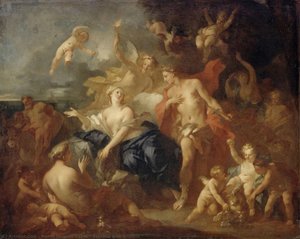
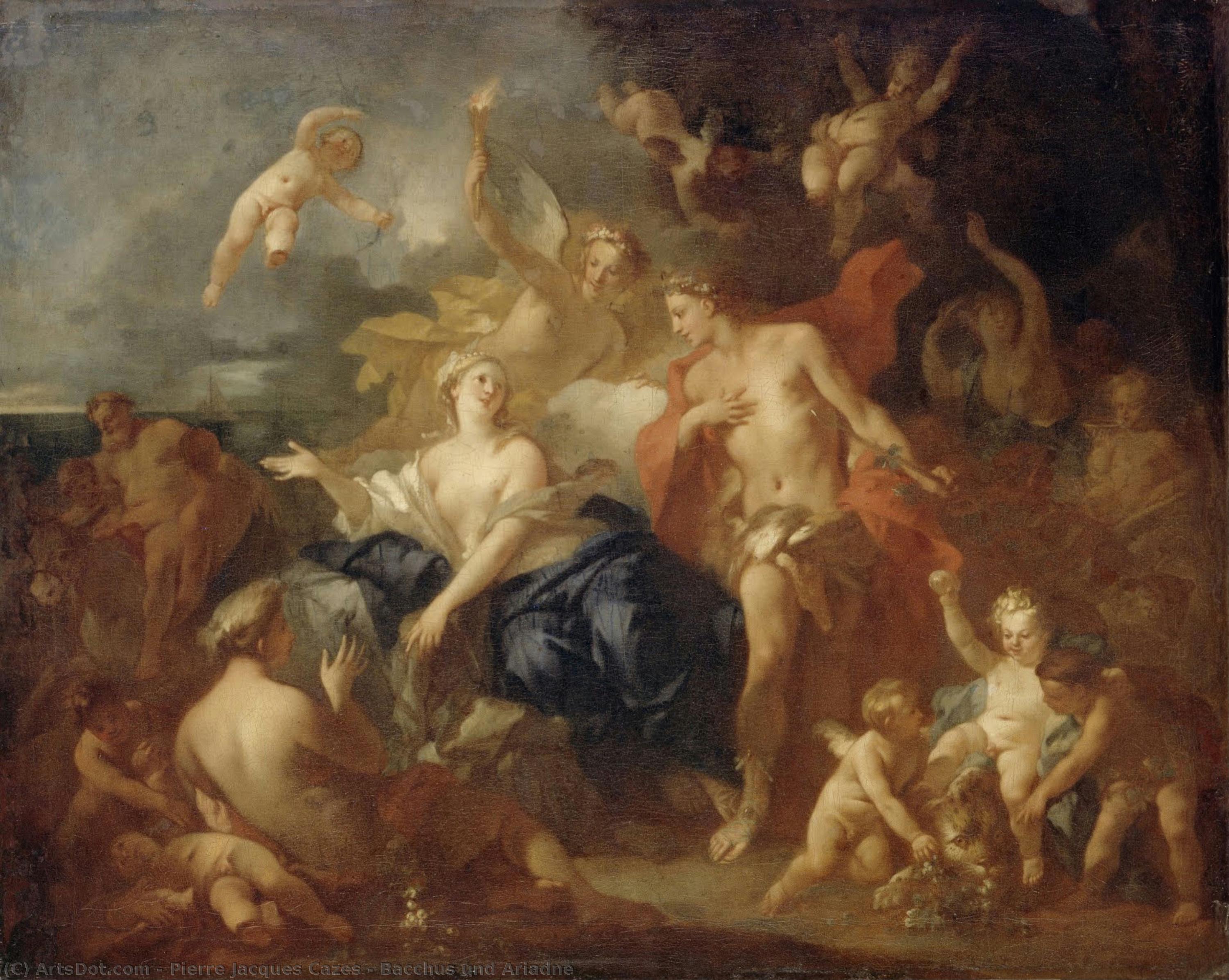
Bacchus und Ariadne
 Oil On Canvas
- WallArt
- Baroque
 1740
1740- Early Modern
 72.0 x 95.0 cm
 Sanssouci Palace
 Read More
Hand Made Oil Reproduction
Hand-painted oil on canvas in your size and frame, made to order by our artists. ( Buy Print Buy Image)




P118B $10

P118H $10

P118W $10

P438Z $10

P508JH $12

P508YH $12

P805H $10

P805Z $10

P919BZ $10

P919G $10

P919XJ $10

P959ZH $10

P968JZ $12

W106C $8

W218G $10

W218JH $8

W218Y $10

W307PJ $10

W316G $10

W316PJ $8

W316Y $10

W398PJ $8

W4111J $10

W500HY $15

W500JH $15

W692G $12

W849H $8

W940BG $15

W953PJ $8




Pick from our preset sizes that match the artwork's original proportions.

You may enter your own dimensions to fit a specific frame or space. If your selected size does not match the original image's proportions, we will either crop the artwork or extend the painting with additional hand-painted elements. A digital mockup will be sent for your approval before production begins.
Please note that the on-screen preview does not reflect the actual cropping or extension. Only the mockup will accurately show the final composition.
While custom sizes are available, we recommend selecting a dimension from the predefined list to preserve the original proportions.
After order, ArtsDot.com team will email client for instructions and provide a mockup preview
Worldwide Delivery () in 3/4 weeks instead of standard 5 weeks. (17 August). No compromise on quality.

Free Worldwide Express Shipping

High-Quality Linen Canvas

Full Shipping Insurance

Customs Tax Refund Guarantee

True Color Matching Guarantee

60-Day Return Policy (Defects Only)

100% Money-Back Guarantee

Bulk Discount Offer
 Glass option is only available in size under 110 CM

Bacchus und Ariadne
Reproduction Medium
Reproduction Size
-


Total Price
$ 313
Artwork Description
A Baroque Rhapsody: Cazes’s “Bacchus und Ariadne”
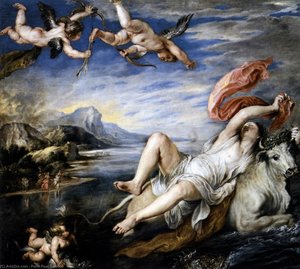
Pierre-Jacques Cazes's "Bacchus und Ariadne," painted around 1740, is more than just a depiction of a classical myth; it’s a vibrant explosion of color and movement, a testament to the flourishing Baroque style in 18th-century France. The painting transports us to the sun-drenched shores of Naxos, where the god Bacchus, pursued by Cupid's fateful arrow, dramatically claims the abandoned Ariadne. Cazes masterfully captures the intoxicating energy of this pivotal moment, weaving together elements of drama, sensuality, and divine intervention into a single, unforgettable scene.
The composition itself is a carefully orchestrated dance of figures. Ariadne, positioned on the left, gestures towards the departing ship of Theseus, a poignant reminder of her abandonment and a subtle foreshadowing of the tragic romance to come. Bacchus, resplendent in flowing robes and a confident stride, dominates the center, his hand outstretched as if inviting her into his ecstatic world. The backdrop—a stylized seascape hinting at the island’s rugged coastline—provides a dramatic stage for this mythological encounter. Beyond the immediate narrative, Cazes employs a dynamic diagonal thrust that pulls the viewer's eye through the crowded scene, creating a sense of perpetual motion and heightened emotion.
A Masterclass in Baroque Technique
Cazes’s skill as a painter is immediately evident in his masterful use of oil paint on canvas. The texture is rich and layered, achieved through impasto techniques – visible brushstrokes that build up the forms and create a palpable sense of volume. The colors are intensely saturated, particularly the reds and golds used to depict Bacchus’s garments and the shimmering light reflecting off the sea. Notice how he expertly blends warm hues with cooler blues in the background, establishing depth and creating an atmospheric perspective that draws us into the scene.
Furthermore, Cazes demonstrates a keen understanding of chiaroscuro – the dramatic interplay of light and shadow. Strong contrasts highlight key figures like Bacchus and Ariadne, while softer lighting envelops the surrounding revelers, contributing to the painting’s overall sense of drama and theatricality. The meticulous detail evident in each figure's drapery, facial expression, and even the expressions on the faces of the Bacchantin adds a remarkable level of realism and engagement.
Symbolism Woven into Myth
“Bacchus und Ariadne” is replete with symbolic elements that enrich its narrative beyond a simple retelling of the myth. The laurel tree, prominently featured in the background, represents Daphne’s transformation – a crucial element of the story where she becomes immortalized as the constellation Corona Borealis after being pursued by Apollo. The presence of Hymenaios, the god of marriage, descending with his torch signifies the union between Bacchus and Ariadne, promising a future filled with abundance and celebration. Even the drunken Silen on the donkey, a symbol of excess and revelry, underscores the intoxicating nature of Bacchus’s world.
The inclusion of numerous figures – Bacchantins dancing wildly, playful Genies, and a slumbering tiger – further amplifies the painting's themes of fertility, intoxication, and the wildness of the divine. These elements contribute to a vibrant tapestry of imagery that speaks to the core values of the Baroque period: exuberance, emotion, and an embrace of the sensual.
A Legacy of Artistic Influence
Originally commissioned by King Friedrich II of Prussia, “Bacchus und Ariadne” reflects the artistic tastes of the European elite. The painting’s opulent style and dramatic composition were highly valued during this era, serving as a symbol of royal power and refined taste. Cazes's work exemplifies the academic tradition of French art, emphasizing historical and mythological subjects rendered with meticulous detail and a strong sense of realism. His influence can be seen in the works of subsequent generations of artists, cementing his place as a pivotal figure in the development of French Baroque painting.
Today, reproductions of “Bacchus und Ariadne” continue to captivate audiences with their vibrant colors, dynamic composition, and evocative storytelling. It remains a powerful example of Baroque artistry—a timeless celebration of myth, passion, and the intoxicating allure of the divine.
Related Artworks
Artist Biography
Pierre-Jacques Cazes: A Master of the French Academic Tradition
Born in Paris in 1676, Pierre-Jacques Cazes emerged as a significant figure within the vibrant artistic landscape of 18th-century France. His life was inextricably linked to the prestigious Académie Royale de Peinture et de Sculpture, where he not only honed his skills but also profoundly shaped the direction of French historical and mythological painting. More than just a painter, Cazes served as a dedicated teacher, nurturing the talents of future masters like Jean-Siméon Chardin, leaving an enduring legacy that extends far beyond his individual creations.
Cazes’s early artistic development was carefully orchestrated by his father, an officer within the Marquis de Louvois's service. Initially tutored by the relatively obscure Ferou, a concierge at the Académie, Cazes later benefited from instruction from the established painters René-Antoine Houasse and Bon Boullogne – figures who instilled in him the foundational principles of French academic style. This rigorous training proved crucial when he competed in the prestigious Prix de Rome in 1698, securing second place with “Joseph’s Cup Found in Benjamin’s Belongings.” The following year, his "Vision of Jacob in Egypt" earned him first prize, a remarkable achievement that nonetheless led him to forgo the opportunity to reside in Rome and instead remain in Paris. This decision highlights a deliberate choice to contribute directly to the artistic development of his homeland.
A Rise Through Academic Circles
Cazes’s dedication to the Académie quickly bore fruit. He was formally admitted as an academician in 1703, with “Triumph of Hercules over Achelous” serving as his reception piece – a monumental work that showcased his burgeoning mastery of historical narrative and dramatic composition. His subsequent career saw him ascend through the ranks of the institution, ultimately becoming Director of the Académie in 1744 and Chancellor in 1746. These positions underscored his immense influence within the French art world and solidified his role as a guardian of artistic standards.
Cazes’s tenure at the Louvre's Galerie d'Apollon from 1727 onward provided him with invaluable access to royal commissions and allowed him to refine his technique. He produced a substantial body of religious paintings, many commissioned for churches in Paris and Versailles – works characterized by their meticulous detail, idealized figures, and adherence to the prevailing academic conventions. These pieces demonstrate his ability to seamlessly blend technical skill with a deep understanding of religious iconography and symbolism.
Themes and Style
Cazes’s artistic output spanned a diverse range of subjects, encompassing historical scenes, mythological narratives, and occasionally, genre paintings. His historical works frequently drew inspiration from classical antiquity, meticulously recreating battles, triumphs, and legendary events with an unwavering commitment to accuracy and grandeur. His mythological paintings, such as “Bacchus und Ariadne,” are notable for their opulent settings, dynamic compositions, and vibrant color palettes – a testament to his command of Baroque techniques. The influence of Charles Le Brun and Charles de Lafosse, both prominent figures in the French academic tradition, is readily apparent in Cazes’s approach to composition, lighting, and dramatic effect.
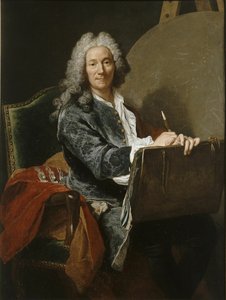
A particularly noteworthy portrait, presented to the Académie Royale in 1734 by Chardin's friend Joseph Aved, depicts Cazes himself wearing a fashionable wig and holding a portfolio – an image that offers a glimpse into the life of this influential artist. This work not only provides valuable insight into Cazes’s personal style but also highlights his role as a respected figure within the Parisian art community.
Legacy and Key Works
Pierre-Jacques Cazes died in Paris in 1754, leaving behind a substantial body of work that continues to be studied and admired. His paintings are held in prestigious collections worldwide, including the Louvre Museum in Paris, the Crocker Art Museum in Sacramento, and the Church of Saint-Michel-de-Sillery in Quebec City. Key works such as “Bacchus und Ariadne,” “Saint Francis receiving the stigmata,” and his numerous religious commissions exemplify his artistic skill and enduring contribution to French art history. Cazes’s legacy extends beyond his individual creations, encompassing his role as a teacher and mentor who shaped the careers of several prominent artists, ensuring that his influence would resonate for generations to come.
pierre jacques cazes
1676 - 1754 , France
Quick Facts
- Artistic Movement Or Style: Academic
- Artists Or Movements Influenced By This Artist:
- Charles Le Brun
- Charles de Lafosse
- Artists Who Influenced This Artist:
- Houasse
- Bon Boullogne
- Date Of Birth: 1676 Paris, France
- Date Of Death: 1754
- Full Name: Pierre-Jacques Cazes
- Nationality: French
- Notable Artworks:
- Bacchus und Ariadne
- St. Cecilia
- Le Christ et la Cananéenne
- Place Of Birth: Paris, France
Related Articles
Renoir's Masterpieces: Explore 25 Iconic Paintings & Bring Art Home | ArtsDot
Explore 25 iconic Pierre-Auguste Renoir paintings! Discover the stories behind Impressionist masterpieces like 'Dance at Le Moulin de la Galette' & 'Luncheon of the Boating Party'. Find museum-quality art reproductions and elevate your home decor with ArtsDot.com.

Baroque Drama: Bringing Opulence & Emotion into Contemporary Interiors
Explore the opulent world of Baroque interior design! Discover key elements, modern applications & how to bring dramatic elegance into your home with 's authentic reproductions.

The Dramatic Flourish: Exploring the Baroque Movement's Enduring Legacy in Art History
Explore the dramatic world of Baroque art! Discover iconic artists like Caravaggio & Rubens, defining techniques, and its lasting impact on art history. Expert insights for collectors & enthusiasts at ArtsDot.

Baroque Masterpieces: 10 Paintings That Defined an Era |
Journey through the drama & grandeur of Baroque art! Explore 10 masterpieces by Caravaggio, Rembrandt, Rubens & more. Discover stunning oil paintings, rich colors & timeless stories. Find museum-quality reproductions at .
Echoes of Olympus: Mythological Narratives in Western Art Through the Ages
Explore the captivating history of mythological narratives in Western art! From ancient Greece to modern masterpieces, discover iconic artworks & symbolism. Expert analysis and high-quality reproductions at ArtsDot.