 Preview
 Send
Send Share
Share
 Details

 Download
 Similars
 X-Ray
X-Ray Diaporama
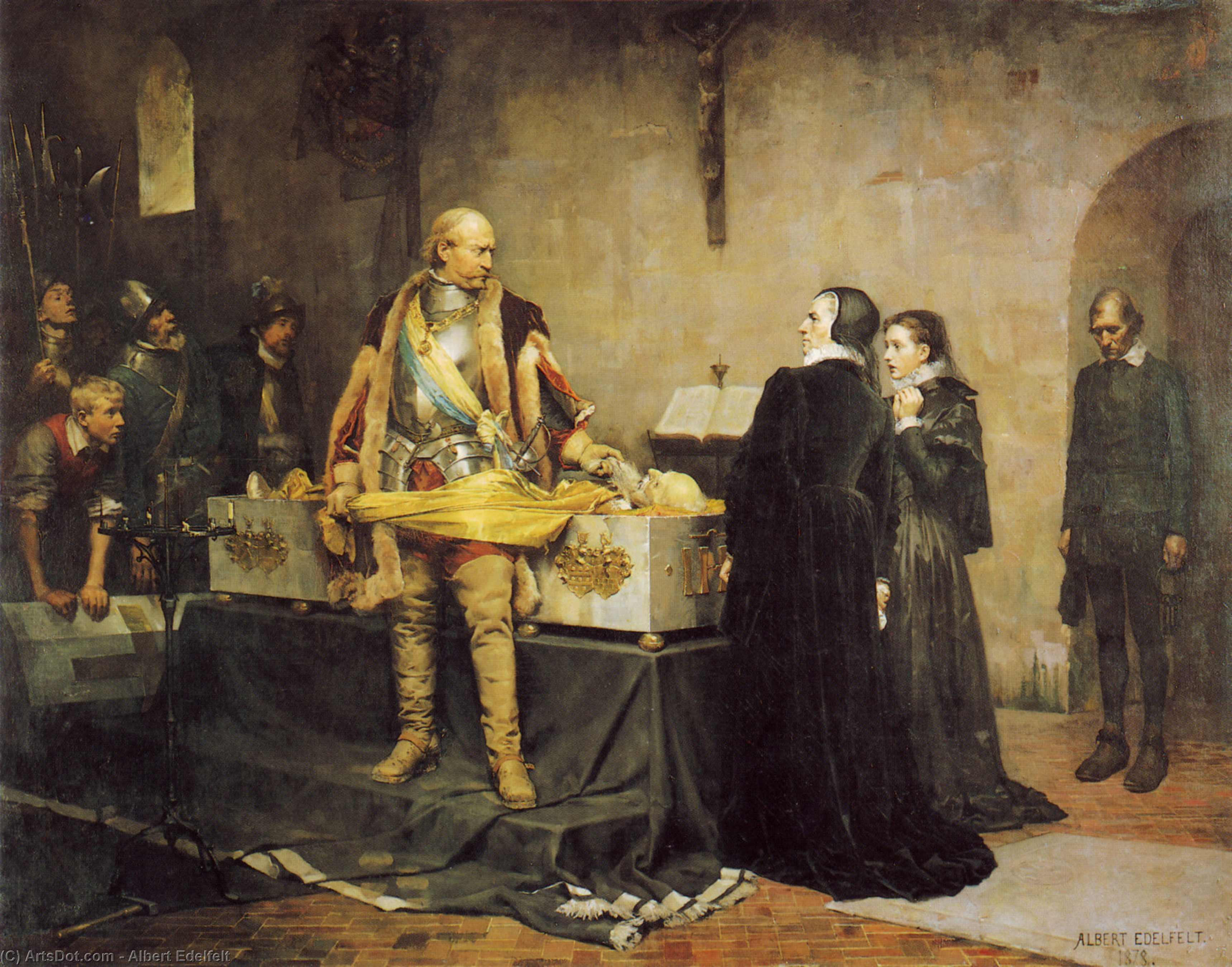
Duke Karl Abusing the Corpse of Klaus Fleming


 Read More
Hand Made Oil Reproduction
Hand-painted oil on canvas in your size and frame, made to order by our artists. ( Buy Print Buy Image)




P118B $10

P118H $10

P118W $10

P438Z $10

P508JH $12

P508YH $12

P805H $10

P805Z $10

P919BZ $10

P919G $10

P919XJ $10

P959ZH $10

P968JZ $12

W106C $8

W218G $10

W218JH $8

W218Y $10

W307PJ $10

W316G $10

W316PJ $8

W316Y $10

W398PJ $8

W4111J $10

W500HY $15

W500JH $15

W692G $12

W849H $8

W940BG $15

W953PJ $8




Pick from our preset sizes that match the artwork's original proportions.

You may enter your own dimensions to fit a specific frame or space. If your selected size does not match the original image's proportions, we will either crop the artwork or extend the painting with additional hand-painted elements. A digital mockup will be sent for your approval before production begins.
Please note that the on-screen preview does not reflect the actual cropping or extension. Only the mockup will accurately show the final composition.
While custom sizes are available, we recommend selecting a dimension from the predefined list to preserve the original proportions.
After order, ArtsDot.com team will email client for instructions and provide a mockup preview
Worldwide Delivery () in 3/4 weeks instead of standard 5 weeks. (16 August). No compromise on quality.

Free Worldwide Express Shipping

High-Quality Linen Canvas

Full Shipping Insurance

Customs Tax Refund Guarantee

True Color Matching Guarantee

60-Day Return Policy (Defects Only)

100% Money-Back Guarantee

Bulk Discount Offer
 Glass option is only available in size under 110 CM

Duke Karl Abusing the Corpse of Klaus Fleming
Reproduction Medium
Reproduction Size
-


Total Price
$ 263
Artwork Description
A Chronicle of Shadows: Duke Karl's Intrigue
This arresting depiction plunges the viewer into a pivotal moment of 19th-century European intrigue. Albert Edelfelt, a master of realism and deeply attuned to the nuances of human emotion, has meticulously rendered a scene brimming with tension and veiled meaning. At its heart lies Duke Karl, not as a figure of triumphant power, but as a man consumed by calculation and shadowed by regret – a potent image that speaks volumes about the burdens of leadership. The inclusion of Klaus Fleming, presented in a state of solemnity, immediately introduces an element of profound sorrow and perhaps, a subtle critique of authority’s actions.
- Subject Matter: A clandestine meeting between a powerful Duke and a figure associated with mourning or loss.
- Style: Edelfelt's work exemplifies Realism, prioritizing accurate representation and emotional truth over idealized beauty. Notice the meticulous attention to detail in the clothing, expressions, and the overall composition – hallmarks of his approach.
The Painter’s Hand: Technique and Detail
Edelfelt's mastery is immediately apparent in the painting's technical execution. He employs a layered glazing technique, building up color gradually to achieve remarkable depth and luminosity. The use of light and shadow – particularly evident in the Duke’s face and the folds of his military attire – dramatically enhances the scene’s dramatic effect. The artist’s brushwork is precise yet fluid, conveying both the formality of the setting and the underlying emotional turmoil. Note the subtle variations in tone within the fabrics, a testament to Edelfelt's dedication to capturing texture with remarkable accuracy.
- Technique: Layered glazing, meticulous brushwork, masterful use of light and shadow.
- Materials: Likely oil on canvas, reflecting Edelfelt’s preference for rich, saturated colors.
Historical Context & Symbolism
Painted in the late 19th century, this work reflects a period of significant social and political upheaval in Europe. The presence of military garb immediately evokes the era’s ongoing conflicts and the anxieties surrounding national identity. The inclusion of Klaus Fleming – a name often associated with scandal and intrigue within the Swedish court – adds layers of symbolic meaning. Some scholars suggest Fleming represented a fallen noble, a cautionary tale against unchecked ambition, or perhaps even a symbol of resistance to autocratic rule. The book held by the Duke could represent legal authority, justification for his actions, or simply a tool of manipulation. The scene’s overall atmosphere suggests a moment of moral ambiguity and the potential consequences of power.
- Historical Period: Late 19th Century – A time of political instability and social change in Europe.
- Symbolism: The figures, objects, and setting all contribute to a complex web of symbolic meaning related to power, morality, and justice.
Emotional Resonance & Artistic Impact
Beyond its historical context, “Duke Karl Abusing the Corpse of Klaus Fleming” possesses a profound emotional impact. Edelfelt doesn’t simply depict an event; he captures a feeling – a sense of unease, suspicion, and perhaps even horror. The painting's unsettling composition and the Duke’s ambiguous expression invite viewers to question authority, examine motives, and confront uncomfortable truths. This work stands as a testament to Edelfelt’s ability to translate complex historical narratives into emotionally resonant art that continues to captivate audiences today. A hand-painted reproduction offers an unparalleled opportunity to experience this powerful artwork firsthand.
Related Artworks


Artist Biography
early life and education
albert gustaf aristides edelfelt, a renowned finnish painter, was born on july 21, 1854, in porvoo, finland. his parents, carl albert edelfelt and alexandra edelfelt (née brandt), were swedish-speaking finns. edelfelt's early life was marked by an innate passion for art, which led him to pursue formal studies at the drawing school of the finnish art society in 1869.artistic journey
edelfelt's artistic journey took him to various esteemed institutions, including:- antwerp academy of art (1873-74), where he honed his skills in history painting.
- école nationale des beaux-arts in paris (1874-78), under the tutelage of jean-léon gérôme, further refining his craft.
- a brief stint at saint petersburg (1881-82) exposed him to diverse artistic influences.
rise to prominence and notable works
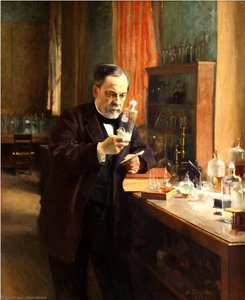
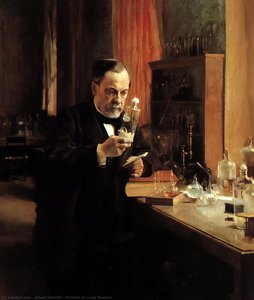
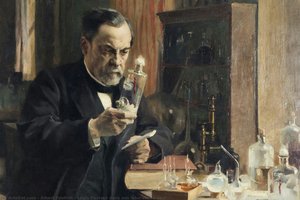
edelfelt's breakthrough came with a gold medal at the paris universal exposition of 1889. his notable works include:- portrait of louis pasteur, which earned him the legion of honour in 1886.
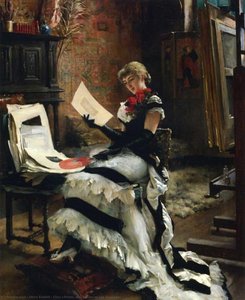
- young woman in her boudoir, showcasing his mastery of capturing the essence of femininity.
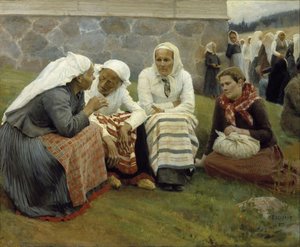
- under the birches, a poignant representation of finnish landscapes.
legacy and impact
as one of the first finnish artists to achieve international fame, edelfelt significantly contributed to the realist art movement in finland. his influence extended to younger finnish painters, such as akseli gallen-kallela and gunnar berndtson, whom he assisted in their breakthroughs in paris.museum collections and commemoration
edelfelt's works are featured in various museums, including the ateneumin taidemuseo in helsinki. his legacy was commemorated with a €100 albert edelfelt commemorative coin in 2004, celebrating his 150th birth anniversary. key artworks and museum collections: discover more: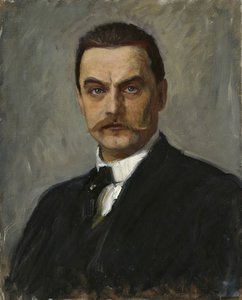
Albert Edelfelt
1854 - 1905 , Finland
Quick Facts
- Artistic Movement Or Style: Realist
- Artists Or Movements Influenced By This Artist:
- Akseli Gallen-Kallela
- Gunnar Berndtson
- Artists Who Influenced This Artist: ['Jean-Léon Gérôme']
- Date Of Birth: July 21, 1854
- Date Of Death: 1905
- Full Name: Albert Gustaf Aristides Edelfelt
- Nationality: Finnish
- Notable Artworks:
- Portrait of Louis Pasteur
- Young woman in her boudoir
- Under the birches
- Girl from Porvoo
- Place Of Birth: Porvoo, Finland