 Preview
 Send
Send Share
Share
 Details

 Download
 Similars
 X-Ray
X-Ray Diaporama
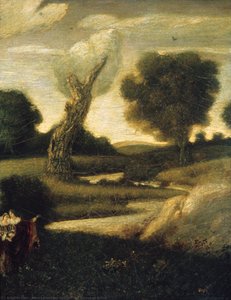
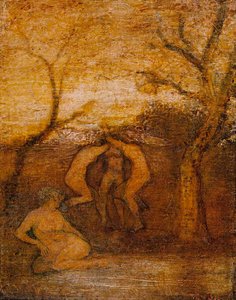
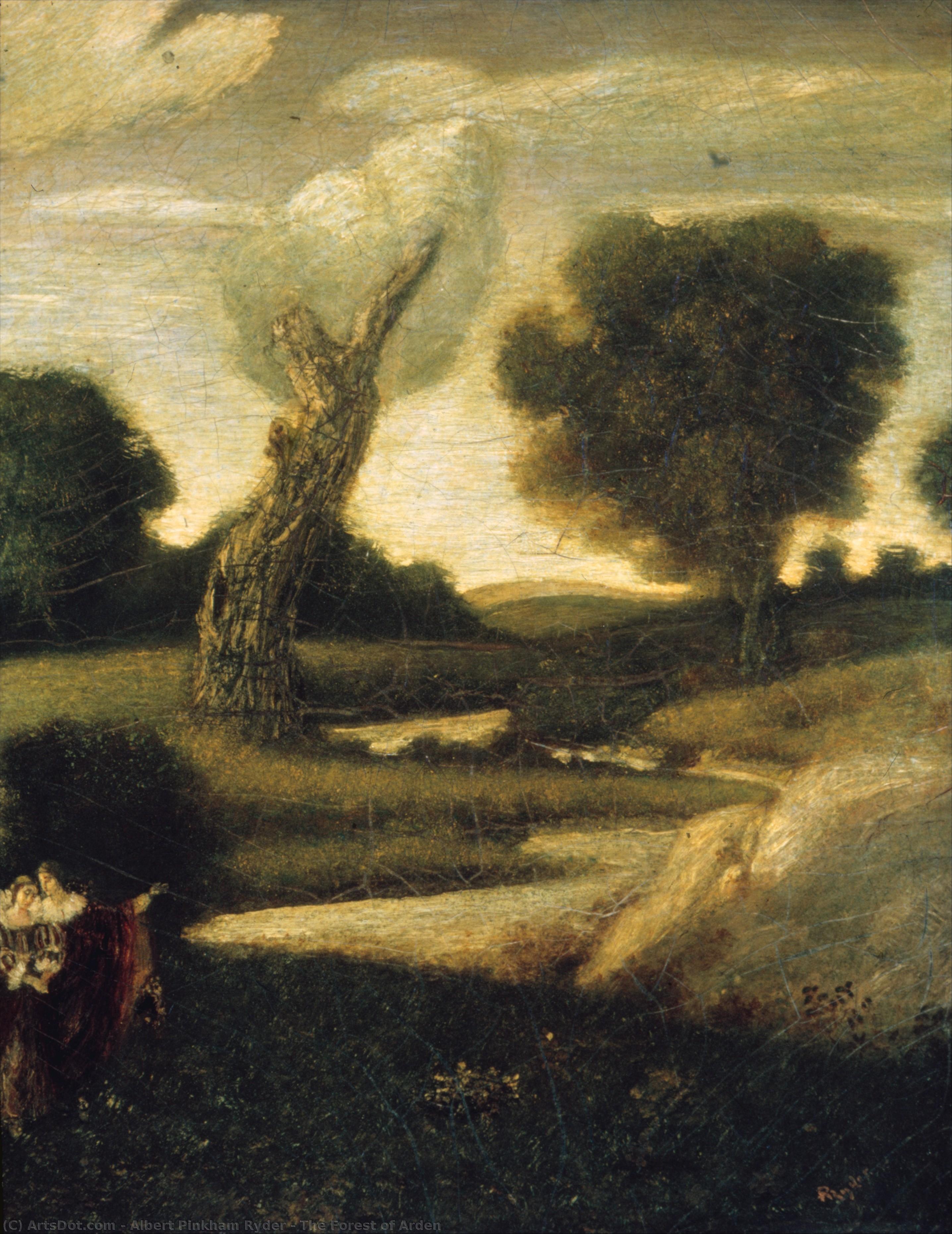
The Forest of Arden
 Acrylic On Canvas
- WallArt
- Impressionistic Landscape
 1908
1908- 19th Century
 48.0 x 38.0 cm
 Metropolitan Museum of Art
 Read More
Hand Made Oil Reproduction
Hand-painted oil on canvas in your size and frame, made to order by our artists. ( Buy Print Buy Image)




P118B $10

P118H $10

P118W $10

P438Z $10

P508JH $12

P508YH $12

P805H $10

P805Z $10

P919BZ $10

P919G $10

P919XJ $10

P959ZH $10

P968JZ $12

W106C $8

W218G $10

W218JH $8

W218Y $10

W307PJ $10

W316G $10

W316PJ $8

W316Y $10

W398PJ $8

W4111J $10

W500HY $15

W500JH $15

W692G $12

W849H $8

W940BG $15

W953PJ $8




Pick from our preset sizes that match the artwork's original proportions.

You may enter your own dimensions to fit a specific frame or space. If your selected size does not match the original image's proportions, we will either crop the artwork or extend the painting with additional hand-painted elements. A digital mockup will be sent for your approval before production begins.
Please note that the on-screen preview does not reflect the actual cropping or extension. Only the mockup will accurately show the final composition.
While custom sizes are available, we recommend selecting a dimension from the predefined list to preserve the original proportions.
After order, ArtsDot.com team will email client for instructions and provide a mockup preview
Worldwide Delivery () in 3/4 weeks instead of standard 5 weeks. (17 August). No compromise on quality.

Free Worldwide Express Shipping

High-Quality Linen Canvas

Full Shipping Insurance

Customs Tax Refund Guarantee

True Color Matching Guarantee

60-Day Return Policy (Defects Only)

100% Money-Back Guarantee

Bulk Discount Offer
 Glass option is only available in size under 110 CM

The Forest of Arden
Reproduction Medium
Reproduction Size
-


Total Price
$ 263
Artwork Description
A Vision of Arden’s Embrace: Albert Pinkham Ryder's “The Forest of Arden”
Albert Pinkham Ryder’s “The Forest of Arden,” completed in 1908, stands as a testament to the artist’s profound connection with the natural world and his masterful ability to translate literary inspiration into visual form. Inspired by Shakespeare’s pastoral comedy, this painting delves beyond mere landscape depiction—it seeks to capture the very essence of Arcadia itself, presenting a dreamlike panorama that resonates with themes of escape, contemplation, and the transformative power of solitude.The Landscape as Narrative
Ryder meticulously studied the Bronx Park landscape, transforming it into a canvas imbued with an almost palpable stillness. Unlike Impressionist explorations of fleeting light, Ryder prioritizes solidity and depth—the towering trees dominate the composition, their trunks rendered in rich browns and ochres, conveying a sense of permanence and groundedness. The artist skillfully simplifies forms, reducing complex botanical details to abstracted shapes that prioritize mood over precise representation. This deliberate stylistic choice underscores Ryder’s conviction that art should evoke emotion rather than merely documenting reality. Notice how the muted palette—primarily greens, blues, and browns—creates an atmosphere of serene melancholy, mirroring the contemplative spirit of Shakespeare's characters seeking refuge from societal constraints.Symbolism Rooted in Literary Tradition
The central element of “The Forest of Arden”—a felled tree—holds significant symbolic weight. Traditionally interpreted as representing mortality and decay, it simultaneously embodies resilience and regeneration. Ryder’s depiction isn’t merely a visual record; it's an allusion to Shakespeare’s exploration of human vulnerability within the grandeur of nature. Rosalind and Celia, disguised as men, embody this duality – outwardly concealing their identities while inwardly embracing the freedom offered by Arden’s wilderness. Their presence in the lower left corner serves not only as compositional anchor but also reinforces the painting's overarching message about finding solace and authenticity amidst external pressures.Technique and Impressionistic Influence
Ryder employed a technique characterized by thick impasto—applying paint thickly onto the canvas—creating textured surfaces that capture the physicality of the forest environment. This approach distinguishes him from many of his contemporaries who favored smoother brushstrokes, prioritizing expressive gesture over meticulous detail. However, Ryder’s style retains subtle influences from Impressionism, particularly in his handling of light and color. The dappled sunlight filtering through the canopy is rendered with delicate gradations of hue, suggesting movement and luminosity without resorting to photographic realism. This masterful blending of tonal variation contributes significantly to the painting's emotional impact—drawing viewers into a contemplative space where imagination reigns supreme.A Legacy of Quiet Beauty
“The Forest of Arden” continues to captivate audiences today with its understated elegance and evocative atmosphere. It exemplifies Ryder’s unwavering devotion to capturing the sublime—the awe-inspiring grandeur of nature that inspires contemplation and elevates the human spirit. More than just a depiction of a place, it's an embodiment of a philosophical ideal: finding beauty and truth in simplicity, mirroring the enduring appeal of Shakespeare’s timeless drama. Its quiet majesty serves as a reminder that art can transcend mere visual representation, transporting us to realms of imagination and emotion—a testament to Ryder’s singular vision and his profound understanding of the human condition.Related Artworks


Artist Biography
Early Life and Artistic Beginnings
Albert Pinkham Ryder, born March 19, 1847, in New Bedford, Massachusetts, remains a somewhat enigmatic figure in American art history. Details of his childhood are scarce, shrouded in the mists that would later become so characteristic of his paintings. However, it is known that he began to explore his artistic inclinations early on, capturing the landscapes of his native New Bedford with nascent skill. This coastal upbringing, steeped in the atmosphere of a bustling whaling port, undoubtedly left an indelible mark on his imagination and would resurface throughout his career as a recurring source of inspiration.
In the late 1860s, Ryder’s family relocated to New York City, where his brother managed the renowned Hotel Albert in Greenwich Village. This move placed young Albert within a vibrant cultural milieu, offering opportunities for artistic development and exposure to new ideas. While assisting with family responsibilities, he continued to pursue his passion for painting, laying the groundwork for his future artistic journey.
Formal Training and European Influences
Ryder’s formal art education began with studies under William Edgar Marshall in New York City. He then enrolled at the National Academy of Design, attending between 1870 and 1875, where he exhibited his first work in 1873 and forged a lifelong friendship with fellow artist Julian Alden Weir. These formative years provided him with a solid foundation in traditional techniques and introduced him to the established art world.
However, Ryder’s artistic vision extended beyond conventional academic training. Between 1877 and 1903, he embarked on four journeys to Europe, immersing himself in the artistic currents of the Old World. He was particularly drawn to the French Barbizon school, with its emphasis on naturalism and plein air painting, and the Dutch Hague School, known for its atmospheric landscapes and muted color palettes. These influences profoundly shaped his aesthetic sensibilities, contributing to the development of his unique style.
A Unique Artistic Vision: Style and Themes
Albert Pinkham Ryder’s artistic signature is instantly recognizable—a captivating blend of Symbolism, Tonalism, and a deeply personal vision. His paintings are not mere representations of reality but rather evocative interpretations of nature infused with mood, mystery, and spiritual resonance. He favored broad, often ill-defined shapes and stylized figures set within dreamlike landscapes or seascapes, creating an atmosphere that is both ethereal and haunting.
Light plays a crucial role in Ryder’s work. His scenes are frequently illuminated by dim sunlight filtering through eerie clouds or the soft glow of moonlight, casting long shadows and enhancing the sense of drama and introspection. He masterfully manipulated color to create subtle variations and atmospheric effects, often employing a limited palette to achieve maximum emotional impact.
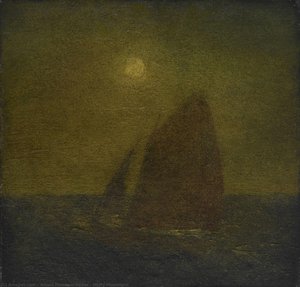
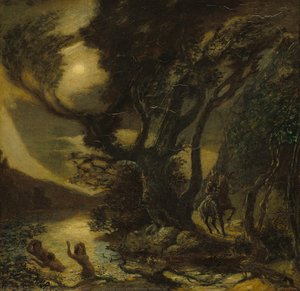
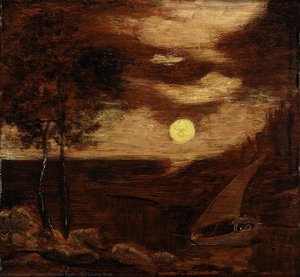
Notable works such as Misty Moonlight, inspired by his childhood memories of coastal New Bedford, exemplify Ryder’s ability to transform personal experiences into universal expressions of longing and contemplation. Other significant paintings, like Siegfried and the Rhine Maidens, demonstrate his fascination with mythology and symbolism.
Later Years and Lasting Legacy
After 1900, Ryder's creative output diminished significantly. He became increasingly reclusive, spending much of his time reworking existing paintings in a relentless pursuit of perfection. Despite this decline in productivity, his earlier works continued to garner attention and admiration.
Albert Pinkham Ryder passed away on March 28, 1917, leaving behind a body of work that continues to captivate audiences today. A memorial exhibition held at the Metropolitan Museum of Art in New York in 1918 solidified his reputation as a major figure in American art.
Ryder’s influence extends far beyond his immediate contemporaries. His emphasis on form, color, and emotional expression paved the way for later generations of artists, including Jackson Pollock, who acknowledged Ryder as a significant precursor to Abstract Expressionism. He remains celebrated as a pioneer of American Tonalism and Symbolism, an artist whose mystical paintings continue to inspire awe and wonder.
Key Characteristics of Albert Pinkham Ryder’s Art
- Dreamlike Atmospheres: His landscapes and seascapes evoke a sense of mystery and otherworldliness.
- Symbolism & Mythology: Frequent use of symbolic imagery and references to mythological narratives.
- Tonalist Influences: Subtle variations in color and emphasis on atmospheric effects.
- Emotional Resonance: Paintings that convey a deep sense of longing, contemplation, and spiritual yearning.
- Unique Brushwork: Broad, expressive brushstrokes that contribute to the overall mood and texture.
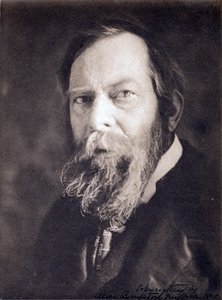
Albert Pinkham Ryder
1847 - 1917 , United States of America
Quick Facts
- Artistic Movement Or Style: Tonalism & Symbolism
- Artists Or Movements Influenced By This Artist: ['Jackson Pollock']
- Artists Who Influenced This Artist:
- Barbizon School
- Hague School
- Date Of Birth: March 19, 1847
- Date Of Death: March 28, 1917
- Full Name: Albert Pinkham Ryder
- Nationality: American
- Notable Artworks:
- Misty Moonlight
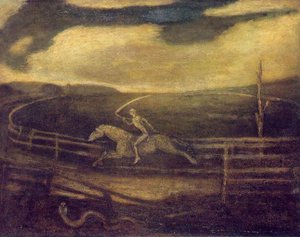
- The Race Track
- Siegfried & Rhine Maidens
- Place Of Birth: New Bedford, USA
Related Articles
Capturing a Nation's Light: Exploring the American Impressionist Movement
Explore the captivating world of American Impressionism! Discover key artists, techniques & its lasting impact on art history. Find museum-quality reproductions and expert guidance at ArtsDot.
Grant Wood & American Regionalism: Identity, Myth & the Rural Landscape
Explore the world of Grant Wood & American Regionalism with ArtsDot. Discover the symbolism behind 'American Gothic', recurring themes, and the movement's lasting impact on art history. High-quality reproductions available.

The Subtleties of Pastel: A Comprehensive Exploration of Technique, History & Emotional Resonance
Explore the captivating world of pastel art! Discover its rich history, Impressionistic masters like Degas, emotional power & unique techniques. Find museum-quality reproductions at ArtsDot.
American Realism's Defining Works: 10 Masterpieces for Your Home
Explore 10 defining American Realism masterpieces – Hopper, Homer & more. Discover the stories behind these iconic paintings and bring timeless art to your home with ArtsDot's museum-quality reproductions. Explore the full collection online.

The Subdued Radiance of Pastel: Exploring Nuance & Emotion in Art
Explore the nuanced world of pastel art! Discover its history, techniques & emotional power with expert insights from ArtsDot.com. Find museum-quality reproductions and learn about collecting this delicate medium.