 Preview
 Send
Send Share
Share
 Details

 Download
 Similars
 X-Ray
X-Ray Diaporama
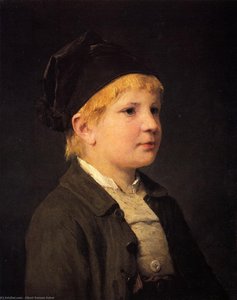
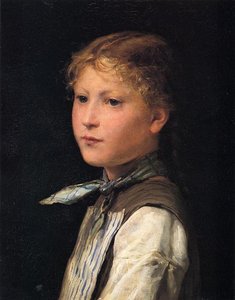
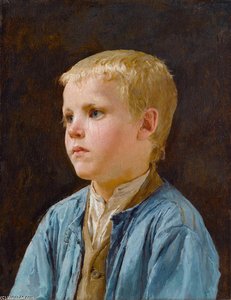
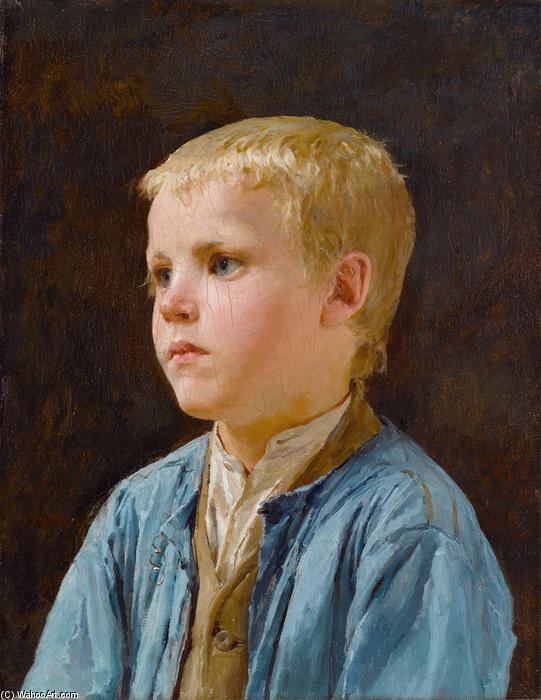
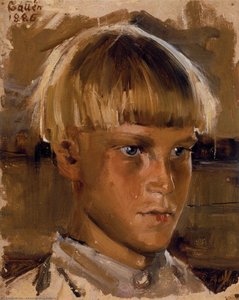
Portrait of boy

 Read More
Hand Made Oil Reproduction
Hand-painted oil on canvas in your size and frame, made to order by our artists. ( Buy Print Buy Image)




































Pick from our preset sizes that match the artwork's original proportions.

You may enter your own dimensions to fit a specific frame or space. If your selected size does not match the original image's proportions, we will either crop the artwork or extend the painting with additional hand-painted elements. A digital mockup will be sent for your approval before production begins.
Please note that the on-screen preview does not reflect the actual cropping or extension. Only the mockup will accurately show the final composition.
While custom sizes are available, we recommend selecting a dimension from the predefined list to preserve the original proportions.
After order, ArtsDot.com team will email client for instructions and provide a mockup preview
Worldwide Delivery () in 3/4 weeks instead of standard 5 weeks. (16 August). No compromise on quality.

Free Worldwide Express Shipping

High-Quality Linen Canvas

Full Shipping Insurance

Customs Tax Refund Guarantee

True Color Matching Guarantee

60-Day Return Policy (Defects Only)

100% Money-Back Guarantee

Bulk Discount Offer
 Glass option is only available in size under 110 CM

Portrait of boy
Reproduction Medium
Reproduction Size
-


Total Price
$ 263
Related Artworks
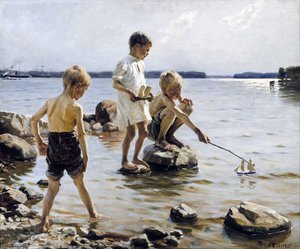
Artist Biography
Early Life and Artistic Beginnings
Albert Samuel Anker, a name synonymous with idyllic Swiss scenes and heartwarming portrayals of rural life, was born on April 1st, 1831, in the small town of Ens, Switzerland. His father, Samuel Anker, was a respected veterinarian who also served within the political arena as a member of the Canton of Bern’s constituent assembly. This blend of scientific practicality and civic duty would subtly influence young Albert's own path. The family relocated to Neuchâtel in 1836, providing a new landscape for his developing sensibilities. It was here that Anker first demonstrated an aptitude for art, receiving initial guidance from Frédéric-Wilhelm Moritz, sparking a passion that would define his life’s work. He continued his formal training alongside Auguste Bachelin under the tutelage of Louis Wallinger from 1845 to 1848, laying a solid foundation in draftsmanship and observation. However, Anker's early ambitions weren’t solely artistic; he pursued theological studies at the Universities of Bern and Halle in Germany after completing his Matura in 1851. It was during these academic years, surrounded by rich art collections, that his dedication to painting solidified, ultimately gaining his father’s blessing in 1854 to pursue a career as an artist.Parisian Influences and the Development of a Distinct Style
The decision to dedicate himself to art led Anker to Paris, the epicenter of artistic innovation during the mid-19th century. He enrolled at the prestigious École nationale supérieure des Beaux-Arts, studying under Charles Gleyre. This period proved pivotal in his development, exposing him to contemporary French trends and solidifying his technical skills. While absorbing influences from the Realist movement—a reaction against Romanticism that emphasized depicting life as it truly was—Anker didn’t simply mimic its tenets. He forged a distinctive style characterized by meticulous detail, subtle emotional expression, and an unwavering focus on everyday scenes of Swiss rural existence. He wasn't interested in grand historical narratives or dramatic allegories; his canvas became a window into the quiet dignity of peasant life. Anker’s work reflects a deep appreciation for simplicity and authenticity, portraying children, farmers, and domestic interiors with remarkable realism and tenderness. The influence of Dutch Masters like Johannes Vermeer is palpable in his attention to light, composition, and the intimate portrayal of interior spaces—a quality that lends a timeless serenity to his paintings.Themes, Major Works, and Artistic Legacy
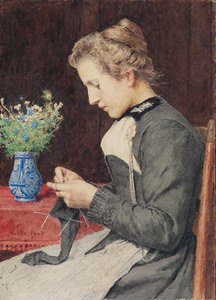
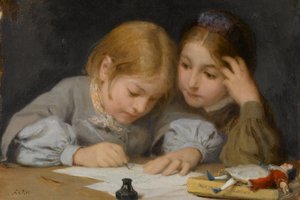
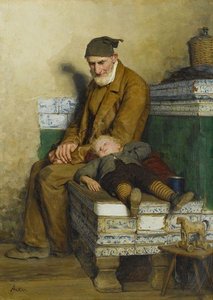
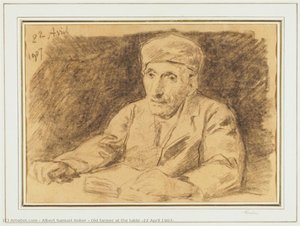
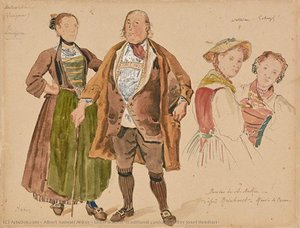
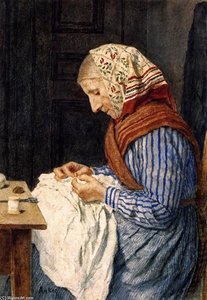
Albert Anker became celebrated for capturing the essence of 19th-century Swiss rural life, earning him the affectionate title of “the national painter” of Switzerland. His canvases are populated with scenes that resonate with a sense of nostalgia and genuine affection for his subjects. Among his most beloved works is "The Little Musician," a charming depiction of a young boy engrossed in playing the violin—a testament to Anker’s ability to capture youthful innocence and concentration. “Portrait of a Young Girl,” similarly, showcases his skill in portraying delicate features and conveying inner emotion. “A Farmer's Wife, Sewing” is a poignant study of domestic tranquility, revealing beauty in the mundane tasks of daily life. Beyond these iconic images, Anker’s dedication to documenting Swiss cultural heritage is evident in works like “Unterwalden (traditional costumes after Josef Reinhart),” a series of watercolor studies meticulously preserving traditional dress. His artistic output extended beyond paintings to include portraits, still lifes, and genre scenes that reflected the values and aesthetics of his time. Even his charcoal study "Old Farmer at the Table (22 April 1907)” demonstrates his mastery of line and form, conveying a wealth of character with minimal means. Recurring themes in Anker’s oeuvre—childhood, family life, rural traditions, and the beauty of the Swiss landscape—are interwoven to create a cohesive vision of a harmonious world.Recognition and Enduring Significance
Throughout his lifetime, Albert Samuel Anker enjoyed considerable recognition, exhibiting his work in numerous national and international exhibitions and earning critical acclaim. He was appointed a knight of the Légion d'honneur in 1878, solidifying his reputation within the European art world. His paintings played a crucial role in shaping the image of 19th-century Switzerland, offering both a romanticized yet realistic view of rural life that resonated deeply with audiences. Anker’s contribution to Swiss Realism was significant, influencing subsequent generations of artists who sought to depict their own national identities and cultural landscapes. He served on the Swiss Federal Art Commission from 1889-1893 and again from 1895-1898, further demonstrating his commitment to fostering artistic growth within his country. He received an honorary doctorate from the University of Bern in 1900. Though a stroke limited his ability to paint in later years, his legacy remained secure. Albert Samuel Anker passed away on July 16th, 1910, in Ins, Switzerland, leaving behind a body of work that continues to be admired for its technical skill, emotional depth, and enduring historical significance—a testament to the power of art to capture the spirit of a nation and the beauty of everyday life.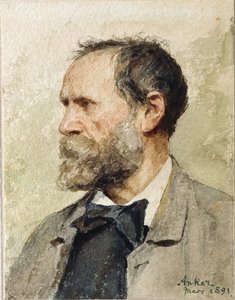
Albert Samuel Anker
1831 - 1910 , Switzerland
Quick Facts
- Artistic Movement Or Style: Realism
- Artists Or Movements Influenced By This Artist: ['Swiss Realism']
- Artists Who Influenced This Artist: ['Johannes Vermeer']
- Date Of Birth: April 1, 1831
- Date Of Death: July 16, 1910
- Full Name: Albert Samuel Anker
- Nationality: Swiss
- Notable Artworks:
- The Little Musician
- A Farmer's Wife, Sewing
- Portrait of a Young Girl
- Place Of Birth: Ens, Switzerland
Related Articles

The Enduring Legacy of Oil on Canvas: Technique, History & Aesthetic Impact
Explore the rich history & techniques of oil painting – from Renaissance masters to Impressionism. Discover pigments, layering methods, and why this timeless medium endures. Expert insights for artists & art enthusiasts.

Oil on Canvas: A Historical & Technical Exploration of a Timeless Artistic Medium
Explore the rich history & enduring techniques of oil painting on canvas. Discover the science behind its longevity, conservation practices, and contemporary relevance. Expert insights for art enthusiasts.
19th Century Masterpieces: 10 Paintings That Defined an Era | ArtsDot
Journey through 19th century art with ArtsDot! Explore 10 iconic paintings – from Monet & Renoir to Courbet – and discover the stories behind Romanticism, Realism & Impressionism. Find museum-quality reproductions for your home decor. Explore the full collection online!

The Enduring Power of Painting: A Historical & Contemporary Exploration of Form and Emotion
Explore the rich history & enduring techniques of oil painting with ArtsDot. Discover masterpieces, learn about art collecting, and find authentic handmade reproductions crafted by skilled artists.

The Enduring Legacy of Oil on Canvas: Technique, History & Contemporary Practice
Explore the rich history & enduring techniques of oil painting on canvas. Discover the science behind its longevity, conservation practices, and contemporary relevance. Expert insights for art enthusiasts.