 Preview
 Send
Send Share
Share
 Details

 Download
 Similars
 X-Ray
X-Ray Diaporama
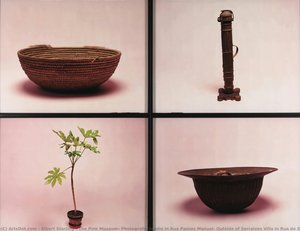
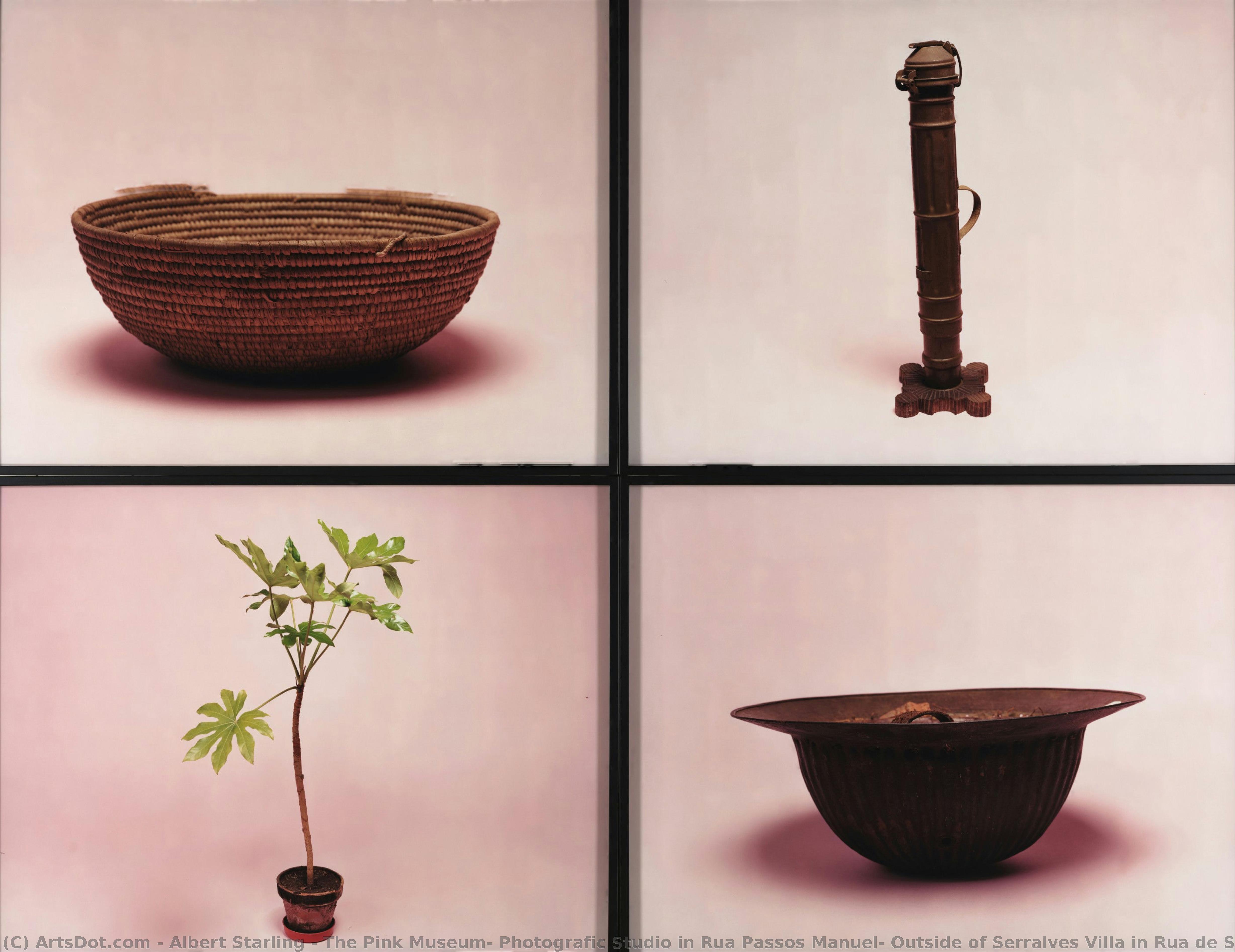
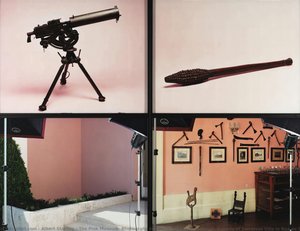
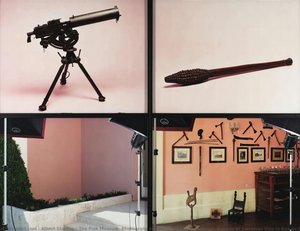
The Pink Museum: Photografic Studio in Rua Passos Manuel, Outside of Serralves Villa in Rua de Serralves, Museum in Rua da Alegria, Collection Liga dos Combatentes, Machine gun, Club, Hand grenade, Helmet, Basket, Shell transportation basket, Chair ,....
 Collage
- WallArt
- Contemporary Art
 2001
2001- Contemporary
 75.0 x 98.0 cm
 Serralves Foundation
 Read More
Hand Made Oil Reproduction
Hand-painted oil on canvas in your size and frame, made to order by our artists. ( Buy Print Buy Image)




































Pick from our preset sizes that match the artwork's original proportions.

You may enter your own dimensions to fit a specific frame or space. If your selected size does not match the original image's proportions, we will either crop the artwork or extend the painting with additional hand-painted elements. A digital mockup will be sent for your approval before production begins.
Please note that the on-screen preview does not reflect the actual cropping or extension. Only the mockup will accurately show the final composition.
While custom sizes are available, we recommend selecting a dimension from the predefined list to preserve the original proportions.
After order, ArtsDot.com team will email client for instructions and provide a mockup preview
Worldwide Delivery () in 3/4 weeks instead of standard 5 weeks. (24 August). No compromise on quality.

Free Worldwide Express Shipping

High-Quality Linen Canvas

Full Shipping Insurance

Customs Tax Refund Guarantee

True Color Matching Guarantee

60-Day Return Policy (Defects Only)

100% Money-Back Guarantee

Bulk Discount Offer
 Glass option is only available in size under 110 CM

The Pink Museum: Photografic Studio in Rua Passos Manuel, Outside of Serralves Villa in Rua de Serralves, Museum in Rua da Alegria, Collection Liga dos Combatentes, Machine gun, Club, Hand grenade, Helmet, Basket, Shell transportation basket, Chair ,....
Reproduction Medium
Reproduction Size
-


Total Price
$ 263
Artwork Description
A Tapestry of Memory and Conflict
In the evocative contemporary work titled The Pink Museum, the artist Albert Starling orchestrates a profound visual dialogue between the mundane and the martial. This complex four-part collage serves as a haunting meditation on the intersection of domesticity and the remnants of war. At first glance, the viewer is greeted by a series of seemingly tranquil photographic fragments: woven baskets, humble ceramic pots, and verdant plants arranged with a quiet, almost pastoral grace. Yet, beneath this surface of stillness lies a deeper, more unsettling narrative. The inclusion of objects such as machine guns, hand grenades, helmets, and shell transportation baskets disrupts the peaceful composition, forcing a confrontation between the sanctity of the home and the intrusive violence of historical conflict.
The piece functions as a photographic archive of memory, where the "Pink Museum" acts as a metaphorical space for preserving both the beautiful and the brutal. By juxtaposing the soft textures of wicker and foliage with the cold, hard steel of weaponry, Starling invites us to contemplate how history is layered within our physical environments. The composition does not merely present objects; it presents echoes. Each quadrant of the collage acts as a window into a different facet of existence, where the domestic ritual of placing a plant in a pot sits uncomfortably alongside the heavy, utilitarian reality of military equipment. It is a masterful exploration of how trauma and peace coexist within the same cultural landscape.
Technique and Visual Poetics
Starling utilizes the medium of collage to manipulate time and space, creating a fragmented reality that mirrors the fractured nature of memory itself. The technique relies on the careful arrangement of disparate photographic elements to create a unified, albeit tension-filled, whole. There is a deliberate rhythmic quality to the placement of the items—the way a chair leans into the frame or how bowls are nestled together—which provides a sense of structural stability that contrasts sharply with the chaotic implications of the war imagery. This formal balance ensures that the viewer's eye wanders through the piece, discovering new layers of meaning with every glance.
For the discerning collector or interior designer, this artwork offers a sophisticated intellectual depth that transcends mere decoration. The muted tones and structured layout allow it to integrate seamlessly into modern, minimalist, or even eclectic spaces, providing a focal point that sparks conversation and introspection. As a high-quality reproduction, the piece retains the intricate details of the original photographic textures, from the delicate weave of a basket to the stark silhouette of a helmet. It is an ideal acquisition for those who seek art that challenges the intellect while enriching the aesthetic atmosphere of a curated environment.
Symbolism and Emotional Resonance
The emotional impact of The Pink Museum lies in its ability to evoke a sense of "unsettled peace." There is a profound melancholy in seeing objects of utility and beauty placed in such close proximity to instruments of destruction. The baskets and plants represent the continuity of life, growth, and tradition, while the weaponry represents the sudden, violent ruptures that define human history. This tension creates a lingering emotional resonance, prompting the viewer to reflect on their own relationship with history and the artifacts we choose to preserve.
Ultimately, Starling’s work is an invitation to look closer at the world around us. It suggests that even in the most quiet corners of our lives, the shadows of larger historical movements are present. For anyone looking to adorn their collection with a piece that possesses both narrative weight and visual elegance, this work stands as a testament to the power of contemporary collage to bridge the gap between the personal and the political, making it a truly timeless addition to any serious art enthusiast's repertoire.
Related Artworks
Artist Biography
Albert Starling: Bridging Light and Landscape in Victorian Britain
Albert Starling (1858-1947) emerges from the late 19th century as a quietly significant figure within British art, a painter who skillfully captured the essence of the English countryside while subtly engaging with broader artistic currents. Born in Hastings, his early life remains somewhat shrouded in detail, yet it’s clear that a deep connection to the natural world and an appreciation for light were formative influences. Starling's career unfolded primarily during the height of the Victorian era, a period marked by both rapid industrialization and a fervent desire to preserve traditional values – themes that resonate powerfully within his artistic output.
Initially trained in London, Starling’s artistic journey took him to Paris in 1882. This immersion in the vibrant Parisian art scene proved transformative. He encountered the Impressionists, absorbing their revolutionary techniques of capturing fleeting moments and utilizing broken color palettes. However, unlike many British artists who simply adopted Impressionism wholesale, Starling retained a distinctly realist sensibility. His paintings weren’t merely reproductions of light; they were imbued with a careful observation of detail and a sensitivity to the textures and forms of his subjects – from the weathered faces of fishermen to the rolling hills of Cornwall.
The Cornish Influence: Light, Sea, and Working Men
Starling's most celebrated work emerged during his extended periods spent in Cornwall. The rugged coastline, dramatic light, and close-knit communities of fishing villages provided an endless source of inspiration. He became particularly renowned for his depictions of the Cornish coast – scenes of fishermen hauling their nets, boats bobbing on the waves, and the ever-changing interplay of sunlight and shadow. These paintings aren’t romanticized fantasies; they are honest portrayals of a demanding life, rendered with remarkable empathy and technical skill.
His technique was characterized by a meticulous approach to color mixing and brushwork. He employed short, broken strokes to build up layers of paint, creating a shimmering effect that captured the dynamism of the sea and sky. The light, in particular, is a central concern – Starling sought to convey not just its presence but also its quality, its warmth, and its ability to transform the landscape. He was heavily influenced by the works of Turner, particularly his atmospheric landscapes, and Ruskin’s theories on color and beauty, which encouraged artists to find inspiration in nature.
A Shift Towards Portraiture and Haitian Art
As the decades progressed, Starling's subject matter broadened beyond purely landscape. He increasingly turned to portraiture, producing a series of striking portraits of local figures – fishermen, farmers, and members of the gentry. These portraits are notable for their psychological depth and their ability to capture the character of their subjects. He also developed an interest in Haitian art, particularly the work of Jean-Baptiste Sansouci, a Haitian painter who had settled in Cornwall. Starling’s fascination with Haitian art led him to create a series of paintings depicting scenes from Haitian life, often infused with a sense of exoticism and cultural curiosity.
His exploration of Haitian themes demonstrates a willingness to engage with diverse artistic traditions and to challenge conventional notions of British identity. These works are considered among his most innovative and thought-provoking, reflecting a growing awareness of the complexities of the colonial world.
Legacy and Recognition
Albert Starling’s work remained largely overlooked during his lifetime, but in recent decades he has been increasingly recognized as a significant figure in British art. His paintings are now held in major museums across the United Kingdom, including the Royal Albert Memorial Museum in Exeter and the Victoria & Albert Museum in London. His ability to capture the beauty of the English countryside while simultaneously engaging with broader artistic and cultural themes ensures that his legacy will continue to grow.
The Mutual Art website highlights several key works, showcasing his mastery of light, color, and composition. His paintings offer a valuable glimpse into Victorian England – a time of both great prosperity and profound social change – and a testament to the enduring power of art to capture the spirit of a place and its people.
Further research through Art UK reveals that Starling was part of the wider artistic community, exhibiting at the Royal Academy between 1882 and 1903. His work continues to be studied and appreciated for its technical skill, emotional depth, and historical significance.
albert starling
1858 - 1947
Quick Facts
- Artistic Movement Or Style: Realist, Portraiture
- Artists Or Movements Influenced By This Artist: ['Impressionism']
- Artists Who Influenced This Artist:
- Turner
- Ruskin
- Date Of Birth: 1858
- Date Of Death: 1947
- Full Name: Albert Starling
- Nationality: British
- Notable Artworks:
- Pedn Vounder...
- Sunset Over the Heather
- The Mouse Trap
- Place Of Birth: Hastings, UK
Related Articles
Salvador Dalí's Masterpieces: 25 Surrealist Visions for Your Home | ArtsDot
Journey into the surreal world of Salvador Dalí! Explore 25 iconic paintings—from 'The Persistence of Memory' to his boldest creations. Discover the stories behind these masterpieces & find museum-quality art reproductions for your home at ArtsDot.com.
William Owen: A Poetic Vision of War & Landscape in British Modernism
Explore the poignant war poetry of Wilfred Owen, a key figure in British Modernism. Discover his innovative style, themes of loss & camaraderie, and lasting impact on 20th-century literature. Analysis & historical context included.
Echoes of Experience: Exploring Representations of Memory in Visual Art
Explore the captivating world of memory in art history! Discover how artists from Rossetti to Hockney evoke emotion & reclaim personal narratives through powerful visual storytelling. Expert insights at ArtsDot.
Echoes of Trauma & Hope: Representing Transformation in Artworks of 1918
Explore the profound artistic responses to World War I's trauma & hope. Discover Expressionist masterpieces by Bacon, de Kooning & more. Expert insights for collectors & art enthusiasts at ArtsDot.
Echoes of a Turning Tide: Artistic Responses to 1916 – A Year of Conflict & Transformation
Explore the profound artistic responses to the tumultuous year of 1916. Discover how WWI shaped movements like Futurism & Expressionism, and delve into masterpieces by Kandinsky, Matisse, Nevinson & more. Learn about art history at ArtsDot.