 Preview
 Send
Send Share
Share
 Details

 Download
 Similars
 X-Ray
X-Ray Diaporama
Finesse Golf Ball # 4, Flat Horizon, The Center of Things
 Acrylic On Canvas
- WallArt
- Contemporary Realism
 2012
2012 100.0 x 100.0 cm
 Museum of the Arts of the University of Guadalajara
 Read More
Hand Made Oil Reproduction
Hand-painted oil on canvas in your size and frame, made to order by our artists. ( Buy Print Buy Image)




P118B $10

P118H $10

P118W $10

P438Z $10

P508JH $12

P508YH $12

P805H $10

P805Z $10

P919BZ $10

P919G $10

P919XJ $10

P959ZH $10

P968JZ $12

W106C $8

W218G $10

W218JH $8

W218Y $10

W307PJ $10

W316G $10

W316PJ $8

W316Y $10

W398PJ $8

W4111J $10

W500HY $15

W500JH $15

W692G $12

W849H $8

W940BG $15

W953PJ $8




Pick from our preset sizes that match the artwork's original proportions.

You may enter your own dimensions to fit a specific frame or space. If your selected size does not match the original image's proportions, we will either crop the artwork or extend the painting with additional hand-painted elements. A digital mockup will be sent for your approval before production begins.
Please note that the on-screen preview does not reflect the actual cropping or extension. Only the mockup will accurately show the final composition.
While custom sizes are available, we recommend selecting a dimension from the predefined list to preserve the original proportions.
After order, ArtsDot.com team will email client for instructions and provide a mockup preview
Worldwide Delivery () in 3/4 weeks instead of standard 5 weeks. (6 September). No compromise on quality.

Free Worldwide Express Shipping

High-Quality Linen Canvas

Full Shipping Insurance

Customs Tax Refund Guarantee

True Color Matching Guarantee

100-Day Return Policy (Defects Only)

100% Money-Back Guarantee

Bulk Discount Offer
 Glass option is only available in size under 110 CM

Finesse Golf Ball # 4, Flat Horizon, The Center of Things
Reproduction Medium
Reproduction Size
-


Total Price
$ 263
Finesse Golf Ball # 4, Flat Horizon, The Center of Things – An Exploration of Pressure and Transformation
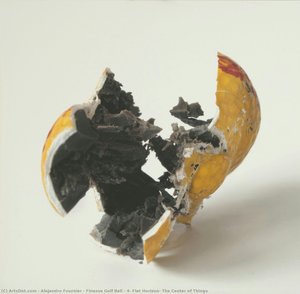
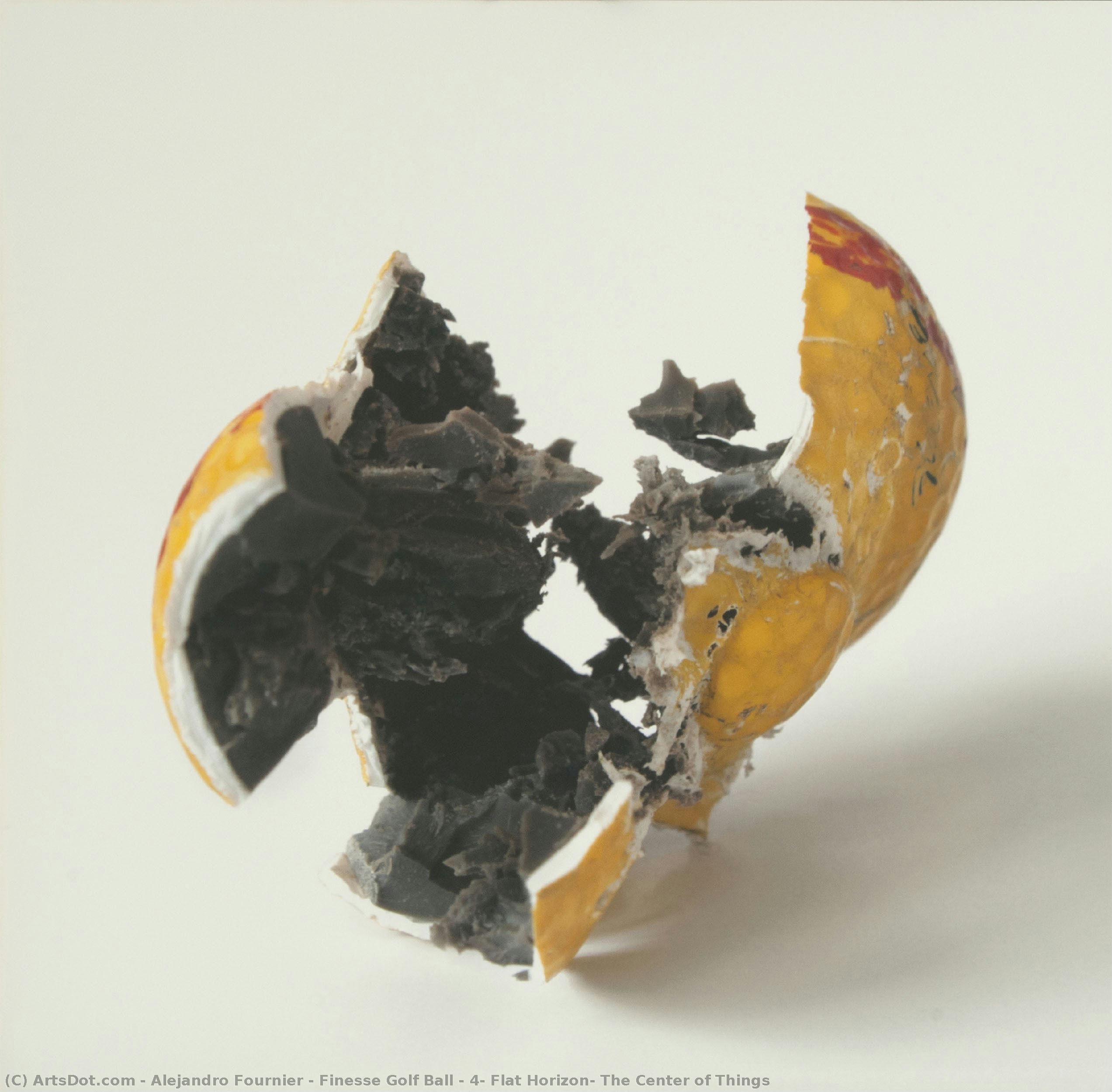
The MUSA owns a digital print, donated by the author in 2015, which records a moment in history based on research performed out of curiosity to understand the content of things. The piece formed part of the series Horizonte plano, The Center of the Things (Flat Horizon, The Center of Things), produced in 2012, through which the author sought to show the hidden part of a lot of soccer, tennis balls, etc., using a die-cutting machine. The image shows the instant in which a golf ball bursts after being crushed. For the artist, it is a form of symbolically representing the pressure that the social environment exerts on the individual. The piece is accompanied by a video that contains the process that culminated in the photography shot. The genesis of “El Centro de las Cosas” lies in a profound fascination with the interplay between observation and interpretation—a quest to distill the essence of experience into visual form. Inspired by Rodrigo’s journey through the Sahara Desert, where he confronted the stark realities of marginalized existence alongside fellow artists, Fournier embarked on a project that deliberately juxtaposes urban complexities with the vulnerability inherent in human interaction. This conceptual framework fueled his artistic exploration, resulting in a series of installations designed to provoke contemplation about societal forces shaping our daily lives. The artist’s meticulous approach began with a detailed study of golf balls—specifically, their fractured surfaces—as emblems of resilience and transformation under duress. Recognizing the parallels between Rodrigo's experience and the broader context of urban life, Fournier sought to capture not merely an image but a feeling—the palpable pressure exerted by external influences on personal identity. This conceptual impetus drove him to experiment with diverse mediums, including die-cutting techniques and photographic printing processes, resulting in artworks that resonate with both formal precision and emotional depth. A key element of Fournier’s artistic vision is the deliberate incorporation of video documentation into his installations—a strategy aimed at enriching the viewer's understanding of the creative process itself. As Rodrigo recounted his encounters during ARTifariti, Fournier meticulously documented every step involved in capturing the photograph, highlighting the importance of observation and experimentation as drivers of artistic innovation. This commitment to transparency extends beyond mere technical execution; it embodies a broader philosophical stance—a conviction that art should illuminate not only aesthetic beauty but also the underlying forces shaping human consciousness. The resulting artwork is presented as a monochrome print, executed on cotton paper—a choice reflecting Fournier’s desire to strip away extraneous distractions and focus solely on the core visual message. The image depicts a yellow golf ball riddled with cracks—a symbol of vulnerability exposed under immense pressure. However, beyond this literal representation lies a deeper layer of meaning: the artist seeks to convey the pervasive influence of social environment on individual experience. Like Rodrigo’s observations in the Sahara Desert, Fournier's work invites viewers to confront uncomfortable truths about our place within the larger narrative of existence—a challenge to conventional perspectives and an affirmation of the transformative potential inherent in artistic engagement. The video accompanying “El Centro de las Cosas” serves as a crucial complement to the photographic print, providing insight into Fournier’s creative methodology and reinforcing his commitment to conveying both aesthetic beauty and philosophical contemplation. By meticulously documenting every stage of the process—from initial conceptualization to final execution—Fournier ensures that viewers grasp not only what is seen but also how it came to be realized. This holistic approach underscores the artist's belief that art should transcend mere visual representation; it must illuminate the underlying forces shaping human perception and fostering intellectual curiosity.- Artist: Alejandro Fournier
- Born Year: 1977
- Death Year: Living
- Birth City: Guadalajara
- Birth Country: Mexico
- Flat Earth
- Finesse Golf Ball # 4, Flat Horizon, The Center of Things
Related Artworks


Artist Biography
A Cartography of Time and Light: The World of Alejandro Fournier
Alejandro Fournier, born in Guadalajara, Mexico, in 1977, is an artist who defies easy categorization. He isn’t simply a painter, sculptor, or photographer; rather, he's a visual philosopher, meticulously dissecting the complexities of existence through a multidisciplinary lens. His work emerges from a deep engagement with Mexican culture and societal structures, yet transcends national boundaries to address universal themes of time, perception, and the pressures that shape human experience. Fournier’s artistic journey began in earnest in 1998, a period marked by self-directed exploration and experimentation—a deliberate immersion into the currents of contemporary art that would define his trajectory. While formal academic training remains somewhat obscured, this autodidactic approach fostered an uninhibited spirit, allowing him to forge a unique visual language unbound by convention.Deconstructing Reality: Themes and Techniques
At the heart of Fournier’s artistic investigation lies a fascination with time—not as a linear progression, but as a fluid, malleable force. He famously describes light as “the skin of time,” a potent metaphor that underscores his belief in its ephemeral nature and its ability to reveal hidden layers of reality. This concept permeates his diverse body of work, manifesting in pieces that challenge our conventional understanding of space and duration. His art often serves as a subtle critique of societal expectations, probing the anxieties and constraints imposed by modern life. Works like “A Photograph,” from the *Horizonte Plano* series, are particularly evocative in this regard, inviting viewers to question their own place within the social fabric and contemplate the subjective nature of perception. Fournier’s technical approach is as eclectic as his thematic concerns. He seamlessly integrates painting, drawing, sculpture, installation, video, sound art, and photography, often within a single piece, creating richly textured experiences that engage multiple senses. This willingness to embrace diverse mediums reflects his belief in the limitations of any singular artistic form—a conviction that compels him to constantly push boundaries and explore new avenues of expression.Key Works and Collaborative Visions
Several works stand out as pivotal points within Fournier’s evolving oeuvre. *Finesse Golf Ball #4* exemplifies his ability to imbue everyday objects with symbolic weight, transforming the mundane into a vehicle for philosophical inquiry. The *Horizonte Plano* series, encompassing “A Photograph,” is arguably his most recognized achievement, offering a poignant commentary on societal pressures and the elusive nature of time and space. *The Center of Things* further solidifies his exploration of these core concepts, inviting contemplation on the fundamental questions that underpin human existence. Beyond his individual creations, Fournier’s commitment to collaborative endeavors has been equally significant. As co-director of Sector Reforma Arte Contemporáneo, he has played a vital role in fostering a vibrant community of contemporary artists in Mexico, organizing numerous exhibitions and projects that promote innovation and dialogue. His alter ego, “Joe From Wisconsin,” represents another facet of his artistic experimentation—a persona through which he can explore unconventional ideas and challenge established norms with greater freedom.Echoes of the Past, Visions for the Future
Fournier’s artistic lineage is deeply rooted in Mexican history, particularly the powerful legacy of the Mexican muralism movement. He acknowledges the influence of these monumental works—their social consciousness, their bold aesthetic, and their commitment to public engagement—as a formative force in his own development. However, he doesn't simply replicate this tradition; rather, he builds upon it, adapting its principles to address contemporary concerns with a distinctly individual voice. His work has garnered recognition both within Mexico and internationally, evidenced by his inclusion in prestigious collections such as the Artist Pension Trust (APT), the Colección Andrés Blaisten & Museo de Arte de Orizaba, and features on platforms like MutualArt and ArtsDot.com. Furthermore, his participation in the National System of Creators (SNCA-FONCA) from 2016 to 2019 underscores his standing as a leading figure in Mexican contemporary art. Fournier’s contribution extends beyond individual artworks; he actively shapes the direction of contemporary art in Mexico through Sector Reforma, fostering dialogue and providing opportunities for emerging artists. His work serves not only as an aesthetic experience but also as a cultural reflection—a nuanced portrayal of Mexican society, its complexities, and its enduring spirit.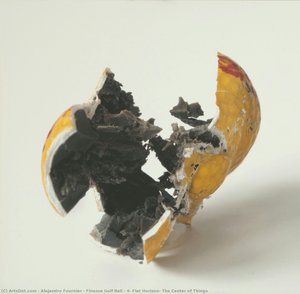
Alejandro Fournier
1977 - , Mexico
Quick Facts
- Artistic Movement Or Style: Multidisciplinary Contemporary
- Artists Who Influenced This Artist: ['Mexican Muralism']
- Date Of Birth: 1977
- Full Name: Alejandro Fournier
- Nationality: Mexican
- Notable Artworks:
- Finesse Golf Ball # 4
- Flat Horizon
- The Center of Things
- Place Of Birth: Guadalajara, Mexico
Related Articles

Beyond the Lens: Photography's Enduring Influence on Modern & Contemporary Art
Explore photography's pivotal role in shaping modern & contemporary art. Discover key movements, influential artists like Stieglitz, and expert collecting advice from ArtsDot.

Monochrome Visions: Exploring the Aesthetic & Historical Significance of Black & White Photography
Explore the rich history & artistic power of black and white photography. From early techniques to iconic masters like Ansel Adams, discover why monochrome continues to captivate art lovers today. Expert insights for collectors.

Pictorialism: A Search for Artistic Photography's Soul – Aesthetics, Techniques & Legacy
Explore the captivating world of Pictorialism – a pivotal movement that transformed photography into fine art. Discover key artists like Stieglitz & Käsebier, techniques, and collecting tips from experts.

Witnessing History Through Lens & Light: Documentary Photography's Enduring Legacy
Explore the powerful history of documentary photography – from its origins to contemporary masters like Gordon Parks & W. Eugene Smith. Discover how this art form shapes our understanding of society and witness pivotal moments in time.
Documentary Photography's Defining Moments: 10 Masterpieces for Your Home |
Explore 10 defining documentary photography masterpieces – from Dorothea Lange to Robert Capa. Discover powerful stories, iconic images & timeless art for your home. Museum-quality prints at .