 Preview
 Send
Send Share
Share
 Details

 Download
 Similars
 X-Ray
X-Ray Diaporama
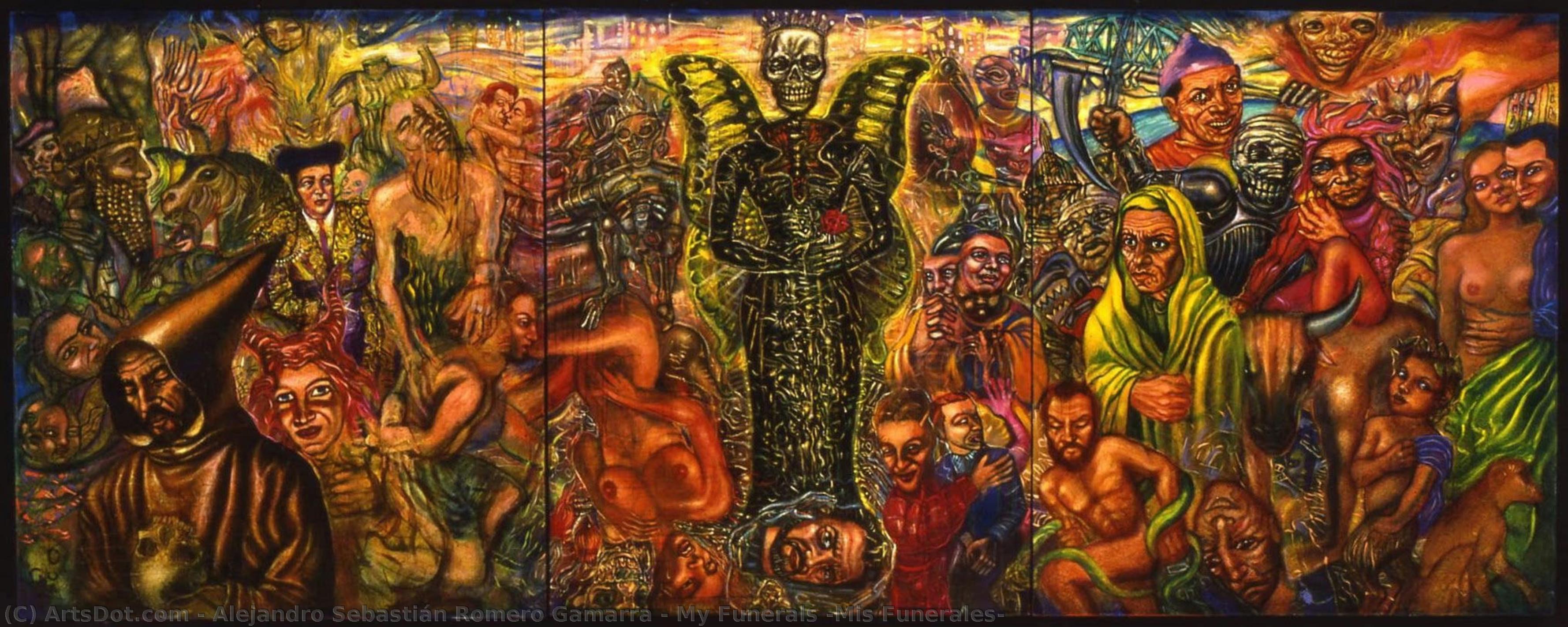
My Funerals (Mis Funerales)


 Read More
Giclée / Art Print
Museum-quality giclée or canvas print with fast production and flexible finish options. ( Buy Hand Made Painting Buy Image)




































Pick from our preset sizes that match the artwork's original proportions.

You may enter your own dimensions to fit a specific frame or space. If your selected size does not match the original image's proportions, we will either crop the artwork or extend the image with a mirrored or solid-fill edge. A digital mockup will be sent for your approval before production begins.
Please note that the on-screen preview does not reflect the actual cropping or extension. Only the mockup will accurately show the final composition.
While custom sizes are available, we recommend selecting a dimension from the predefined list to preserve the original proportions.
Worldwide Delivery () in 2 weeks instead of standard 4/5 weeks. (24 August)

Free Worldwide Express Shipping

High-Quality Linen Canvas

Full Shipping Insurance

Customs Tax Refund Guarantee

True Color Matching Guarantee

60-Day Return Policy (Defects Only)

100% Money-Back Guarantee

Bulk Discount Offer
 Glass option is only available in size under 110 CM

My Funerals (Mis Funerales)
Giclée / Art Print
Reproduction Size
-


Total Price
$ 63
Related Artworks





Artist Biography
A Life Rooted in Mexican Soil: The Early Years and Artistic Awakening
Alejandro Sebastián Romero Gamarra, born in 1948 in Tabasco, Mexico, embodies a fascinating confluence of artistic traditions—a bridge between the powerful legacy of Mexican muralism and the emotive force of European Expressionism. His early life was steeped in the vibrant cultural landscape of his homeland, though not without its complexities. Growing up in Mexico City’s Tepeyac district, a place resonant with religious history due to the apparition of the Virgin of Guadalupe, Romero's artistic inclinations were nurtured by a supportive mother who herself had studied architecture and recognized her son’s innate creative drive. This encouragement provided him with an easel at age fifteen, marking the beginning of a lifelong dedication to visual expression. However, it wasn’t merely familial support that ignited his passion; as he himself has stated, “I became an artist because it was something in me.” This inherent artistic impulse flourished within a family brimming with creative talent—nine siblings all possessed a unique flair, and Romero would often collaborate with them throughout his career. His formal training began at the Academy of San Carlos in Mexico City in 1967, where he encountered some of the most influential figures in Mexican art history: Diego Rivera, José Clemente Orozco, and Juan O’Gorman. Yet, it was his time as an assistant in David Alfaro Siqueiros' workshop—a period spanning 1969 and 1970—that proved particularly formative. Though he modestly describes himself as “an assistant to an assistant,” the experience of working alongside this master of social realism left an indelible mark on his artistic sensibility, even though Siqueiros had been a patron of his family’s pharmacy since Romero was a child.From Mexico City to Chicago: A Search for Voice and Expression
The early 1970s saw Romero navigating various avenues of creative exploration—working in advertising, pursuing freelance photography, immersing himself in music, and undertaking short art courses whenever possible. These experiences, including studies at the Art School of Vincennes in Paris and the Artists’ Collective in Taos, New Mexico, broadened his artistic horizons but ultimately led him to a pivotal decision: relocating to Chicago in 1975. This move wasn't simply a pursuit of professional opportunity; it was driven by a deeper desire to preserve and celebrate his Mexican cultural heritage amidst a changing world. As Romero explained, “In Mexico the spirit of the culture is being eroded. Through art, I help to preserve the most important elements of my culture.” Upon settling in Chicago’s Pilsen neighborhood—a historic hub for the city's Mexican community—Romero quickly became an integral part of its artistic fabric. His arrival coincided with a surge in Mexican immigration and a growing demand for visual representations that reflected their experiences and traditions. He began to adorn the cityscape with murals, posters, and paintings, transforming public spaces into vibrant canvases that spoke to themes of identity, social justice, and cultural pride. This commitment to community engagement not only established him as a prominent artist but also contributed to the flourishing of Latin American art within Chicago, fostering the creation of galleries and even the city’s first museum dedicated to this rich artistic tradition.Influences and Artistic Development: A Fusion of Styles
Romero's work is characterized by a compelling synthesis of seemingly disparate influences—the monumental scale and social consciousness of Mexican muralism, the raw emotionality of European Expressionism, and the enduring power of pre-Columbian art. He acknowledges the impact of José Guadalupe Posada, whose satirical prints often critiqued societal norms, as well as the legacy of the great Mexican muralists. However, his artistic vision extends beyond these national boundaries, drawing inspiration from masters like Bosch and Brueghel—artists renowned for their complex symbolism, allegorical narratives, and Baroque treatment of space. This fusion of styles is evident in his emotionally intense paintings, which explore a diverse range of themes: music, the pre-Columbian past, the constraints imposed by modern society on human impulses, and the intricate relationship between Mexico and North America. His compositions often feature dynamic figures rendered with bold colors and expressive brushstrokes, conveying a sense of urgency and psychological depth. Romero’s art is not merely decorative; it is a powerful form of social commentary—a visual exploration of the human condition that challenges viewers to confront uncomfortable truths and question established norms.Major Achievements and Historical Significance
Alejandro Romero's contributions extend beyond his individual artworks. He has played a crucial role in fostering cross-cultural dialogue and promoting Mexican art within the United States. His murals, in particular, have become iconic landmarks within Chicago’s Pilsen neighborhood—testaments to the resilience and cultural vibrancy of its community.- Public Art: Romero's extensive mural work has transformed public spaces into vibrant expressions of Mexican culture and social commentary.
- Community Engagement: His commitment to Chicago’s Pilsen neighborhood helped establish it as a thriving center for Latin American art.
- Exhibitions & Recognition: Romero's work has been exhibited in numerous key galleries and museums, including the Mexic-Arte Museum, solidifying his reputation as a significant contemporary artist.

alejandro sebastián romero gamarra
1948 - , Mexico
Quick Facts
- Artistic Movement Or Style: European Expressionism & Mexican styles
- Artists Who Influenced This Artist:
- José Guadalupe Posada
- Mexican muralists
- Date Of Birth: 1948
- Full Name: Alejandro Sebastián Romero Gamarra
- Nationality: Mexican
- Notable Artworks: ['My Funerals (Mis Funerales)']
- Place Of Birth: Tabasco, Mexico