 Preview
 Send
Send Share
Share
 Details

 Download
 Similars
 X-Ray
X-Ray Diaporama
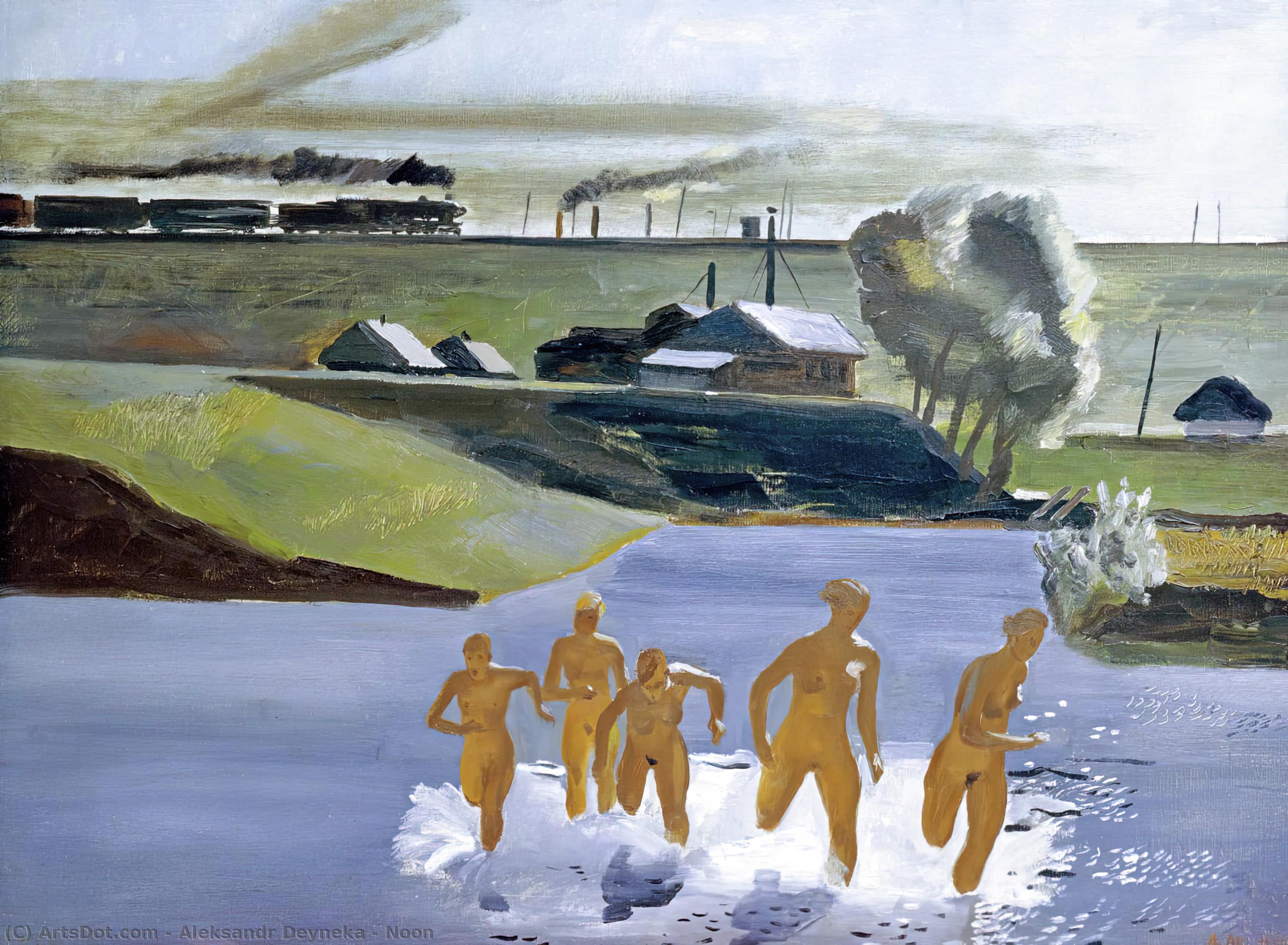
Noon
 Oil On Canvas
- WallArt
- Socialist Realism
 1932
1932- Modern
 58.0 x 80.0 cm
 Read More
Hand Made Oil Reproduction
Hand-painted oil on canvas in your size and frame, made to order by our artists. ( Buy Print Buy Image)




P118B $10

P118H $10

P118W $10

P438Z $10

P508JH $12

P508YH $12

P805H $10

P805Z $10

P919BZ $10

P919G $10

P919XJ $10

P959ZH $10

P968JZ $12

W106C $8

W218G $10

W218JH $8

W218Y $10

W307PJ $10

W316G $10

W316PJ $8

W316Y $10

W398PJ $8

W4111J $10

W500HY $15

W500JH $15

W692G $12

W849H $8

W940BG $15

W953PJ $8




Pick from our preset sizes that match the artwork's original proportions.

You may enter your own dimensions to fit a specific frame or space. If your selected size does not match the original image's proportions, we will either crop the artwork or extend the painting with additional hand-painted elements. A digital mockup will be sent for your approval before production begins.
Please note that the on-screen preview does not reflect the actual cropping or extension. Only the mockup will accurately show the final composition.
While custom sizes are available, we recommend selecting a dimension from the predefined list to preserve the original proportions.
After order, ArtsDot.com team will email client for instructions and provide a mockup preview
Worldwide Delivery () in 3/4 weeks instead of standard 5 weeks. (18 August). No compromise on quality.

Free Worldwide Express Shipping

High-Quality Linen Canvas

Full Shipping Insurance

Customs Tax Refund Guarantee

True Color Matching Guarantee

60-Day Return Policy (Defects Only)

100% Money-Back Guarantee

Bulk Discount Offer
 Glass option is only available in size under 110 CM

Noon
Reproduction Medium
Reproduction Size
-


Total Price
$ 263
Artwork Description
A Moment Frozen in Sunlight: The Vitality of Noon
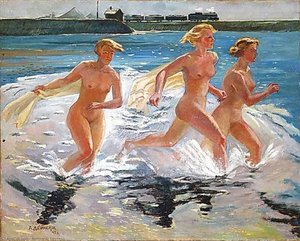
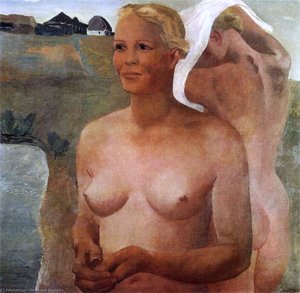
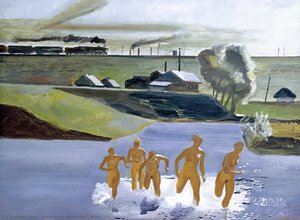
In the radiant expanse of Aleksandr Deyneka’s 1932 masterpiece, Noon, we are invited into a world where the heat of the sun and the vigor of youth converge in a breathtaking display of life. This evocative piece of Socialist Realism captures a fleeting moment of leisure, yet it vibrates with an underlying energy that transcends mere relaxation. A group of figures, some partially submerged in the cool embrace of a lake, find themselves suspended in a state of pure, unadulterated existence. The composition is masterfully balanced, drawing the eye across the shimmering water to the rhythmic movement of a passing train on the horizon. This juxtaposition of human tranquility and industrial momentum creates a profound dialogue between the natural world and the burgeoning pulse of modern Soviet life.
Deyneka’s technique is nothing short of cinematic. With a brush that favors structural clarity and dynamic lines, he strips away unnecessary ornamentation to focus on the essential geometry of the scene. The figures are rendered with a muscularity and grace that reflect his unique ability to blend classical form with a modern, almost graphic sensibility. The light in Noon is not merely an environmental factor; it is a character in itself, bathing the landscape in a high-contrast brilliance that defines every ripple in the water and every silhouette against the sky. For the discerning collector or interior designer, this painting offers a striking focal point—a window into a sun-drenched era that commands attention through its bold use of light and space.
The Pulse of Progress and the Spirit of the Era
To understand Noon is to understand the historical heartbeat of the early 1930s. As a pivotal figure in Soviet art, Deyneka was tasked with capturing the spirit of a nation in transition. The inclusion of the train, slicing through the landscape parallel to the water, serves as a potent symbol of progress and the unstoppable march of industrialization. Yet, unlike much of the heavy-handed propaganda of the era, Deyne_ka finds a way to weave this technological advancement into a scene of profound human connection. There is no tension here between man and machine; instead, they exist in a harmonious, rhythmic coexistence, celebrating a new dawn of collective vitality.
The emotional resonance of the work lies in its ability to evoke nostalgia for an idealized sense of freedom and communal joy. The nudity and casual postures of the bathers suggest a return to a primal, healthy state of being—a celebration of the human body in its most natural form, unburdened by the complexities of the modern world. This sense of liberation makes the piece incredibly versatile for contemporary spaces; it brings an infusion of optimism and warmth to any room. Whether placed in a sophisticated gallery setting or as a centerpiece in a modern living space, Noon serves as a timeless reminder of the beauty found in moments of stillness amidst the rush of progress.
Related Artworks

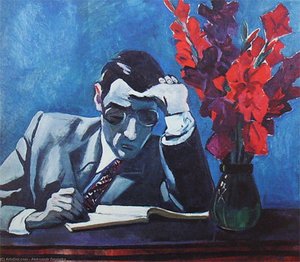
Artist Biography
A Life Forged in Revolution: The Artistic Journey of Aleksandr Deyneka
Aleksandr Aleksandrovich Deyneka, born in 1899 in the provincial Russian city of Kursk, was an artist inextricably linked to the tumultuous currents of the twentieth century. His life and work mirrored the dramatic shifts of his nation – from the waning days of Tsarist Russia through the fervor of revolution, the industrialization of the Soviet era, and the shadow of war. Deyneka wasn’t merely a recorder of these events; he was an active participant, shaping and being shaped by the ideological forces that swept across his homeland. His early life offered little hint of the artistic prominence to come. He initially pursued studies at a railway college, simultaneously attending art workshops – a practical grounding that would later inform the dynamic energy and structural clarity present in his compositions. This period was cut short by the upheaval of 1917, propelling him towards Moscow and enrollment at Vkhutemas, the Higher State Artistic and Technical Workshops, a crucible of avant-garde thought and experimentation. It was here, under the tutelage of Vladimir Favorsky, that Deyneka honed his skills in graphic arts and printmaking, absorbing the principles of constructivism and developing a keen understanding of form and space.The Rise of Socialist Realism and Defining an Era
Deyneka’s artistic development unfolded alongside the evolving aesthetic demands of the Soviet state. Initially aligned with groups like OST (Society of Easel Artists), he embraced modernist principles, exploring dynamic compositions and a bold visual language. However, as Stalin consolidated power and Socialist Realism became the officially sanctioned style, Deyneka adapted – not by abandoning his artistic vision entirely, but by channeling it into forms acceptable to the regime. This wasn’t simply capitulation; rather, it was a strategic negotiation that allowed him to continue creating impactful work while navigating a politically fraught landscape. His paintings of the 1930s, such as Collective Farmer on a Bicycle (1935), became iconic representations of Soviet ideals – celebrating labor, athleticism, and the promise of a new socialist society. The painting is not merely a depiction of rural life; it’s an embodiment of forward momentum, a visual manifesto of progress and optimism. This period also saw his involvement with the *Windows of ROSTA* project, creating powerful propaganda posters that disseminated revolutionary messages throughout the country. He wasn't just painting pictures; he was actively constructing a new cultural narrative.Beyond Propaganda: Monumentality and Mosaic Mastery
While often categorized as a Socialist Realist painter, to limit Deyneka to this label is to overlook the breadth of his artistic talent. His ambition extended beyond easel paintings into monumental works and public art. He created large-scale canvases depicting historical events – The Defense of Petrograd (1928) being a prime example – imbued with dramatic intensity and a sense of epic scale. These weren’t simply illustrations of battles; they were attempts to capture the spirit of revolutionary struggle, transforming historical moments into mythic narratives. Perhaps less known but equally significant is his work in mosaics. Deyneka's designs for the Mayakovskaya metro station in Moscow are breathtaking examples of public art seamlessly integrated with architecture. These vibrant, dynamic compositions – depicting scenes of Soviet life and aspirations – transformed a utilitarian space into a palace of the people, demonstrating his versatility and mastery of different artistic mediums. These mosaics stand as enduring testaments to his ability to elevate everyday themes into grand visual statements.Legacy and Enduring Influence
Aleksandr Deyneka passed away in 1969, leaving behind a vast body of work that continues to resonate today. His paintings, mosaics, and graphic designs offer a compelling window into the Soviet experience – its aspirations, contradictions, and artistic achievements. While his association with Socialist Realism has sometimes led to critical reassessment, his technical skill, compositional dynamism, and ability to capture the energy of his time remain undeniable. He is categorized as a “1A - world famous artist” in the United Artists Rating, a testament to his enduring international recognition. Exhibitions dedicated to his work, such as those held at the Gallery for Russian Arts and Design in London, continue to introduce new audiences to his art. Deyneka’s influence can be seen in subsequent generations of artists who sought to engage with social and political themes through powerful visual imagery. His ability to blend modernist techniques with socially conscious subject matter makes him a uniquely important figure in the history of twentieth-century art, a golden boy whose work continues to provoke thought and inspire awe.A Complex Artistic Identity
Ultimately, Aleksandr Deyneka’s artistic identity is one of compelling complexity. He was an artist who navigated a shifting political landscape with both pragmatism and passion, adapting his style while maintaining a distinctive visual voice. His work wasn't simply propaganda; it was a reflection of the hopes and anxieties of a nation undergoing radical transformation.- He embraced modernity but also sought to connect with the traditions of Russian art.
- He celebrated collective ideals yet retained a sense of individual artistic expression.
- His work continues to spark debate about the relationship between art, politics, and ideology.
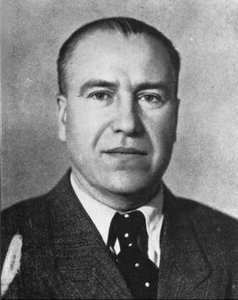
Aleksandr Deyneka
1899 - 1969 , Russia
Quick Facts
- Artistic Movement Or Style: Socialist Realism
- Date Of Birth: May 20, 1899
- Date Of Death: June 12, 1969
- Full Name: Aleksandr Aleksandrovich Deyneka
- Nationality: Russian
- Notable Artworks:
- Collective Farmer on a Bicycle
- Defense of Petrograd
- Basketball
- The Battle of Sevastopol
- Place Of Birth: Kursk, Russia
Related Articles
Socialist Realism: Ideology, Aesthetics & Enduring Legacy of Soviet Art
Explore the fascinating world of Socialist Realism! Discover its historical context, key artists like Deyneka & Brodsky, defining aesthetics, and lasting impact on Soviet culture. A comprehensive guide for art lovers.
Fluid Reflections: Exploring Water's Symbolism in Art History – From Myth to Impressionism
Explore the rich symbolism of water in art history – from ancient myths to Impressionism's fleeting beauty. Discover masterpieces & find your perfect serene artwork with ArtsDot.com.
Romantic Realism's Finest: 10 Masterpieces for Your Home | ArtsDot
Explore 10 defining masterpieces of Romantic Realism! Discover Courbet, Millet & Daumier's powerful paintings—capturing emotion and social realities. Find museum-quality reproductions for your home at ArtsDot.com.
Echoes of Society: Exploring Social Realism's Enduring Legacy in Art
Explore the powerful world of Social Realism art! Discover key artists, masterpieces & its profound social commentary. Expert insights into this influential movement's history and enduring legacy.
The Evocative Embrace of Reality: Exploring Romantic Realism in 19th-Century Painting
Explore the captivating world of Romantic Realism! Discover key artists like Courbet & Millet, masterpieces, and the social context behind this influential art movement. Expert insights for collectors at ArtsDot.