

 Preview
 Send
Send Share
Share
 Details

 Download
 Similars
 X-Ray
X-Ray Diaporama
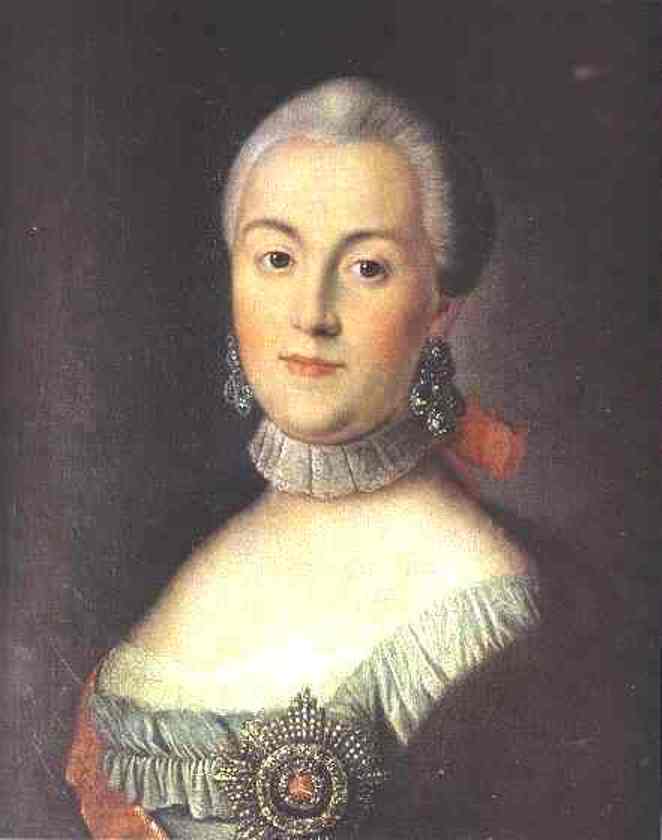
Portrait of Grand Duchess Catherine Alekseevna, Future Empress Catherine II the Great


 Read More
Purchase a high-resolution, enhanced digital image, far superior to the online preview.
Each file is meticulously prepared by our in-house specialists using advanced tools and expert manual retouching. We ensure every image has exceptional clarity, precise color accuracy, and fine detail.
The final file is delivered via email within 72 hours, optimized for immediate use in professional, editorial, and print environments. This is the same quality trusted by top-tier design studios, publishers, and galleries.
Digital Image
Download a high-resolution file for personal display, printing, and creative projects. ( Buy Print Buy Hand Made Painting)
Included in Every Digital Image Order
Expert Digital Delivery, Guaranteed
When you choose ArtsDot.com, you're not just getting an image - you're receiving a professionally enhanced digital artwork, crafted with precision and backed by a satisfaction guarantee. Here's everything that comes with your order, automatically:

Fast Email Delivery
Your high-resolution digital image file will be emailed to you within 72 hours of ordering - ready for immediate use.

AI-Enhanced Digital File
Your artwork is professionally optimized using advanced AI tools and manual editing, ensuring maximum detail, clarity, and color accuracy.

Free Lifetime Re-Delivery
Accidentally deleted or lost your file? No worries - we'll resend it to you anytime, free of charge.

No Import Fees - Ever
Enjoy your artwork instantly with zero customs, duties, or delivery fees - digital downloads are always tax-free.

Color Accuracy Guarantee
We ensure your digital image reflects the original colors as closely as possible using professional tools and color management.

100-Day Satisfaction Guarantee
If you're not satisfied with your digital image, we'll revise it or refund 100% within 100 days - no questions asked.

100% Money-Back Guarantee
Not satisfied? Get a full refund within 100 days of receiving your digital file - no questions asked.

Bulk Order Discounts
Buy 3 images, save 10% - Buy 5, save 15% - Buy 10+, save 20%. Great for creative projects, galleries, and agencies.
A Regal Gaze: Portrait of Grand Duchess Catherine Alekseevna
This striking black and white reproduction captures Aleksey Antropov's 1760 portrait of Grand Duchess Catherine Alekseevna, the future Empress Catherine II the Great. More than just a likeness, this painting offers a glimpse into the burgeoning power and ambition of a woman who would dramatically reshape Russian history. The image presents a poised and dignified young woman, her blonde hair elegantly styled in a bun, adorned with a delicate necklace and crowned with regal authority. Her direct gaze engages the viewer, conveying both intelligence and an underlying strength – qualities that would prove crucial to her ascent to the throne.Style & Technique: Rococo Elegance Meets Russian Portraiture
Antropov, a leading figure in 18th-century Russian portraiture, was heavily influenced by Western European artistic trends, particularly the Rococo style popular in France and Italy. While this reproduction is presented in monochrome, it allows us to appreciate the subtle gradations of light and shadow that Antropov masterfully employed to define form and create a sense of depth. The composition itself adheres to the conventions of court portraiture: a three-quarter pose, emphasizing the sitter’s status and elegance. Note the careful attention to detail in her jewelry – the earrings, the necklace - indicative of the wealth and privilege she embodied. Antropov's skill lies in capturing not just physical features but also an essence of character, hinting at the formidable personality that lay beneath the surface.Historical Context: A Moment on the Cusp of Change
Painted in 1760, this portrait was created during a period of significant political upheaval in Russia. Catherine's husband, Peter III, was widely unpopular and his reign marked by instability. Antropov’s commission to paint her portrait reflects the growing awareness of Catherine’s potential as an alternative ruler. The painting served not only as a visual record but also as a subtle assertion of her legitimacy and claim to power. It's important to remember that this was a time when portraits were powerful tools for propaganda and self-promotion, carefully constructed images designed to shape public perception. The portrait’s creation precedes Catherine’s coup d'état in 1762, making it a fascinating document of a pivotal moment in Russian history.Symbolism & Emotional Impact
Beyond the obvious symbols of royalty – the crown and jewelry – the portrait conveys a sense of quiet confidence and determination. The direct gaze suggests an unwavering resolve, hinting at the strength Catherine would need to navigate the treacherous waters of court politics. The monochrome palette, while perhaps a consequence of reproduction, lends a timeless quality to the image, evoking a sense of historical gravitas. It invites contemplation on the burdens and responsibilities of leadership, as well as the personal sacrifices often required in pursuit of power. The overall emotional impact is one of restrained elegance combined with an underlying feeling of anticipation – a portrait capturing a woman poised on the brink of greatness.- Artist: Aleksey Petrovich Antropov (1716-1795)
- Date: 1760
- Style: Rococo, Russian Portraiture
- Subject: Grand Duchess Catherine Alekseevna, Future Empress Catherine II the Great
Related Artworks
Artist Biography
Aleksey Antropov: The Painter of Imperial Grace
Born in Saint Petersburg in 1716, Aleksey Petrovich Antropov emerged as a pivotal figure in the landscape of 18th-century Russian art. His career spanned nearly half a century, marked by a remarkable versatility that encompassed portraiture, ecclesiastical frescoes, and miniature painting—a testament to his artistic breadth and adaptability within the evolving courtly and religious spheres of Imperial Russia. Antropov’s work is not merely decorative; it offers intimate glimpses into the lives of nobility, the grandeur of imperial ceremonies, and the spiritual heart of the Orthodox Church.
Antropov's early life was steeped in the traditions of the Russian state. His father held a position within the Armory, an institution responsible for maintaining the royal collections—a formative experience that undoubtedly instilled in him an appreciation for craftsmanship and historical context. He began his artistic training at the Chancellery of Buildings, where he honed his skills under the tutelage of established masters. This early exposure to architectural decoration and portraiture laid the foundation for his future success. Crucially, he received instruction from Louis Caravaque, a French court painter who brought Western European techniques and sensibilities into Russian art, influencing Antropov’s approach to composition, lighting, and detail.
The Frescoes of Power: Kiev and Beyond
Antropov's reputation truly blossomed during his period in Kiev (1752-1755), where he was commissioned to decorate the St. Andrew’s Church. This project represents a high point in his career, showcasing his mastery of fresco technique and his ability to imbue religious subjects with a palpable sense of drama and emotion. The most celebrated work from this period is undoubtedly the “Last Supper,” a monumental fresco that dominates the altar space—a vibrant tableau filled with meticulously rendered figures and an impressive use of color. The scale and ambition of this undertaking demonstrated Antropov’s growing confidence as an artist, solidifying his position within the highest echelons of the Russian artistic establishment.
Beyond Kiev, Antropov continued to contribute significantly to the decoration of prominent St. Petersburg landmarks. He played a key role in embellishing the Winter Palace, Anichkov Palace, and other royal residences, imbuing these spaces with an aura of imperial splendor. His work during this time was characterized by a refined elegance and a meticulous attention to detail—qualities that reflected the prevailing aesthetic sensibilities of the Russian court.
Portraiture and Courtly Influence
While his ecclesiastical frescoes secured Antropov’s place in architectural history, it is perhaps through his portraiture that he achieved the greatest renown. He produced a series of captivating portraits of members of the Imperial family and the aristocracy—works that offer invaluable insights into the fashion, customs, and social dynamics of 18th-century Russia. His portraits are not simply likenesses; they capture the personalities and bearing of his subjects with remarkable sensitivity and psychological depth. Notably, he painted a series of portraits of Empress Elizabeth, capturing her regal presence and inner strength. His portrait of Count Rumyantsev is particularly admired for its subtle use of color and its evocative portrayal of aristocratic elegance.
Antropov’s artistic trajectory was significantly shaped by his association with Prince Ivan Shuvalov, a prominent figure in the Imperial court. Shuvalov recognized Antropov's talent and provided him with patronage and opportunities—a crucial factor in his professional advancement. The prince’s support enabled Antropov to pursue his artistic ambitions without the constraints of financial hardship.
Legacy and Influence
Aleksey Petrovich Antropov died in Saint Petersburg in 1795, leaving behind a substantial body of work that continues to be admired for its technical skill, stylistic grace, and historical significance. His frescoes remain as testaments to the grandeur of Imperial Russia, while his portraits offer intimate glimpses into the lives of those who shaped the nation’s destiny. Antropov's influence extended beyond his own lifetime, particularly through his student Dmitry Levitzky, who carried on Antropov’s artistic legacy and further developed his techniques.
Today, Antropov’s works are housed in museums across Russia and beyond—a testament to their enduring appeal. His art serves as a valuable window into the cultural and artistic landscape of 18th-century Russia, offering insights into the values, beliefs, and aspirations of a bygone era.
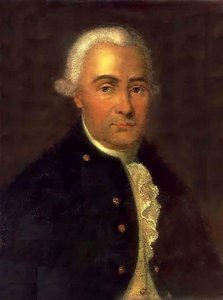
aleksey petrovich antropov
1716 - 1795 , Russia
Quick Facts
- Artistic Movement Or Style: Portraiture, Iconography
- Artists Or Movements Influenced By This Artist: ['Levitzky']
- Artists Who Influenced This Artist: ['Louis Caravaque']
- Date Of Birth: March 25, 1716
- Date Of Death: June 23, 1795
- Full Name: Aleksey Petrovich Antropov
- Nationality: Russian
- Notable Artworks:
- Portrait of Grand Duchess Catherine II
- Portrait of Countess M. A. Rumyantzeva
- Portrait of tsarevna Sophia
- Place Of Birth: Saint Petersburg, Russia