

 Preview
 Send
Send Share
Share
 Details

 Download
 Similars
 X-Ray
X-Ray Diaporama
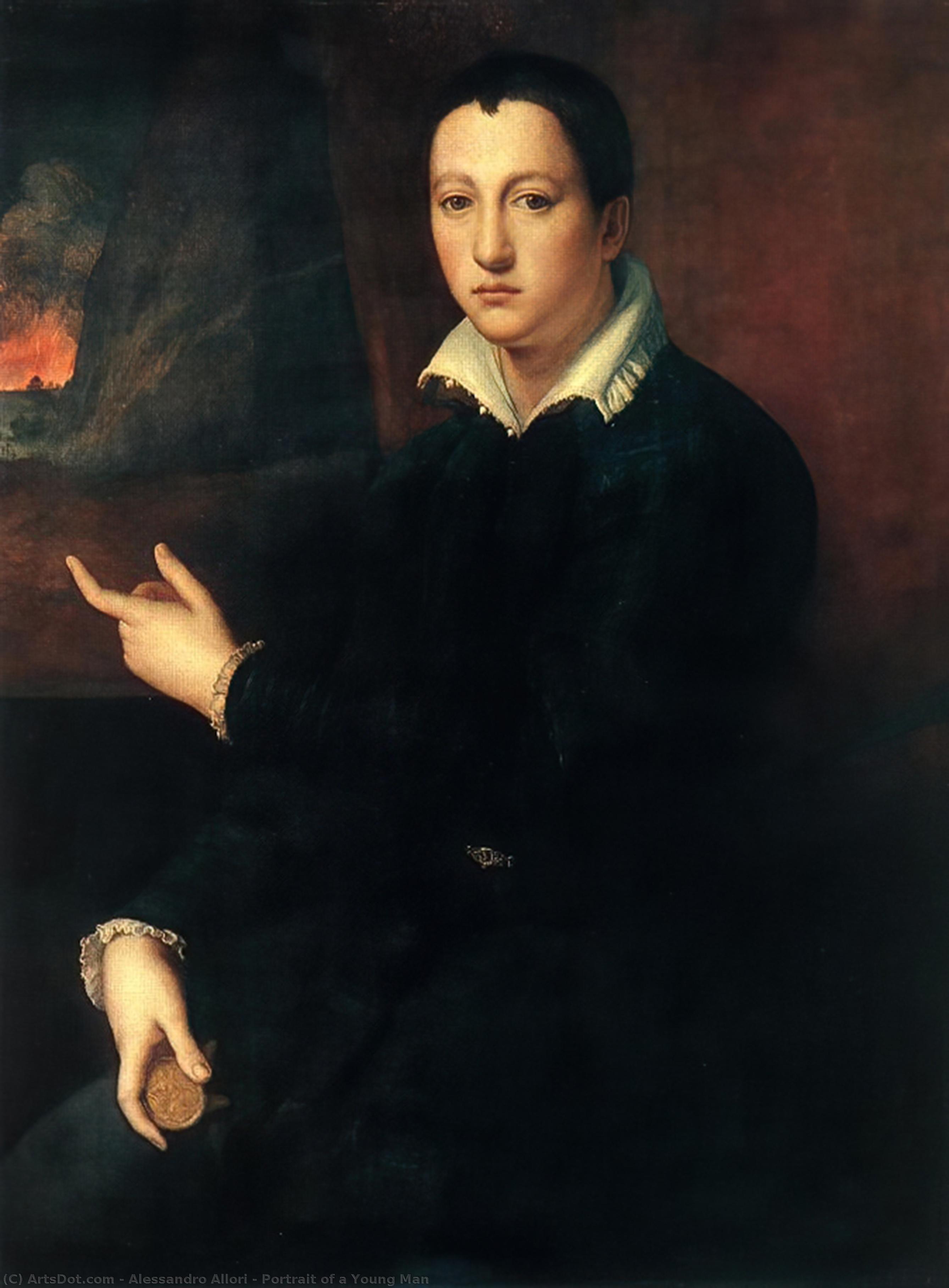
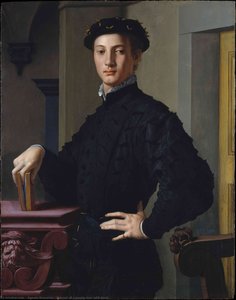
Portrait of a Young Man
 Oil On Canvas
- WallArt
- Italian Renaissance/Mannerism
 117.0 x 87.0 cm
 Hermitage Museum
 Read More
Purchase a high-resolution, enhanced digital image, far superior to the online preview.
Each file is meticulously prepared by our in-house specialists using advanced tools and expert manual retouching. We ensure every image has exceptional clarity, precise color accuracy, and fine detail.
The final file is delivered via email within 72 hours, optimized for immediate use in professional, editorial, and print environments. This is the same quality trusted by top-tier design studios, publishers, and galleries.
Digital Image
Download a high-resolution file for personal display, printing, and creative projects. ( Buy Print Buy Hand Made Painting)
Included in Every Digital Image Order
Expert Digital Delivery, Guaranteed
When you choose ArtsDot.com, you're not just getting an image - you're receiving a professionally enhanced digital artwork, crafted with precision and backed by a satisfaction guarantee. Here's everything that comes with your order, automatically:

Fast Email Delivery
Your high-resolution digital image file will be emailed to you within 72 hours of ordering - ready for immediate use.

AI-Enhanced Digital File
Your artwork is professionally optimized using advanced AI tools and manual editing, ensuring maximum detail, clarity, and color accuracy.

Free Lifetime Re-Delivery
Accidentally deleted or lost your file? No worries - we'll resend it to you anytime, free of charge.

No Import Fees - Ever
Enjoy your artwork instantly with zero customs, duties, or delivery fees - digital downloads are always tax-free.

Color Accuracy Guarantee
We ensure your digital image reflects the original colors as closely as possible using professional tools and color management.

60-Day Satisfaction Guarantee
If you're not satisfied with your digital image, we'll revise it or refund 100% within 60 days - no questions asked.

100% Money-Back Guarantee
Not satisfied? Get a full refund within 60 days of receiving your digital file - no questions asked.

Bulk Order Discounts
Buy 3 images, save 10% - Buy 5, save 15% - Buy 10+, save 20%. Great for creative projects, galleries, and agencies.
Collectible Description
A Study in Renaissance Dignity: Unveiling Alessandro Allori’s ‘Portrait of a Young Man’
Alessandro Allori's “Portrait of a Young Man,” painted circa 1560-65, is more than just a likeness; it’s a carefully constructed meditation on status, contemplation, and the burgeoning spirit of the Italian Renaissance. This arresting portrait, currently residing in the Ashmolean Museum in Oxford, immediately draws the viewer into a world of restrained elegance and subtle psychological depth – a testament to Allori's mastery of capturing not just appearance but also the quiet intensity within. The painting’s power lies in its ability to evoke a sense of dignified reserve, hinting at an inner life both complex and profoundly thoughtful.
The composition is remarkably controlled, centering on the young man who occupies the majority of the frame. His posture, subtly angled towards the viewer, suggests a deliberate awareness – he’s not merely posing for the artist; he's engaging with the act of representation itself. The inclusion of two secondary figures in the background—a woman to his left and a gentleman further back on the right—adds layers of narrative without disrupting the central focus. A prominent clock near the top-left corner subtly anchors the scene, perhaps symbolizing the passage of time or the subject’s awareness of his position within society's intricate hierarchy.
A Palette of Shadow and Light: Technique and Materiality
Allori’s technical skill is immediately apparent in the painting’s rich color palette. Dominated by deep browns, blacks, and muted greens, the overall effect is one of somber formality. However, this darkness is skillfully punctuated by highlights of white – particularly noticeable in the subject's collar and face—creating a dramatic interplay of light and shadow that emphasizes his features and lends depth to the portrait. The artist’s use of oil paint on canvas allows for meticulous layering, building up textures from the smooth skin of the face to the more pronounced roughness of the fabric. Glazes are likely employed to achieve subtle color transitions, adding luminosity and a remarkable sense of realism.
The painting's linear perspective, while not flawlessly consistent, effectively establishes depth, drawing the eye into the background landscape glimpsed through an opening or window. This atmospheric perspective—the blurring of details in the distance—creates a convincing illusion of space and reinforces the feeling of looking out at a broader world beyond the immediate scene. The strong lines defining the subject’s clothing – the elaborate ruffles of his collar, the folds of his sleeves – are meticulously rendered, showcasing Allori's attention to detail and his understanding of fabric texture.
Symbolism and the Portraiture of an Era
The stern expression on the young man’s face is perhaps the most striking element of the portrait. It conveys a sense of seriousness, even disapproval—a quiet dignity that speaks volumes about his character. His gesture – a subtle pointing outwards – suggests importance or direction, as if he's offering guidance or sharing an observation. The inclusion of the clock could be interpreted symbolically, representing the passage of time and perhaps alluding to the subject’s awareness of his social standing and responsibilities.
Stylistically, “Portrait of a Young Man” firmly places Allori within the late Mannerist tradition—a period characterized by elongated forms, complex compositions, and an emphasis on psychological realism. Yet, unlike some of his Mannerist contemporaries, Allori avoids excessive ornamentation or artificiality, instead opting for a more restrained and controlled aesthetic. The painting’s overall effect is one of polished sophistication, reflecting the values and sensibilities of Renaissance Florence.
A Legacy in Oil: Alessandro Allori's Enduring Influence
Alessandro Allori (1535-1607) was a pivotal figure in Florentine art, deeply influenced by Agnolo Bronzino, his mentor. His work embodies the transition from the High Renaissance to Mannerism, showcasing both technical brilliance and a profound understanding of human psychology. “Portrait of a Young Man” stands as a prime example of Allori’s artistic vision—a captivating study in dignity, contemplation, and the enduring power of portraiture.
Related Artworks


Artist Biography
A Florentine Legacy: The Life and Art of Alessandro Allori
Alessandro Allori, born in Florence on May 31st, 1535, stands as a compelling figure within the late Mannerist school. His artistic journey was profoundly shaped by circumstance; orphaned at a young age, he found an unlikely father figure and mentor in Agnolo Bronzino, one of Florence’s most celebrated painters. This adoption wasn't merely familial—it was an immersion into a world of refined technique, intellectual rigor, and the distinctive aesthetic principles that would come to define Allori’s own style. Bronzino instilled within him not only technical mastery but also a particular sensibility: a preference for polished surfaces, elongated forms, and a cool, almost sculptural quality in his figures. This influence became the cornerstone of Allori's artistic identity, though it often drew criticism for its perceived derivativeness throughout his career. He supplemented this foundational training with anatomical studies – even undertaking dissections at the Hospital of Santa Maria Nuova – demonstrating a commitment to understanding the human form that underpinned his stylized representations.The Echoes of Mannerism and Artistic Development
Allori’s work is deeply rooted in the Mannerist tradition, an artistic movement characterized by its artificiality, elegance, and emphasis on stylistic sophistication over naturalistic representation. However, he wasn't a revolutionary; rather, he was a skilled interpreter and developer of existing forms. Critics often noted his tendency to draw heavily from pre-existing art, refining and reinterpreting the works of masters like Michelangelo and Raphael through the lens of Bronzino’s aesthetic. This isn’t necessarily a detraction—it speaks to Allori's role as a crucial link in the transmission of artistic knowledge within Florentine circles. His paintings are marked by an almost unsettling smoothness, figures possessing a marble-like quality that lends them a two-dimensional, statue-esque appearance. This effect wasn’t simply a matter of technique; it was a deliberate aesthetic choice, reflecting the Mannerist desire to elevate art above nature, to create images of idealized beauty and intellectual complexity. He headed one of Florence's most important workshops alongside Santi di Tito, and his pupils included notable artists like Cristoforo del Altissimo, Cesare Dandini, Aurelio Lomi, and his own son, Cristofano Allori, ensuring the continuation of this artistic lineage.Major Works and Patronage
Allori’s career flourished under the patronage of prominent Florentine families, most notably the Medici. He contributed significantly to several important decorative projects for them, including his work on the Studiolo of Francesco I in the Palazzo Vecchio. His *Pearl Fishers*, part of this elaborate chamber, exemplifies his ability to create complex allegorical scenes filled with graceful figures and intricate detail. He also expanded upon frescoes begun by earlier masters like Andrea del Sarto and Franciabigio within the Villa di Poggio a Caiano, demonstrating both his technical skill and his willingness to engage with the artistic legacy of Florence. Beyond these grand commissions, Allori produced numerous portraits, religious paintings, and altarpieces that showcase his mastery of composition, color, and form. A notable example is “Allegory of Human Life,” housed in the Uffizi Gallery, which encapsulates the Renaissance humanist ideals prevalent during his time. His "Stories of St. Jerome" fresco further demonstrates his skill in narrative painting and illusionistic space.Legacy and Historical Significance
Alessandro Allori died in Florence on September 22nd, 1607, leaving behind a body of work that continues to fascinate and challenge art historians. While often overshadowed by the more innovative artists of his time, his significance lies in his role as a key figure in the late Mannerist movement and as a transmitter of artistic tradition. He wasn’t an innovator in the same vein as Michelangelo or Leonardo da Vinci, but he was a supremely skilled craftsman who refined and developed existing styles, ensuring their survival for future generations. The story of a painting – possibly a portrait of Eleonora di Toledo de' Medici – returned to the Gemäldegalerie in Berlin after decades lost adds an intriguing layer to his legacy. His influence extended through his numerous pupils, most notably his son Cristofano Allori, who continued the family’s artistic tradition. Allori’s paintings remain valuable testaments to the elegance and intellectual complexity of Florentine Mannerism, offering a glimpse into a world where art was not merely about representation but about the pursuit of idealized beauty and refined expression. He remains an important figure for understanding the transition from Renaissance artistry towards the Baroque period.Exploring Allori’s World Today
- Museum Collections: Discover Alessandro Allori's masterpieces in institutions like the Uffizi Gallery, the Gemäldegalerie in Berlin, and various other museums worldwide.
- Notable Works: Explore iconic paintings such as “Allegory of Human Life,” “Stories of St. Jerome,” and his contributions to the Studiolo of Francesco I.
- Further Research: Delve deeper into Allori’s life and art through resources like Wikipedia, Getty Museum archives, and scholarly articles on Florentine Mannerism.
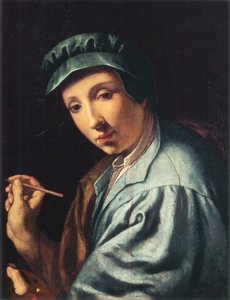
Alessandro Allori
1535 - 1607 , Italy
Quick Facts
- Artistic Movement Or Style: Mannerism
- Artists Or Movements Influenced By This Artist: ['Cristofano Allori']
- Artists Who Influenced This Artist: ['Agnolo Bronzino']
- Date Of Birth: May 31, 1535
- Date Of Death: September 22, 1607
- Full Name: Alessandro Allori
- Nationality: Italian
- Notable Artworks:
- Allegory of Human Life
- Stories of St. Jerome
- Place Of Birth: Florence, Italy

