 Preview
 Send
Send Share
Share
 Details

 Download
 Similars
 X-Ray
X-Ray Diaporama
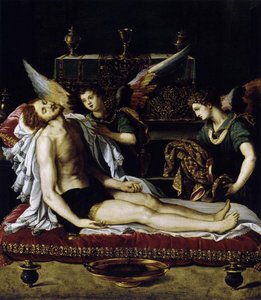
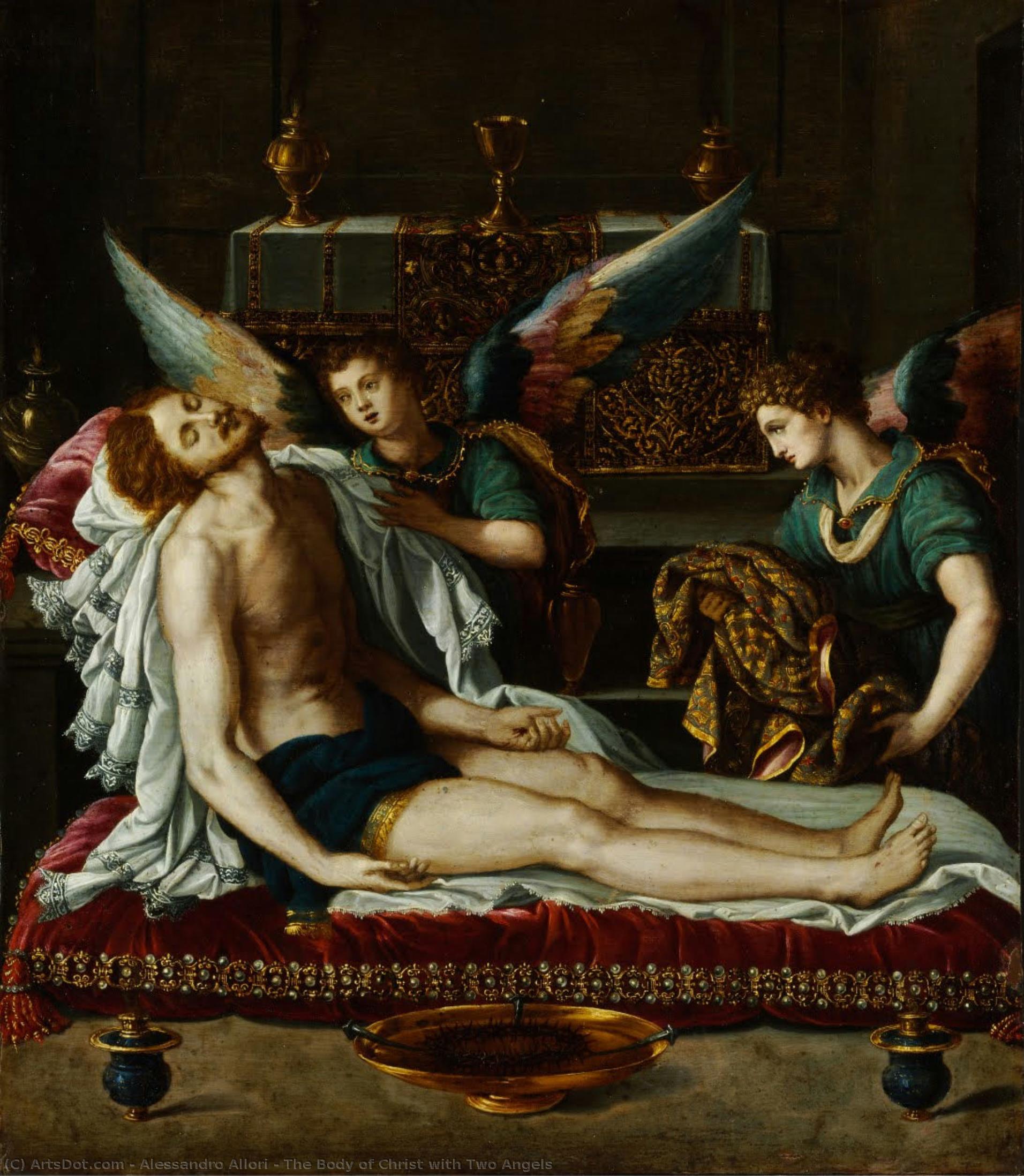
The Body of Christ with Two Angels
 Oil On Canvas
- WallArt
- Late Mannerism
 1590
1590 45.0 x 39.0 cm
 Museum of Fine Arts
 Read More
Hand Made Oil Reproduction
Hand-painted oil on canvas in your size and frame, made to order by our artists. ( Buy Print Buy Image)




P118B $10

P118H $10

P118W $10

P438Z $10

P508JH $12

P508YH $12

P805H $10

P805Z $10

P919BZ $10

P919G $10

P919XJ $10

P959ZH $10

P968JZ $12

W106C $8

W218G $10

W218JH $8

W218Y $10

W307PJ $10

W316G $10

W316PJ $8

W316Y $10

W398PJ $8

W4111J $10

W500HY $15

W500JH $15

W692G $12

W849H $8

W940BG $15

W953PJ $8




Pick from our preset sizes that match the artwork's original proportions.

You may enter your own dimensions to fit a specific frame or space. If your selected size does not match the original image's proportions, we will either crop the artwork or extend the painting with additional hand-painted elements. A digital mockup will be sent for your approval before production begins.
Please note that the on-screen preview does not reflect the actual cropping or extension. Only the mockup will accurately show the final composition.
While custom sizes are available, we recommend selecting a dimension from the predefined list to preserve the original proportions.
After order, ArtsDot.com team will email client for instructions and provide a mockup preview
Worldwide Delivery () in 3/4 weeks instead of standard 5 weeks. (16 August). No compromise on quality.

Free Worldwide Express Shipping

High-Quality Linen Canvas

Full Shipping Insurance

Customs Tax Refund Guarantee

True Color Matching Guarantee

60-Day Return Policy (Defects Only)

100% Money-Back Guarantee

Bulk Discount Offer
 Glass option is only available in size under 110 CM

The Body of Christ with Two Angels
Reproduction Medium
Reproduction Size
-


Total Price
$ 263
Artwork Description
A Glimpse into the Soul: Alessandro Allori’s “The Body of Christ with Two Angels”
Alessandro Allori's "The Body of Christ with Two Angels," painted around 1590, isn’t merely a depiction of a religious scene; it’s an invitation to contemplate profound sorrow and the quiet dignity of suffering. Emerging from the shadowy depths of the Palazzo Vecchio’s storeroom, this painting transcends its humble origins – a fragment within a larger collection – to become a powerfully intimate meditation on loss and divine compassion. The work immediately draws the eye with its restrained palette of deep blues, ochres, and reds, colors that evoke both the solemnity of death and the warmth of human empathy. It’s a scene steeped in Byzantine tradition, yet subtly infused with Allori's distinctly Florentine sensibility – a delicate balance between reverence and earthly realism.
- Subject Matter: The painting centers on the lifeless body of Christ, laid upon a simple wooden bed draped in crimson velvet. Two serene angels flank the scene, their gestures conveying not judgment or condemnation, but a profound sense of comfort and care.
- Style & Technique: Allori’s style is characterized by its polished surfaces, elongated figures, and a masterful use of light and shadow – hallmarks of the late Mannerist movement. The drapery flows with an almost sculptural quality, while the faces of Christ and the angels are rendered with remarkable sensitivity, capturing a fleeting expression of peace.
- Historical Context: Painted during the Counter-Reformation, this work reflects the era’s renewed emphasis on religious devotion and emotional engagement. The scene draws heavily from Byzantine iconography, particularly the “Epitaphios” – an image depicting Christ's body laid out for anointing – a tradition deeply rooted in Eastern Orthodox Christianity.
Symbolism Woven into the Fabric of Grief
Beyond its immediate depiction, "The Body of Christ with Two Angels" is rich in symbolic meaning. The crimson velvet beneath Christ’s body isn't simply a decorative element; it represents the “red stone” – the relic of the Holy Stone of Unction, venerated in Jerusalem and believed to have been used to anoint Christ’s body after his crucifixion. This detail subtly connects the painting to the broader narrative of Christian pilgrimage and devotion. The angels themselves are not presented as imposing figures of authority but rather as gentle attendants, embodying compassion and mercy. Their positioning – one closer to the left edge, the other nearer to the right – creates a sense of balance and harmony, mirroring the divine order within the scene.
The inclusion of a dining table with two cups and a bowl adds an unexpected layer of domesticity to the sacred space, suggesting a moment of quiet contemplation amidst profound grief. It’s as if Christ is being cared for in his final moments, surrounded by the familiar comforts of home – a poignant reminder of his humanity.A Florentine Legacy: Allori's Artistic Journey
Alessandro Allori’s artistic development was profoundly shaped by his early life. Orphaned at a young age, he found an unlikely mentor in Agnolo Bronzino, one of Florence’s most celebrated painters. This adoption wasn’t merely familial—it was an immersion into a world of refined technique, intellectual rigor, and the distinctive aesthetic principles that would come to define Allori’s own style. Bronzino instilled within him not only technical mastery but also a particular sensibility: a preference for polished surfaces, elongated forms, and a cool, almost sculptural quality in his figures. This influence became the cornerstone of Allori's artistic identity, though it often drew criticism for its perceived derivativeness throughout his career.
Allori’s work reflects a complex interplay between tradition and innovation. He skillfully blended Byzantine iconography with his own unique Florentine style, creating images that are both deeply rooted in the past and strikingly contemporary. His ability to capture the emotional weight of religious subjects – particularly grief and compassion – is what truly sets his paintings apart.Bringing “The Body of Christ” into Your Space
Reproductions of "The Body of Christ with Two Angels" offer a remarkable opportunity to bring this evocative artwork into your home or office. ArtsDot’s meticulous reproductions faithfully capture the painting's nuanced details, colors, and textures, allowing you to experience its emotional depth and artistic beauty firsthand. Whether displayed as a statement piece in a formal living room or as a contemplative focal point in a study, this painting is sure to evoke a sense of serenity, reflection, and profound connection to the enduring themes of faith and humanity.
Related Artworks
Artist Biography
A Florentine Legacy: The Life and Art of Alessandro Allori
Alessandro Allori, born in Florence on May 31st, 1535, stands as a compelling figure within the late Mannerist school. His artistic journey was profoundly shaped by circumstance; orphaned at a young age, he found an unlikely father figure and mentor in Agnolo Bronzino, one of Florence’s most celebrated painters. This adoption wasn't merely familial—it was an immersion into a world of refined technique, intellectual rigor, and the distinctive aesthetic principles that would come to define Allori’s own style. Bronzino instilled within him not only technical mastery but also a particular sensibility: a preference for polished surfaces, elongated forms, and a cool, almost sculptural quality in his figures. This influence became the cornerstone of Allori's artistic identity, though it often drew criticism for its perceived derivativeness throughout his career. He supplemented this foundational training with anatomical studies – even undertaking dissections at the Hospital of Santa Maria Nuova – demonstrating a commitment to understanding the human form that underpinned his stylized representations.The Echoes of Mannerism and Artistic Development
Allori’s work is deeply rooted in the Mannerist tradition, an artistic movement characterized by its artificiality, elegance, and emphasis on stylistic sophistication over naturalistic representation. However, he wasn't a revolutionary; rather, he was a skilled interpreter and developer of existing forms. Critics often noted his tendency to draw heavily from pre-existing art, refining and reinterpreting the works of masters like Michelangelo and Raphael through the lens of Bronzino’s aesthetic. This isn’t necessarily a detraction—it speaks to Allori's role as a crucial link in the transmission of artistic knowledge within Florentine circles. His paintings are marked by an almost unsettling smoothness, figures possessing a marble-like quality that lends them a two-dimensional, statue-esque appearance. This effect wasn’t simply a matter of technique; it was a deliberate aesthetic choice, reflecting the Mannerist desire to elevate art above nature, to create images of idealized beauty and intellectual complexity. He headed one of Florence's most important workshops alongside Santi di Tito, and his pupils included notable artists like Cristoforo del Altissimo, Cesare Dandini, Aurelio Lomi, and his own son, Cristofano Allori, ensuring the continuation of this artistic lineage.Major Works and Patronage
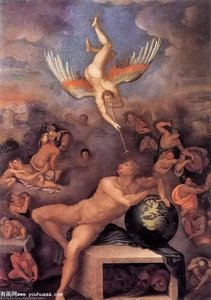
Allori’s career flourished under the patronage of prominent Florentine families, most notably the Medici. He contributed significantly to several important decorative projects for them, including his work on the Studiolo of Francesco I in the Palazzo Vecchio. His *Pearl Fishers*, part of this elaborate chamber, exemplifies his ability to create complex allegorical scenes filled with graceful figures and intricate detail. He also expanded upon frescoes begun by earlier masters like Andrea del Sarto and Franciabigio within the Villa di Poggio a Caiano, demonstrating both his technical skill and his willingness to engage with the artistic legacy of Florence. Beyond these grand commissions, Allori produced numerous portraits, religious paintings, and altarpieces that showcase his mastery of composition, color, and form. A notable example is “Allegory of Human Life,” housed in the Uffizi Gallery, which encapsulates the Renaissance humanist ideals prevalent during his time. His "Stories of St. Jerome" fresco further demonstrates his skill in narrative painting and illusionistic space.Legacy and Historical Significance
Alessandro Allori died in Florence on September 22nd, 1607, leaving behind a body of work that continues to fascinate and challenge art historians. While often overshadowed by the more innovative artists of his time, his significance lies in his role as a key figure in the late Mannerist movement and as a transmitter of artistic tradition. He wasn’t an innovator in the same vein as Michelangelo or Leonardo da Vinci, but he was a supremely skilled craftsman who refined and developed existing styles, ensuring their survival for future generations. The story of a painting – possibly a portrait of Eleonora di Toledo de' Medici – returned to the Gemäldegalerie in Berlin after decades lost adds an intriguing layer to his legacy. His influence extended through his numerous pupils, most notably his son Cristofano Allori, who continued the family’s artistic tradition. Allori’s paintings remain valuable testaments to the elegance and intellectual complexity of Florentine Mannerism, offering a glimpse into a world where art was not merely about representation but about the pursuit of idealized beauty and refined expression. He remains an important figure for understanding the transition from Renaissance artistry towards the Baroque period.Exploring Allori’s World Today
- Museum Collections: Discover Alessandro Allori's masterpieces in institutions like the Uffizi Gallery, the Gemäldegalerie in Berlin, and various other museums worldwide.
- Notable Works: Explore iconic paintings such as “Allegory of Human Life,” “Stories of St. Jerome,” and his contributions to the Studiolo of Francesco I.
- Further Research: Delve deeper into Allori’s life and art through resources like Wikipedia, Getty Museum archives, and scholarly articles on Florentine Mannerism.

Alessandro Allori
1535 - 1607 , Italy
Quick Facts
- Artistic Movement Or Style: Mannerism
- Artists Or Movements Influenced By This Artist: ['Cristofano Allori']
- Artists Who Influenced This Artist: ['Agnolo Bronzino']
- Date Of Birth: May 31, 1535
- Date Of Death: September 22, 1607
- Full Name: Alessandro Allori
- Nationality: Italian
- Notable Artworks:
- Allegory of Human Life
- Stories of St. Jerome
- Place Of Birth: Florence, Italy
Related Articles
Celestial Messengers: Angels in Painting – A Historical & Artistic Exploration
Explore the captivating history of angels in painting! Discover symbolism, iconic Renaissance & Byzantine masterpieces, and renowned artists. Expert insights for art lovers & collectors at ArtsDot.
Celestial Messengers: A Comprehensive Exploration of Angelic Representation in Art History
Explore the captivating history of angels in art! Discover symbolism, iconic Renaissance masterpieces & renowned artists. Expert insights for art lovers & collectors at ArtsDot.
Fra Angelico's Masterpieces: 25 Renaissance Paintings for Your Home | ArtsDot
Explore 25 breathtaking masterpieces by Fra Angelico, a Renaissance master. Discover the stories behind his iconic frescoes, Annunciations & religious art. Find museum-quality reproductions and elevate your home decor with ArtsDot.com.

Sacred Narratives on Canvas: Exploring Religious Painting Through History
Explore the rich history of religious painting with ArtsDot.com! Discover iconic artworks, symbolism & techniques from antiquity to the Renaissance. Enhance your art appreciation today.
Sacred Narratives Embodied: A Comprehensive Exploration of Religious Iconography in Art History
Explore the rich history of religious iconography in art! Discover symbolism, movements & masterpieces from Byzantine to Renaissance periods. Expert insights for collectors and enthusiasts at ArtsDot.