 Preview
 Send
Send Share
Share
 Details

 Download
 Similars
 X-Ray
X-Ray Diaporama
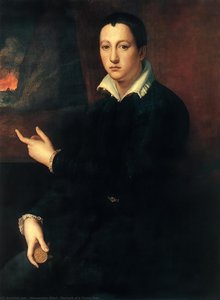
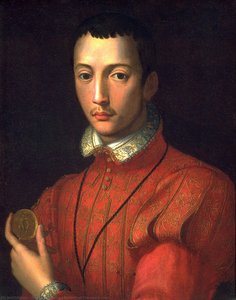
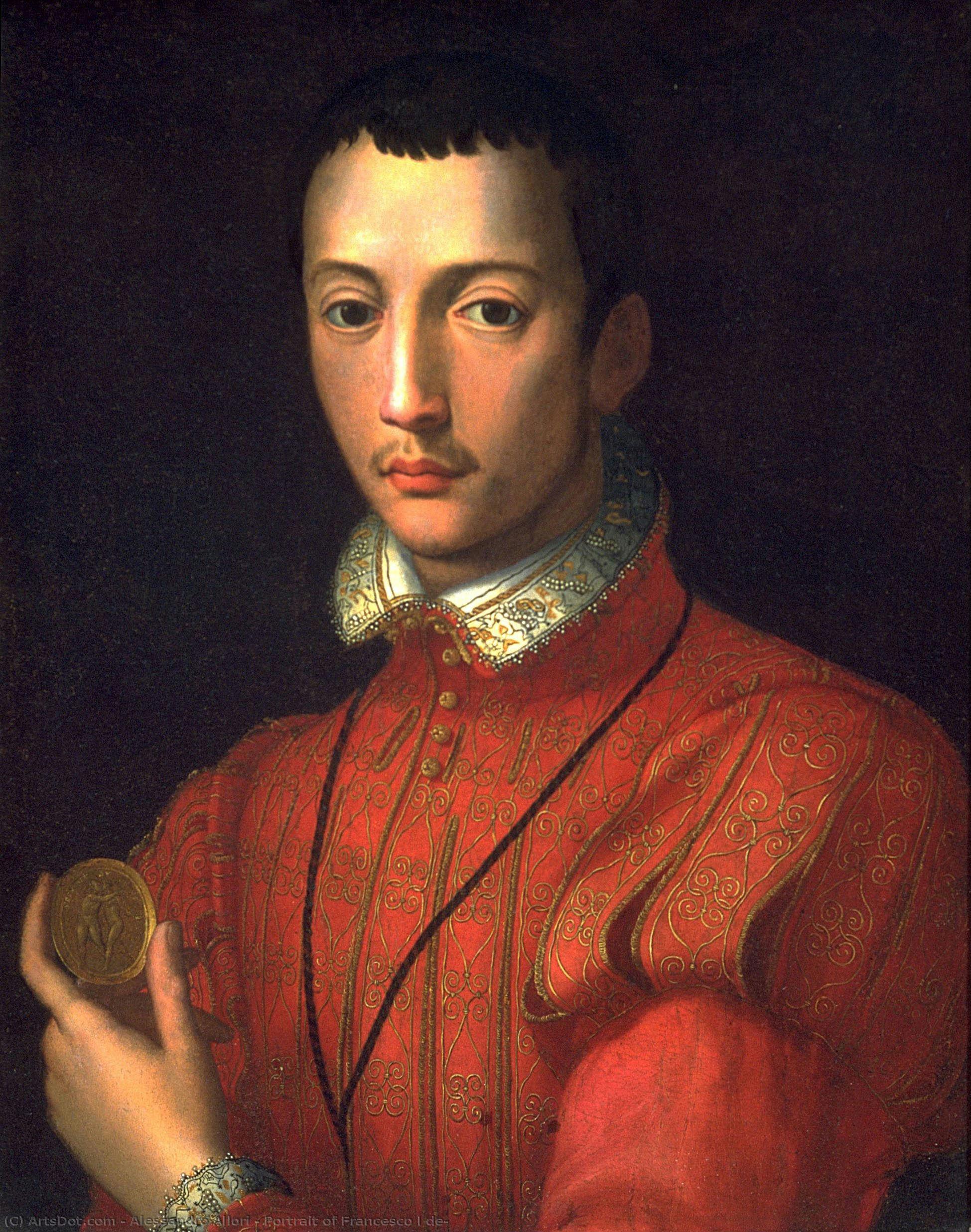
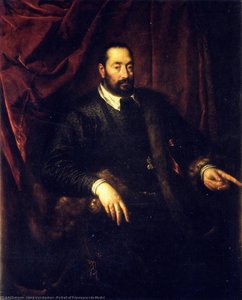
Portrait of Francesco I de
 Oil On Panel
- Mannerism
 60.0 x 47.0 cm
 Legion of Honor
 Read More
Hand Made Oil Reproduction
Hand-painted oil on canvas in your size and frame, made to order by our artists. ( Buy Print Buy Image)




P118B $10

P118H $10

P118W $10

P438Z $10

P508JH $12

P508YH $12

P805H $10

P805Z $10

P919BZ $10

P919G $10

P919XJ $10

P959ZH $10

P968JZ $12

W106C $8

W218G $10

W218JH $8

W218Y $10

W307PJ $10

W316G $10

W316PJ $8

W316Y $10

W398PJ $8

W4111J $10

W500HY $15

W500JH $15

W692G $12

W849H $8

W940BG $15

W953PJ $8




Pick from our preset sizes that match the artwork's original proportions.

You may enter your own dimensions to fit a specific frame or space. If your selected size does not match the original image's proportions, we will either crop the artwork or extend the painting with additional hand-painted elements. A digital mockup will be sent for your approval before production begins.
Please note that the on-screen preview does not reflect the actual cropping or extension. Only the mockup will accurately show the final composition.
While custom sizes are available, we recommend selecting a dimension from the predefined list to preserve the original proportions.
After order, ArtsDot.com team will email client for instructions and provide a mockup preview
Worldwide Delivery () in 3/4 weeks instead of standard 5 weeks. (17 August). No compromise on quality.

Free Worldwide Express Shipping

High-Quality Linen Canvas

Full Shipping Insurance

Customs Tax Refund Guarantee

True Color Matching Guarantee

60-Day Return Policy (Defects Only)

100% Money-Back Guarantee

Bulk Discount Offer
 Glass option is only available in size under 110 CM

Portrait of Francesco I de
Reproduction Medium
Reproduction Size
-


Total Price
$ 263
Artwork Description
The Regal Presence of Francesco I: An Allori Masterpiece
Alessandro Allori’s “Portrait of Francesco I de' Medici” is more than just a likeness; it’s a carefully constructed embodiment of power, piety, and the burgeoning grandeur of Florence in the late 16th century. Painted around 1580, this intimate tondo – measuring a modest yet perfectly proportioned diameter of seven centimeters – offers a profound glimpse into the character of one of Tuscany's most influential rulers. The painting’s enduring appeal lies not just in its technical brilliance but also in its ability to convey a complex blend of authority and human vulnerability.
The subject himself, Francesco I, was a pivotal figure in Florentine history. Born into the illustrious Medici dynasty, he ascended to the Grand Duchy after his father’s retirement, inheriting a state grappling with political instability and external pressures. A man of considerable intellect and ambition, Francesco sought to consolidate Medici power while navigating the treacherous currents of European diplomacy. This portrait captures him at a crucial juncture – a seasoned ruler tempered by experience, yet still radiating an aura of youthful vigor and regal bearing.
A Bronzinesque Foundation: Style and Technique
Allori’s artistic lineage is inextricably linked to Agnolo Bronzino, the master who mentored him early in his career. This connection is immediately apparent in the painting's polished surface and the deliberate restraint of its composition. Like Bronzino before him, Allori favored a highly finished style – a meticulous attention to detail that borders on the sculptural. The figures are rendered with an almost unnerving smoothness, their skin tones luminous and flawlessly smooth, reflecting a deep understanding of anatomy and a masterful command of oil paint.
The palette is restrained yet sophisticated, dominated by rich browns, deep reds, and subtle golds. These colors contribute to the painting’s overall sense of opulence and formality. Notice particularly the luxurious fur trim adorning Francesco's cloak – a detail rendered with exquisite realism that speaks volumes about his wealth and status. The use of gold leaf, applied sparingly but strategically, further enhances the portrait’s visual impact, adding a touch of divine grace to the subject’s countenance.
Symbolism and Context: A Ruler in His Realm
Beyond its technical merits, “Portrait of Francesco I de' Medici” is laden with symbolic meaning. The pose itself – seated at a table, holding a small portrait of his sister Lucrezia – suggests a man deeply invested in family and legacy. The open book resting on the table hints at his intellectual pursuits and scholarly inclinations, qualities that were highly valued by Renaissance rulers.
The setting is deliberately understated, devoid of extraneous details that might distract from the central figure. This focus underscores Francesco’s importance as the focal point of the composition. The painting was likely commissioned for private viewing within his court or palace, serving as a tangible representation of his power and authority. It's believed to have been created during a period of intense political maneuvering, reflecting both his ambition and the precariousness of his position.
An Enduring Legacy: A Window into Renaissance Florence
“Portrait of Francesco I de’ Medici” is more than just a portrait; it’s a window into the heart of Renaissance Florence. Through Allori's skilled hand, we gain insight into the personality and aspirations of one of its most prominent figures. The painting’s enduring appeal lies in its ability to capture not only Francesco’s physical likeness but also his complex character – a ruler who balanced political acumen with intellectual curiosity, and whose legacy continues to resonate through the centuries.
Related Artworks
Artist Biography
A Florentine Legacy: The Life and Art of Alessandro Allori
Alessandro Allori, born in Florence on May 31st, 1535, stands as a compelling figure within the late Mannerist school. His artistic journey was profoundly shaped by circumstance; orphaned at a young age, he found an unlikely father figure and mentor in Agnolo Bronzino, one of Florence’s most celebrated painters. This adoption wasn't merely familial—it was an immersion into a world of refined technique, intellectual rigor, and the distinctive aesthetic principles that would come to define Allori’s own style. Bronzino instilled within him not only technical mastery but also a particular sensibility: a preference for polished surfaces, elongated forms, and a cool, almost sculptural quality in his figures. This influence became the cornerstone of Allori's artistic identity, though it often drew criticism for its perceived derivativeness throughout his career. He supplemented this foundational training with anatomical studies – even undertaking dissections at the Hospital of Santa Maria Nuova – demonstrating a commitment to understanding the human form that underpinned his stylized representations.The Echoes of Mannerism and Artistic Development
Allori’s work is deeply rooted in the Mannerist tradition, an artistic movement characterized by its artificiality, elegance, and emphasis on stylistic sophistication over naturalistic representation. However, he wasn't a revolutionary; rather, he was a skilled interpreter and developer of existing forms. Critics often noted his tendency to draw heavily from pre-existing art, refining and reinterpreting the works of masters like Michelangelo and Raphael through the lens of Bronzino’s aesthetic. This isn’t necessarily a detraction—it speaks to Allori's role as a crucial link in the transmission of artistic knowledge within Florentine circles. His paintings are marked by an almost unsettling smoothness, figures possessing a marble-like quality that lends them a two-dimensional, statue-esque appearance. This effect wasn’t simply a matter of technique; it was a deliberate aesthetic choice, reflecting the Mannerist desire to elevate art above nature, to create images of idealized beauty and intellectual complexity. He headed one of Florence's most important workshops alongside Santi di Tito, and his pupils included notable artists like Cristoforo del Altissimo, Cesare Dandini, Aurelio Lomi, and his own son, Cristofano Allori, ensuring the continuation of this artistic lineage.Major Works and Patronage
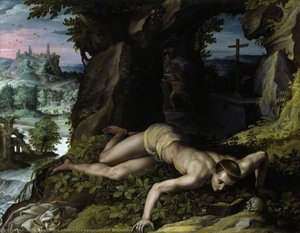
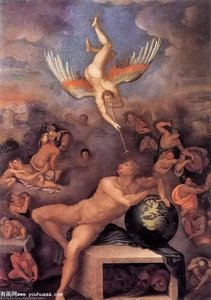
Allori’s career flourished under the patronage of prominent Florentine families, most notably the Medici. He contributed significantly to several important decorative projects for them, including his work on the Studiolo of Francesco I in the Palazzo Vecchio. His *Pearl Fishers*, part of this elaborate chamber, exemplifies his ability to create complex allegorical scenes filled with graceful figures and intricate detail. He also expanded upon frescoes begun by earlier masters like Andrea del Sarto and Franciabigio within the Villa di Poggio a Caiano, demonstrating both his technical skill and his willingness to engage with the artistic legacy of Florence. Beyond these grand commissions, Allori produced numerous portraits, religious paintings, and altarpieces that showcase his mastery of composition, color, and form. A notable example is “Allegory of Human Life,” housed in the Uffizi Gallery, which encapsulates the Renaissance humanist ideals prevalent during his time. His "Stories of St. Jerome" fresco further demonstrates his skill in narrative painting and illusionistic space.Legacy and Historical Significance
Alessandro Allori died in Florence on September 22nd, 1607, leaving behind a body of work that continues to fascinate and challenge art historians. While often overshadowed by the more innovative artists of his time, his significance lies in his role as a key figure in the late Mannerist movement and as a transmitter of artistic tradition. He wasn’t an innovator in the same vein as Michelangelo or Leonardo da Vinci, but he was a supremely skilled craftsman who refined and developed existing styles, ensuring their survival for future generations. The story of a painting – possibly a portrait of Eleonora di Toledo de' Medici – returned to the Gemäldegalerie in Berlin after decades lost adds an intriguing layer to his legacy. His influence extended through his numerous pupils, most notably his son Cristofano Allori, who continued the family’s artistic tradition. Allori’s paintings remain valuable testaments to the elegance and intellectual complexity of Florentine Mannerism, offering a glimpse into a world where art was not merely about representation but about the pursuit of idealized beauty and refined expression. He remains an important figure for understanding the transition from Renaissance artistry towards the Baroque period.Exploring Allori’s World Today
- Museum Collections: Discover Alessandro Allori's masterpieces in institutions like the Uffizi Gallery, the Gemäldegalerie in Berlin, and various other museums worldwide.
- Notable Works: Explore iconic paintings such as “Allegory of Human Life,” “Stories of St. Jerome,” and his contributions to the Studiolo of Francesco I.
- Further Research: Delve deeper into Allori’s life and art through resources like Wikipedia, Getty Museum archives, and scholarly articles on Florentine Mannerism.
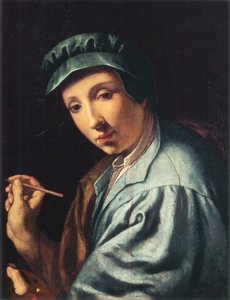
Alessandro Allori
1535 - 1607 , Italy
Quick Facts
- Artistic Movement Or Style: Mannerism
- Artists Or Movements Influenced By This Artist: ['Cristofano Allori']
- Artists Who Influenced This Artist: ['Agnolo Bronzino']
- Date Of Birth: May 31, 1535
- Date Of Death: September 22, 1607
- Full Name: Alessandro Allori
- Nationality: Italian
- Notable Artworks:
- Allegory of Human Life
- Stories of St. Jerome
- Place Of Birth: Florence, Italy
Related Articles

Demandes Commerciales
APS ofrece reproducciones de bellas artes y encargos personalizados desde 2004. Confían en nosotros corporaciones, hoteles y coleccionistas selectos para obras de arte de calidad museística, servicio discreto y soluciones artísticas completas. ¡Póngase en contacto con nosotros para obtener un presupuesto personalizado!

Goya's Masterpieces: Explore 25 Iconic Paintings & Art Prints | ArtsDot
Delve into the world of Francisco Goya with ArtsDot. Explore 25 iconic paintings – from 'The Third of May' to his haunting Black Paintings. Discover the stories, techniques & emotions behind these Spanish masterpieces. Find museum-quality art reproductions for your home at ArtsDot.com!

A riguardo di noi
Découvrez notre histoire ! Nous apportons l'art de classe mondiale dans votre vie grâce à une sélection experte, des créations personnalisées et des aperçus gratuits. Approuvé par les particuliers et les entreprises depuis 2000.
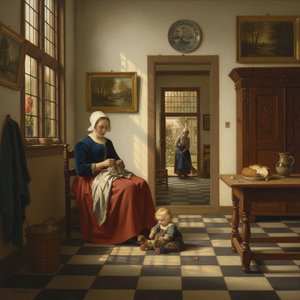
Pieter de Hooch: Illuminating Dutch Domestic Life & Golden Age Charm
Explore the captivating world of Pieter de Hooch, a master of Dutch Golden Age painting. Discover his innovative use of light, intimate domestic scenes, and lasting influence on art history. Learn more at ArtsDot.
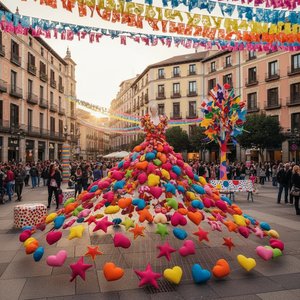
Águeda Ruiz de la Prada: A Study of Eclecticism & Emotional Resonance in Contemporary Spanish Painting
Discover the vibrant world of Ágatha Ruiz de la Prada, a leading figure in contemporary Spanish art. Explore her eclectic style, emotional depth & legacy – a must-read for discerning collectors.