 Preview
 Send
Send Share
Share
 Details

 Download
 Similars
 X-Ray
X-Ray Diaporama
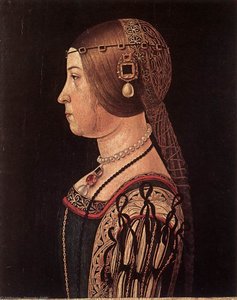
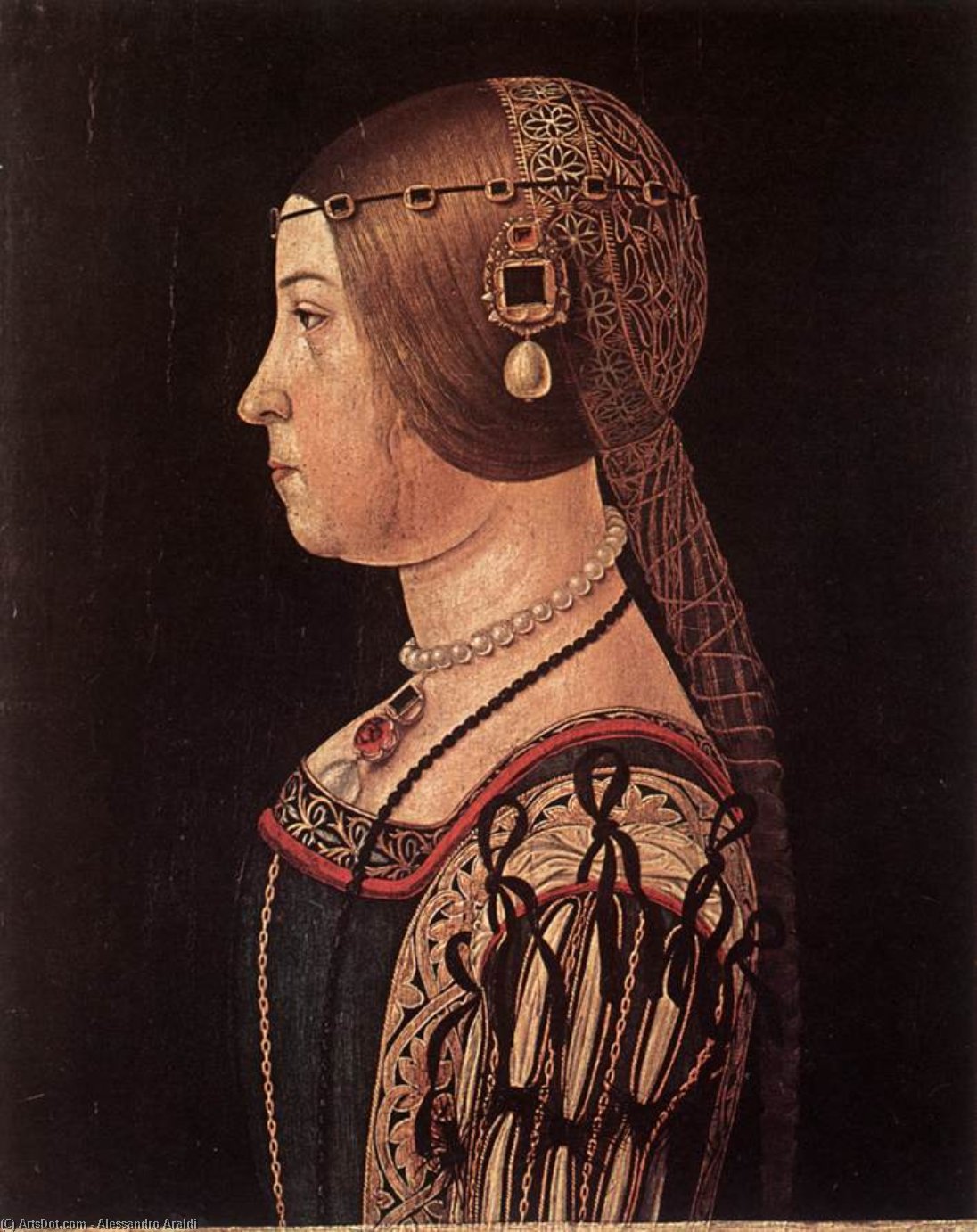
Portrait of Barbara Pallavicino
 Oil On Canvas
- WallArt
- Renaissance
 1510
1510 46.0 x 35.0 cm
 Galleria degli Uffizi
 Read More
Hand Made Oil Reproduction
Hand-painted oil on canvas in your size and frame, made to order by our artists. ( Buy Print Buy Image)




P118B $10

P118H $10

P118W $10

P438Z $10

P508JH $12

P508YH $12

P805H $10

P805Z $10

P919BZ $10

P919G $10

P919XJ $10

P959ZH $10

P968JZ $12

W106C $8

W218G $10

W218JH $8

W218Y $10

W307PJ $10

W316G $10

W316PJ $8

W316Y $10

W398PJ $8

W4111J $10

W500HY $15

W500JH $15

W692G $12

W849H $8

W940BG $15

W953PJ $8




Pick from our preset sizes that match the artwork's original proportions.

You may enter your own dimensions to fit a specific frame or space. If your selected size does not match the original image's proportions, we will either crop the artwork or extend the painting with additional hand-painted elements. A digital mockup will be sent for your approval before production begins.
Please note that the on-screen preview does not reflect the actual cropping or extension. Only the mockup will accurately show the final composition.
While custom sizes are available, we recommend selecting a dimension from the predefined list to preserve the original proportions.
After order, ArtsDot.com team will email client for instructions and provide a mockup preview
Worldwide Delivery () in 3/4 weeks instead of standard 5 weeks. (21 August). No compromise on quality.

Free Worldwide Express Shipping

High-Quality Linen Canvas

Full Shipping Insurance

Customs Tax Refund Guarantee

True Color Matching Guarantee

60-Day Return Policy (Defects Only)

100% Money-Back Guarantee

Bulk Discount Offer
 Glass option is only available in size under 110 CM

Portrait of Barbara Pallavicino
Reproduction Medium
Reproduction Size
-


Total Price
$ 263
Artwork Description
The Unveiling Gaze: Portraiture in the Italian Renaissance
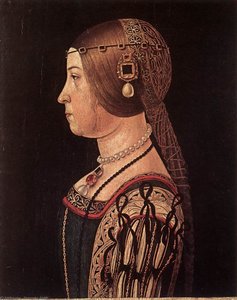
To stand before Alessandro Araldi's "Portrait of Barbara Pallavicino" is to encounter a moment suspended in time, a direct communion with the spirit of the early sixteenth century. This oil painting, executed in 1510, transcends a mere likeness; it is a carefully constructed meditation on status, intellect, and enduring feminine grace. The subject, Barbara Pallavicino, confronts the viewer with an arresting seriousness. Her gaze, unwavering and direct, seems to penetrate the veil of centuries, inviting us not just to observe her beauty, but to question the nature of portraiture itself—what does it mean to be seen so completely?
Mastery in Oil: Technique and Elegance
Araldi’s handling of oil paint is evident in every delicate fold of Barbara's attire. The richness achieved through his technique allows the textures—the sheen of her dress, the subtle gleam on her necklace, the softness of her hair—to leap from the canvas. While the overall composition speaks to the refined tastes of the Italian Renaissance, Araldi imbues it with a palpable sense of immediacy. His background elements, though perhaps understated, serve only to elevate the sitter, ensuring that all focus remains upon the captivating presence emanating from Barbara herself. The careful rendering of light across her features suggests an artist deeply versed in the emerging naturalism of the period.
Historical Echoes: Life in Parma at the Turn of the Century
Painted when Alessandro Araldi was a mature practitioner, this portrait situates us within the vibrant cultural milieu of Parma. The early sixteenth century was a time of burgeoning artistic confidence across Italy, where patronage fueled an intense desire to capture and commemorate individual lives. To own such a piece is to possess a tangible link to the aristocratic circles that shaped Renaissance culture. It speaks to a society that valued both outward display—the elegance suggested by her garments—and inner fortitude, embodied in her resolute expression.
Symbolism of the Portrait
The symbolism within this work is subtle yet profound. The necklace, an adornment of wealth and connection, speaks to her social standing, while the gravity of her expression hints at a depth of character beyond mere superficial beauty. Renaissance portraiture often served as a visual testament to lineage and virtue. Barbara’s composure suggests a woman who understands her place in the world but whose inner life remains sovereign. It is a study in controlled power, beautifully framed by Araldi's skilled hand.
Bringing History Home: For the Modern Collector
For those seeking an artwork that marries historical gravitas with undeniable aesthetic appeal, this reproduction offers an unparalleled opportunity. Imagine this piece gracing your salon or drawing-room; it does not merely decorate a space—it elevates its narrative. The combination of Araldi's masterful technique and the timeless subject matter ensures that "Portrait of Barbara Pallavicino" will remain a focal point, sparking conversation and contemplation for generations to come.
Related Artworks

Artist Biography
The Shadowy Master of Parma
Alessandro Araldi remains one of the more enigmatic figures of the Italian Renaissance, a painter whose life is etched less in written records and more in the enduring pigments of his surviving works. Born around 1460 in the vibrant city of Parma, Araldi emerged during a period of profound cultural transformation. While much of his personal biography has been lost to the passage of centuries, his presence in the artistic landscape of Northern Italy is unmistakable. He operated within a city that was becoming a jewel of patronage under figures like Federico II Gonzaga, a setting that provided the fertile ground necessary for his talent to bloom and for his distinctive style to take root.
To understand Araldi is to trace the lineage of his training, which connected him to some of the most significant artistic currents of his era. His early development was shaped within the workshop of Cristoforo Caselli, known as Il Temperello, a Bolognese master whose penchant for dramatic compositions and expressive brushwork left an indelible mark on Araldi’s approach to visual storytelling. This foundation in the Bolognese tradition was later enriched by his time in the Mazzola workshop under Lorenzo Costa of Ferrara. Through Costa, Araldi absorbed a sophisticated synthesis of Venetian elegance and Florentine realism, allowing him to bridge the gap between different regional aesthetics and create something uniquely his own.
A Synthesis of Style and Spirit
The artistry of Alessandro Araldi is defined by a masterful command over the diverse influences circulating through the Italian peninsula. His oeuvre acts as a crossroads where the soft, atmospheric qualities of the Venetian school meet the structured classicism of Bologna. One can observe the echoes of Giovanni Bellini and the Vivarini in his handling of light and color, yet Araldi possessed a singular ability to infuse these borrowed techniques with a sense of local identity. This is perhaps most evident in his monumental frescoes within the Benedictine Monastery of San Paolo, where his command of perspective and chromatic depth demonstrates an artist at the height of his technical prowess.
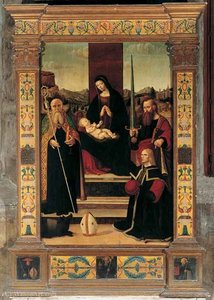
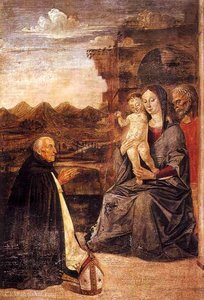
Beyond the grand scale of his frescoes, Araldi’s mastery extended to the intimate and the profound. His religious commissions, such as the Madonna col bambino e i santi antonio abate e paolo, reveal a deep devotion to detail and a capacity for conveying spiritual weight through delicate textures and luminous skin tones. In these works, the divine is made tangible through the meticulous rendering of fabric, light, and human emotion. His ability to navigate both the monumental requirements of ecclesiastical commissions and the nuanced demands of private devotional art marks him as a versatile and highly skilled practitioner of the High Renaissance.
Legacy in Portraiture and Narrative
While much of his fame rests upon his religious compositions, Araldi’s contribution to the genre of portraiture offers a window into the social fabric of the sixteenth century. His 1510 work, Portrait of Barbara Pallavicino, stands as a breathtaking testament to his ability to capture not just a likeness, but a soul. In this oil painting, Araldi utilizes a sophisticated technique to render the sheen of silk and the subtle glow of skin, creating a portrait that is as much a study of status and intellect as it is of beauty. The subject’s unwavering gaze serves as a bridge across time, inviting the modern viewer into the aristocratic world of Parma.
The breadth of his narrative achievements is further highlighted by his ability to depict complex biblical and hagiographic scenes. From the dramatic tension found in his Ultima Cena (1516) to the intricate storytelling in his depictions of Saint Catherine and Saint Jerome, Araldi’s work captures pivotal moments of human and divine interaction. His legacy is not merely found in the individual masterpieces he left behind, but in his role as a vital link in the evolution of the Parma school, ensuring that the traditions of the early Renaissance were carried forward with grace, technical brilliance, and an enduring emotional resonance.
Alessandro Araldi
1460 - 1529 , Italy
Quick Facts
- Artistic Movement Or Style: Renaissance
- Artists Or Movements Influenced By This Artist: ['Antonio Allegri']
- Artists Who Influenced This Artist:
- Cristoforo Caselli
- Giovanni Bellini
- Lorenzo Costa
- Vivarini
- Date Of Birth: ca. 1460 Parma Italy
- Date Of Death: ca. 1529 Parma Italy
- Full Name: Alessandro Araldi
- Nationality: Italian
- Notable Artworks:
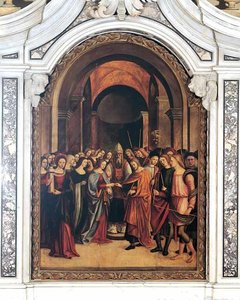
- Lo Sposalizio di Maria e San Giuseppe
- Ultima Cena
- Madonna col bambino e i santi antonio abate e paolo
- Place Of Birth: Parma Italy
Related Articles

The Enduring Legacy of Oil on Canvas: Technique, History & Aesthetic Impact
Explore the rich history & techniques of oil painting – from Renaissance masters to Impressionism. Discover pigments, layering methods, and why this timeless medium endures. Expert insights for artists & art enthusiasts.

Oil on Canvas: A Historical & Technical Exploration of a Timeless Artistic Medium
Explore the rich history & enduring techniques of oil painting on canvas. Discover the science behind its longevity, conservation practices, and contemporary relevance. Expert insights for art enthusiasts.

The Enduring Power of Painting: A Historical & Contemporary Exploration of Form and Emotion
Explore the rich history & enduring techniques of oil painting with ArtsDot. Discover masterpieces, learn about art collecting, and find authentic handmade reproductions crafted by skilled artists.

The Enduring Legacy of Oil on Canvas: Technique, History & Contemporary Practice
Explore the rich history & enduring techniques of oil painting on canvas. Discover the science behind its longevity, conservation practices, and contemporary relevance. Expert insights for art enthusiasts.
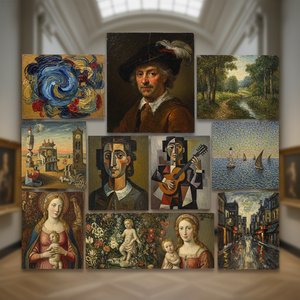
Oil on Board Masters: 10 Paintings That Redefined Art | ArtsDot
Explore 10 legendary 'Oil on Board' masterpieces by Van Gogh, Monet & more! Discover art history, iconic styles like Impressionism, and find museum-quality reproductions to elevate your home decor. Explore the full collection online at ArtsDot.com.