

 Preview
 Send
Send Share
Share
 Details

 Download
 Similars
 X-Ray
X-Ray Diaporama
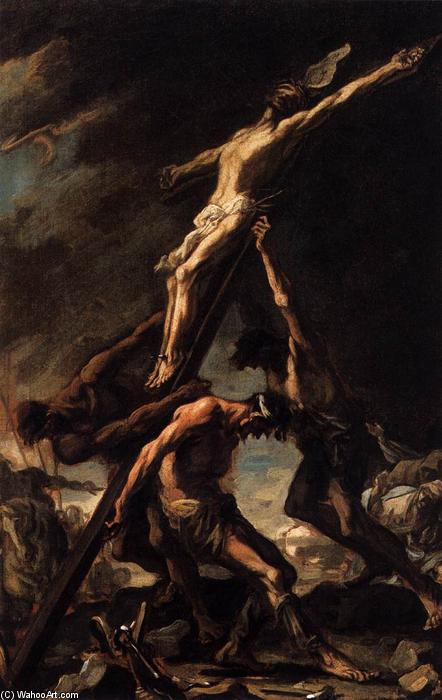
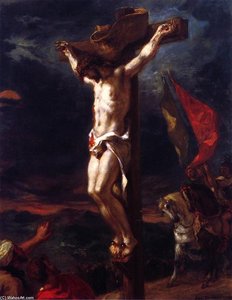
Raising of the Cross
 Acrylic On Canvas
- WallArt
- Baroque
 57.0 x 37.0 cm
 Academy of Fine Arts Vienna
 Read More
Purchase a high-resolution, enhanced digital image, far superior to the online preview.
Each file is meticulously prepared by our in-house specialists using advanced tools and expert manual retouching. We ensure every image has exceptional clarity, precise color accuracy, and fine detail.
The final file is delivered via email within 72 hours, optimized for immediate use in professional, editorial, and print environments. This is the same quality trusted by top-tier design studios, publishers, and galleries.
Digital Image
Download a high-resolution file for personal display, printing, and creative projects. ( Buy Print Buy Hand Made Painting)
Included in Every Digital Image Order
Expert Digital Delivery, Guaranteed
When you choose ArtsDot.com, you're not just getting an image - you're receiving a professionally enhanced digital artwork, crafted with precision and backed by a satisfaction guarantee. Here's everything that comes with your order, automatically:

Fast Email Delivery
Your high-resolution digital image file will be emailed to you within 72 hours of ordering - ready for immediate use.

AI-Enhanced Digital File
Your artwork is professionally optimized using advanced AI tools and manual editing, ensuring maximum detail, clarity, and color accuracy.

Free Lifetime Re-Delivery
Accidentally deleted or lost your file? No worries - we'll resend it to you anytime, free of charge.

No Import Fees - Ever
Enjoy your artwork instantly with zero customs, duties, or delivery fees - digital downloads are always tax-free.

Color Accuracy Guarantee
We ensure your digital image reflects the original colors as closely as possible using professional tools and color management.

60-Day Satisfaction Guarantee
If you're not satisfied with your digital image, we'll revise it or refund 100% within 60 days - no questions asked.

100% Money-Back Guarantee
Not satisfied? Get a full refund within 60 days of receiving your digital file - no questions asked.

Bulk Order Discounts
Buy 3 images, save 10% - Buy 5, save 15% - Buy 10+, save 20%. Great for creative projects, galleries, and agencies.
Collectible Description
Alessandro Magnasco’s Haunted Vision: Exploring “Raising of the Cross”
Alessandro Magnasco (1667-1749), a name perhaps less familiar than those of his Baroque contemporaries, nevertheless occupies a unique and compelling position within the history of Italian art. Born in Genoa in 1667, he spent the majority of his working life in Milan, returning to his birthplace only towards the end of his career in 1735. This geographical shift mirrors a subtle but significant evolution in his artistic vision—a journey from collaborative projects and established traditions toward an intensely personal and often unsettling style. Magnasco wasn’t merely painting what he saw; he was translating a particular mood, a sense of melancholy and decay, onto canvas with a boldness that set him apart. A period between 1703 and 1709 found him in Florence, serving the Grand Duke Cosimo III, an experience that undoubtedly broadened his artistic horizons, though its direct impact on his mature style remains open to interpretat Magnasco’s oeuvre is characterized by a distinctive preoccupation with landscapes imbued with psychological depth—scenes rendered not as mere representations of nature but as conduits for conveying profound emotional states. This approach distinguishes him from many of his peers who prioritized idealized beauty and clarity, opting instead for compositions that capture the unsettling grandeur of twilight skies and desolate terrains. “Raising of the Cross,” housed in the Web Gallery of Art (WGA), exemplifies this singular aesthetic perfectly. The painting depicts a dramatic tableau rooted in Christian iconography—the ascension of Jesus Christ—yet Magnasco transforms the familiar narrative into something profoundly disturbing.A Baroque Masterpiece: Style and Technique
The artwork adheres to the tenets of Baroque art, a movement renowned for its theatrical grandeur and masterful manipulation of light and shadow. Magnasco’s technique is meticulous, employing oil paints on canvas with painstaking detail—a hallmark of his artistic practice. He skillfully utilizes chiaroscuro – dramatic contrasts between light and dark – to sculpt the figures within the composition, emphasizing their physicality and conveying a palpable sense of suffering. The artist's brushstrokes are visible, contributing to the textured surface of the painting and reinforcing its emotional intensity. This deliberate layering of pigment creates an immersive experience for the viewer, drawing them into the scene’s unsettling atmosphere.Historical Context: Milanese Baroque and Spiritual Anxiety
Magnasco’s artistic output flourished during a period marked by significant religious upheaval in Italy—the waning influence of papal authority and the rise of Protestantism fueled anxieties about faith and mortality. The Milanese Baroque, under Cosimo III de Medici, embraced dramatic narratives and emotionally charged imagery as expressions of spiritual conviction. Magnasco's paintings reflect this cultural climate, portraying figures caught in moments of agonizing contemplation and conveying a palpable sense of existential dread. Unlike many artists of his time who sought to reassure viewers with comforting depictions of divine grace, Magnasco confronted the darker aspects of human experience—the inevitability of death and the fragility of hope.Symbolism: Darkness and Suffering as Vessels of Emotion
The painting’s pervasive darkness serves as a powerful symbol of spiritual despair—a visual representation of the psychological torment endured by Christ and his followers. The stormy sky mirrors the turbulent emotions simmering beneath the surface, suggesting an impending doom that threatens to engulf all involved. Magnasco's deliberate use of color – muted hues dominated by browns and grays – reinforces this mood of melancholy and decay. Furthermore, the muscular figures surrounding Jesus embody strength and determination, yet their anguished expressions underscore the profound cost of faith—the willingness to endure suffering for the sake of righteousness.Emotional Impact: A Portrait of Unease
“Raising of the Cross” transcends mere visual representation; it compels viewers to confront uncomfortable truths about human vulnerability and spiritual struggle. Magnasco’s masterful composition captures a moment of unbearable tension, eliciting feelings of pity, apprehension, and contemplation. The painting's unsettling beauty derives from its refusal to offer easy answers or comforting illusions—instead, it invites introspection and prompts us to grapple with the complexities of faith and mortality. It remains a testament to Magnasco’s ability to transform religious iconography into an emotionally resonant experience that continues to captivate audiences centuries later.- Title: Raising of the Cross
- Artist: Alessandro Magnasco
- Size: 57 x 37 cm
- Date: Unknown
Related Artworks
Artist Biography
A Life Shrouded in Gloom: The Enigmatic World of Alessandro Magnasco
Alessandro Magnasco, a name perhaps less familiar than those of his Baroque contemporaries, nevertheless occupies a unique and compelling position within the history of Italian art. Born in Genoa in 1667, he spent the majority of his working life in Milan, returning to his birthplace only towards the end of his career in 1735. This geographical shift mirrors a subtle but significant evolution in his artistic vision—a journey from collaborative projects and established traditions toward an intensely personal and often unsettling style. Magnasco wasn’t merely painting what he saw; he was translating a particular mood, a sense of melancholy and decay, onto canvas with a boldness that set him apart. A period between 1703 and 1709 found him in Florence, serving the Grand Duke Cosimo III, an experience that undoubtedly broadened his artistic horizons, though its direct impact on his mature style remains open to interpretation. Early in his career, he frequently partnered with other artists, skillfully integrating figures into the landscapes of Giovanni Battista Tavella and utilizing architectural ruins crafted by Clemente Spera—collaborations that honed his technical skills while hinting at a burgeoning independence.An Unusual Vision: Style and Subject Matter
Magnasco’s artistic signature lies in his distinctive approach to both scale and palette. He favored small-scale canvases, often employing a hypochromatic range of subdued colors—grays, browns, ochres—that contribute to the somber atmosphere pervading his work. These aren't paintings that shout for attention; they whisper secrets from dimly lit corners. His scenes frequently depict crumbling ruins, eerie landscapes shrouded in mist, or crowded interiors populated by elongated figures rendered with nervous, flickering brushstrokes. It is these figures – often ragged beggars, solitary monks, or shadowy groups engaged in mysterious activities – that truly define his oeuvre. Magnasco’s choice of subject matter was remarkably unconventional for his time. He didn't shy away from depicting scenes considered marginal or even taboo: synagogue services, Quaker meetings, gatherings of robbers, interrogations by the Inquisition, and depictions of catastrophes. The artist’s intent remains ambiguous; were these paintings expressions of social commentary, explorations of religious tolerance (or intolerance), or simply exercises in capturing a particular mood? This ambiguity is precisely what makes his work so captivating. Later in his career, after 1710, he became known for gothic churches, solitary hermits and monks, scoundrels assembled in town squares, and soldiers in barracks – scenes that further solidified his reputation as an artist drawn to the fringes of society.Influences and Artistic Development
Pinpointing the precise influences on Magnasco’s artistic development is a complex undertaking. He clearly absorbed elements from various sources, yet synthesized them into something wholly original. The loose painterly style of his Venetian contemporary, Sebastiano Ricci, undoubtedly played a role, though Ricci's work tended towards grander scales and more overtly mythological themes. Closer to home, the Genoese artists Domenico Piola and Gregorio de Ferrari offered stylistic precedents, but Magnasco’s vision was far darker and more introspective. The emotional intensity of Milanese artist Il Morazzone also resonated with him, particularly in his ability to convey psychological depth through expressive brushwork. His seascapes reveal an affinity for the romantic depictions of stormy seas and brigands favored by Salvatore Rosa, while the diminutive scale of his figures relative to expansive landscapes echoes the airy compositions of Claude Lorraine. Comparisons have also been drawn to Giuseppe Maria Crespi’s genre scenes featuring beggars, though Crespi's figures are generally more substantial and individualized. Some scholars even suggest that Magnasco may have influenced Crespi himself. Furthermore, the artist was likely impacted by late Baroque Italian genre painters, the Roman Bamboccianti, and the detailed engravings of Jacques Callot.Legacy and Historical Significance
Alessandro Magnasco’s style stood in stark contrast to the prevailing artistic norms of Genoa, which emphasized polished surfaces and harmonious color blending. His bold approach and unique vision were not immediately appreciated in his native city but found favor among collectors and patrons elsewhere, particularly within the aristocratic circles of Milan. Rudolf Wittkower famously described him as a “solitary, tense, strange” artist, detached from the dominant Venetian school. Despite this initial lack of recognition, Magnasco’s work exerted a subtle yet significant influence on subsequent generations of artists, including Marco Ricci, Giuseppe Bazzani, Francesco Maffei, and the famed Venetian painters Gianantonio and Francesco Guardi. While these later Rococo painters adopted his loose brushwork for decorative purposes, Magnasco himself employed it to capture a sense of gloom, reality, and psychological unease. His depictions of torture and other dark aspects of humanity have even been compared to the social commentary found in Francisco Goya’s 19th-century etchings—a testament to the enduring power and relevance of his unsettling vision. Magnasco remains an enigmatic figure, a master of mood and atmosphere whose paintings continue to captivate and provoke contemplation centuries after their creation. His art is a reminder that beauty can be found even in the shadows, and that true artistic expression often lies beyond the boundaries of convention.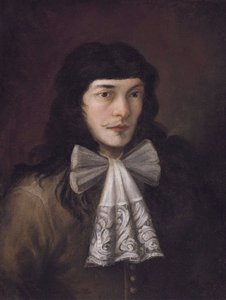
Alessandro Magnasco
1667 - 1749 , Italy
Quick Facts
- Artistic Movement Or Style: Baroque, Genre painting
- Artists Or Movements Influenced By This Artist:
- Marco Ricci
- Giuseppe Bazzani
- Francesco Maffei
- Artists Who Influenced This Artist:
- Sebastiano Ricci
- Domenico Piola
- Gregorio de Ferrari
- Date Of Birth: 1667
- Date Of Death: 1749
- Full Name: Alessandro Magnasco
- Nationality: Italian
- Notable Artworks:
- Three Camaldolese Monks
- Carthusian Monks in a Landscape
- The Raising of Lazarus
- Place Of Birth: Genoa, Italy

