 Preview
 Send
Send Share
Share
 Details

 Download
 Similars
 X-Ray
X-Ray Diaporama
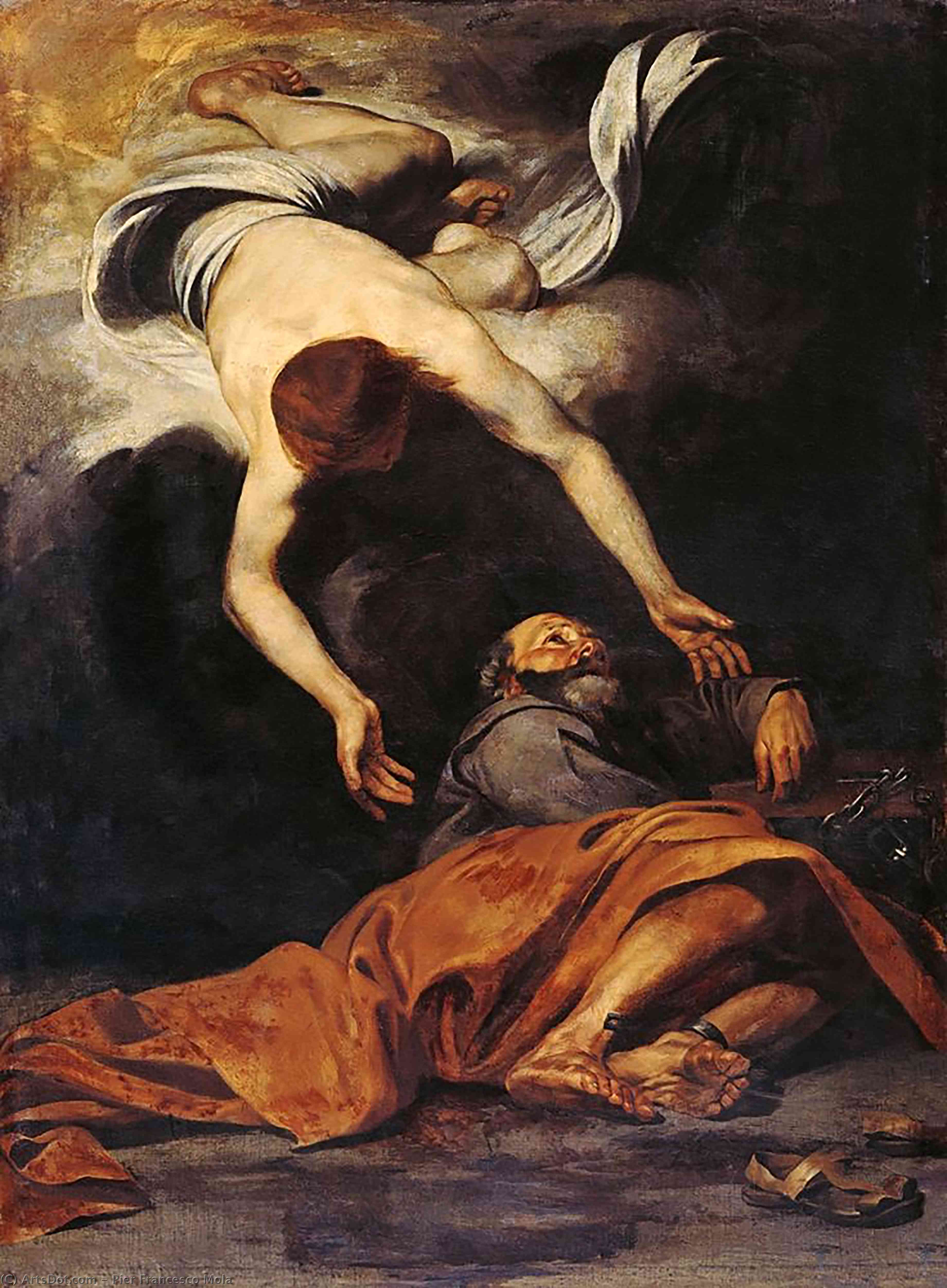
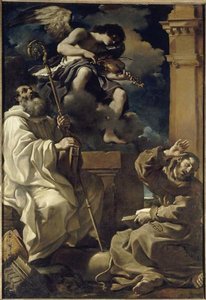
St Peter Freed from Prison


 Read More
Hand Made Oil Reproduction
Hand-painted oil on canvas in your size and frame, made to order by our artists. ( Buy Print Buy Image)




P118B $10

P118H $10

P118W $10

P438Z $10

P508JH $12

P508YH $12

P805H $10

P805Z $10

P919BZ $10

P919G $10

P919XJ $10

P959ZH $10

P968JZ $12

W106C $8

W218G $10

W218JH $8

W218Y $10

W307PJ $10

W316G $10

W316PJ $8

W316Y $10

W398PJ $8

W4111J $10

W500HY $15

W500JH $15

W692G $12

W849H $8

W940BG $15

W953PJ $8




Pick from our preset sizes that match the artwork's original proportions.

You may enter your own dimensions to fit a specific frame or space. If your selected size does not match the original image's proportions, we will either crop the artwork or extend the painting with additional hand-painted elements. A digital mockup will be sent for your approval before production begins.
Please note that the on-screen preview does not reflect the actual cropping or extension. Only the mockup will accurately show the final composition.
While custom sizes are available, we recommend selecting a dimension from the predefined list to preserve the original proportions.
After order, ArtsDot.com team will email client for instructions and provide a mockup preview
Worldwide Delivery () in 3/4 weeks instead of standard 5 weeks. (16 August). No compromise on quality.

Free Worldwide Express Shipping

High-Quality Linen Canvas

Full Shipping Insurance

Customs Tax Refund Guarantee

True Color Matching Guarantee

60-Day Return Policy (Defects Only)

100% Money-Back Guarantee

Bulk Discount Offer
 Glass option is only available in size under 110 CM

St Peter Freed from Prison
Reproduction Medium
Reproduction Size
-


Total Price
$ 288
Artwork Description
The Drama of Divine Intervention
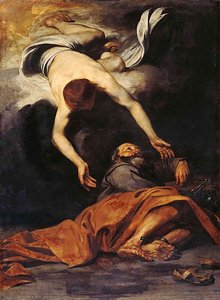
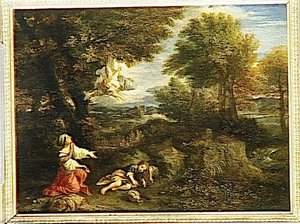
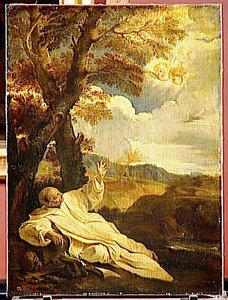
This arresting canvas plunges the viewer into a moment charged with palpable spiritual energy. The subject matter itself—a depiction reminiscent of Saint Jerome receiving divine visitation—is steeped in the dramatic fervor characteristic of the Baroque era. One feels the weight of history and faith emanating from the scene. At its heart lies a dynamic interplay between two figures: one, prone and seemingly vulnerable, perhaps representing profound contemplation or earthly struggle; and the other, an angel whose form flows with ethereal grace, suggesting an ascent toward the sublime. The composition is not merely arranged; it writhes with implied motion, drawing the eye upward into the luminous presence of the divine intervention.
Baroque Mastery in Light and Shadow
Technically, the painting speaks volumes about its period. The masterful use of chiaroscuro—that dramatic contrast between deep shadow and brilliant light—is breathtaking. It is through this selective illumination that the artist sculpts the forms, giving them a three-dimensional weight despite the somewhat flattened perspective typical of Baroque narrative painting. Observe how the warm ochres and rich browns defining the earthly figures are sharply contrasted by the pale, almost incandescent white drapery surrounding the angel. This contrast does more than just illuminate; it heightens the emotional stakes, making the moment feel both intensely private and cosmically significant.
A Glimpse into 17th-Century Devotion
Dating to approximately 1630, this work situates itself firmly within the artistic currents following the Counter-Reformation. Art during this time was rarely decorative; it was didactic and deeply emotional. The visible brushwork suggests an oil on canvas technique, allowing for rich layering of pigment that gives texture to the robes and musculature alike. While the artist, da pier francesco mola, is known more for his landscapes, this piece showcases a profound ability to handle narrative drama, channeling the expressive dynamism learned from masters who prioritized emotional impact over strict classical restraint.
Symbolism and Emotional Resonance
The symbolism here is potent: it speaks of divine grace overcoming human limitation. The angel represents transcendent knowledge or salvation, while the prone figure embodies the dedication—the tireless study, the spiritual yearning—that precedes such a revelation. For the collector or decorator, this piece offers more than mere visual appeal; it serves as an object of contemplation. It evokes feelings of awe, vulnerability, and the profound sense of transformation that comes from confronting something greater than oneself. To bring this reproduction into a space is to invite a dialogue between earthly struggle and heavenly promise.
Related Artworks
Artist Biography
The Legacy of Il Ticinese: A Master of Baroque Light and Landscape
Born in the quiet Swiss enclave of Coldrerio in 1612, Pietro Francesco Mola, famously known as Il Ticinese, emerged from the shadows of the Alps to become a luminous presence in the heart of the Roman Baroque. His artistic identity was forged through a sophisticated blend of influences, beginning with the rigorous training under the Mannerist master Cavalier d'Arpino. This early education instilled in him a profound respect for disegno—the disciplined art of drawing and anatomical precision—which would serve as the structural backbone for his later, more fluid explorations of nature. As he moved into the orbit of Francesco Albani, Mola’s style began to shed its rigid Mannerist skin, embracing a burgeoning naturalism that sought to capture the breathing essence of the world around him.
Mola’s evolution as an artist is characterized by a remarkable transition from the structured classical ideals of the Renaissance toward the emotive, theatrical dynamism of the Baroque era. While many of his contemporaries focused on the monumental scale of frescoed ceilings, Mola found a unique voice in smaller, more intimate canvases that allowed for a meticulous study of light and atmosphere. His work often serves as a bridge between the intellectual rigor of composition and the visceral beauty of the natural landscape. This duality is perhaps most evident in his ability to weave complex allegorical themes into settings that feel tangibly real, inviting the viewer to step into a world where the divine and the earthly intersect through soft shadows and rich, evocative textures.
Mastery of Narrative and Allegory
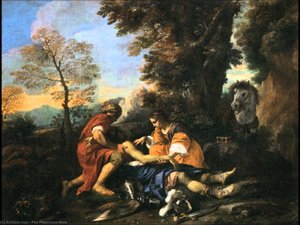
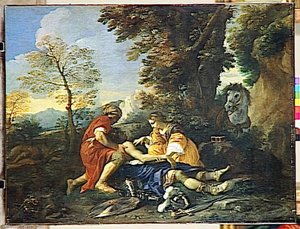
The true brilliance of Mola lies in his capacity to infuse biblical and mythological narratives with a sense of profound human emotion. His paintings are rarely mere illustrations; they are dramatic stages where light acts as a primary protagonist. In works such as L'Ange Apparissant à Agar dans le Désert, one can witness his mastery of evocative lighting, using chiaroscuro to highlight moments of divine grace and spiritual vulnerability. Similarly, his depictions of historical or legendary scenes, such as the poignant Herminie et Valfrino soignent les blessures de Tancrede après le combat d'Argante, demonstrate a deep empathy for his subjects, capturing the tender nuances of care and compassion amidst the harsh realities of conflict.
Beyond the purely religious or heroic, Mola possessed a keen intellect for the allegorical. His Allegory of Geography stands as a testament to his ability to utilize the Baroque language of symbolism to celebrate human curiosity and the era's spirit of exploration. Through rich colors and detailed realism, he transformed abstract concepts like cartography into visual spectacles. This ability to synthesize disparate elements—the scientific, the mythological, and the naturalistic—ensured that his work resonated with the sophisticated patrons of Rome, from high-ranking clergy to the intellectual elite of the seventeenth century.
Historical Significance and Artistic Triumph
The zenith of Mola’s professional recognition was undoubtedly his contribution to the Roman architectural landscape, most notably his monumental fresco cycle in the Gallery of Alexander VII at the Quirinal Palace. This commission, featuring works such as Joseph Making Himself Proclaimed to His Brethren, solidified his status among the foremost painters of his generation. In these large-scale works, Mola successfully merged the theatricality required by Baroque aesthetics with a refined sense of classical balance, proving that he could command the grandest of stages just as effectively as the most intimate canvas.
Though his career was defined by the prolific output of smaller works, his impact on the development of landscape painting in Italy cannot be overstated. By moving away from the purely decorative and toward a more observational, atmospheric approach, he paved the way for future generations of landscape artists to find beauty in the subtle shifts of light and the rugged textures of the earth. Today, the legacy of da Pier Francesco Mola remains etched in the history of art as a testament to the power of a painter who could capture both the grandeur of the heavens and the quiet, breathing reality of the world below.
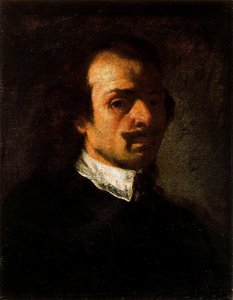
da pier francesco mola
1612 - 1666 , Switzerland
Quick Facts
- Artistic Movement Or Style: Baroque
- Artists Or Movements Influenced By This Artist: ['Michelangelo Merisi Caravaggio']
- Artists Who Influenced This Artist:
- Cavalier d'Arpino
- Francesco Albani
- Date Of Birth: February 9, 1612
- Date Of Death: May 13, 1666
- Full Name: Pier Francesco Mola
- Nationality: Swiss-Italian
- Notable Artworks:
- Flight into Egypt
- Saint Jean Baptiste Prechant Dans Le Desert
- La Vision De Saint Bruno
- Herminie Gardant Ses Troupeaux Grave Sur Un Arbre Le Nom De Tancrede
- Place Of Birth: Coldrerio, Switzerland
Related Articles

The Dramatic Flourish: Exploring the Baroque Movement's Enduring Legacy in Art History
Explore the dramatic world of Baroque art! Discover iconic artists like Caravaggio & Rubens, defining techniques, and its lasting impact on art history. Expert insights for collectors & enthusiasts at ArtsDot.

Baroque Masterpieces: 10 Paintings That Defined an Era |
Journey through the drama & grandeur of Baroque art! Explore 10 masterpieces by Caravaggio, Rembrandt, Rubens & more. Discover stunning oil paintings, rich colors & timeless stories. Find museum-quality reproductions at .
The Golden Age Reforged: Dramatic Realism & Religious Zeal in Spanish Baroque Art
Explore the dramatic world of Spanish Baroque art! Discover masters like Zurbarán & the powerful influence of religious zeal on painting techniques – a guide for collectors and enthusiasts.

The Visceral Stage: Exploring Dramatic Narratives & Emotional Intensity in Baroque Art
Explore the dramatic world of Baroque art! Discover iconic masters like Caravaggio & Rembrandt, their techniques, and the movement's lasting impact. Expert insights for collectors & enthusiasts at ArtsDot.
Simon Vouet: A Baroque Master's Journey from Italian Influence to French Classicism
Explore the life & art of Simon Vouet, a pivotal French Baroque painter who introduced Italian styles to France. Discover his masterpieces and lasting influence on 17th-century art.