

 Preview
 Send
Send Share
Share
 Details

 Download
 Similars
 X-Ray
X-Ray Diaporama
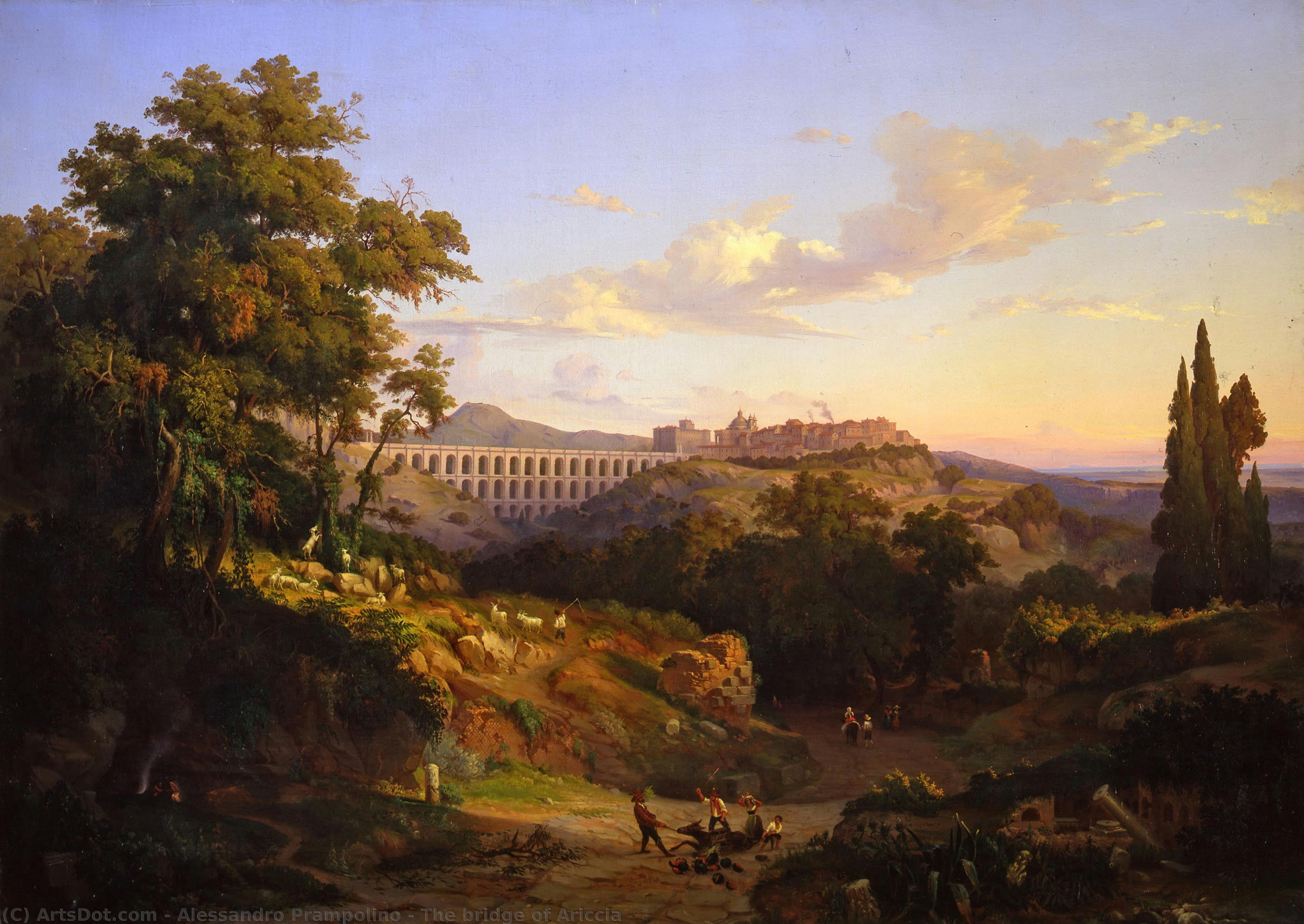
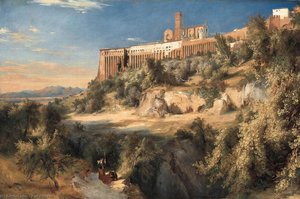
The bridge of Ariccia
 Oil
Oil- WallArt
 19th Century
 173.0 x 120.0 cm
 Civic Museums of Reggio Emilia
 Read More
Purchase a high-resolution, enhanced digital image, far superior to the online preview.
Each file is meticulously prepared by our in-house specialists using advanced tools and expert manual retouching. We ensure every image has exceptional clarity, precise color accuracy, and fine detail.
The final file is delivered via email within 72 hours, optimized for immediate use in professional, editorial, and print environments. This is the same quality trusted by top-tier design studios, publishers, and galleries.
Digital Image
Download a high-resolution file for personal display, printing, and creative projects. ( Buy Print Buy Hand Made Painting)
Included in Every Digital Image Order
Expert Digital Delivery, Guaranteed
When you choose ArtsDot.com, you're not just getting an image - you're receiving a professionally enhanced digital artwork, crafted with precision and backed by a satisfaction guarantee. Here's everything that comes with your order, automatically:

Fast Email Delivery
Your high-resolution digital image file will be emailed to you within 72 hours of ordering - ready for immediate use.

AI-Enhanced Digital File
Your artwork is professionally optimized using advanced AI tools and manual editing, ensuring maximum detail, clarity, and color accuracy.

Free Lifetime Re-Delivery
Accidentally deleted or lost your file? No worries - we'll resend it to you anytime, free of charge.

No Import Fees - Ever
Enjoy your artwork instantly with zero customs, duties, or delivery fees - digital downloads are always tax-free.

Color Accuracy Guarantee
We ensure your digital image reflects the original colors as closely as possible using professional tools and color management.

60-Day Satisfaction Guarantee
If you're not satisfied with your digital image, we'll revise it or refund 100% within 60 days - no questions asked.

100% Money-Back Guarantee
Not satisfied? Get a full refund within 60 days of receiving your digital file - no questions asked.

Bulk Order Discounts
Buy 3 images, save 10% - Buy 5, save 15% - Buy 10+, save 20%. Great for creative projects, galleries, and agencies.
Collectible Description
Related Artworks
Artist Biography
Sanford Robinson Gifford: A Master of Light and the Hudson
Sanford Robinson Gifford (1823–1880) stands as a pivotal figure in American art, often considered the second-generation artist to emerge from the influential Hudson River School. His legacy rests not solely on grand landscapes but on an extraordinary ability to capture the ephemeral qualities of light and atmosphere—a skill honed through meticulous observation and a deep connection to the natural world of upstate New York. Born in Greenfield, Saratoga County, New York, as an infant he moved with his family to Hudson, New York, where his father operated and financed iron foundries and a bank. On his eldest brother Charles’s example, he became enamored of art at an early age and may have received some early instruction from Henry Ary, a landscape and portrait painter who had moved to Hudson from Catskill, where he had been a neighbor of Thomas Cole, the progenitor of the American landscape school. Gifford attended Brown University for two years in 1842–44, but did not graduate, telling his parents that he wished to be an artist. Soon after college, he went to New York City to study with the well-known art pedagogue (and fine watercolorist), the English emigré John Rubens Smith. Under Smith, and perhaps at his parents’ insistence, Gifford trained to become a portrait and figure painter, but longed to follow in Cole’s footsteps and to join what was already a small society of young artists inspired by Cole and Asher B. Durand, the president of the National Academy of Design, to pursue landscape painting. By 1847, Gifford had exhibited his first painting at the Academy, submitting almost annually thereafter. In 1850, he was elected an associate of the Academy and, in 1854, a full Academician. Gifford’s artistic journey was profoundly shaped by his time abroad, particularly his extended sojourn in Europe between 1855 and 1857. Inspired by the revolutionary work of J.M.W. Turner, Gifford sought to emulate the British master's ability to convey atmospheric effects through loose brushwork and a vibrant use of color. He traveled extensively throughout France, Belgium, Holland, and Germany, immersing himself in the artistic traditions of these countries while simultaneously developing his own distinct style. His time in Rome proved particularly formative, where he painted *Lake Nemi* (Toledo Museum of Art), a monumental work that established the radiant sunlight and filmy atmosphere that would become hallmarks of his oeuvre. This painting demonstrated his mastery of capturing the fleeting qualities of light on water and reflected surfaces—a skill he relentlessly pursued throughout his career. Returning to New York in 1857, Gifford found himself amidst a thriving artistic community, including fellow Hudson River School painters like Frederic Church and Edward Moran, fostering a dynamic exchange of ideas and techniques.- Key Influences: Thomas Cole, Asher B. Durand, J.M.W. Turner
- Technique: Primarily watercolor, characterized by loose brushwork, vibrant color palettes, and an emphasis on capturing atmospheric effects.
- Subject Matter: Predominantly landscapes of the Hudson Valley, particularly mountains, forests, and rivers, often depicted during dawn or dusk to showcase the dramatic interplay of light and shadow.
William Oliver: A London Figure Painter
Alongside Gifford's flourishing career, another significant figure emerged from the same period – William Oliver (1823–1901), an English figurative and genre artist based in London. Unlike Gifford’s focus on landscape, Oliver specialized in paintings of young women, often portraying them in intimate domestic settings. His work demonstrates a meticulous attention to detail and a refined technique, reflecting the influence of academic art training. Oliver was enrolled (as William Oliver Williams) as a Probationer at the Royal Academy Schools of the Royal Academy of Arts on 18 July 1848 (recommended by Thomas Clark (*sic*) from Birmingham) and as a student on 16 December 1848. The Schools' register, and other sources, indicate that he also worked at the Government School of Design, Birmingham (see Birmingham School of Art), where he was the assistant master (1849–1851) and the headmaster was Thomas Clarke (1846–1851). He married Jane Elizabeth née Hughes in the district of St Pancras in London in 1852. Two of his sons, Oliver 'Rhys' Williams and Reginald Arthur Williams, also became established artists, with the professional names of Oliver Rhys and Reginald Arthur respectively. William Oliver died in Kensington on 16 April 1901. His obituary notice appeared in the Evening Standard the following day. It was stated as follows. ‘OLIVER WILLIAMS, on the 16th inst., 41 Queensgate Gardens, South Kensington, William Oliver Williams ('William Oliver', artist) aged 77’.Legacy and Historical Significance
Sanford Robinson Gifford’s contribution to American art is undeniable. He played a crucial role in establishing the Hudson River School as a distinct artistic movement, influencing generations of landscape painters who followed. His innovative approach to capturing light and atmosphere—a legacy deeply rooted in Turner's techniques—continues to resonate with viewers today. Gifford’s paintings offer not only aesthetic pleasure but also a profound connection to the natural world, inviting contemplation and reminding us of the beauty and power of the American landscape. He remains an important figure in understanding the development of American art and the enduring appeal of the Hudson River School tradition. His work is held in prestigious collections such as the Metropolitan Museum of Art, the Toledo Museum of Art, and numerous private collections across the United States.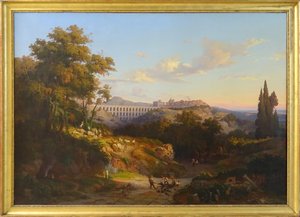
alessandro prampolino
1823 - 1865 , Italy
Quick Facts
- Artistic Movement Or Style: Genre/Figurative Art
- Artists Or Movements Influenced By This Artist: ['Birmingham School of Art']
- Artists Who Influenced This Artist: ['Henry Raeburn']
- Date Of Birth: 1823
- Date Of Death: 1901
- Full Name: William Oliver Williams
- Nationality: English
- Notable Artworks:
- Isabella McLeod
- Mrs James Gregory
- Place Of Birth: Worcester, England

