 Preview
 Send
Send Share
Share
 Details

 Download
 Similars
 X-Ray
X-Ray Diaporama
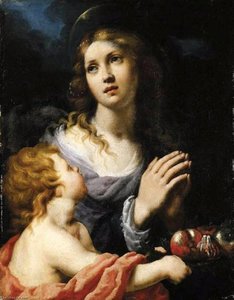
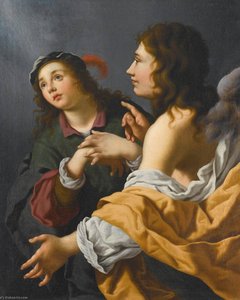
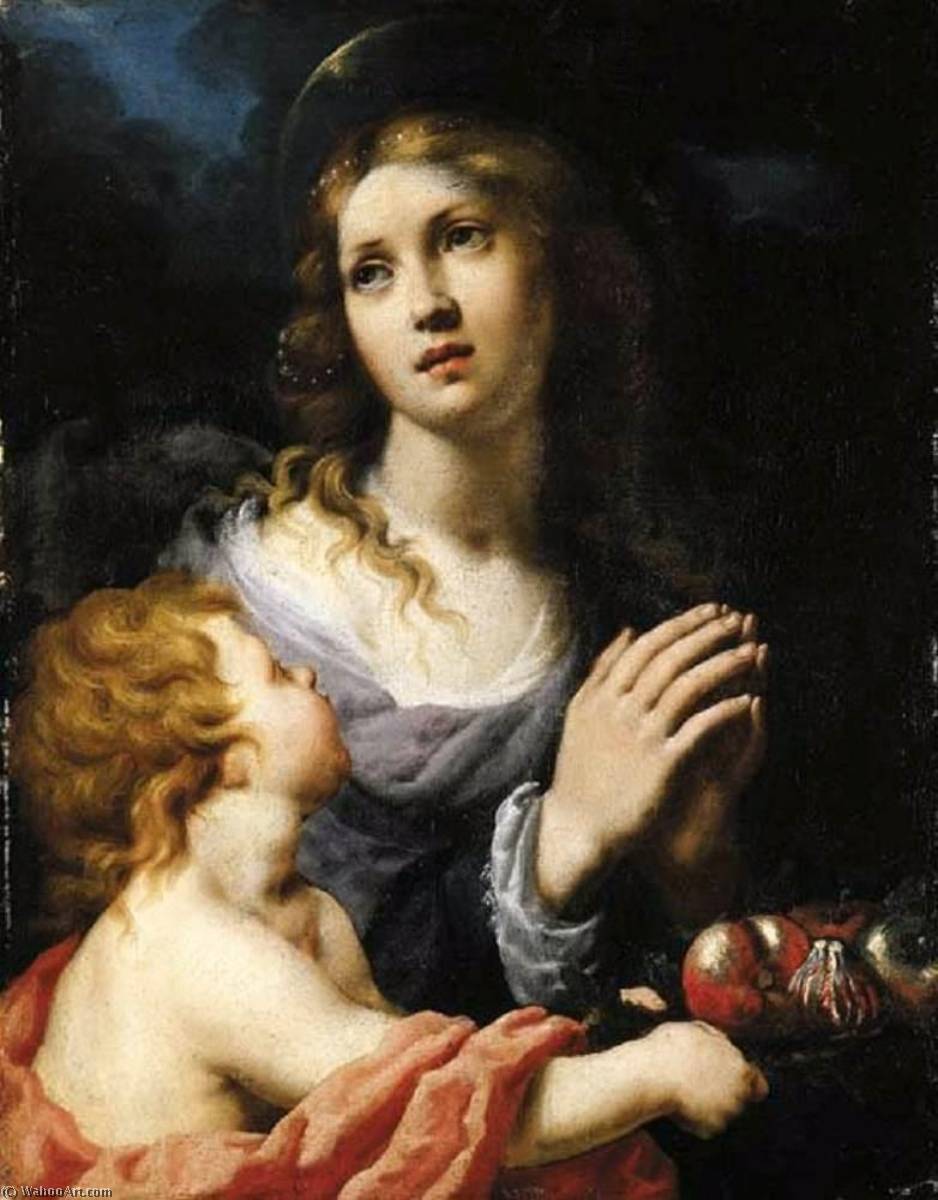
Female Saint with Putto
 1646
1646 64.0 x 51.0 cm
 Read More
Hand Made Oil Reproduction
Hand-painted oil on canvas in your size and frame, made to order by our artists. ( Buy Print Buy Image)




































Pick from our preset sizes that match the artwork's original proportions.

You may enter your own dimensions to fit a specific frame or space. If your selected size does not match the original image's proportions, we will either crop the artwork or extend the painting with additional hand-painted elements. A digital mockup will be sent for your approval before production begins.
Please note that the on-screen preview does not reflect the actual cropping or extension. Only the mockup will accurately show the final composition.
While custom sizes are available, we recommend selecting a dimension from the predefined list to preserve the original proportions.
After order, ArtsDot.com team will email client for instructions and provide a mockup preview
Worldwide Delivery () in 3/4 weeks instead of standard 5 weeks. (27 August). No compromise on quality.

Free Worldwide Express Shipping

High-Quality Linen Canvas

Full Shipping Insurance

Customs Tax Refund Guarantee

True Color Matching Guarantee

60-Day Return Policy (Defects Only)

100% Money-Back Guarantee

Bulk Discount Offer
 Glass option is only available in size under 110 CM

Female Saint with Putto
Reproduction Medium
Reproduction Size
-


Total Price
$ 263
Related Artworks
Artist Biography
The Florentine Shadow: The Life and Legacy of Alessandro Rosi
Alessandro Rosi remains a figure shrouded in artistic mystery, his oeuvre largely obscured by centuries of neglect—a poignant irony for an artist who dedicated his life to capturing divine beauty. Born in Rovezzano, near the heart of Florence, in 1627, Rosi emerged from the crucible of the Florentine Baroque, inheriting the stylistic fervor and intellectual currents that defined the era. While much of his personal history remains lost to the mists of time, his brushwork speaks of a man deeply embedded in the prestigious workshops of his homeland, navigating the complex social and religious landscapes of seventeenth-century Italy.
His artistic education was forged under the tutelage of masters who shaped the very essence of the Baroque aesthetic. Rosi’s formative years were spent in the studios of Jacopo Vignali and Cesare Dandini, alongside contemporaries like the celebrated Carlo Dolci. From Dandini, Rosi inherited a meticulous devotion to anatomical precision and the exquisite treatment of drapery—a hallmark of his early style. This foundation in Florentine classicism provided him with a technical rigor that would later allow him to embrace more dramatic, expansive compositions as his career matured.
A Pilgrimage of Light and Grandeur
Seeking to expand his visual vocabulary beyond the borders of Tuscany, Rosi undertook a transformative study trip to Rome around 1650. This pilgrimage brought him into direct contact with the monumental innovations of the Roman Baroque. Encountering the works of Simon Vouet and Giovanni Lanfranco, he witnessed firsthand the power of idealized forms and the theatrical use of dramatic lighting. These encounters infused his Florentine training with a new sense of movement and atmospheric depth, allowing him to synthesize the delicate grace of his mentors with the sweeping grandeur of the Roman school.
Upon his return to Florence, Rosi’s talent secured him a place among the city's most esteemed patrons. He moved within the highest aristocratic circles, earning prestigious commissions from families such as the Corsini and the Rinuccini. His versatility was perhaps most evident in his large-scale decorative projects, including the ambitious design of ten tapestries for Cosimo III de' Medici, Grand Duke of Tuscany. These works demonstrated not only his skill as a painter but also his ability to translate complex artistic visions into grand, tactile narratives suitable for the palatial environments of the Medici court.
Mastery of the Baroque Spirit
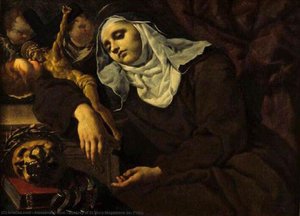
The breadth of Rosi’s output is characterized by a remarkable command over both fresco and oil on canvas. His religious compositions often serve as windows into the spiritual ecstasy of the era, utilizing light to guide the viewer's eye through complex, emotive scenes. Notable works such as his “Ecstasy of St Mary Magdalen de'Pazzi” showcase a masterful ability to balance monumental composition with intimate, human emotion. Whether depicting the celestial presence in “The Guardian Angel” or the dramatic tension of biblical narratives, Rosi’s work is defined by a rich color palette and a profound sense of drama.
Despite his significant contributions, Rosi's historical significance was nearly lost to history. For centuries, his works were frequently misattributed to other artists, such as Sigismondo Coccapini, contributing to a period of artistic oblivion. It was only through recent critical re-evaluation that his unique hand has been rediscovered. His death in 1697—tragically occurring after being struck by a falling column while walking along the Via Condotta in Florence—marked the end of a life dedicated to the pursuit of beauty. Today, as scholars piece together his legacy, Alessandro Rosi stands recognized not merely as a follower of Dandini, but as a vital architect of the Florentine Baroque tradition.
alessandro rosi
1627 - 1697
Quick Facts
- Artistic Movement Or Style: Baroque
- Artists Or Movements Influenced By This Artist: ['Simon Vouet']
- Artists Who Influenced This Artist: ['Cesare Dandini']
- Date Of Birth: December 28, 1627
- Full Name: Alessandro Rosi
- Nationality: Italian
- Notable Artworks:
- Santa con ángel niño
- Frescos del Palazzo Corsini
- Ecstasy of St Mary Magdalen de'Pazzi
- Place Of Birth: Rovezzano