 Preview
 Send
Send Share
Share
 Details

 Download
 Similars
 X-Ray
X-Ray Diaporama
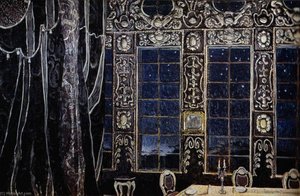
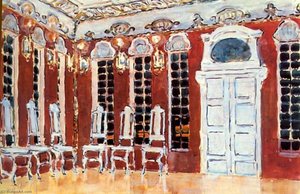
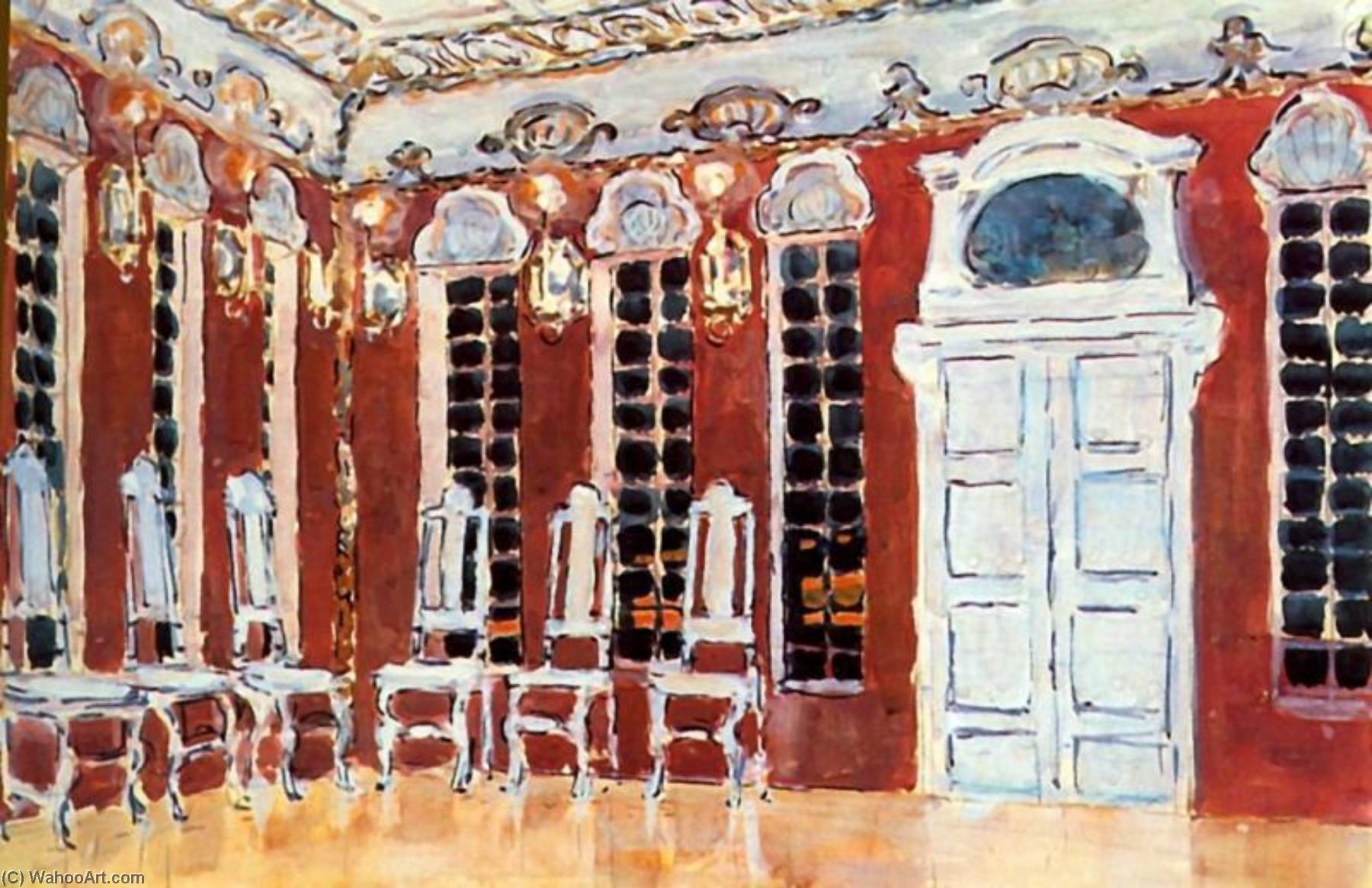
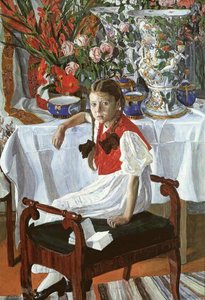
Hall in the Palace (also known as Stage design for The Ice House opera)

 Read More
Hand Made Oil Reproduction
Hand-painted oil on canvas in your size and frame, made to order by our artists. ( Buy Print Buy Image)




































Pick from our preset sizes that match the artwork's original proportions.

You may enter your own dimensions to fit a specific frame or space. If your selected size does not match the original image's proportions, we will either crop the artwork or extend the painting with additional hand-painted elements. A digital mockup will be sent for your approval before production begins.
Please note that the on-screen preview does not reflect the actual cropping or extension. Only the mockup will accurately show the final composition.
While custom sizes are available, we recommend selecting a dimension from the predefined list to preserve the original proportions.
After order, ArtsDot.com team will email client for instructions and provide a mockup preview
Worldwide Delivery () in 3/4 weeks instead of standard 5 weeks. (25 August). No compromise on quality.

Free Worldwide Express Shipping

High-Quality Linen Canvas

Full Shipping Insurance

Customs Tax Refund Guarantee

True Color Matching Guarantee

60-Day Return Policy (Defects Only)

100% Money-Back Guarantee

Bulk Discount Offer
 Glass option is only available in size under 110 CM

Hall in the Palace (also known as Stage design for The Ice House opera)
Reproduction Medium
Reproduction Size
-


Total Price
$ 263
Related Artworks








Artist Biography
Aleksandr Golovin: Weaver of Dreams and Shadows
Aleksandr Yakovlevich Golovin (1863-1930) wasn’t merely a painter or stage designer; he was, as many contemporaries described him, a magician. A conjurer of atmosphere, a shaper of emotion through color and form, he possessed an almost preternatural ability to translate the intangible – myth, poetry, and the very essence of human experience – into visual spectacle. His legacy rests not just on a body of work, but on his profound impact on Russian theatre and art at the turn of the 20th century, a period marked by fervent experimentation and a yearning for a new, distinctly Russian aesthetic.
Born in Moscow to a priest, Golovin’s early life was steeped in intellectual and artistic ferment. He initially enrolled in architecture but quickly gravitated towards painting, finding his true calling in capturing the nuances of light and shadow, color and texture. This fascination with visual language would prove crucial as he transitioned into the demanding world of theatrical design. His formative years were spent studying under masters like Illarion Pryanishnikov and Vladimir Makovsky at the Moscow School of Painting, Sculpture and Architecture, absorbing their techniques while simultaneously forging his own unique style – one characterized by a rich palette, evocative symbolism, and an almost dreamlike quality.
The Theatre as Canvas
Golovin’s career truly blossomed within the vibrant theatrical circles of late 19th and early 20th century Russia. He quickly established himself as a sought-after designer for leading companies like the Imperial Theatres Company, collaborating with luminaries such as Constantin Stanislavski and Vsevolod Meyerhold. It was through these partnerships that he honed his craft, pushing the boundaries of what was possible on stage. His designs weren’t simply decorative; they were integral to the storytelling process, shaping the audience's perception of the play and enhancing its emotional impact.
His most celebrated work undoubtedly lies in his collaborations with Sergei Diaghilev and the Ballets Russes. Diaghilev, a revolutionary impresario who sought to elevate Russian ballet to international prominence, recognized Golovin’s extraordinary talent and brought him into his inner circle. The productions for the “Russian Seasons” in Paris – including *The Firebird*, *Scheherazade*, and *Les Sylphides* – were not just spectacles of dazzling choreography; they were immersive experiences crafted by Golovin's masterful designs. He created settings that felt both fantastical and deeply rooted in Russian folklore, employing a rich tapestry of color, texture, and symbolic imagery to transport the audience to another world.
Symbolism and Modernism
Golovin’s artistic vision was profoundly influenced by Symbolism, a late 19th-century movement that sought to express ideas through evocative imagery rather than literal representation. However, he skillfully blended this symbolic approach with elements of Modernism, embracing new techniques and materials to create designs that were both visually arresting and conceptually innovative. His use of color, in particular, was remarkable – he employed a vibrant palette of hues, often layering them to create complex visual effects. He frequently incorporated geometric shapes and stylized forms into his sets, reflecting the growing influence of Cubism and other avant-garde movements.
Consider, for example, his set design for Molière’s *Dom Juan*. The dining room isn't merely a backdrop; it’s a carefully constructed illusion, brimming with symbolic details that hint at the play’s themes of seduction, morality, and deception. The opulent furnishings, the flickering candlelight, and the strategically placed objects all contribute to an atmosphere of decadent pleasure and impending doom. Similarly, his work on Stanislavski's *Marriage of Figaro* demonstrated a masterful understanding of theatrical space and character development, utilizing a revolve to create dynamic transitions between scenes and highlighting key moments in the drama.
Legacy and Influence
Aleksandr Golovin’s impact on Russian theatre and art is undeniable. He helped to establish a new aesthetic standard for stage design, demonstrating that sets could be more than just functional props; they could be integral components of the theatrical experience. His work influenced generations of designers who followed in his footsteps, shaping the visual language of Russian theatre for decades to come. His legacy extends beyond specific productions; he embodied a spirit of artistic innovation and a deep commitment to exploring the expressive potential of visual art.
Despite facing challenges during the turbulent years following the Bolshevik Revolution, Golovin continued to work as a painter and graphic artist, leaving behind a rich body of work that continues to captivate audiences today. His paintings – often characterized by their luminous colors and evocative symbolism – offer a glimpse into the inner world of this extraordinary artist, revealing his enduring fascination with beauty, myth, and the human condition.
alexander golovin
1863 - 1930
Quick Facts
- Artistic Movement Or Style: Symbolism, Modernism
- Artists Or Movements Influenced By This Artist:
- Stanislavski designs
- Meyerhold collaborations
- Artists Who Influenced This Artist:
- Konstantin Korovin
- Vasily Polenov
- Date Of Birth: 1 March 1863
- Date Of Death: 17 April 1930
- Full Name: Aleksandr Yakovlevich Golovin
- Nationality: Russian
- Notable Artworks:
- Dom Juan's Dining Room
- Flowers
- Portrait of Golovin
- Place Of Birth: Moscow, Russia